

At the recently concluded WePlay convention, I played a very interesting new FPS title—Last Flag.
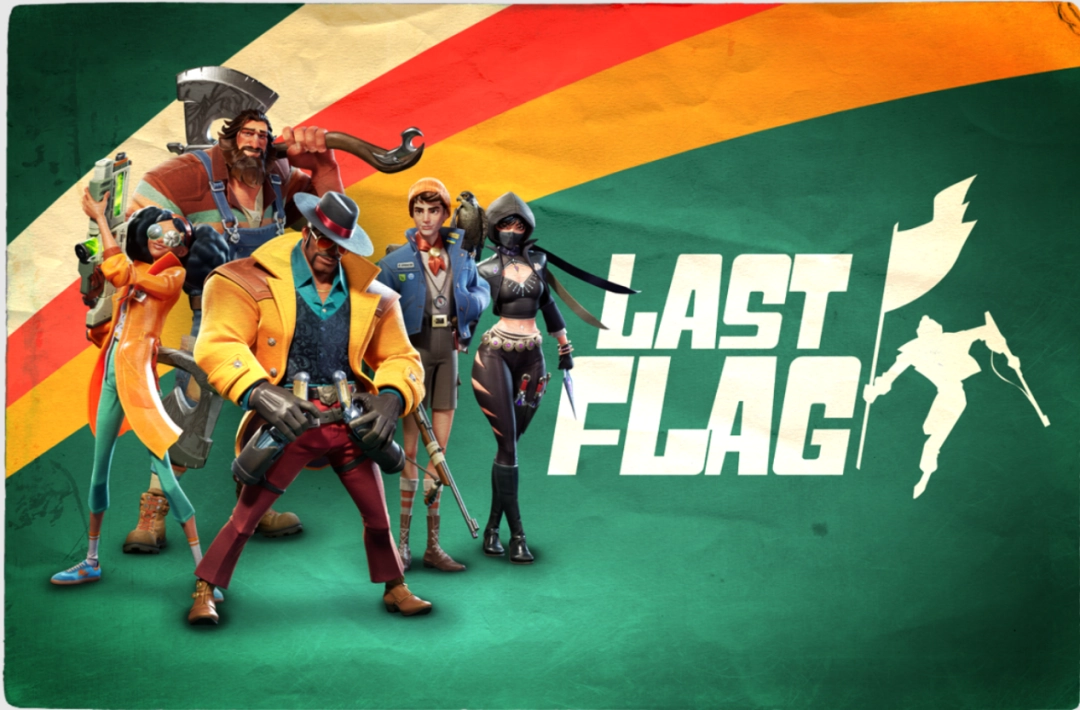
Last Flag features "Hero Shooter" elements, allowing players to control various characters to fight opponents at range or in close quarters. Last Flag also includes "Point Control" gameplay, where players compete for three radar stations on the field to gain various benefits—such as healing, fast travel, and most critically, scanning specific enemy areas to locate the key to victory: the "Flag."
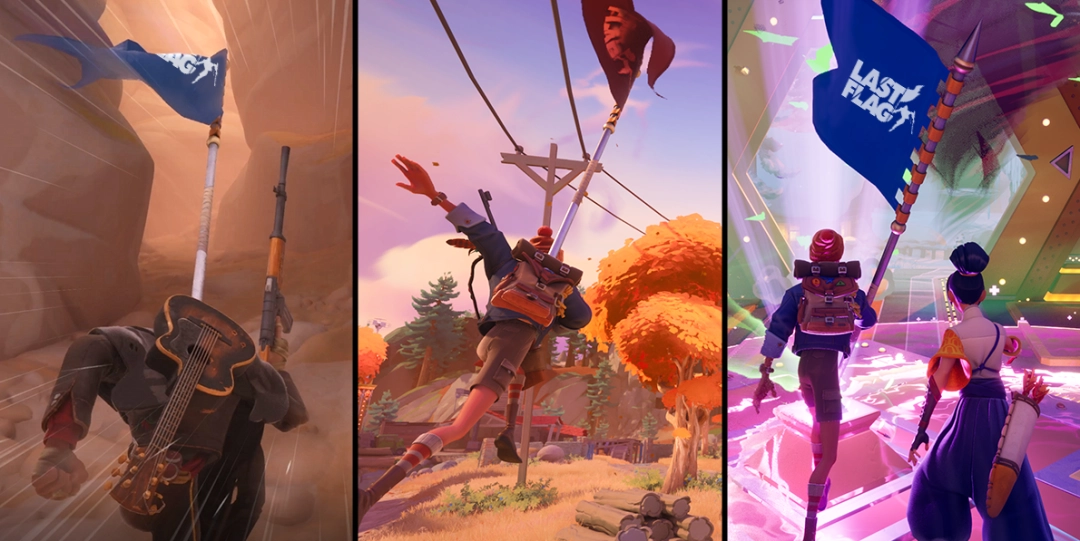
At the start of the game, players need to take their team's flag and find a hidden spot to conceal it. Then, after the game begins, they must eliminate the enemy's scouts searching for the flag and dispatch their own mobile units deep into enemy territory to find the opposing flag. During this time, capturing radar stations can help scan for the flag's location. Although the scanning speed is slow, ignoring it completely obviously gives the opponent a huge advantage. Most importantly, even if players occupy all radar towers, they cannot win—the key to victory is always the flag, specifically how to find and capture the opponent's flag.
The gameplay of Last Flag can be said to have pioneered a new competitive FPS track—at least during my brief trial, I was fully immersed, rediscovering the passion I felt when I first started playing Overwatch in college.
By the way, sitting next to me on my team is Mike Reynolds, the producer of Last Flag. However, if you're familiar with the music industry, you probably know Mike Reynolds' other identity—he is the manager of Imagine Dragons and the brother of the band's lead singer, Dan Reynolds.
As for why a world-renowned rock band would cross over into the gaming industry to create such a promising FPS masterpiece, that is the highlight of our interview today.
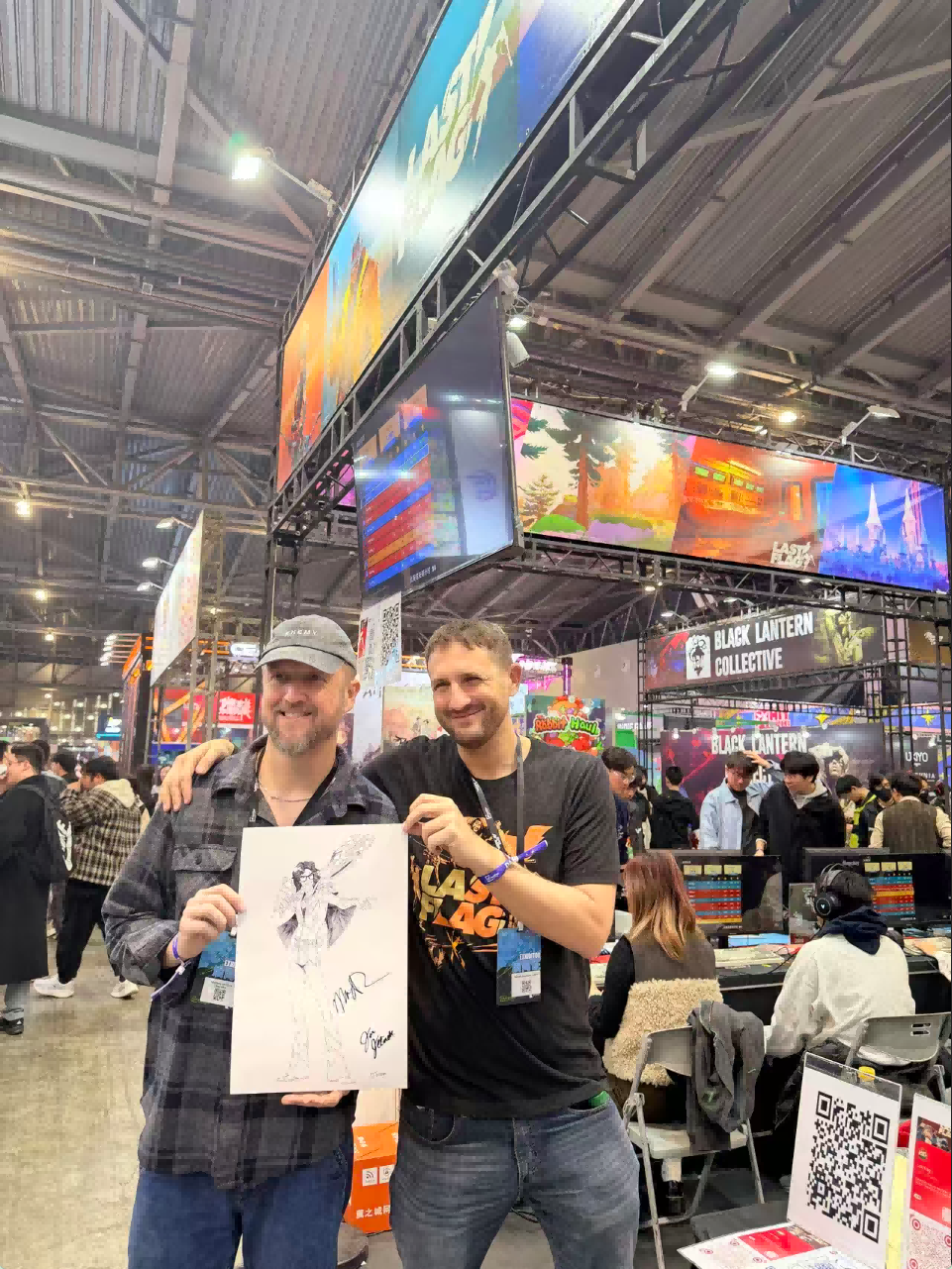
Q: My first question isn't closely related to the game, but it definitely represents the curiosity of most players—as the lead singer and manager of the globally renowned band Imagine Dragons, why did you decide to enter the gaming industry and create your own game?
Mike:I know, it looks quite unusual. But honestly, Dan (lead singer of Imagine Dragons) and I have never really left the gaming world. Gaming has long been a part of our lives.
We were obsessed with computer games as children. Sierra Online, LucasArts, and Delphine Software were our favorites. You might not know that Dan started programming in C# and Unity when he was nine. I started even earlier, initially programming on the Commodore 64—that 8-bit antique. I began doing animation and 3D modeling in middle and high school. Dan continued programming and secretly released many games—mobile games, PC games, etc.
In fact, since then, making games has been on our minds. Even though we later pursued a career in music, as you can see, we've always been collaborating with various games, such as League of Legends and Starfield. Our passion has always been there, never fading.
This idea has been hovering in our minds. My brother and I have been discussing and hesitating for a long time. Now we've decided to realize our dream with our own hands—that's why we are standing here.
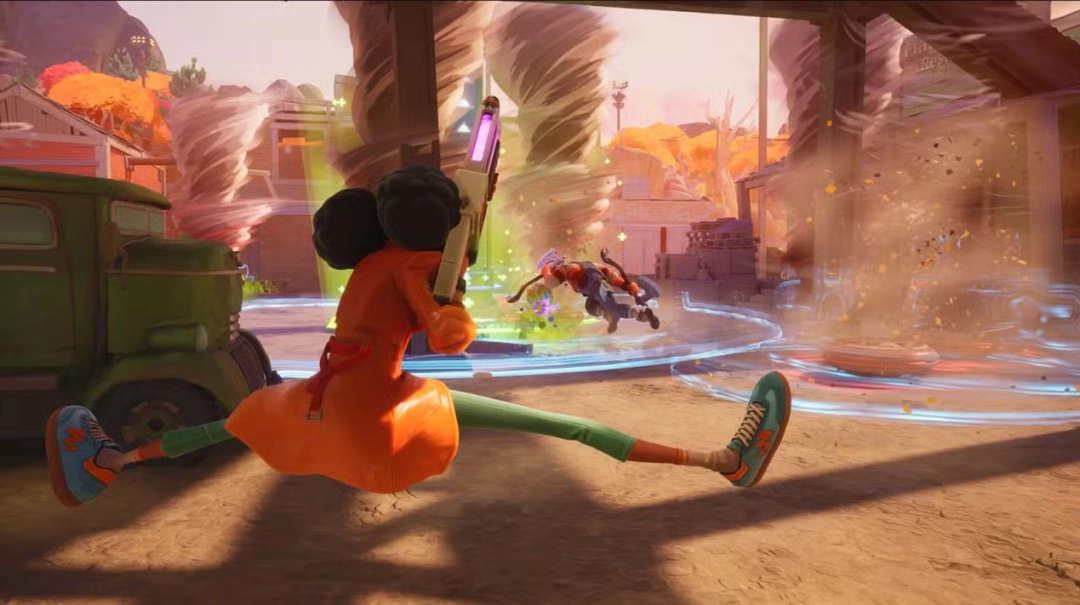
Q: Honestly, looking at the scale and gameplay reserves of Last Flag, it's hard to believe it's the work of "gaming newcomers." You've added "Hero Shooter," "Point Defense," and a "Bounty" mechanism similar to Hunt: Showdown. Plus, you've created many competitive map designs, hoping for intense player confrontations.
With so many mechanics blended together, creating such a long learning curve—how do you find the balance between fun and competitiveness?
Mike:Our primary goal is actually to create a game that's fun whether you win or lose—even if you lose, you should still walk away smiling. We've prepared the best track in the game for the losing side, hoping players won't be discouraged and will find the courage to try again within that music.
But as you said, the game has a long learning curve and requires some time to adapt.
However, although Last Flag looks dazzling with its "Hero Shooter" and "Capture Point" elements, the core has never changed—hide the flag, then capture the flag, just like hide-and-seek. During actual gameplay, many players may be misled by various mechanics, such as obsessing over point control or just shooting at each other. But the essence of Last Flag will never change.
In fact, the inspiration for Last Flag came from the "Capture the Flag" games we played during our Boy Scout training. But we never found the most authentic "Capture the Flag" experience. Although many classic FPS games—such as Quake, Unreal Tournament, Warsong, and Team Fortress—had interesting "Capture the Flag" modes, they still didn't satisfy the passion we Boy Scouts felt when playing "Capture the Flag." What we wanted to recreate was the thrill of finding the target and sneaking through enemy lines.
You should understand that we don't particularly focus on creating an absolutely fair gaming experience for players, because we always prioritize fun. We want the gameplay to be exciting, allowing for a certain degree of freedom, and ensuring that when players use their skills, interesting experiences inevitably arise.
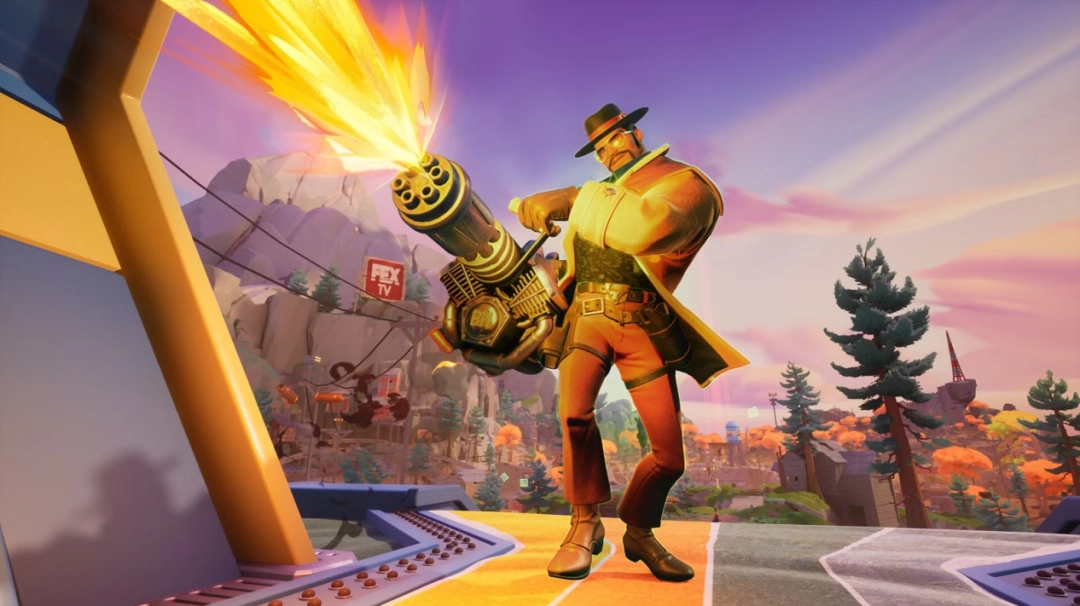
Q: So, the core mechanic of the game is hiding and capturing flags, right? All the other elements like "Hero Shooter" and "Point Control" are just side dishes surrounding the core gameplay. As you mentioned, you want each character's skills to offer their own "unbalanced" experiences. But regardless, Last Flag is a shooter with competitive elements. Even if "Hero Shooter" isn't the core, as the most intense "branch" of the experience, players will spend most of their time engaging with it.
So, how will you balance character stats and strength?
Mike:We tend to position Last Flag as a "casual competitive" game. As mentioned earlier, we prioritize fun over competitiveness. But you're right, players will exhibit strong competitive instincts, much like in Super Smash Bros.—even if designers want everyone to have fun, as long as there is competition, there will be winners and losers.
So, we've been constantly thinking about how to make the core gameplay—hiding and capturing flags—more meaningful and valuable.
The first thing we considered was that the maps must be large and complex. This makes hiding and searching interesting. But the maps can't be too large, as that would slow down the pace and make the experience drag. From this perspective, capturing radar stations is a strategically superior choice. You gain healing, fast travel, and slow down the opponent's search for the flag.
Secondly, we want players to always have a chance for a comeback. It's okay if you don't capture the radar stations, since the game's goal is to find the flag, so you can bypass the radar stations and go straight for the flag—of course, if you play this way, you'd better be quick, otherwise others might scan and locate your flag first.
Then, in the final phase—when a player captures the enemy flag and brings it back to their base—there will also be a one-minute guaranteed overtime. Do you remember the overtime in our last match? I used my stealth ability to recapture our flag, creating an opportunity for a comeback from the brink of defeat.
This is essentially our core strategy—every hero should have multiple ways to play, and there should be multiple ways for the team to win. There is no unified meta or fixed strategy; tactics need to be adjusted continuously during each match, seizing opportunities as they arise. For example, if the enemy is defending Point C heavily, their flag might be behind Point C, or they might be using a feint, deliberately defending fiercely in other areas to distract you.
In some ways, this is almost like our idealized strategy game. You might not have noticed if you haven't played for long—we've streamlined many systems to ensure a focused core experience. For example, each character can spend money to upgrade skills, twice per match.
In fact, regarding your question, we hope players will focus more on gameplay and tactical psychology, rather than agonizing over how to build complex tactical systems to boost character stats or achieve dominance.
Q: But what about those quick-match players who just want to relax with a few games after work or school? We all know that the longevity of a live-service game depends on that batch of "silent" players—the quick-match crowd. They just want relaxed, efficient, and fair battles.
But if you prioritize fun and deliberately create scenarios for dominance, wouldn't that be unfair to players who can't assemble a team and can only play solo quick matches?
Mike:Exactly, you're right. Let's talk about balance first. You'll notice we don't have team role definitions, right? There's no special reason behind this; we just feel that various things happen during gameplay. We want players to be able to pose a threat in different situations, rather than always feeling confined to a single role defined by their class.
The core of Last Flag's hero design is adaptability—we want players to develop their own unique playstyles. We firmly believe that if your playstyle synergizes well with your hero, achieving ideal performance is naturally commendable.
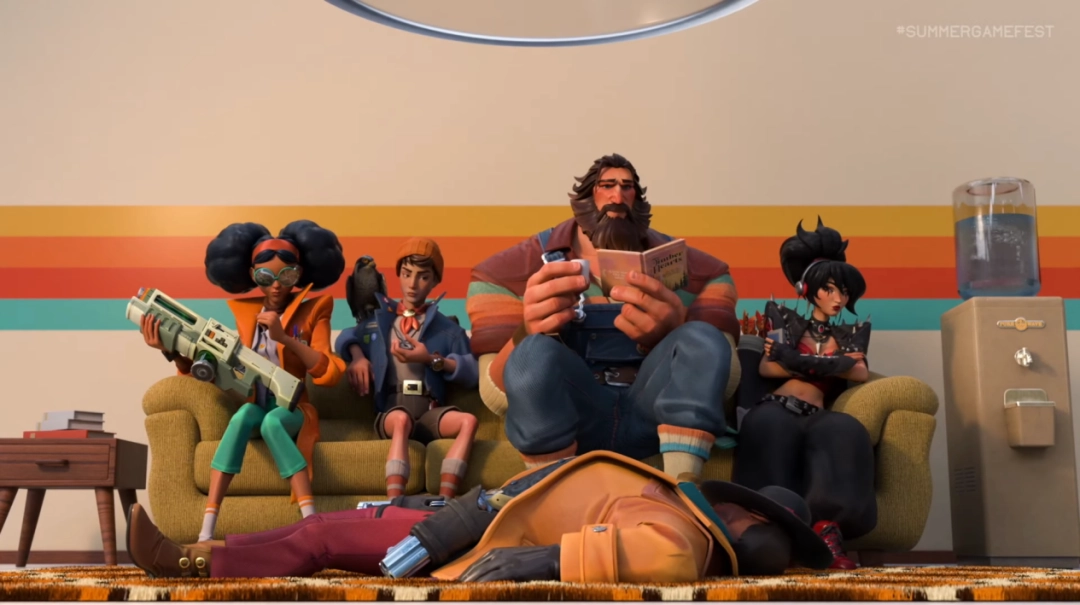
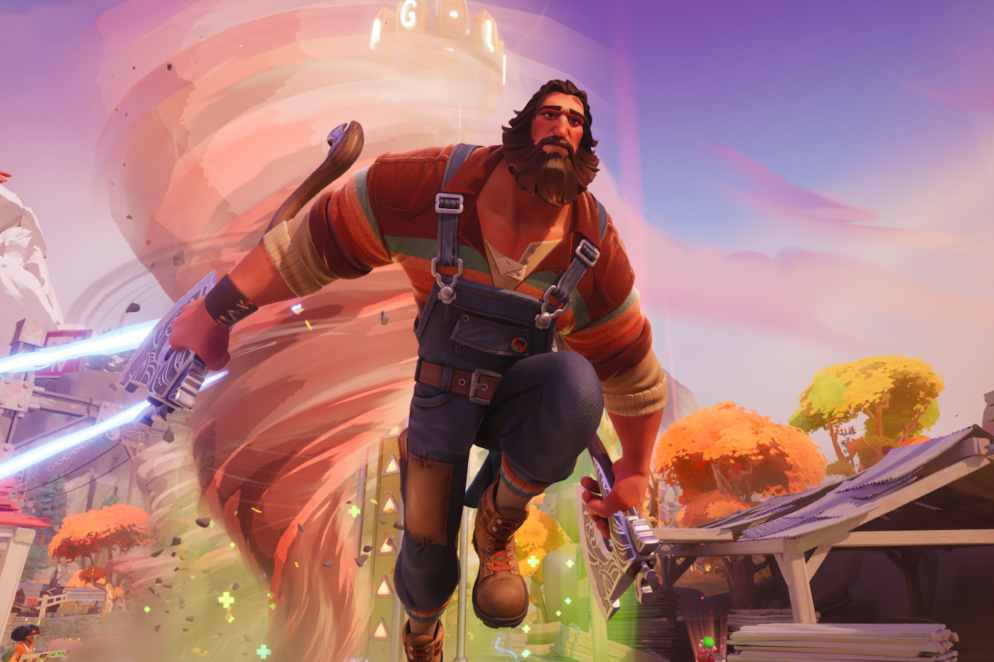
However, this doesn't mean every character is reckless and fearless. If you play the Lumberjack—a powerful melee class—and face off against a Gunner in an open area, getting beaten senseless, you have no one to blame. If you play an Assassin and get tangled up with a Lumberjack at close range, you'll likely meet your end. Therefore, we also hope players will carefully study various heroes and combinations to maximize their strengths and minimize weaknesses.
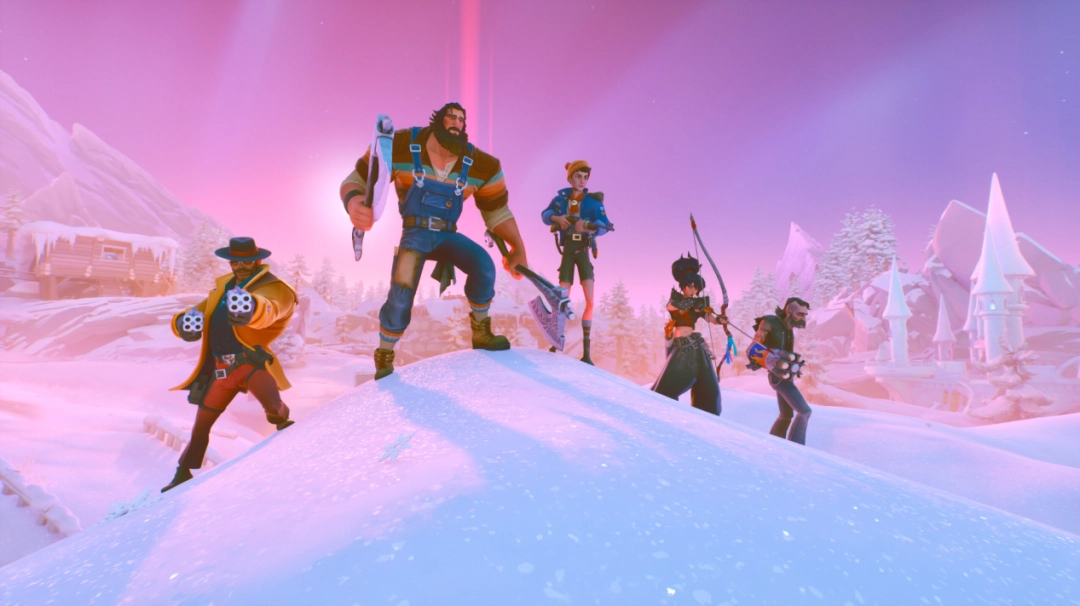
In fact, this philosophy extends to our map design. We've prepared various terrains—hills, tunnels, caves, forests, lakes, etc. We hope players will use their brains and think: Where should I run? How should I play? Where should I stay? Am I better suited for intense, close-quarters combat? Or am I better at using ranged attacks to harass enemies?
And as players become more familiar with the game mechanics, the answers to these questions will become increasingly clear.
You can fully leverage your advantages based on your personal playstyle; we believe freedom is crucial for players. However, regarding teamwork, this applies to all multiplayer games; it's just one aspect of the gameplay.
Moreover, we are fully developing a stable and reliable ping system and team-shared hints. We believe this will make teamwork more straightforward and intuitive. Furthermore, based on our numerous past conventions and testing experiences, the ping system is cross-cultural—even players from opposite ends of the earth can quickly understand certain symbolic indicators.
Interestingly, player experiences vary across different regions. As developers, our task is to provide sufficiently practical tools so players can jump in quickly after work. Even if they aren't playing with friends, they should still be able to have fun—this is precisely the challenge we face.
Exactly, this is a challenge for all multiplayer games, especially those of this genre. Not all multiplayer games are like this. In many shooters, if I shoot accurately enough and react quickly enough, I can easily carry the team. But this game is different; it requires players to pay a price to reap rewards, and when you play with friends, this experience becomes even more chaotic and fun.
Q: So, Last Flag doesn't have defined roles like "Support," "DPS," or "Tank," correct?
Mike:That's right. Unlike games like Overwatch, there is no linear combat here. In Overwatch, players either push payloads or engage in fights, moving back and forth—the combat is linear. Here, however, the combat is three-dimensional, even four-dimensional.
Therefore, we don't even want these abilities to feel like predetermined combos, where I just press 1-2-3-4 to secure a kill and help my team win. We want these abilities to be practical tools for players to express themselves, giving them the confidence to unleash their creativity on the game's canvas without hesitation. For instance, once the Lumberjack has charged up their ultimate, I can immediately use a teleport skill to send them high into the air above the battlefield for a devastating drop attack.
We hope players will think creatively about how to utilize their character's abilities, keeping an open mind and actively seeking new directions—especially in shooter games, where this determines success or failure. We don't want players to simply mindlessly eliminate opponents to win; we want everyone to move around and have some fun.
Q: I finally understand why you said "Hero Shooter" is just a tool serving the overall experience. Pure "Hero Shooter" titles like Overwatch or Marvel Rivals must balance hero damage output. If players develop creative gameplay like ultimate skills or combo modes that can instantly destroy all enemies, developers tend to adjust numbers to ensure so-called "fairness."
Last Flag is different; you prioritize fun and don't treat "Hero Shooter" as the main focus, thus encouraging this kind of creative tactical gameplay.
Mike:You're absolutely right. We want players to enjoy the thrill of combat and the joy of creation, rather than mechanically following set templates for entertainment.
Q: Last Flag has many details and mechanics that directly affect the outcome of the game and player interactions—like the Radar Tower mechanic—but during my playthrough, I had no chance to learn about such critical information.
So, how will you guide players to help newcomers get started faster or master Last Flag?
Mike:You're absolutely right; guidance is crucial. Currently, our development is focused on helping players get started quickly—I call this the "First Match Experience" and "Second Match Experience." In the release version, we will introduce a Shooting Range and "Mini Capture the Flag" to help players quickly familiarize themselves with Last Flag. I won't elaborate on the Shooting Range, as everyone understands that concept. "Mini Capture the Flag" will be a significant mechanic, greatly reducing map size and arranging AI opponents to help players learn the entire flow.
We also designed a very chatty little assistant that whispers in the player's ear—"Hey, you'd better start looking for the flag immediately," "Oh no! They've captured the radar station, they're starting to scan our area," and other flavorful hints.
As we mentioned earlier, the core mechanics of "Capture the Flag" and "Hide-and-Seek" aren't particularly novel, but turning them into a self-consistent and fun gameplay loop requires careful thought.
Players can become veterans familiar with the entire process by their second game—but we hope to reduce that number to one. In other words, players should be able to understand and enjoy all the gameplay mechanics in their very first match.
Q: What happens if players choose to skip the tutorial?
Mike:Yes, we did consider that issue. Our initial idea was to make the tutorial mandatory. But we quickly abandoned that plan. The current design uses player account experience as a benchmark—for example, requiring 10,000 XP to unlock multiplayer matches. New players who haven't earned enough XP will be placed in AI matches to thoroughly familiarize themselves with the gameplay flow.
I personally strongly support this design, as it effectively helps players get familiar with the game without causing too much frustration. Look, if you're skilled and quickly grasp the mechanics, dominating matches, you can jump straight into PvP after one game. If you're a bit clumsy and need more practice, AI matches will always be available. We ensure players are well-prepared before starting real battles.
We are currently progressing with this design.
Q: Have you considered adding some "rewards" to the tutorial? For example, skins or in-game currency, to better encourage players to train?
Mike:Yes, we have prepared various reward mechanisms for players, including tutorials, guided training, achievements... and upcoming Demo tests. At every stage, players can enjoy various exclusive rewards we provide.
Q: The core gameplay revolves around "Hide and Seek Flag Capture." Where will your future updates focus? New maps, new heroes, or more "hide-and-seek" elements?
Mike:We focus on leveraging our unique advantages to create the best flag-capturing experience. Undoubtedly, we will introduce various special game modes in the future to maintain our unique interpretation of different elements. Perhaps in the future, we will introduce a Free-for-All mode, or maybe every player will have their own flag for a chaotic brawl.
We look forward to Last Flag eventually developing into a more inclusive platform, providing players with opportunities to experiment, learn, grow, and explore new gameplay methods, including diverse experiences such as rule adjustments.
Q: So, there are no cool map elements like huge moving mechanical structures or movable islands?
Mike:We have indeed thoroughly studied design elements like movable terrain. I need to clarify a few points—I won't say such designs are impossible forever, as we are still actively developing, and the future is uncertain. But what is certain is that I've played the first map about 1,500 times, and I can still discover new hiding spots. Moreover, I can play hundreds of matches with the same team composition without getting bored, because someone always comes up with something new.
Q: What future community support does the game have? Will you open up MOD functionality, allowing the community to create new maps or modes?
Mike:Although I can't reveal specific details, our current development plan does include many elements. Both long-term community building within the game and MOD support are key points of focus for us.
Q: What is the monetization model for Last Flag? Do you plan to operate this title long-term?
Mike:We undoubtedly want Last Flag to be a live-service game, but we also want players to pay an entry fee. The pricing will be quite affordable—around $20 to $25. After all, we are a small independent studio and need to consider costs and other factors.
We believe the best way to serve players is to focus on crafting an excellent core gaming experience, rather than pursuing a massive content pipeline. We will gradually improve such content later, but our immediate priority is to polish the ultimate core experience—as long as players are enjoying themselves, we can continue to optimize based on that. Additionally, we have post-launch plans to sequentially introduce new maps, new contestants, and other elements to continuously stimulate player engagement.
But... for now, the goal is of course to fully enjoy this year's WePlay convention.
Q: One-time purchase, long-term operation, selling skins—so, will you have a Season Pass or Battle Pass?
Mike:We are still evaluating several existing long-term operational models, such as the Season Pass and Battle Pass you mentioned. We can't say much at the moment, but相关工作 has already started. What we can say now is that there will be new execution animations, new skills, new characters, and various other new content. We believe players will be satisfied with this.
And I want to mention that there are many exclusive rewards prepared for those who participate in early testing—so, don't miss out.
Q: What about the frequency of content updates? Personally, I believe that aside from external factors, a key reason for Overwatch's decline has been the slow pace of content updates—not just maps, but also heroes—in addition to rigid team compositions.
So, what are the future update plans for Last Flag to avoid repeating Overwatch's mistakes?
Mike:We have many plans, including new maps, modes, characters, and yes, plenty of new skins and dance emotes. And, if you'll allow me to keep a little secret, here's an exclusive hint for your readers—we've hidden many Easter eggs in the game trailer. Those who dig deep will discover these clues and uncover the story behind it all. However, I won't spoil the specific details; the trailer will be officially released on December 4th.
Among these Easter eggs, there's a clue about a new hero. Let me just say, this hero is absolutely cool! As a highly creative character, you'll be able to play him in all sorts of imaginative ways.
Q: Regarding business collaborations, how do you plan to promote this game within the Chinese community?
Mike:We highly value the Chinese player base. You should know that back when we were Imagine Dragons, we had some fantastic collaborations with Chinese bands. And speaking of which, Imagine Dragons will be making a comeback—this hasn't been officially announced yet, but we're definitely coming back.
We firmly believe there are no shortcuts to building relationships with the community, and it can't be achieved through empty talk. This is precisely one of the important reasons we came to the WePlay stage. Although there aren't many Western studios here, we've already established our presence and plan to expand further.
Currently, our plan is to hold events during major Chinese holidays. In addition, we are building our own social media platforms—although still in a very early stage, we have already partnered with several Chinese collaborators who have provided significant support in areas such as media coverage.
Q: So how do you plan to handle cheating? Everyone knows that for an FPS game, cheats can devastate the player experience, and while they can't be completely eradicated, they can be managed through joint efforts by the community and developers.
Mike:We are currently using Easy Anti-Cheat. Our team also includes specialists in cybersecurity testing, whose job is to relentlessly attack the game's vulnerabilities and then fix them.
That said, we won't claim that Everythinggj will be perfect right at launch; this still requires community cooperation. But the good news is that we place a high priority on the security of the core "Capture the Flag" mechanics—specifically, the safety of flag locations. We are committed to ensuring that cheaters cannot easily exploit this critical point of victory.
We fully understand that players will only enjoy the game if it feels relatively fair. We are developing game management tools and other supporting systems to build a robust moderation framework. At the same time, we look forward to collaborating with the community to jointly identify and prevent potential issues after launch.
Q: What is your vision for Last Flag?
Mike:I'd say Last Flag is the first "Hide-and-Seek Capture the Flag Shooter." And naturally, every game genre will spawn countless subgenres in the future. I hope that as more titles emerge, people will look back on Last Flag and call it an interesting piece of work.