
"Other 'Soulslike' games rarely elevate spells to such an important position in their design. Did you do this intentionally?"
After the trial, while copying assets, I seized the opportunity to ask the development team a question that intrigued me, receiving an answer that was unexpected yet reasonable—
"Innovation is necessary, after all."
This is my second time playing Wuchang: Fallen Feathers.
I like it more than I did last time.

Thanks to Leenzee and 505 Games for inviting us to play the first chapter of Wuchang: Fallen Feathers in advance. We are even more grateful for their generosity in providing more trial time than last time—a full six hours.
We attended the Chengdu session, following previous sessions in Shanghai and Beijing. Honestly, given the large-scale player trials that preceded this, this preview report isn't strictly necessary; it's just one opinion among many, and not necessarily the one that aligns with your preferences.

However, just like the Q&A at the beginning of the article, playing again did reveal some game details worth sharing that were hard to fully appreciate during the first playthrough. These details almost all relate to gameplay design, focusing mainly on map exploration and combat, consistent with the content of my preview report written in January.
Basically, you can view this preview report as an extension of the one from January. In fact, some content has reached the level of a review—but there's no helping it. Playing the same content twice, totaling over ten hours, was unavoidable.
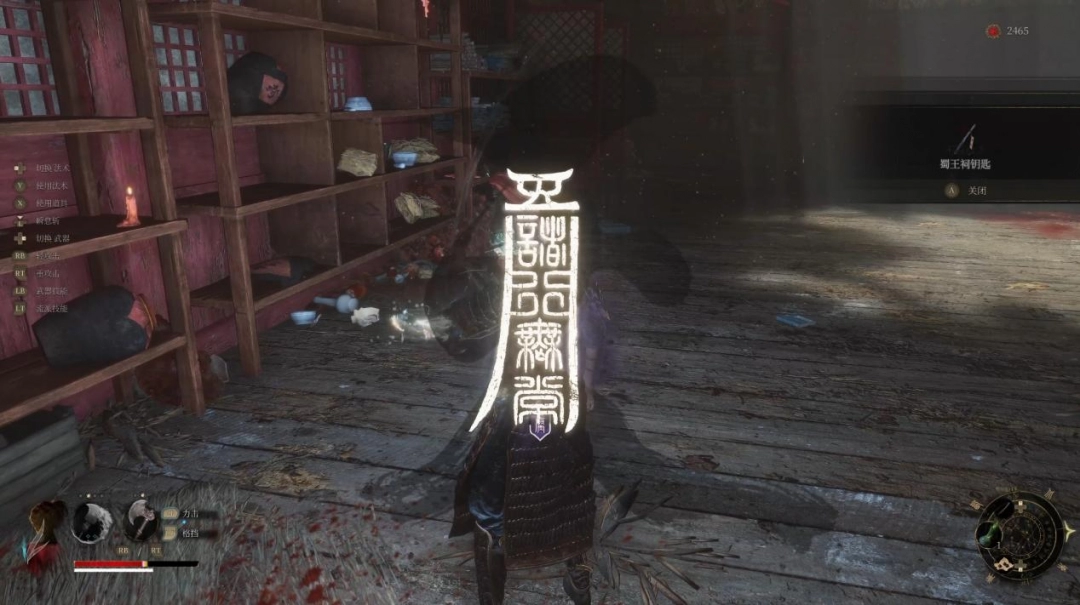
In the January preview report, I mentioned that the game's map design direction is similar to the integrated structure of the original Dark Souls.
Interconnected box-garden-style maps are one of the most significant genre characteristics of "Soulslike" games. This map design philosophy, originating from "Metroidvania," incorporates level exploration into the realm of gameplay fun, granting it enduring charm unaffected by the passage of time. The map design of the original Dark Souls is the most classic example of this in 3D gaming. It not only achieved stereoscopic structures within individual box-garden levels and complete connections between different box gardens but also linked all game levels together into a "grand structure" centered around Firelink Shrine.
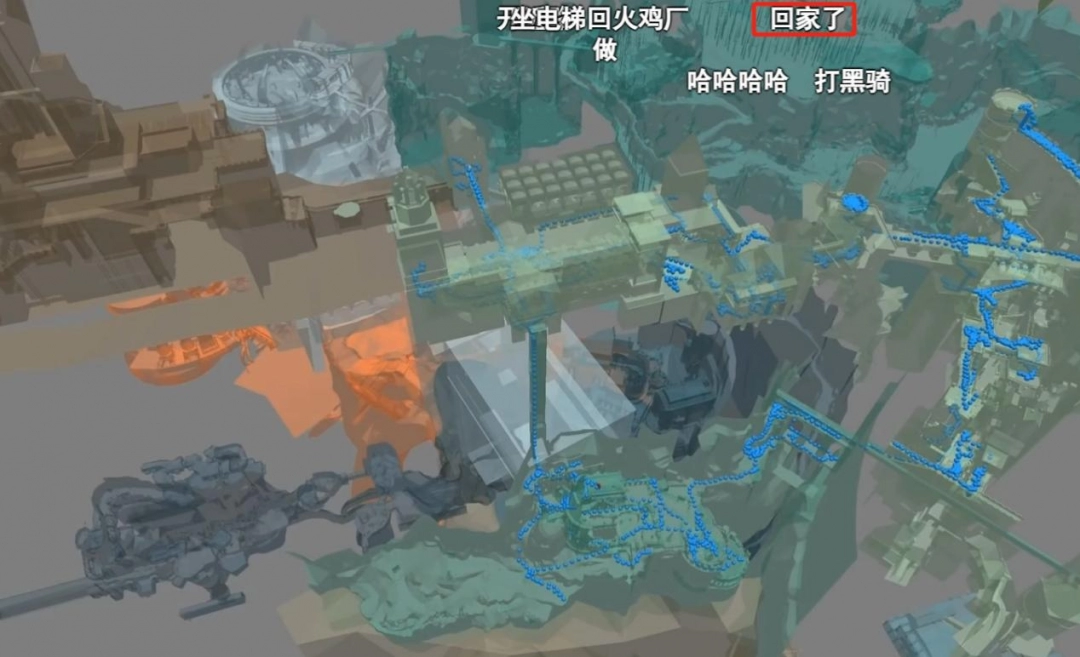
Wuchang: Fallen Feathers clearly aims to replicate this "grand loop containing small loops" design. During my second playthrough of the Chapter 1 levels, I could more clearly perceive that each different area scenario basically follows this design philosophy. Whether in the initial "Foyuan Town," the later underground palace, or the final "Tang Wang Xinggong" (Tang Prince's Palace), each contains its own "large and small loops." Starting from a bonfire, exploring a loop to open various shortcuts and returning to the initial bonfire completes a "small loop" exploration. The connection of these "small loops" forms the area's "grand loop."
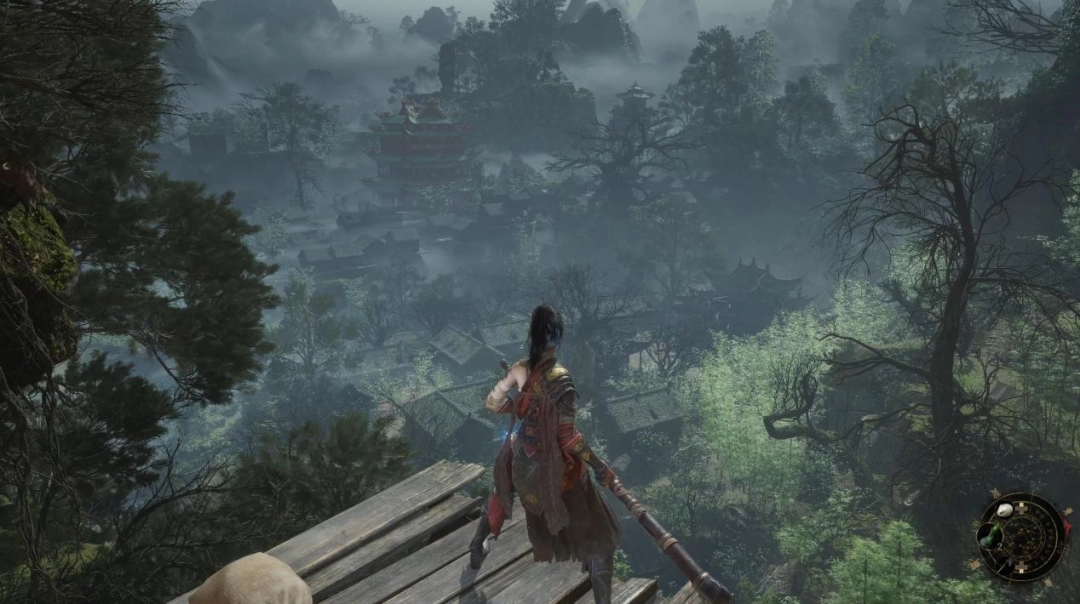
What You See Is What You Get
The underground palace map is relatively clear. Although the experience, reminiscent of "Blighttown," doesn't make map exploration particularly enjoyable, looking back at the path taken reveals that the map structure is actually quite clear. Like "Sousouzan" from Mashin Hero Wataru, it has a distinct layered structure.

Starting from the "Shu Wang Ci" (Shu King's Shrine) down to the underground palace to light the first bonfire, completing a loop exploration to open the elevator mechanism, and returning to this bonfire constitutes the first layer. Then, starting from this bonfire, exploring another loop to open the second elevator is the second layer. These two loop structures connect to form the map's "Grand Loop." After completing this "Grand Loop" exploration, starting from the second elevator and going through another round of exploration leads players to the next bonfire and triggers the level's boss fight. The overall scene map structure is a very standard vertical立体箱庭 (stereoscopic box garden).
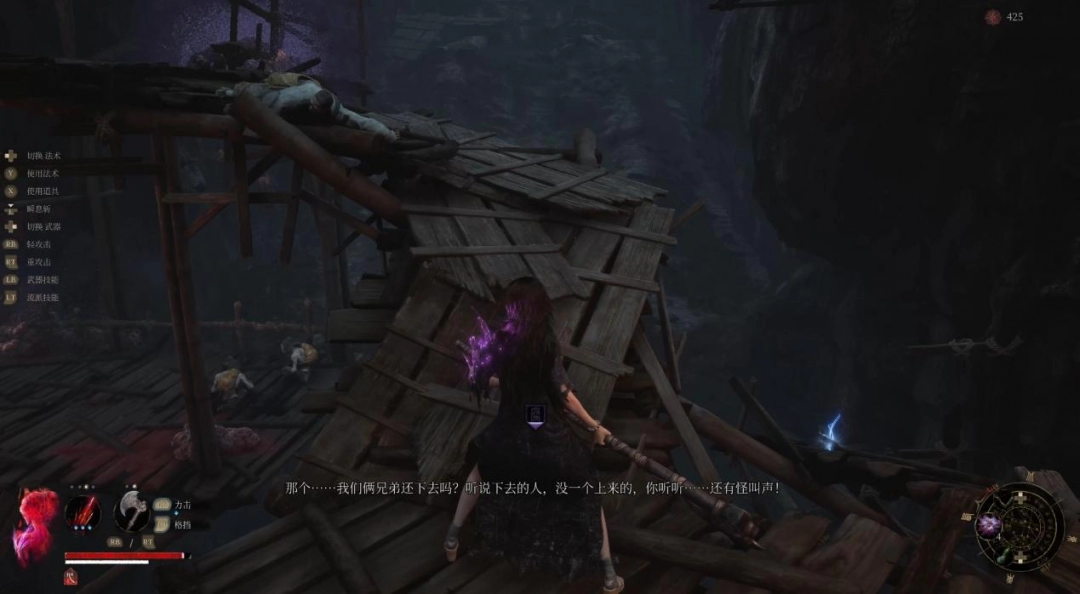
This standard and mature map design was the key reason I praised its map layout in the previous trial. With the foundation of this mature design, being able to return from the "Tang Wang Xinggong" at the end of the chapter to the initial "Shu Wang Ci" felt like a "surprise" that was logically expected.
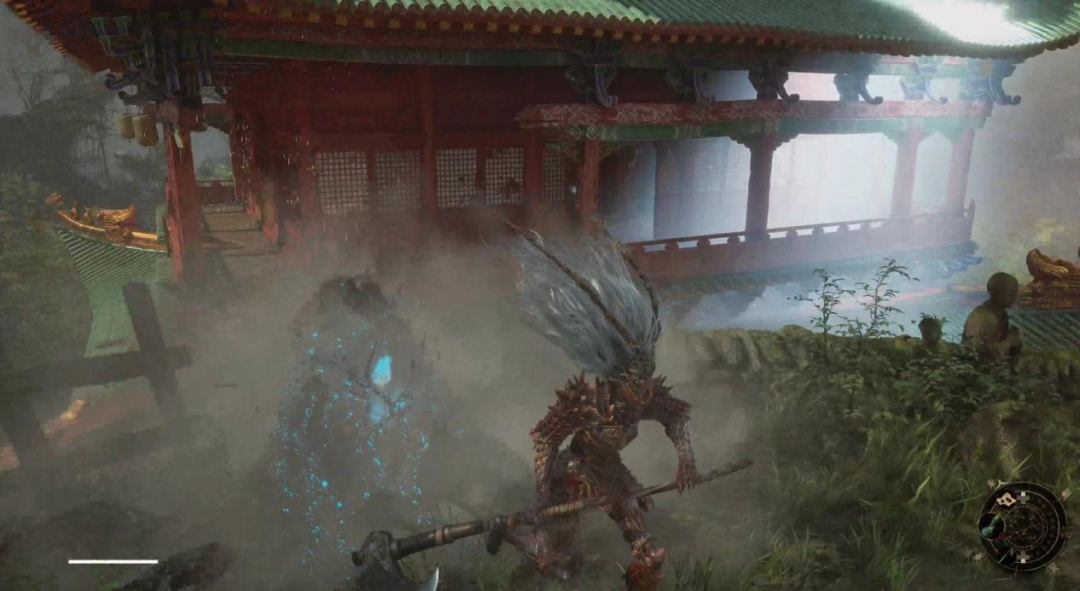
Shortcut from "Tang Wang Xinggong" back to "Shu Wang Ci"
And in this trial, Leenzee's maturity in map design once again exceeded my expectations. The Chapter 1 map they provided is not just a "standard and proper" "classic Souls-like map," but one that aims to do something more on top of that, mainly reflected in the map layout.
The map of Chapter 1 in Wuchang: Fallen Feathers has a fairly clear main path, but secretly features "sequence-breaking" route designs. On the way from "Foyuan Town" to the Panda Bamboo Shoot exchange spot, there is a fork in the road ending in a large fire and an item. Following normal logic, this item is the exploration reward for this fork, and players can turn back after picking it up. However, if players are willing to play a "brave man's game," stacking fire resistance and preparing corresponding potions allows them to tough it out through the fire.

Crossing this fire wall allows players to go directly from "Foyuan Town" to "Hui Liu Tan" (Defiled Willow Beach). This means players can skip the two bosses "Yuhua Jisi" (Feathered Priestess) and "Da You Yan" (Giant Centipede), defeat "Fu Hun Mu" (Soul-Binding Wood), and arrive at "Tang Wang Xinggong." If players are familiar with this flow, they will realize that challenging the Chapter 1 final boss "Hong Lan" (Red Mist) does not require any items from the skipped section, indicating this is a designated "speedrun route."

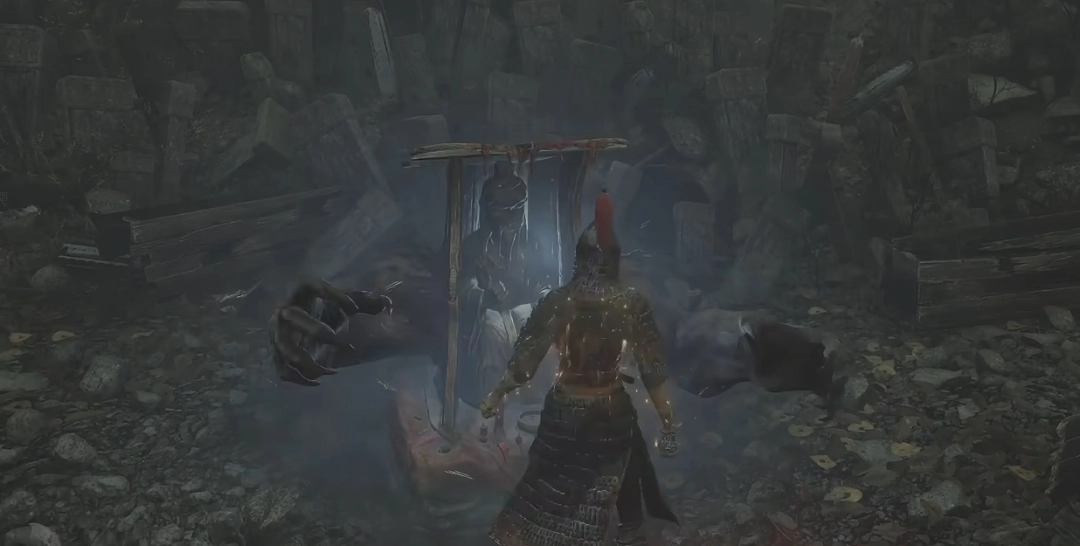
Passing through the fire wall leads you to this "Bonfire Monster."
Additionally, heading back from the "Shu Wang Ci" (Shu King's Shrine), players can find an "invisible bridge" in "Foyuan Town." Crossing this "invisible bridge" leads to the area where the hidden boss "Lu Hongliu" is located. This is the route most players choose to challenge "Lu Hongliu."
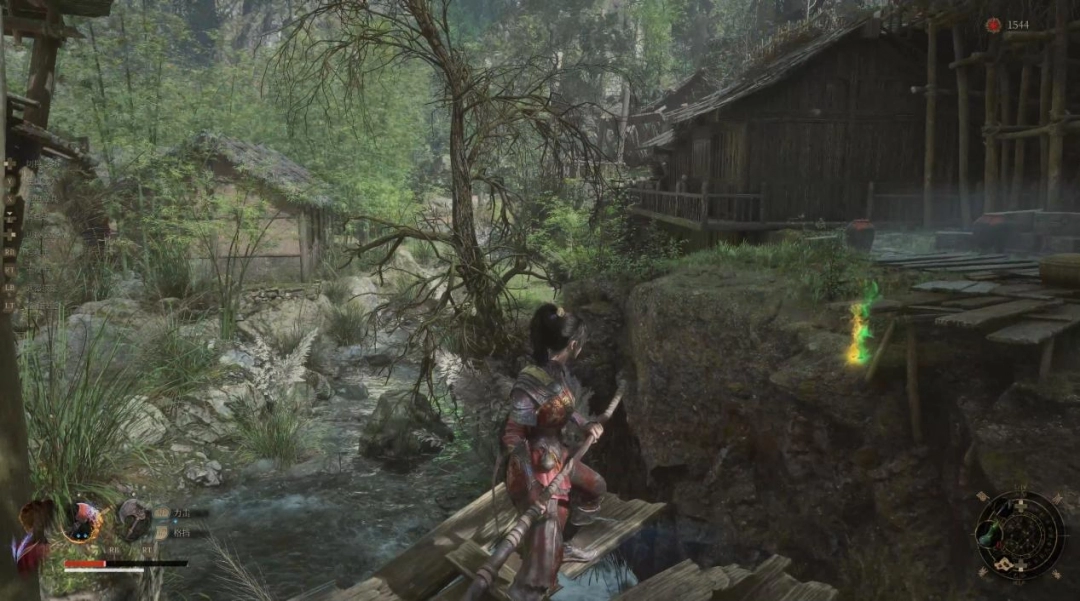
Invisible bridge; the light spots on the bridge are hints.
However, I wasn't aware of this during my trial. As my playtime was nearing its end, I realized I hadn't found Lu Hongliu yet. While checking for missed content, I accidentally discovered that starting from the "Tang Wang Xinggong" (Tang Prince's Palace), players could also reach Lu Hongliu's boss arena via a route that skips the exploration area before the boss.
This means that the "Lu Hongliu" boss arena is actually another route connecting the "Shu Wang Ci" (Shu King's Shrine) and the "Tang Wang Xinggong" (Tang Prince's Palace). Players can challenge "Lu Hongliu" starting from either end. From this discovery, I saw some deliberately designed flow planning in Wuchang: Fallen Feathers.
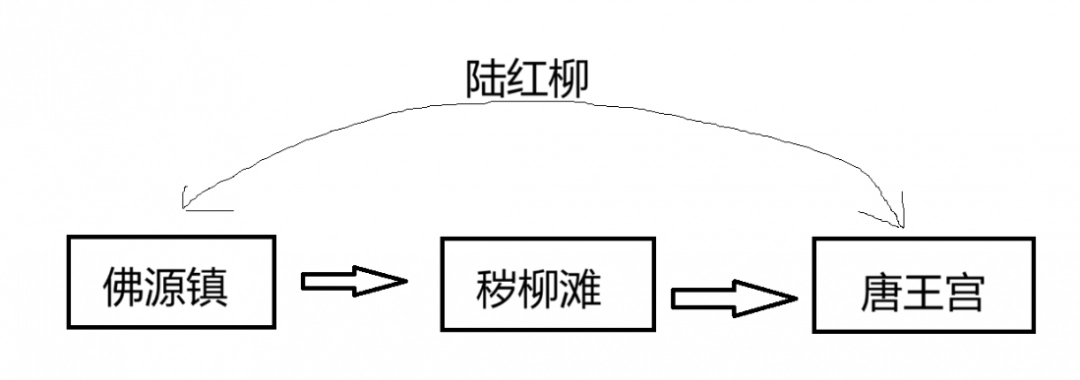
If players start from "Foyuan Town" and challenge "Lu Hongliu" directly, they must pass through an exploration area, making the battle relatively risky. At this stage, the player's level might make fighting "Lu Hongliu" quite difficult. However, if players clear this route, they can obtain an axe that performs strongly in the early game, which helps with subsequent progress.
However, if players challenge "Lu Hongliu" starting from the "Tang Wang Xinggong" (Tang Prince's Palace), skipping the previous exploration area makes the journey much easier. Moreover, if players follow the normal map progression order and explore carefully, they will have an accessory that resists roar abnormalities. This accessory can directly turn one of "Lu Hongliu's" control skills into a "punishable mistake." This accessory is originally placed in the underground palace to help players deal with shrieking insects and certain moves of the boss "Da You Yan" (Giant Centipede).
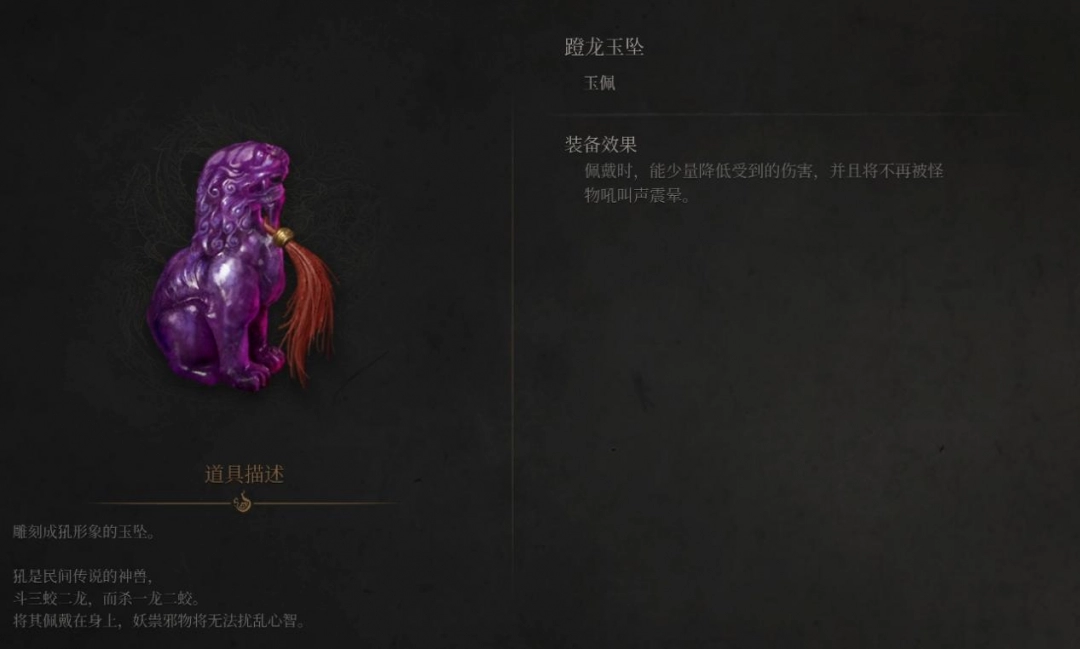
The difference in combat difficulty brought by different route choices was clearly carefully designed by Leenzee. Challenging early on allows players to receive the "Brave Man's Reward" for a better start, while returning to fight later grants "specialized items" against the boss.
This difference in experience reflects Leenzee's higher level of map layout capability. They not only achieved connectivity of "large and small loops" within a single scene but also designed various "hidden paths" between different areas. Furthermore, through item placement and boss mechanic design, they transformed "exploration rewards" from pure "treasure hunting fun" into tangible aids for game progression in a very intuitive way.
Playing the first chapter of Wuchang: Fallen Feathers again is more enjoyable due to its superior map layout and guidance capabilities. They didn't just sculpt the map into an "industrial wonder"; instead, while creating the structure, they sincerely ensured these inherently charming maps offered more gameplay interactions and exploration feedback.
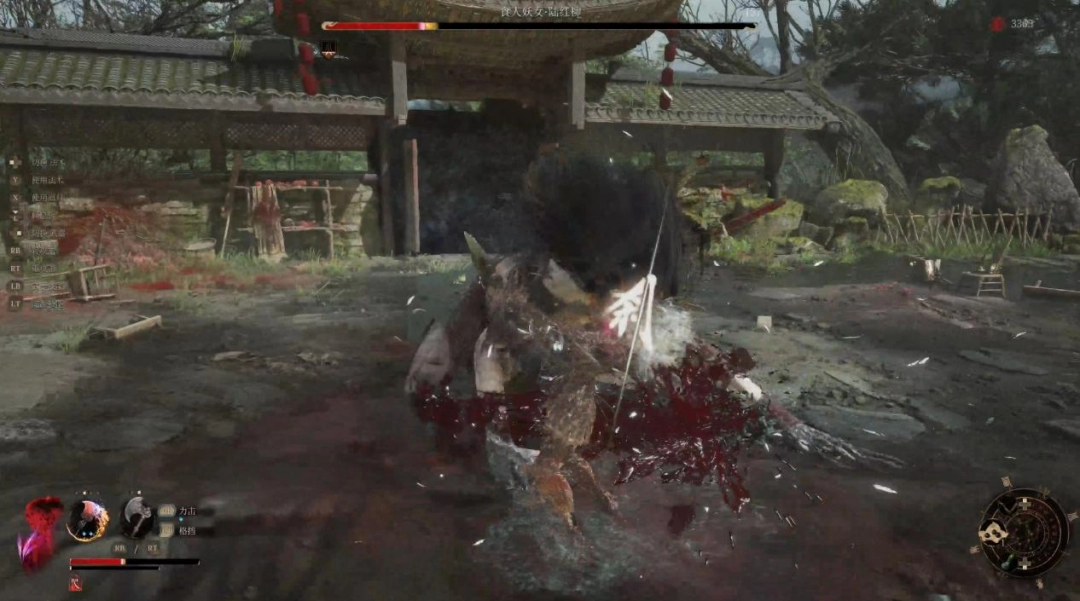
Even in map design, you can see signals encouraging players to explore and experiment. However, these signals are even stronger in the combat content.
Wuchang: Fallen Feathers is a game that offers very generous freedom in character build experimentation. This doesn't just mean the game allows "unlimited one-click stat resets"; it also means that the "reset" itself carries unusual "weight." In this game, players can seek changes in playstyle with virtually no burden.
In the previous preview report, I mentioned that Wuchang: Fallen Feathers integrates all upgrade items into a single "Talent Tree." Attribute growth, flask upgrades, weapon skills, and even weapon enhancements are all performed by spending talent points.
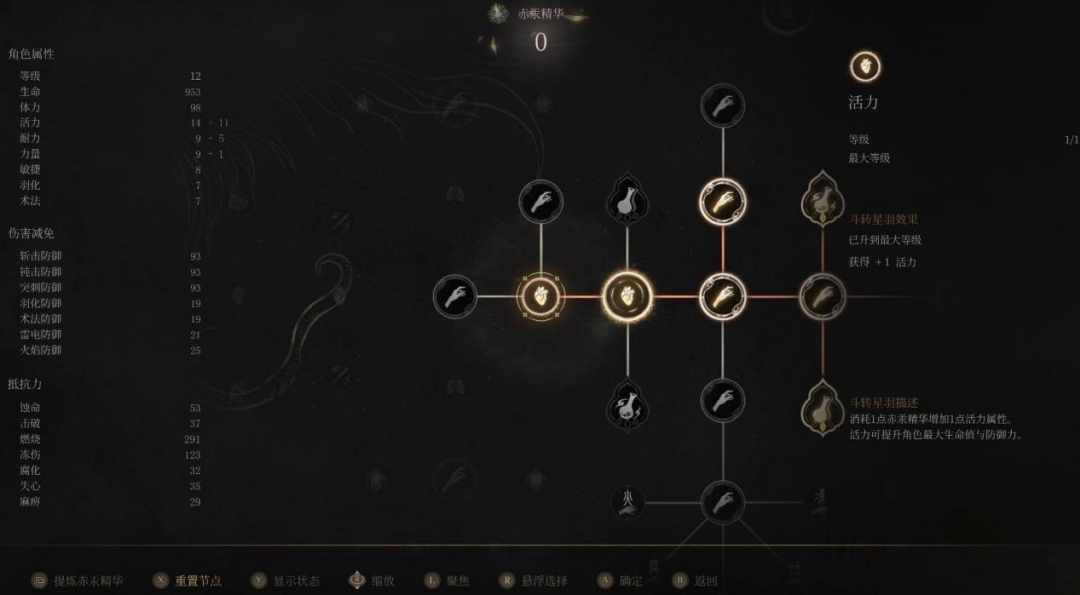
During this trial, I found that this system offers convenience beyond the understanding of veteran "Souls-like" players. It not only resets investments in attribute selection and weapon skills but also resets investments in flask growth and weapon enhancement.
In previous "Soulslike" games, trying new weapons involved facing limitations from attribute points and proficiency, but weapon enhancement levels were also a barrier, and a harder one to overcome since enhancement materials are often limited. Common solutions include opening up acquisition routes for these materials, either by generously providing them during progression or allowing players to purchase unlimited enhancement materials after a certain stage.
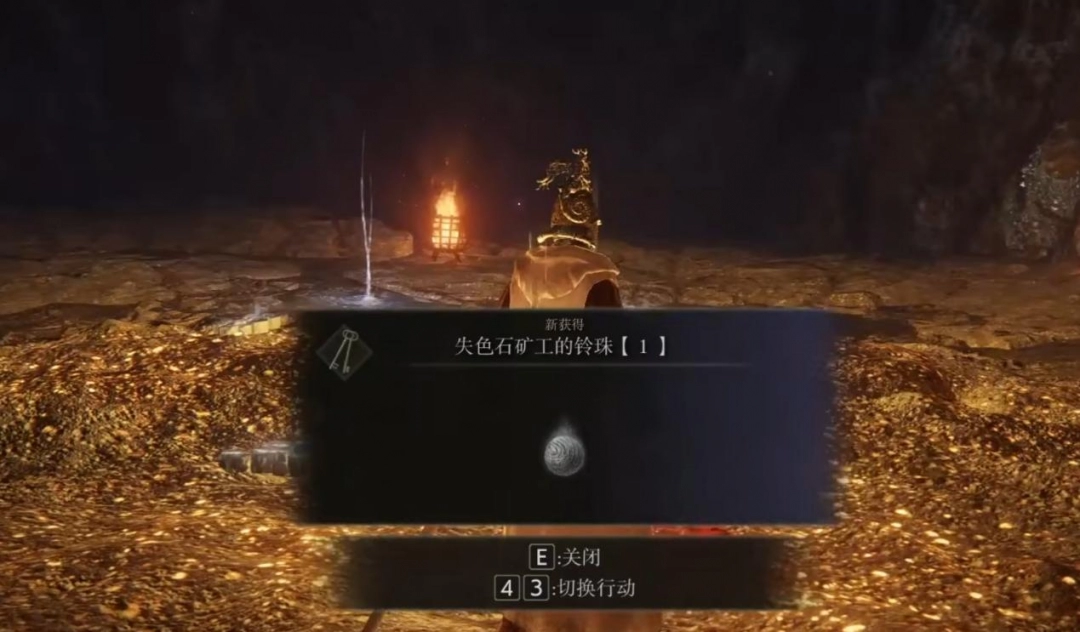
For example, the "Bell Bearings" obtainable in mineshafts in Elden Ring.
But I prefer Wuchang: Fallen Feathers' approach: when you want to switch weapons, it resets the talent tree and refunds weapon materials as well. This scheme better fits the integrated character growth design of Wuchang: Fallen Feathers, establishing a solid "logistical foundation" for the game's complex combat system.
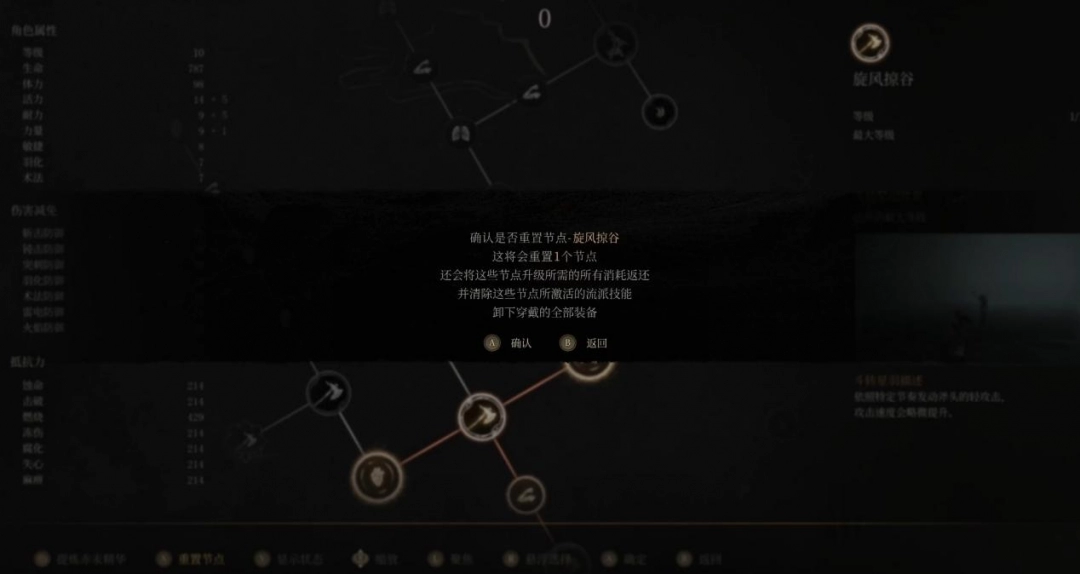
When you truly delve into this game's combat system, you'll realize that this convenience is not just a gesture of goodwill from the developers, but a necessary feature for gameplay.
The most obvious impression of the game's combat system from this trial is that it is far more complex and interesting than imagined. Approaching it with the mindset of a veteran "Soulslike" player will likely result in getting beaten badly.
On the offensive side, you have light attacks, heavy attacks, charged heavy attacks, weapon skills, style skills, spells, and Shunxi Slashes. On the defensive side, there's positioning, dodging, blocking, parrying, and clashing blades. The number of decisions a player faces in a single combat round is enough to make one's head spin, and the combinations formed by linking these choices are endless. Mastering Wuchang: Fallen Feathers' combat system has a much higher learning cost than typical "Soulslike" games, which is one of the thresholds all players will face upon release.
I recommend treating it as a smaller-scale Nioh 2.
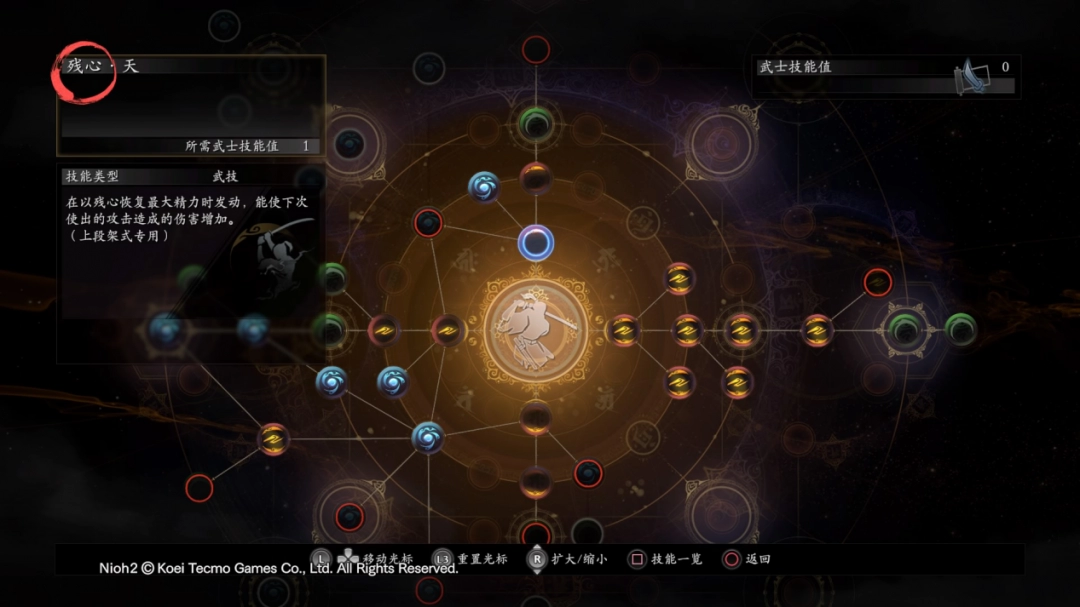
Nioh 2 Skill Tree
However, after becoming familiar with the game, you'll find that beneath these complex combat choices, the underlying combat interaction logic remains "resource management." Just as Nioh 2 centers its entire combat system around "Stamina" management, all important combat interactions in this game are linked to the "Feather" system. Wuchang: Fallen Feathers does have a "Stamina Bar," but the cyclical importance of "Feathers" far exceeds that of Stamina. It represents the release of key abilities like spells and combat arts, and signifies who holds the initiative in a combat round.
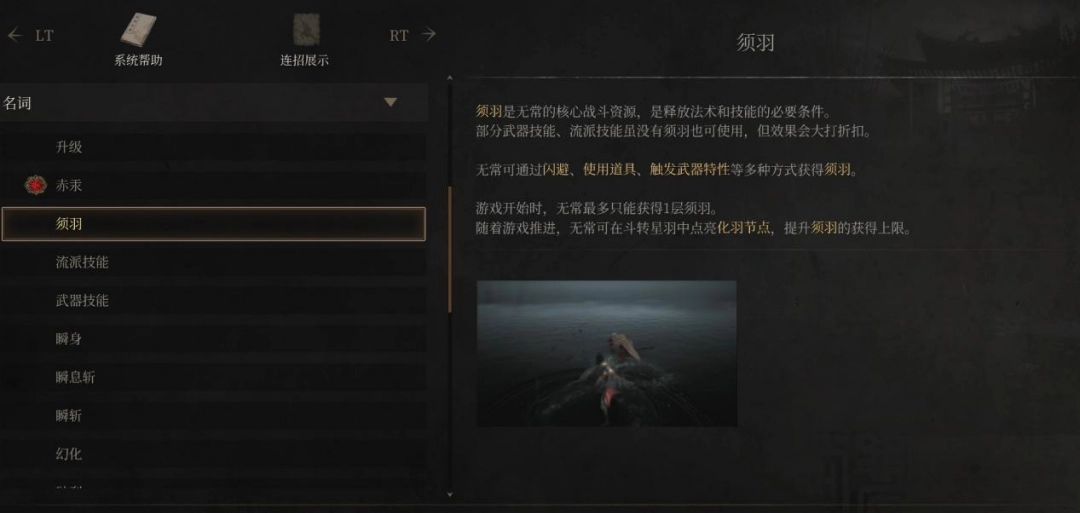
This is not a system that is easy to design well. Like the previously popular Infinity Strash, its combat system design was basically just "adequate." But Wuchang: Fallen Feathers shows a maturity and solidity in this aspect that is unlike a studio's debut title.
The five weapons in the game exhibit vastly different performances in terms of weapon animations, functions, mechanisms, and combat styles.
Based on impressions from this trial, the Poleaxe is a fairly rigid and powerful weapon, focusing on suppression with wide swings; the Spear is an agile "anti-personnel tool" with strong counter-attack capabilities; Dual Blades possess massive GP points, resembling a weapon straight out of the Monster Hunter series; and the Long Blade is a well-balanced, high-quality choice in all aspects.
And the One-Handed Sword is interesting; it's essentially a "staff." Its animation set is more performative than practical, with its primary use being holding it to allow natural "Feather" regeneration.

One important reason why these weapons exhibit such huge differences is that they satisfy the game's underlying combat logic in different ways. Intuitively, their differences stem not only from different animation sets but also from how they acquire "Feathers."
Even for common traits like "recovering Feathers on hit," weapons differ. For example, the Long Blade gains "Feathers" on the second and fifth light attacks, while the Poleaxe gains "Feathers" on the fourth light attack.
A simple truth is that these weapons have different attack speeds and animations. Even with the same number of attacks, the time required varies, meaning each weapon already has a different attack rhythm.
These light attacks that generate "Feathers" become key nodes in weapon animations, giving each weapon a new attack loop and further widening the rhythmic differences between weapons. One of the most intuitive changes is that long blade users will quickly habituate to a combo loop consisting of only the first two light attacks.
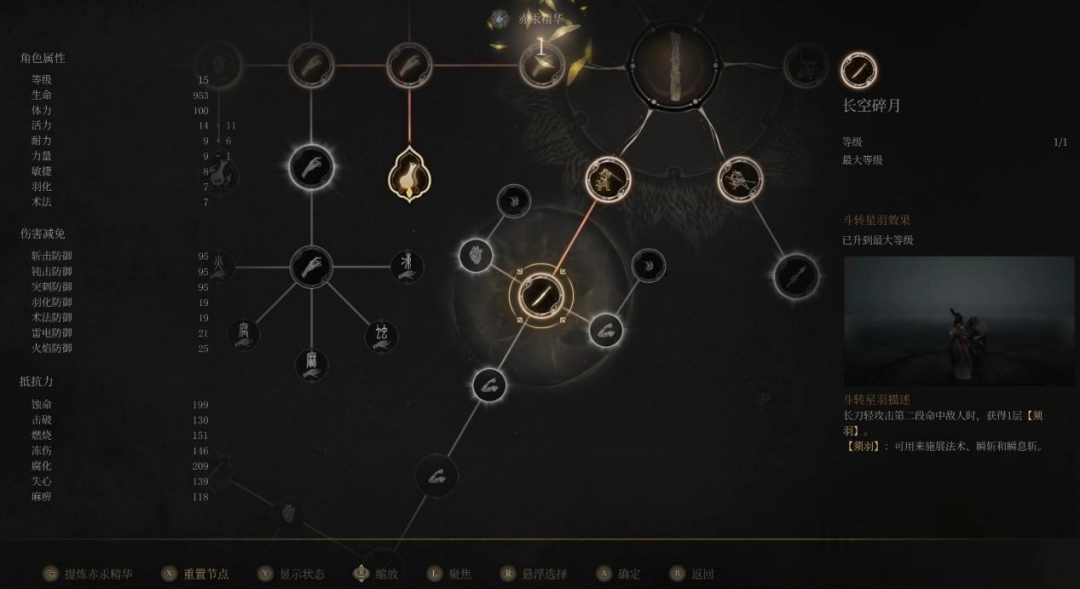
This difference in attack rhythm is the underlying logic of weapon usage differences. Other sources of variation come from the weapons' own traits and the use of spells and combat arts.
Differences in weapon traits are easy to understand. For instance, dual blades are a weapon with considerable "Guard Points" (GP) built into their attack animations. Therefore, their usage emphasizes "counter-attacking," using GP generated during attacks to cover defensive needs, resulting in a continuous, flowing combat style for dual blades.
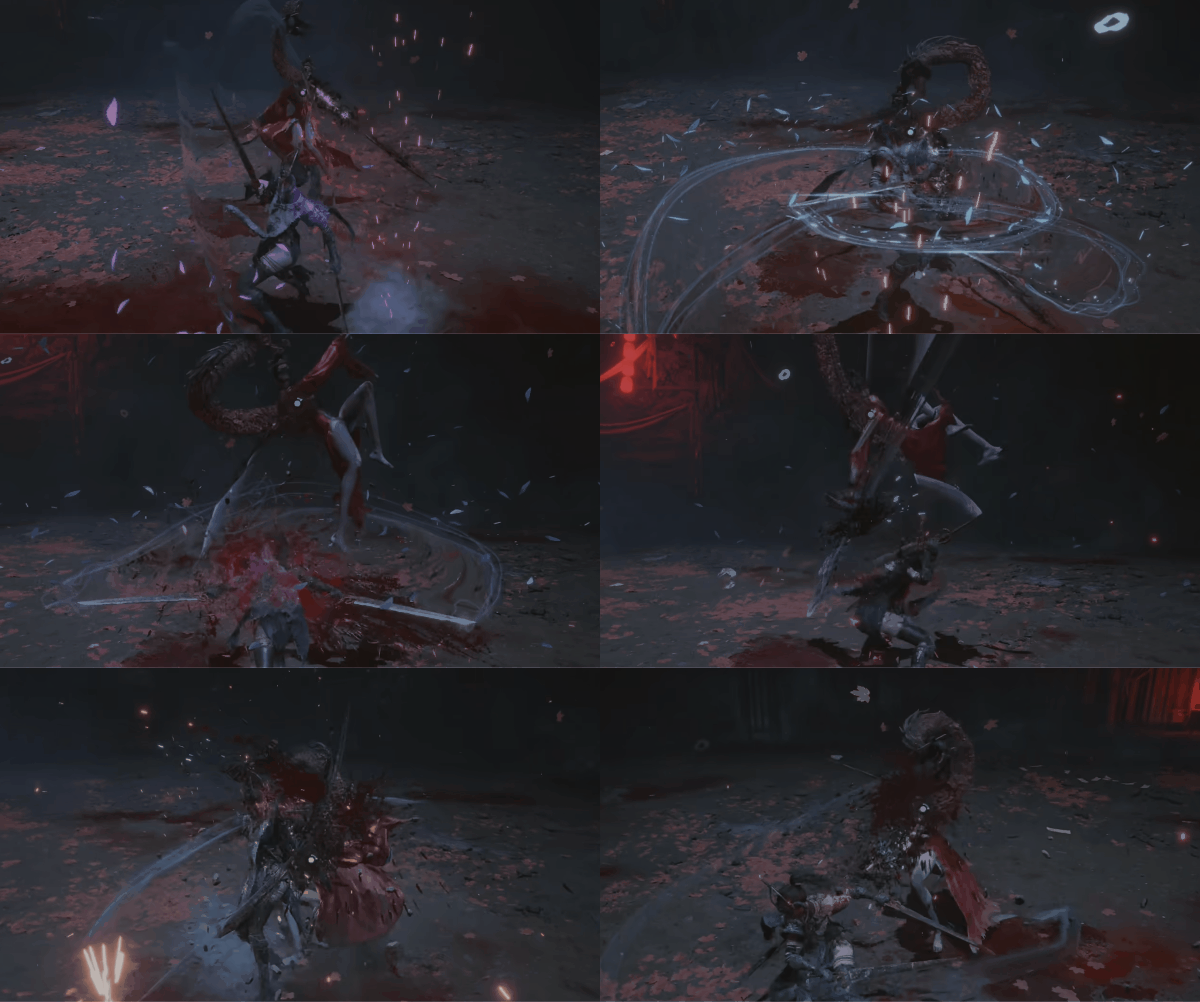
Recent official PVs have featured concentrated demonstrations of Dual Blade GP mechanics.
The use of spells and combat arts is even more interesting, as their presence adds significant variety to Wuchang: Fallen Feathers' combat system. When attacking, players can choose between spell attacks or normal attacks—a variation easily anticipated when a spell system is introduced. However, in this title, the impact of the skill system runs much deeper.
It can directly change the number of hits in a player's weapon combo. Based on current trial experiences, light attacks performed after casting spells or combat arts skip the first three hits and jump directly to the fourth hit in the corresponding animation set. Undoubtedly, this allows players to build completely different attack loops based on spells and combat arts. This change is somewhat similar to how "offsetting" alters move animations—not just in form, but in concept.
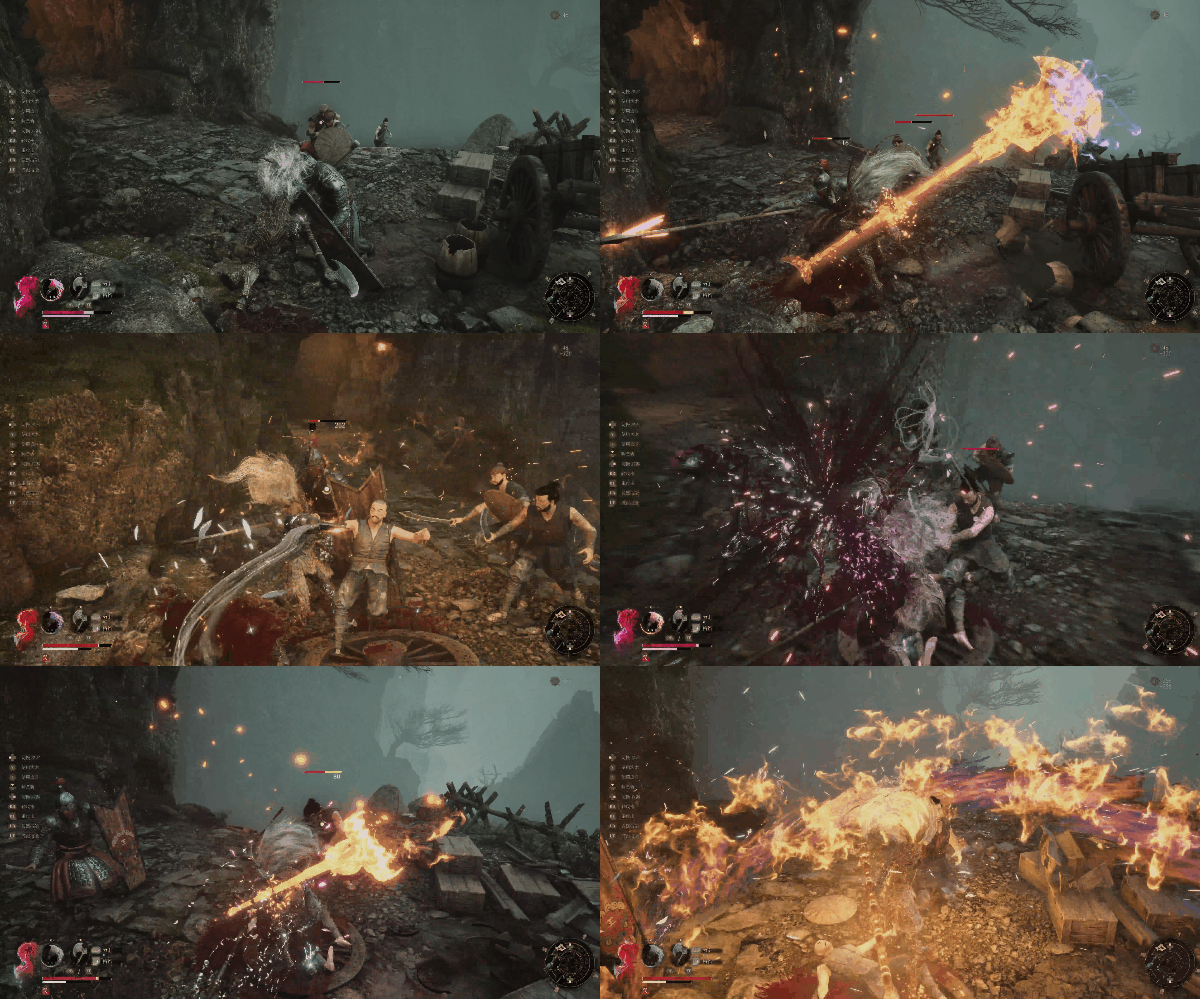
Here's the simplest example: In the early game, after defeating the boss Chi Ren Tou Tuo, players obtain a spell that swings a burning crescent shovel, consuming two "Feathers." At this point, if players unlock the talent that restores three "Feathers" on the fourth light attack with the Poleaxe, they can access one of the early-game "wheelchairs" (easy modes): swing the shovel, follow up with the Poleaxe's fourth light attack to regain feathers, then swing the shovel again, repeating this cycle. This combo features high damage, high super armor, high poise damage, high pressure, and wide coverage, performing excellently in both map clearing and boss fights.
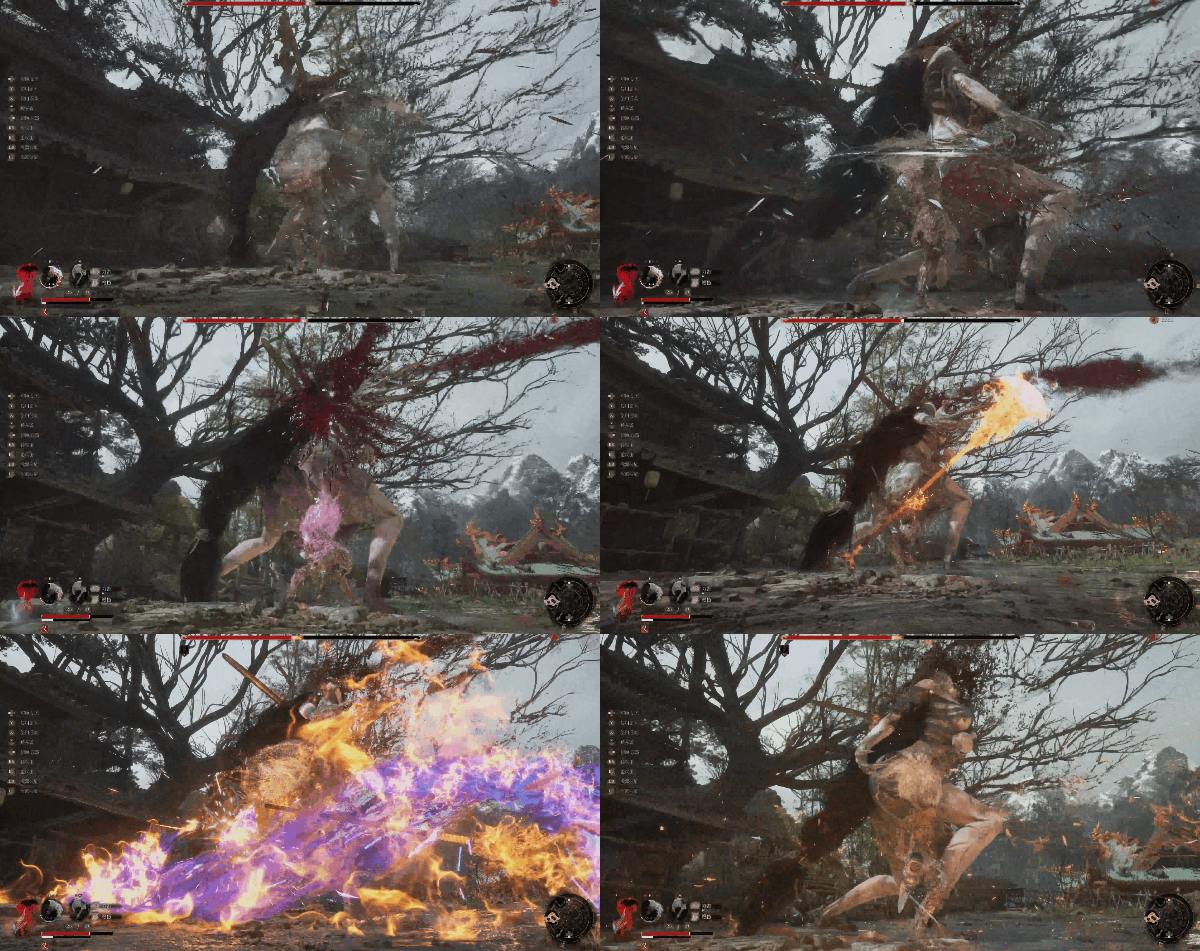
Since many spells or combat arts in this game have excellent ability to cancel attack recovery frames, the integration of spells and combat arts into player combat combos creates a smooth "1+1>2" effect.
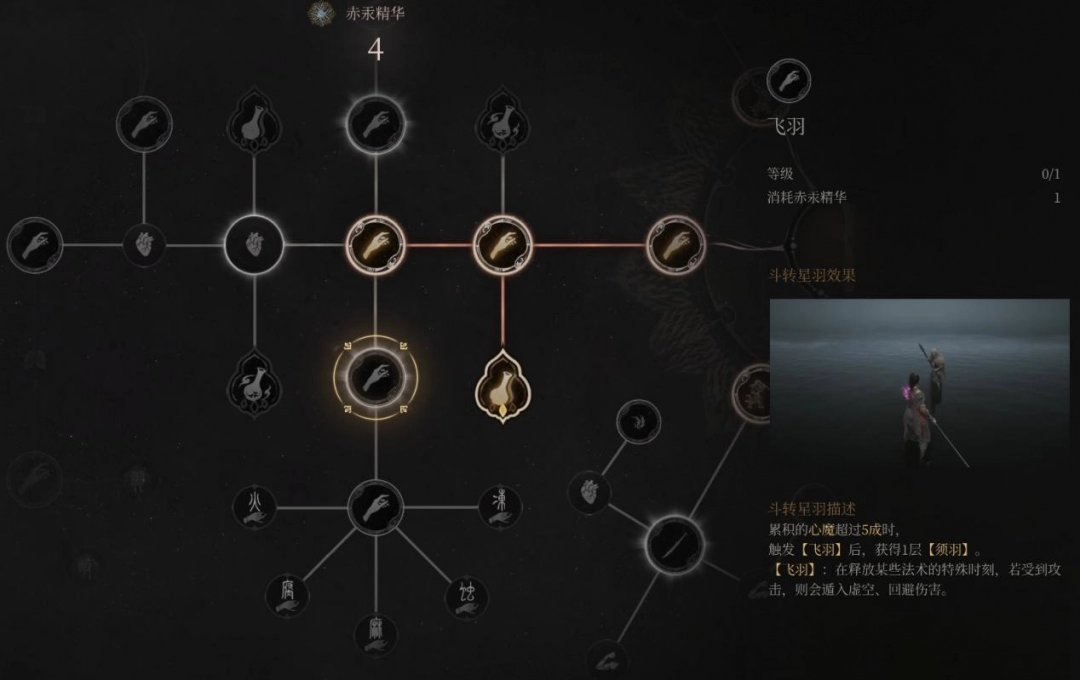
Meanwhile, Wuchang: Fallen Feathers adds GP judgments to certain spells, similar to the effect of the "Mist Step" ash of war in Elden Ring. If players unlock the "Flying Feather" effect in the talent tree, they can trigger inherent startup GP for some spells. The addition of this setting undoubtedly makes certain spells as important as dodging or blocking when dealing with enemy attacks.
All of this culminates in the Q&A at the beginning of the article. The systemic niche Wuchang: Fallen Feathers assigns to spells is far higher than in many "Soulslike" games. This makes it unlikely for disputes between "mages" and "brute force" players to arise—incorporating "spells" into combat to look cool and fight smoothly is as natural as breathing in this game.
Due to the increased importance of spells, the choices for weapon combos in this game are exceptionally open. Specific segments of light attacks, heavy attacks, spells, and weapon skills are all broken down into independent choices. Two actions are merely the smallest unit for forming combos in the game; longer sequences composed according to player preference will obviously transform into visually pleasing combat performance scenes in the full game.
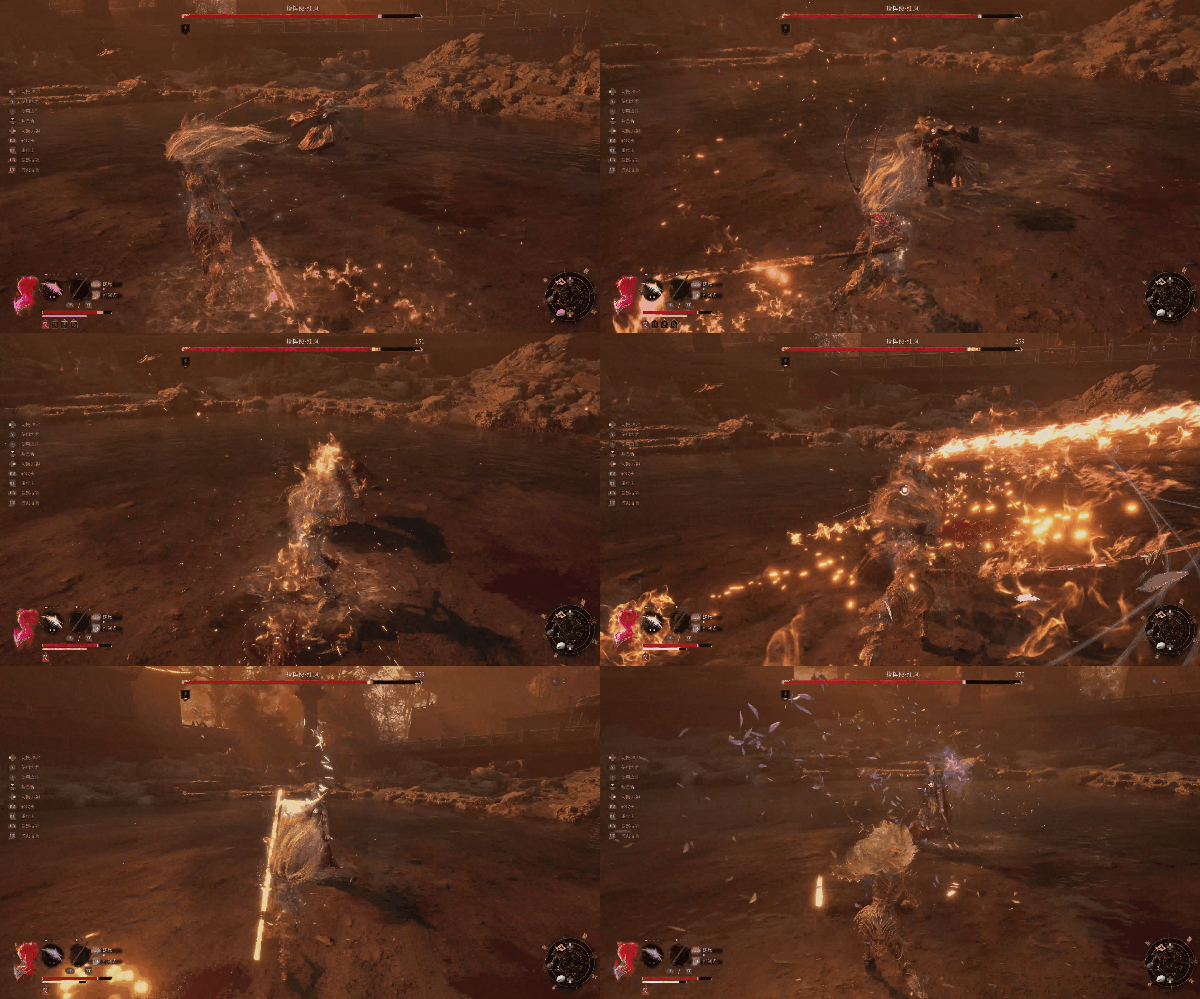
It looks a bit ugly, please don't mind.
This experience isn't unique to Wuchang: Fallen Feathers. The long history of action games has produced many brilliant peaks in the genre. Even within the ARPG field alone, Team NINJA's "Nioh" series or Stranger of Paradise: Final Fantasy Origin are "predecessors" that offer excellent similar experiences.
However, one advantage Wuchang: Fallen Feathers has as a latecomer is that it retains the "joy of button input" while simplifying the burden of "button inputs" to some extent. Taking controller experience as an example, none of the weapon combos in the game involve combination keys, nor do they heavily rely on "C-move" derivations (skill releases changed by the number and order of button inputs, common in ACT games). Each individual action requires only pressing the corresponding single button.
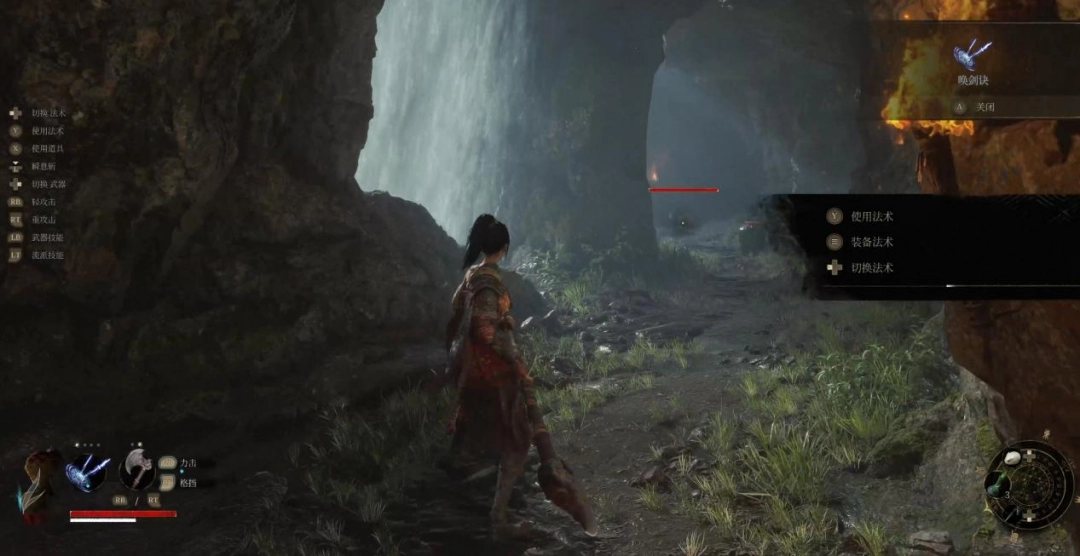
Although using single buttons for weapon combos might seem to "lower the skill ceiling," for this ARPG, the range of possible action combinations is already impressively vast. Therefore, when I realized this, the game's ability to reset all growth stats became particularly crucial—because Everythinggj mentioned above applies to just one weapon. Keep in mind that with attacks like "Shunxi Slash" that allow weapon switching, incorporating a second weapon into late-game combos is inevitable. Thus, familiarizing yourself with multiple weapons becomes essential.

To be fair, my new appreciation for the game's map layout quality and combat system depth was beyond my expectations for this trial. Like most players, I originally didn't have a clear purpose and just wanted to have fun. Not being able to properly check out the latter half of the game content during the last trial due to work constraints was a minor regret.
But unexpectedly, this trip to complete what I missed yielded rewards far beyond imagination. Wuchang: Fallen Feathers raised my expectations for the title in a very "classic" way. It didn't win through stylization or fill desire gaps with "quantity over quality," but spoke solidly through high-completion gameplay.
It is not without flaws. In my opinion, the game's aesthetic expression is actually inferior to its gameplay design. Although the characters' costumes have received praise from many players, I find them somewhat abrupt. Unfortunately, I couldn't catch "Xiaqi Yinggao" on site; otherwise, I would have definitely asked him why he likes designing "lingerie" so much.
Additionally, the game has a steep learning curve in the early stages, but the corresponding tutorial design is insufficient. Many aspects, such as building weapon combos and using the Heart Demon system, rely heavily on players' own research. Without a mature player community, the initial experience for many players would likely be extremely frustrating.
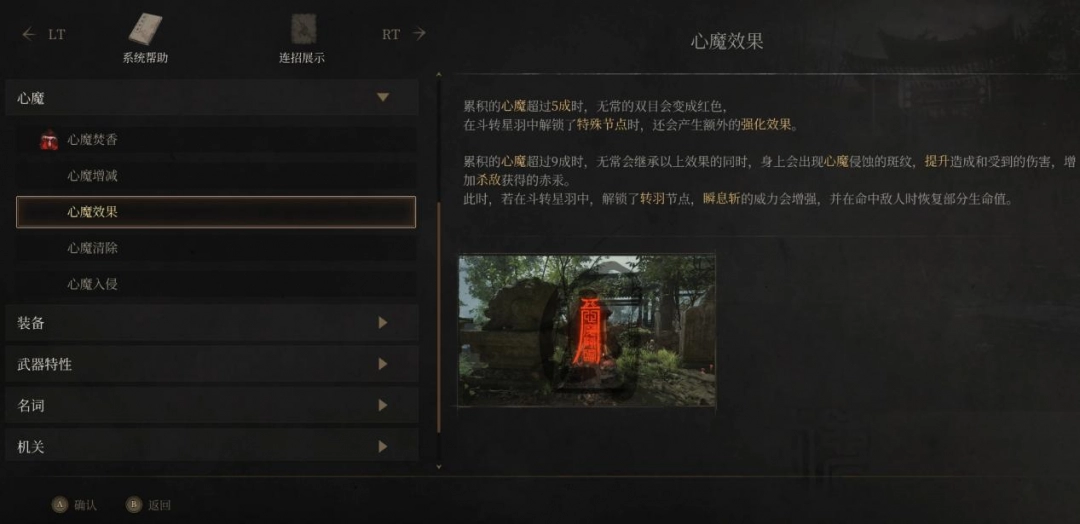
But even so, for many veteran "Souls-like" players, this is still an unprecedented delicacy. We've never seen this ingredient in our hometown cuisine before.
After this trial ended, I visited the public player area and chatted with a few ordinary players who also participated in the trial.
The conversation wasn't too serious. Since Leenzee is very persistent in retaining the "Souls-like malice" in the game, a significant part of our discussion involved exchanging famous quotes/memes, such as—
"When Xiaqi Yinggao was young, he went home and got swept by a branch into a roadside ditch."
"When Xiaqi Yinggao was young, he fell down a slope and got sprayed with a water gun so hard he couldn't get up."
What impressed me most was one player who said to me in a rather disdainful tone—
"Xiaqi Yinggao's ambush skills aren't great. Aside from that bonfire monster, he basically never ambushed me successfully. I suggest he go study at Sen's Fortress Amusement Park."
I agree with this.