

Going round and round, swaying back and forth, lying in bed, you surely haven't realized that days have quickly turned to late April. Looking back on this month, it seems nothing major happened, and then we reached the "end." However, this world has seven or eight billion people; our peace and lack of incident do not mean others are the same. For example, our Asian neighbor, Thailand—they have just experienced a "catastrophe."
You might think "catastrophe" is a bit exaggerated, seeing no news of natural disasters or man-made calamities, right? But honestly, if you could witness the scene of parting from loved ones, feces and urine everywhere, and people fainting on the spot, you would definitely feel that this word is not an exaggeration. Moreover, this catastrophe is a fixed routine in Thailand, occurring once a year.
To put it bluntly, April is the month when Thailand begins conscription.

Thailand's recruitment process doesn't involve complex procedures or layers of verification. Within a certain area, a lottery ceremony is set up. All able-bodied young men participate; if you don't draw a lot, you're fine, but if you do, wait for the truck to take you to the camp.
But don't imagine this matter to be too simple. It’s not that everyone lazily queues up because the annual process is too familiar, just to grab a ticket at the end. Remember our premise—all "able-bodied young men." In other words, no matter your profession or what you are doing, even if you are kneeling in a temple praying to the Four-Faced Buddha, the moment a Thai soldier appears, you must put aside the Buddha and give the soldier face by going to draw lots.
However, the nightmare accompanies this master right from this moment.
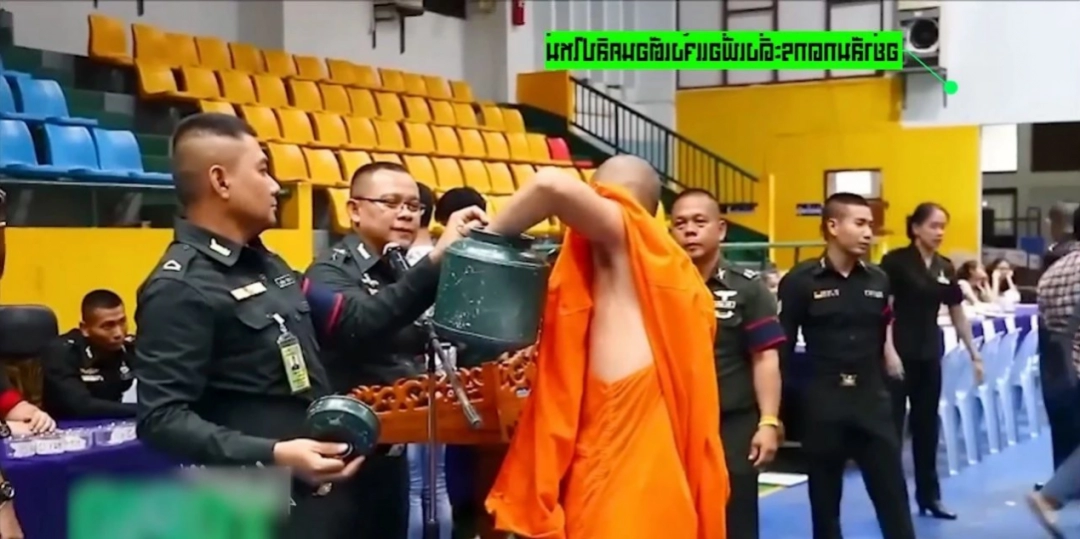
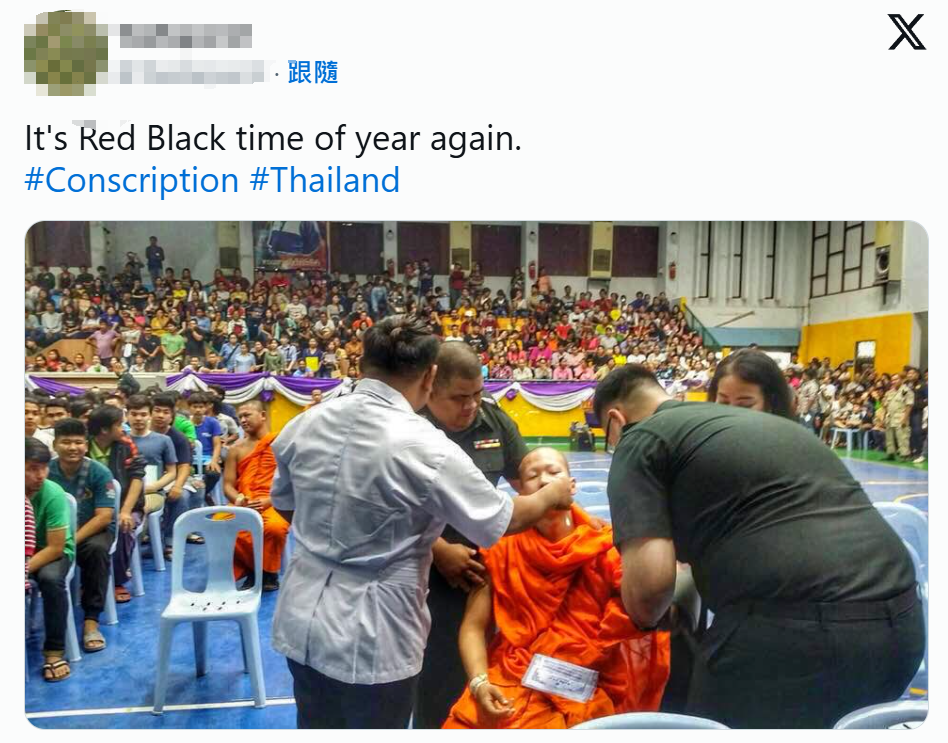
As long as the master draws a black lot, he can return to the Buddhist order to continue serving the Buddha, chanting sutras and teaching laypeople. The Thai government even reimburses his taxi fare. But if he draws a red lot—sorry, even if the Four-Faced Buddha descends with divine power now, the master must carry a rifle into the barracks to practice marching.
Unfortunately, the various Buddhas of Thailand clearly did not wish for this master to continue his service; otherwise, it would be hard to explain why the master secretly drew twice but failed to get a single black lot. When the staff member overseeing the draw officially announced that the master had drawn a red lot, the master's limbs went limp, and he fainted on the spot. No matter how people around him pushed or shoved, he remained unresponsive. If those around weren't accustomed to such scenes, they might have suspected that the master had attained enlightenment on the spot and passed away into Nirvana.

If even a master who meditates and practices Zen daily nearly passes away upon drawing a red lot, then ordinary children from common families need not be mentioned. Drawing a red lot is like being struck by lightning; they collapse unconscious, unresponsive even when Thai soldiers smear essential balm on their faces. More extreme cases may even leak yellowish fluid from below, with a fishy odor. Yet even so, the individual remains motionless, as if their soul has already departed for the Western Pure Land, leaving only a numb body behind.
However, none of this helps; the result for those who draw a lot does not change. Those who draw a lot in the morning must report to the barracks in the afternoon, and by the next day, they begin enduring the "warmth" of military life.

In search of that sliver of possibility, some people actively pose and display strange bodily behaviors to the Thai soldiers in front of them, hoping to escape the lottery ceremony. Unfortunately, the lottery ceremony is paramount; no one dares to cheat in front of so many people. Even if this guy swings his arms faster than a propeller, he will ultimately draw a red lot and collapse on the ground.

The annual conscription event torments more than just the young men drawing lots. Upon learning that their son unfortunately drew a red lot and must offer his heart to the Thai King, the "elderly woman" beside him, praying with hands clasped for a miracle, also faints on the spot, losing consciousness. No matter how people pinch her philtrum or rub the tiger's mouth area, she cannot be revived—this shows the impact of conscription on a family.

Besides these seemingly normal "young men," there are also many young women and housewives personally present for the lottery draw. Of course, this is not an indiscriminate conscription by the Thai government, nor are they accompanying family members—remember, this is Thailand, the "Land of Ladyboys."
That's right. Those who look like sweet women are actually men at their root. Being men, they cannot escape and must obediently come to participate in the conscription lottery.

However, some rejoice while others sorrow. Although most people draw red lots and are forced to accept their fate, there will always be a few lucky ones who draw black lots. Some become so excited that they strip off their outer clothes in front of everyone, leaving only vests and underwear, and frantically shake their buttocks at the lottery staff, as if offering a "gratitude bonus."

On another note, military service in Thailand starts at age 21 and ends at 30. A lottery draw is held every year. Even if you are incredibly lucky and don't draw a lot this year, it doesn't mean your luck will hold next year.

Speaking of which, since military service in Thailand is so terrifying, is there a way to avoid it directly? Actually, there is. After all, Thailand is a country with a "ladyboy culture," and the state does not conscript women. This means that as long as a male becomes a ladyboy and completely removes all male organs, becoming both psychologically and physiologically female, they can be exempt from military service. Whether this price is worth paying is left for the individual to decide.
At the very least, it is obvious that for some people, they would rather have all male organs removed and obtain a "female examination certificate" from the military doctor than serve in the army.

Holding a female certificate
Since it is difficult to find a good way to avoid it, why not actively embrace it and bravely enjoy this military service? Honestly, this is really not an "activity" that average people can withstand. Every Thai youth has a deep fear of it, so much so that students would rather face the punishment of imprisonment than publicly oppose the government and resist conscription.

First, there is the clichéd issue of barracks bullying.
If you often watch movies from countries like South Korea and the United States, you should understand that in the barracks, a place smaller than a fist, veteran bullying of recruits is very common—the line "Fourth-year students are your eternal big brothers" is no joke.

Thailand is no exception. On your first day in the barracks, you can directly participate in the "Electric Baton Countryside Tour." The veteran brothers, who have been waiting for you in the camp for a year, have their new energy "long stick-shaped tools" ready. On the first night after meeting them, you will most likely experience services where every swing has force, every flick has angle, and every hit is accurate. If the veteran brother is in a good mood that night, there might even be promotions like "ten draws upon arrival, get one free after ten."
Perhaps while playing a certain anime-style game outside the barracks, you have been crying because you didn't have enough pulls to obtain "Shan Li Ling Huo" (Mountain Spirit). Now, however many pulls you want, the veteran brothers will give you.
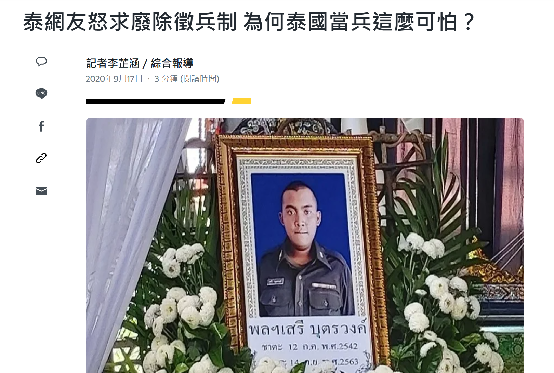
Alright, let's speak seriously: according to news from "massive individual cases," incidents of abuse against new recruits in Thai barracks happen almost as regularly as the annual conscription news—it happens every year, is condemned every year, and continues every year. If you are incredibly lucky, you might get the good job of washing veterans' underwear, socks, and clothes, or making beds. If you are unlucky, you will likely be a regular customer of the "electric baton countryside tour." If you are even unluckier, you might have to pick up soap for veterans, and not just for one person—they probably didn't expect that the red ticket stub would lead them not to the barracks, but to a brothel.
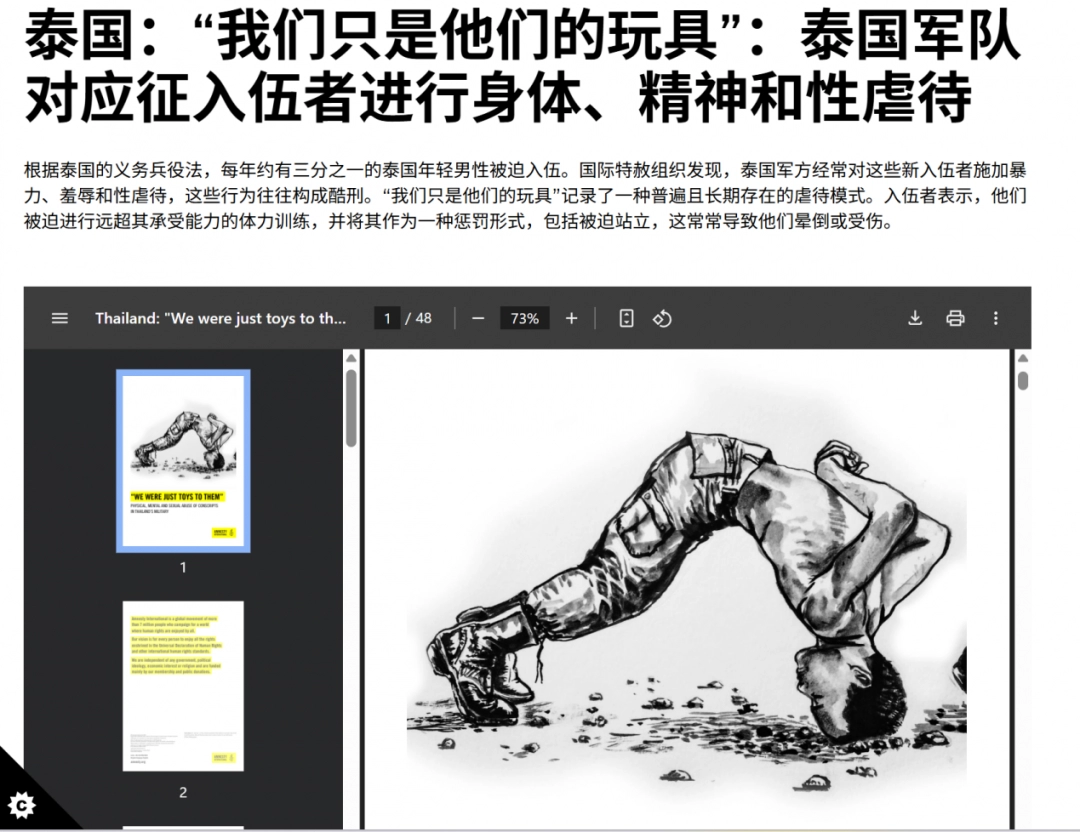
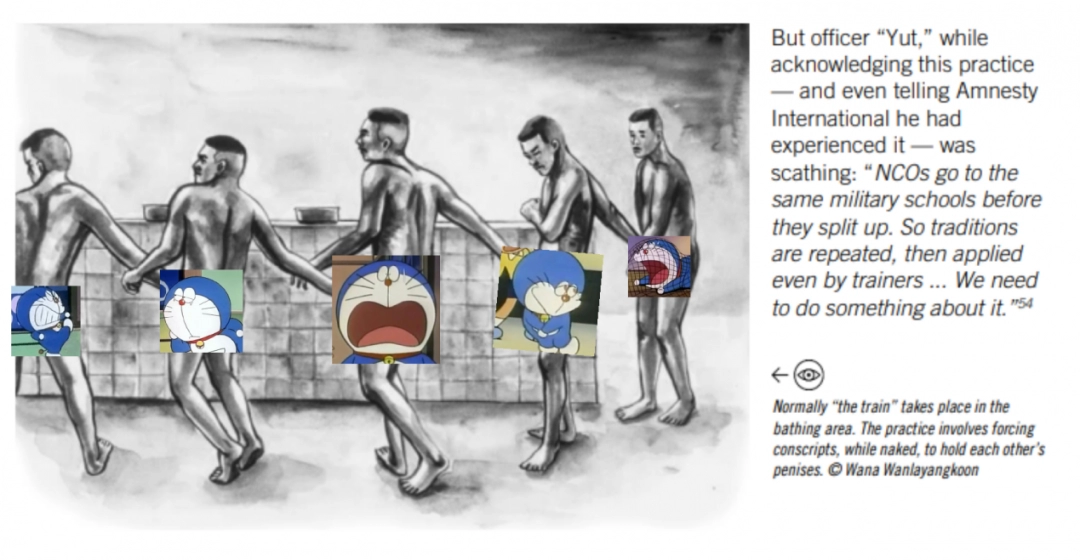
And that's not all. If new recruits encounter a veteran with many "clever ideas," they might occasionally make everyone demonstrate "riding the train."
To put it bluntly, it involves making all new recruits strip naked, with each person holding the genitals of the person behind them, forming a circle, and walking around continuously. Sometimes, if the veterans are in high spirits, this activity can even last all night.
Not only do you get beaten and scolded, but you also likely won't eat well in the barracks. When you first enter, you might get sporadic minced meat, chili sauce, stir-fried vegetables, and slightly hard rice. But after a while, you will find the rice has turned sour, the minced meat is gone, and even the chili sauce is withheld.
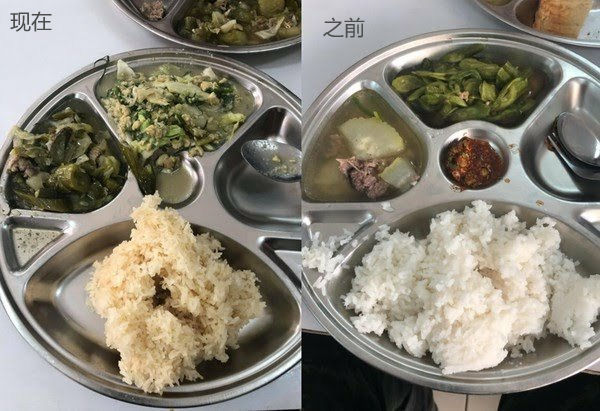
Even this isn't enough to feed everyone. Although it is cruel, it must be said: if you are not active in fighting for food, you won't even get to eat the sour rice.

Life in the barracks is so harsh, and when the time comes, there is no shortage of work to be done. Since Thailand is not a peaceful place, with frequent friction between nations, you, as a grunt, must shoulder your rifle and offer your heart to the Thai King.
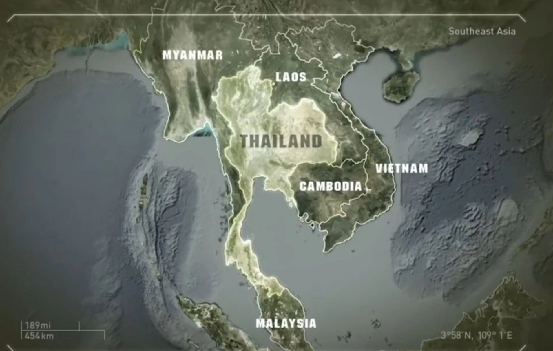
And don't forget, Thailand, Laos, and Myanmar are famous members of the "Golden Triangle." In this region, drugs, warlords, and conflicts may not occur every day, but outbreaks of conflict are extremely easy.
Of course, these clichéd reasons, worn out by countless repetitions, cannot summarize Everythinggj.
Let's be honest: conscription in Thailand may seem equal for all, where everyone must go in to "ride the train," but it is actually somewhat unfair. You would never guess that even this grand annual fixed event depends on "connections."
We all know that Thailand is a country with a fervent devotion to Buddhism. From the King down to ordinary citizens, every household must enshrine a statue of the Four-Faced Buddha. At the very least, they place a "Success Buddha" in their shrine to ensure their family remains free from mishaps throughout their lives. Therefore, some religious practitioners are actually exempt from military service—wait? This seems to conflict with the master who collapsed and wailed incessantly at the beginning of this article?
Of course not. Because religion is deeply ingrained in the nation, many poor families send their children to become monks. Serving as a basic novice monk, known in Thailand as "Phra."
The Buddhist personnel allowed exemption from military service by the Thai King must be prominent figures within the hierarchy. At the very least... you must have 15 to 20 years of experience, reaching the rank of "Phra Khanakriya" or higher. But for a poor "Phra," advancing further to become a "Phra Khru" already requires the personal appreciation of a "Phra Khanakriya" to qualify for this step—let alone directly becoming a "Phra Khanakriya"?
Of course, if your family has multiple religious practitioners who have already reached the level of "Phra Khanakriya" or higher, you can likely inherit this title and need not worry about military service.
Although Buddhism advocates equality for all sentient beings, above the self (Phra Khanakriya), there is indeed equality, because they do not need to serve. As for those below the self, you are on your own.
Secondly, there are prominent figures in society. For example, some celebrities have sufficient exposure and a certain social status. Although these are not enough to completely exempt them from military service, they can significantly reduce their service time.
Furthermore, these individuals have strong social influence, so veterans in the barracks dare not bully them. Therefore, celebrities basically stay comfortably in the barracks for half a year before retiring, conveniently earning a good reputation for supporting the national conscription system.

Therefore, military service has also become a publicity show for some celebrities. They release news of their participation in the lottery draw in advance, arrange for media reporters and fans to cheer for them at the ceremony site, and take a series of beautiful photos to highlight their composure.

Military service has become a game of house for the wealthy and powerful. They have countless legitimate ways to avoid participating, and when they must participate, they only undergo trivial training. In contrast, children from poor families must endure a nightmare every year starting at age 21. Entering the barracks is no different from a death sentence; besides getting beaten, they are prone to losing their lives.
At this moment, conscription in Thailand has become a naked ritual of atonement—Buddha can save anyone, but唯独 (only) not those who are "guilty." If a believer draws a red lot, it is highly likely that Buddha is unwilling to bless them. What can be done? One can only reflect on their own problems and then happily receive the luxury package of "two years of electric baton countryside massage."
As Michel Foucault stated: Power is not created, but seized and used. Clearly, those Thai youths unwilling to serve have had the power to control their own bodies seized from them; they can only choose to completely castrate themselves or unreservedly offer up their bodies.
I don't know if you remember, but I mentioned something similar at the beginning: Thailand's recruitment activity has become a fixed "hit variety show" because it airs once every April, briefly becoming a topic of global discussion.
You see, even though we have discussed so much, it will still be a novel hotspot next year. Those who truly feel pain at the scene can only use various forms of "performance art" as their outlet—unfortunately, this is useless. Their various stress response behaviors only earn tens of thousands or hundreds of thousands of likes and热度 (heat/popularity) for those filming videos, making the audience look forward even more to "next year's performance."
In the barracks, new recruits hold each other's genitals. On the internet, the audience holds their genitals.