

Lost Soul Abyss, a domestic action RPG that has been in development for ten years, is finally meeting all players this summer. With its distinctive theme, unique art style, and development journey that witnessed significant changes in the domestic game environment, Lost Soul Abyss has become something of an "industry living fossil" under the interplay of various factors. This attribute has made many players eager to see its true form.
However, alongside the anticipation, "excessively long development time" has been the main source of skepticism from the player community regarding Lost Soul Abyss in recent years—why hasn't the game been released yet? What has the production team experienced over these years? In discussions about Lost Soul Abyss, these questions can never be ignored.
As someone who also has expectations for Lost Soul Abyss, I traveled to Suzhou earlier this month to attend an offline closed-door demo session jointly hosted by Sony Interactive Entertainment and the game's developer, Shanghai Lingxi Technology Co., Ltd. Taking this opportunity, I interviewed Mr. Bao Bo, Director of Game Production at Sony Interactive Entertainment China and Head of the "China Hero Project," and Mr. Yang Bing, Producer of Lost Soul Abyss. From them, I learned many secrets about the internal development process of Lost Soul Abyss.
If you are also in a conflicted state of expectation and doubt regarding Lost Soul Abyss, then this interview is definitely what you need.

Mr. Yang Bing, Producer of Lost Soul Abyss, Founder and CEO of Shanghai Zero Rhino Information Technology Co., Ltd.

Mr. Bao Bo, Director of Game Production at Sony Interactive Entertainment China and Head of the China Hero Project
Q: Lost Soul Abyss has been in development for a long time, and Sony Interactive Entertainment's "China Hero Project" has accompanied this project for just as long. In what ways did the "China Hero Project" provide assistance? Could you share some details?
Yang Bing:Shortly after the 2016 trailer was released, we contacted colleagues at Sony Interactive Entertainment, subsequently establishing the company and launching the project. In the early stages of joining the "China Hero Project," Sony Interactive Entertainment provided tangible support: during the initial financing phase, they not only endorsed the project but also actively facilitated connections, helping us对接 various investment resources. Without Sony Interactive Entertainment's assistance, it would have been very difficult for the company to form the team and initiate project development. During the collaboration, Sony Interactive Entertainment helped our team achieve standardized operations on one hand, and guided us on how to develop games tailored to platform characteristics on the other. Whether participating in various exhibitions or when the project officially became a Sony Interactive Entertainment published title in 2022, they consistently invested heavily—not only with financial support but also with team collaboration assistance and multi-dimensional technical support internally and externally.
Bao Bo:Our collaboration with Yang Bing's team is mainly divided into two phases. The first phase, as Yang Bing mentioned, was the pre-investment cooperation stage; the second phase began after the investment was completed in 2022.
At that time, after multiple communications with Yang Bing's team, we unanimously agreed that promoting the timely and high-quality completion of the project was the core goal of later-stage cooperation. Therefore, starting from 2022, Sony Interactive Entertainment fully intervened in project promotion, pouring resources and energy into the three core dimensions of "money, people, and matters." Both teams cooperated highly, collaboration was very smooth, and the project achieved steady progress.
Currently, the overall project progress is 90% complete. We are conducting the final concentrated push—focusing on producing cutscenes and fixing bugs. Our goal is to achieve "zero bugs" at launch.
Q: Speaking of team collaboration, Yang Bing mentioned in previous interviews that the most challenging aspect of development seemed to be the transition from individual work to team collaboration. Could you share what you consider the most impressive difficult moment or low point, and how you and the team overcame it?
Yang Bing:What stands out in my memory is a period in the middle of development when we felt the project might not be able to continue. On one hand, there was a huge gap between our actual development capabilities and the preset goals; on the other hand, in the process of transitioning from individual leadership to team collaboration, we encountered too many pitfalls. This led both me and the team into self-doubt, even wondering: Do we still have the ability to complete this project?
During that period, the domestic game industry was also experiencing turmoil, facing numerous difficulties in funding, technology, and other areas. We worried every day that the project might be interrupted at any moment. At that critical juncture, colleagues from Sony Interactive Entertainment, who had previously supported us through the "China Hero Project," proposed deeper cooperation. From that point on, it was confirmed that Sony Interactive Entertainment would publish Lost Soul Abyss. Subsequently, the shortage of funds and key technical support were addressed one by one. Development returned to the right track, and my team and I slowly emerged from the low point.
Q: You mentioned encountering many pitfalls during development. What do you consider the biggest pitfall?
Yang Bing:I think the biggest problem was unfamiliarity with the development pipeline. At that time, we wanted to make this type of ARPG, but we were completely figuring out step-by-step what to do first, second, and third in the entire process. Especially when transitioning from a personal demo to truly industrialized medium-scale game development, we had no concept of the industrial pipeline required for such scale, which directly resulted in much of our early work going to waste.
Q: You mentioned that the team currently has over 40 people. Could you explain how this team established its collaboration mechanisms and processes?
Yang Bing:Our team currently has fewer than 40 members. Since 2017, the team's growth has mainly relied on people joining out of admiration for the project. For example, after an early art colleague joined, he soon brought in other talents he knew from the art industry. Most of the team gathered this way, rather than through formal recruitment channels.
It can be said that everyone actually came together driven by their passion for single-player games.
Q: Lost Soul Abyss is scheduled for release on August 29. Based on the current quality, has the team compared it with the original vision? How does it compare to expectations?
Yang Bing:In recent months, I've rarely discussed "expectations" with the team. However, judging by everyone's state, the current product is close to the level we initially hoped for.
Q: Lost Soul Abyss is a domestic single-player ARPG at the AA level. How did you balance the long development cycle and cost control while managing development costs, market expectations, and player needs? While maintaining personal unique creativity and expression, did you make any compromises due to market expectations or player demands?
Yang Bing:This was also a process of figuring things out as we went. The deepest realization I've had over these years is that recognizing one's own capabilities takes time. Initially, I always thought I could make a large-scale project, but only after getting started did I realize that this goal far exceeded our capabilities at the time.
Later, we began to focus our goals and also noticed that player preferences in the market were constantly changing. I believe the most important thing is that, although the game did undergo some adjustments—such as adding details more aligned with the market and easier for players to get started with, and adjusting the scope to what our team could handle... from start to finish, the core traits we initially wanted to present, such as fast-paced action experiences and smooth visual performance, have remained unchanged.
Q: Previously, it was mentioned that the cutscenes in Lost Soul Abyss exceed 120 minutes, indicating a game with substantial content. After playing the demo today, I feel the game's background worldview is grand and carries a hint of tragedy. Without spoilers, could you discuss the core theme of this story, or is there anything specific you wish to express through it?
Yang Bing:Actually, the core of Lost Soul Abyss's story evolved somewhat during development. In the earliest trailer released in 2016, the scenes featuring the protagonist alongside the dragon-like creature "Arena" conveyed a sense of loneliness. However, players trying the demo today will discover that companions continuously join the protagonist's journey, offering support.
This change wasn't decided suddenly one day—I think it might also be related to our team members' continuous expansion. Within the game, with the addition of these characters, the protagonist's journey becomes richer, and the player's experience becomes more fulfilling.
Q: Lost Soul Abyss will be released on both PC and PlayStation. Generally, cross-platform games face challenges in balancing performance optimization, frame rates, and resolution across both ends, especially dealing with diverse hardware devices and keyboard/mouse adaptation on PC. Did Sony Interactive Entertainment provide any constructive assistance in this regard?
Bao Bo:In this project, Mr. Yang Bing and I collaborate closely without distinction. I lead the PC development and PlayStation 5 performance optimization. My responsibilities also include music, sound effects, and many other tasks such as pipeline construction, project management, and optimizing art quality. Mr. Yang Bing and his team handle cutscenes, core gameplay refinement, level design, and also participate in localization work.
Q: In today's market dominated by "Soulslike" games and open worlds—including many "Soulslike" titles within the "China Hero Project"—is Lost Soul Abyss's persistence with linear levels and high-speed ACT design a case of "going against the trend"? What are the specific reasons?
Yang Bing:I think this is related to the entire development history of the project. Initially, it was just a personal demo—so essentially, Lost Soul Abyss is a game shaped and assembled based on personal preferences.
Later, as the person in charge of the company and team, I made the final decisions on major project plans. Since my personal preferences haven't changed much over the years, even if the market changes and some raise commercial doubts, what has supported my persistence is always the initial concept of "making what I like." This is very personal and has never changed.
Bao Bo:One point needs clarification: the "China Hero Project" did not specifically choose to include "Soulslike" games. Our selection criteria are actually very simple: we select high-quality works from a large number of submissions, that's all.
Looking at it now, the "China Hero Project" has indeed selected many ARPG titles. This is actually related to the overall submission situation—most of the games we received were action RPGs, possibly because Chinese developers generally favor action games. As for whether they belong to the "Soulslike" genre, we didn't specifically consider it. After all, there aren't many "Soulslike" enthusiasts in our team. However, having worked on console games for a long time, everyone enjoys various types of games, so there isn't a specific "preference for a certain type."
Q: The setting and art style of Lost Soul Abyss blend Eastern and Western elements, such as Japanese-inspired character designs and a Western sci-fi worldview. What considerations led to this fusion?
Yang Bing:We didn't deliberately fuse these elements; these contents mostly "grew" naturally following the logic of the worldview and story.
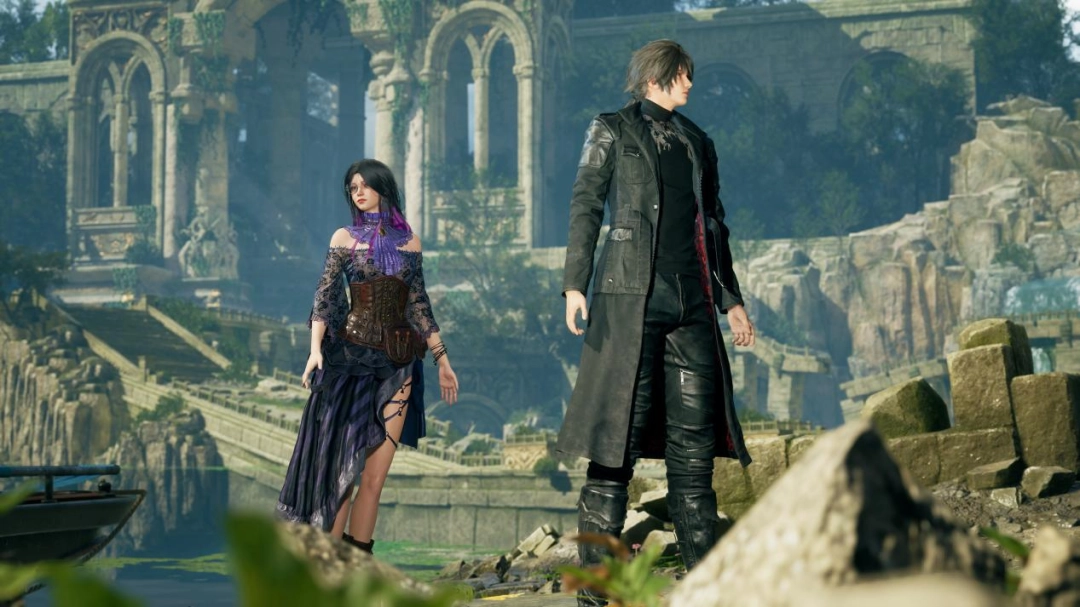
In character design, due to my personal preferences, the protagonist's style leans towards "visual kei." Such a character image fits more reasonably within a human civilization background set in the modern era, allowing the clothing style to match accordingly.
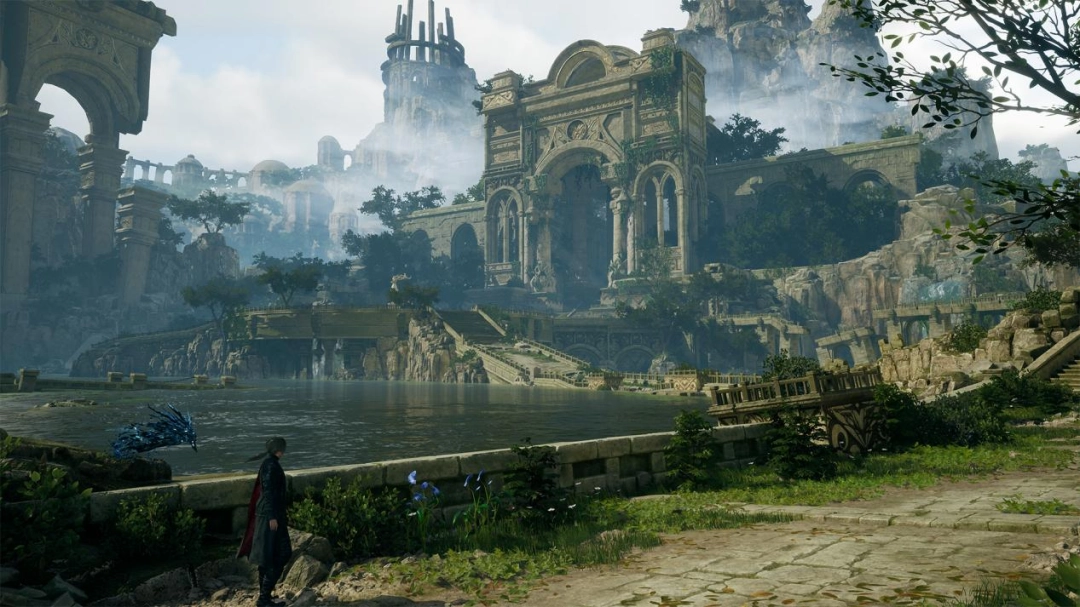
In the story, the protagonist needs to search for ruins, so these ruins were designed as grand ancient structures, referencing ancient Greek architectural styles. Overall, these elements formed naturally as the production process progressed.
Q: The combat system of Lost Soul Abyss is considered by players to have the style of "Devil May Cry" while also carrying a hint of "Soulslike." In your opinion, what unique experience does the combat design of Lost Soul Abyss hope to bring to players?
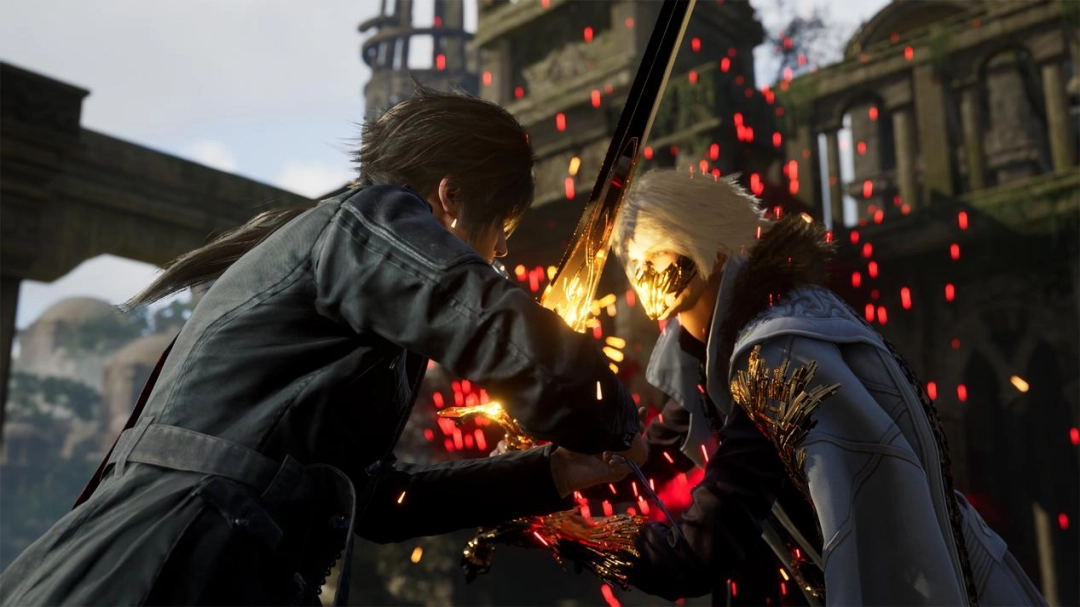
Yang Bing:My development team and I always prioritize "fluidity" in combat design. To achieve this, we made many optimizations—eliminating numerous unnecessary actions, minimizing recovery frames as much as possible, and designing skill connections and derivation logic entirely around providing players with a smooth experience. In Lost Soul Abyss, we don't want players to be constrained by the game's predetermined rhythm or passively accept various operational limitations. Instead, we aim to ensure that every input from the player is executed freely, with commands promptly reflected in the protagonist's combat actions.
Q: You mentioned being influenced by many classic high-speed action games, and many Chinese and Korean producers have expressed similar sentiments. Recently, I personally observed a small surge in single-player action games in the domestic game market, including in Korea. From your personal perspective, how do you view this?
Yang Bing:I have seen these news reports. A common point I noticed is that most of us game developers belong to the same age group. Personally, my childhood through high school coincided with the heyday of PlayStation 2 and PlayStation 3. Influenced by this era, the types of games I most aspired to create were largely action-oriented. The dream of making such games has always been buried in my heart.
And in recent years, everyone has gradually acquired the ability and resources to realize it. I think this might be the main reason.
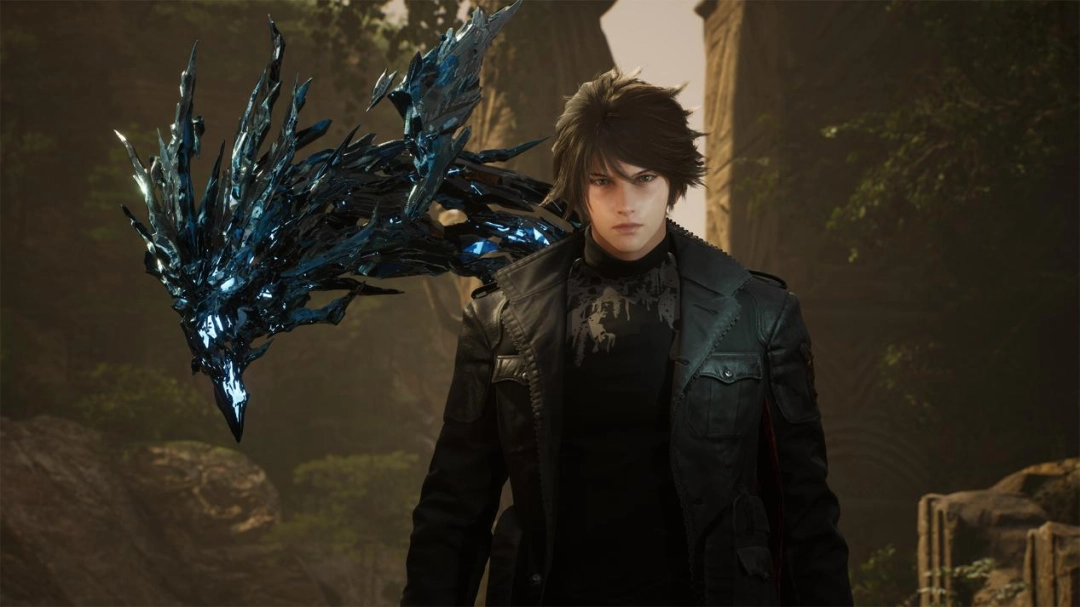
Q: Personally, what has your mental journey been like? From liking games, starting to conceive ideas, to step-by-step bringing them into reality, what are your feelings?
Yang Bing:At the very beginning, I just wanted to create something I thought was cool. I made a demo, edited it into a short video, and posted it online without any expectations, even thinking, "This probably ends here." After all, continuing alone is extremely difficult.
Unexpectedly, we later received support from many game companies and players. At that time, I felt particularly flattered, completely exceeding my expectations before posting the short video. So, from initial confusion to the "mysterious confidence" born from everyone's encouragement along the way, I started to think that with so much support, maybe this could succeed. Thus, I formed the team and officially launched the project. That confidence lasted quite a while; I always felt that even without systematic experience, passion alone could make it happen.
But later, I realized reality was far from what I had imagined. There was a period when funds were nearly exhausted, yet we were dissatisfied with what we produced. Those days were filled with self-doubt. It wasn't until later, when we received more encouragement—especially after Sony Interactive Entertainment became deeply involved and provided support—that the project slowly got back on track. Looking back, my mindset during this period was healthier: the blind confidence of the past was gone, replaced by humility—knowing there were many things I couldn't do alone and being able to calmly accept help, advice, and support from others.
Moreover, this made me re-examine my initial starting point: from the very beginning, I wasn't making Lost Soul Abyss for any specific reward. This mindset actually allowed me to persist more steadily.
Thus, step by step, we have reached the point where the game is finally about to be released. So, my mindset is quite calm now. Although we still encounter many difficulties, neither I, the team, nor our partners will panic as we did before. Everyone will work together to find solutions.
Q: Some players feel that Lost Soul Abyss has vibes reminiscent of "Final Fantasy." You also mentioned classic works like "Final Fantasy" in previous interviews. From your personal perspective, what unique traits does Lost Soul Abyss possess?
Yang Bing:Regarding the issue of "resemblance," Lost Soul Abyss started as a project based on personal preference. When making that demo, I didn't intend to deliberately distinguish it from other works. But as a player, I always had some "unwillingness to settle"—for example, feeling that a certain game did well in one aspect but didn't suit my taste in another. So, I wanted to showcase all the elements I liked within a single project.
Although Lost Soul Abyss evolved from a personal demo into a team development project, the style I initially loved never changed. Even if some players think it "resembles other works," I don't feel the need to overturn a style I genuinely like just to avoid suspicion. That's not how I operate.
During development, my initial expectations gradually came to fruition. The overall style of the game is now the type I prefer, and I am quite satisfied with the combat feel personally. Therefore, we never considered deliberately changing it because it "resembled someone else." We didn't spend too much effort on this aspect during R&D. We cared more about ensuring that what players experienced was consistent: the environment, art style, combat style, etc., were not fragmented but unified, providing a good experience for players. I believe this is the more important part.
Q: From the demo experience, the art style of Lost Soul Abyss is quite distinct. Many domestic games focus primarily on ancient Chinese or traditional Chinese styles, while Lost Soul Abyss leans more towards a modern, globalized aesthetic. How do you both view the global market? What content has Lost Soul Abyss added in this regard?
Yang Bing:The art style of Lost Soul Abyss has remained unchanged from start to finish. When the project was first announced in 2016, mobile games accounted for a higher proportion among domestic games of similar scale, while fewer were made for single-player consoles. Therefore, we didn't feel our style was particularly "outstanding" at that time.
In recent years, there have been more and more games with ancient Chinese styles, and since everyone thinks this style is great, our approach seems somewhat different. But this is unavoidable—after all, this direction was set when the project was initiated. We couldn't rashly switch to an ancient Chinese style just because the market changed. Furthermore, players who liked the style of Lost Soul Abyss initially expected this kind of work; blindly changing course might not be the optimal solution.
However, our game does incorporate some Eastern elements, though they haven't been prominently showcased externally yet. For us, the core of production is maintaining stylistic unity throughout the work, rather than deliberately adding elements to cater to certain trends, which would disrupt this integrity. Therefore, the current state of Lost Soul Abyss is the result of our careful consideration.
Bao Bo:I led the art upgrade for this project, subsequently collaborating closely with art colleagues and Yang Bing. When I first joined, I found the project's style very interesting. Yang Bing's team had already created many differentiated scenes. As players can see today, the artistic style varies significantly between different levels. However, amidst these changes, Lost Soul Abyss maintains a characteristic that Yang Bing mentioned earlier: "stylistic consistency." Regardless of the scene, it fits reasonably within the game's own worldview.
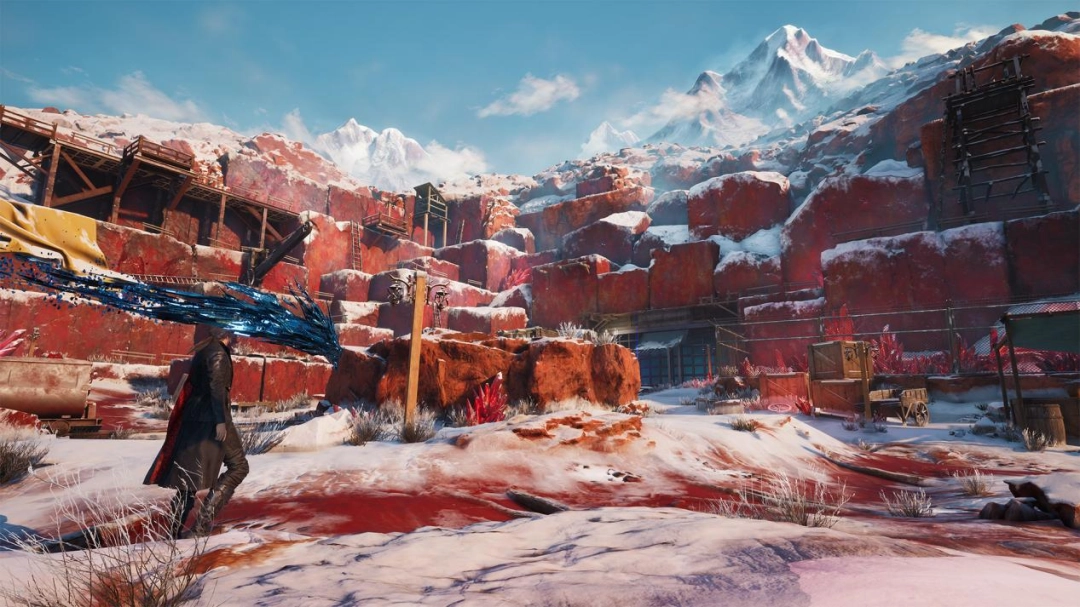
On this basis, we also added many visual designs that create unity, such as specific symbols and core elements, allowing Eastern-style scenes and semi-sci-fi scenes to resonate with each other and maintain overall consistency. This was difficult to achieve, and we spent a lot of time polishing it, but I believe players will feel our efforts after experiencing all the levels.
For characters, the initial style framework was already determined, so we subsequently focused on improving the precision of character presentation—such as fabric and texture of clothing. After all, technical expressiveness is an important part of attracting players to a game. Additionally, we ensured that all character adjustments adhered closely to the worldview, creating a sense of coordination when characters from different backgrounds stand together.
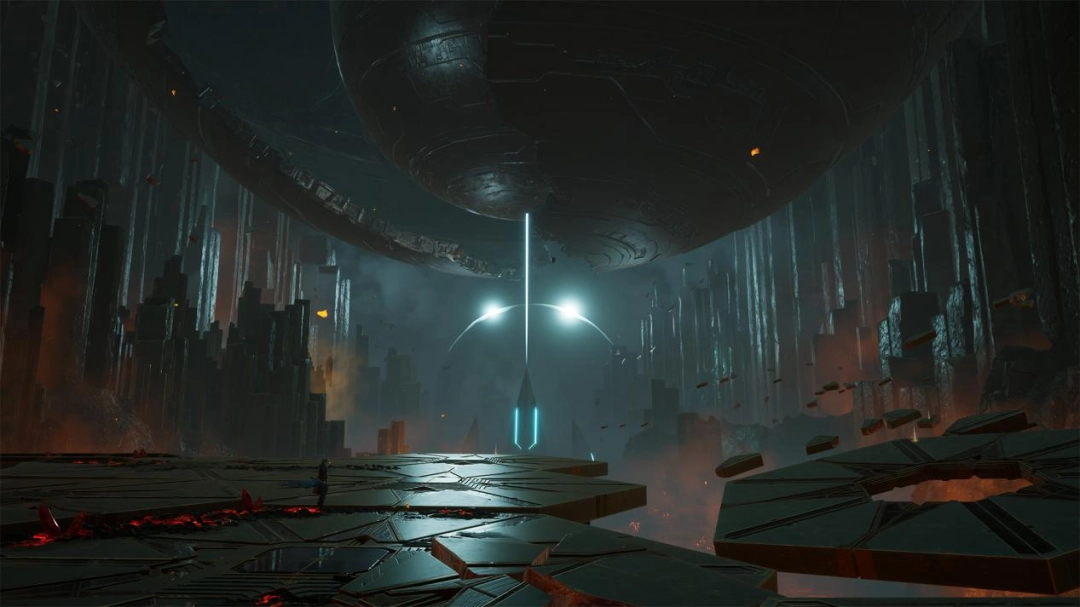
Q: Is Lost Soul Abyss currently positioned as an ACT, or is it closer to an ARPG?
Yang Bing:I think it is still an ARPG. Because from the perspective of growth elements and overall development trends, it is no longer a traditional pure ACT. Currently, action elements remain the core subject of Lost Soul Abyss, occupying a more prominent proportion, while the narrative and growth systems emphasized by role-playing (RP) allow the game to have more space for content display compared to pure ACT.
Q: People always compare Lost Soul Abyss with some classic action games. Do you two feel pressured by this? Or do you see it as an opportunity?
Yang Bing:Personally, I pay close attention to new developments in classic action games, such as the "God of War" series. As you can see, they have undergone some transformations. Pure ACT inevitably integrates other elements in its later stages, a fact we clearly recognize. We do not question the development path of such ceiling-level classic works.
I play a lot of action games and am well aware that there are many aspects of classic action games that are difficult for us to reach. However, we also possess some traits that those games do not have. Therefore, for me, I prefer to regard those classic games as respected predecessors.
Bao Bo:I don't feel much pressure. Based on my personal experience with projects I've participated in, I am quite confident in Lost Soul Abyss. It will be a good game.
Q: Three years after announcing that Sony Interactive Entertainment would publish Lost Soul Abyss globally, a demo has been released every year. What were the changes and focuses of these demos? What core message did you want to convey to players?
Yang Bing:In 2023, we released a ten-minute gameplay segment for people to try—before that, the information we had publicly shared was all trailers, so people had only seen game videos and didn't know what the actual gameplay was like. Releasing a demo at that point was intended to provide an offline trial opportunity for the gameplay content shown in the trailers, allowing everyone to experience it firsthand.
In 2024, we didn't provide a demo. Instead, I played through the game for everyone on the PlayStation public stage at ChinaJoy. At that time, I didn't think too much about it; I just wanted to show people something different.
At this year's ChinaJoy, there will also be a demo of Lost Soul Aside at the PlayStation booth. We've chosen a level with a strong Chinese style to showcase the Eastern elements in Lost Soul Aside as a domestic game. We hope everyone will come and check it out.
Q: The long journey of Lost Soul Aside has lasted nearly ten years, and the release date is approaching. Everyone will soon see the final result. What is your biggest personal feeling about this?
Yang Bing:I feel quite relieved. A few years ago, I imagined whether I would feel a sense of liberation like "throwing away textbooks after finishing the college entrance exam" once Lost Soul Aside was completed. But now, the actual feeling is much calmer than I imagined. Currently, I am quite satisfied with the game's quality personally, and I hope players who share my tastes will also like it. Overall, I now have a very平常心 (ordinary mindset)—this shift in experience can be described as quite奇妙 (wonderful).
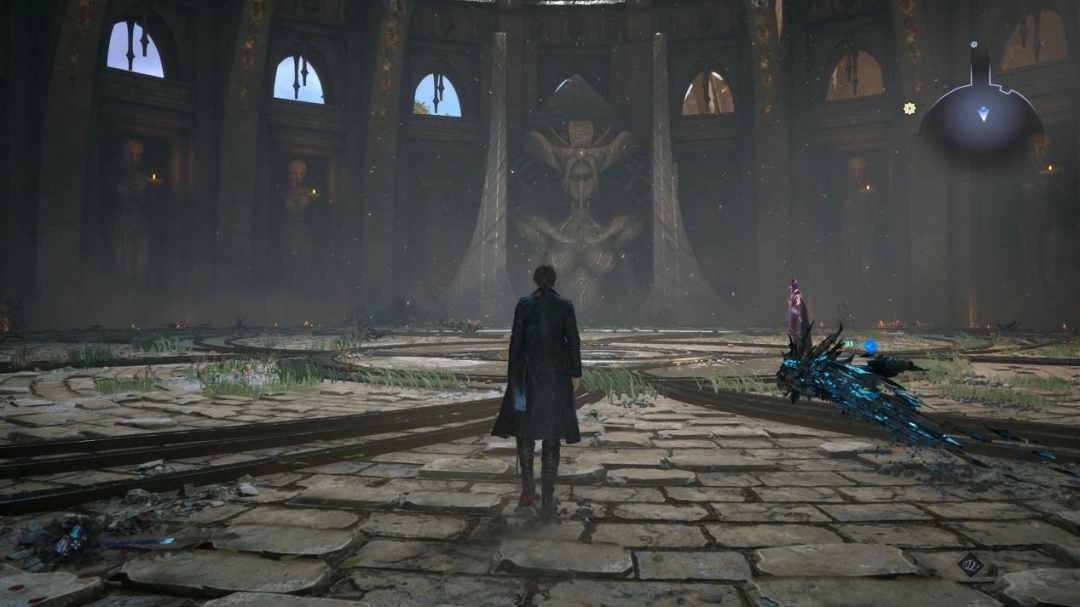
Q: What is the positioning of Lost Soul Aside in today's single-player market? Is this positioning the same as when we first started the project? And what about its position in the game market ecosystem?
Yang Bing:There isn't much difference because the genre hasn't changed. I believe positioning is determined by players and the audience, and those who like this game are still the same group from back then, so I don't think there has been much change.
Bao Bo:From a publishing perspective, we evaluate value based on the investment scale of the game project and the global player base that enjoys this type of game. Lost Soul Aside fits our investment expectations for this project very well and meets our definition and standards for a AA game. In terms of quality, Lost Soul Aside is considered a high-quality AA game, and we still have about six weeks to further optimize it—so I believe Lost Soul Aside can meet our expectations.
Q: The "China Star Project" has collaborated with the Lost Soul Aside project for so long. Taking this as an example, what do you think is the core value of the "China Star Project" to China's console game ecosystem?
Bao Bo:I previously had a "dream" that our "China Star Project" could help the Chinese game industry produce one or more AAA games. Later, I felt that before realizing this dream, what we should do is share our current knowledge and experience, as well as resources such as top domestic and international console game development experts we can find, with all Chinese game development teams—not only those collaborating with Sony Interactive Entertainment through the "China Star Project," but also those not in the program. If our efforts can help these teams improve the quality of their projects, that would be the best outcome.
Q: When you first started developing Lost Soul Aside, did you anticipate that action games would be this popular today? What are your thoughts on this?
Yang Bing:I never thought about it at all. At that time, playing console games in China was itself a rather niche activity—I had very few friends around me who also played console games, but my relationship with these friends was particularly good. Back then, people really didn't think too much about it, but now that domestic games have truly been made and seen by more players globally, I think everyone still shares an unspoken joy and pride.
Q: During these years of persistence, have there been any comments from players online that particularly moved you or left a deep impression? Is there anything you'd like to say to the players who have been waiting since seeing the Lost Soul Aside demo in 2016?
Yang Bing:It's still much the same as back then. Back then, people kept leaving messages of support, and I would always thank them. After the last trailer was released, I saw many comments saying that the demo from back then has finally been completed. From these things, you can see that players from that time have been watching my progress like friends, offering congratulations as I near completion. All of this moves and thanks me deeply.