

As monsters surged forward like mountains of corpses and seas of blood, my pupils suddenly dilated, and my heart pounded. Clutching the mouse tightly, I aimed the barrel of my double-barreled shotgun at the only gap in the defensive line.
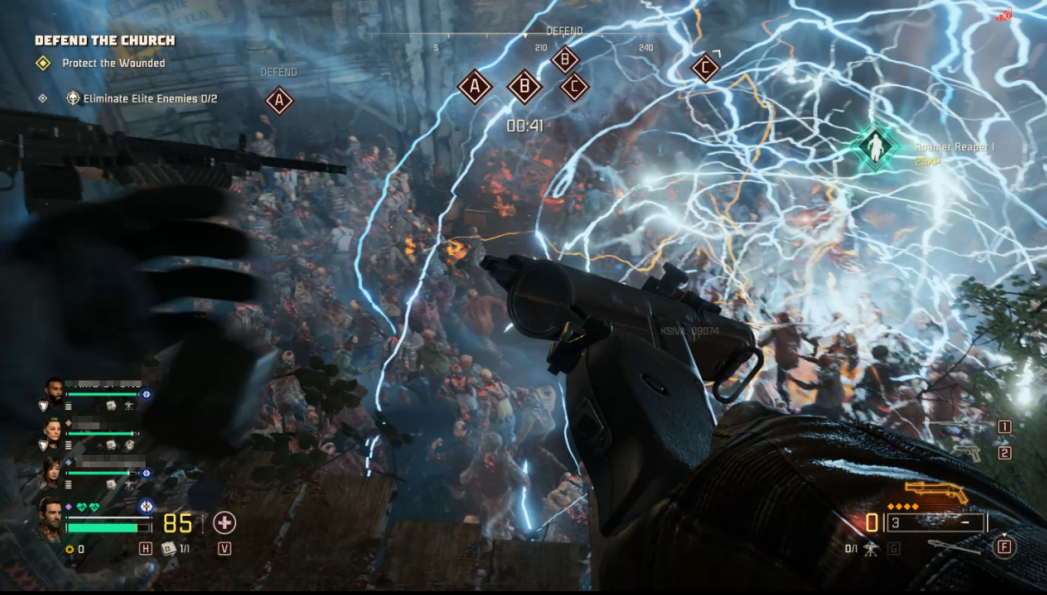
Friend A's mounted heavy machine gun was already spewing tongues of fire, while Friend B unleashed their long-charged ultimate skill into the zombie horde. Bullets, flesh, and superpowered explosions mixed together, creating an especially chaotic scene. Amidst the dense barrage of explosions and the rumbling sound of machine guns tearing through flesh, I faintly heard a shout: "We can't hold on much longer, Point A is about to break!" It was Friend C. His commanding tone had become somewhat hoarse after shouting passionately for half an hour, but the urgency in his words still came through clearly.
I swallowed hard and pulled out the multi-barrel grenade launcher I had been treasuring and protecting throughout the entire round. As flesh and zombie hordes were melted away by a series of earth-shattering explosions, I couldn't help but raise my fist and shout, "Battle, awesome!"
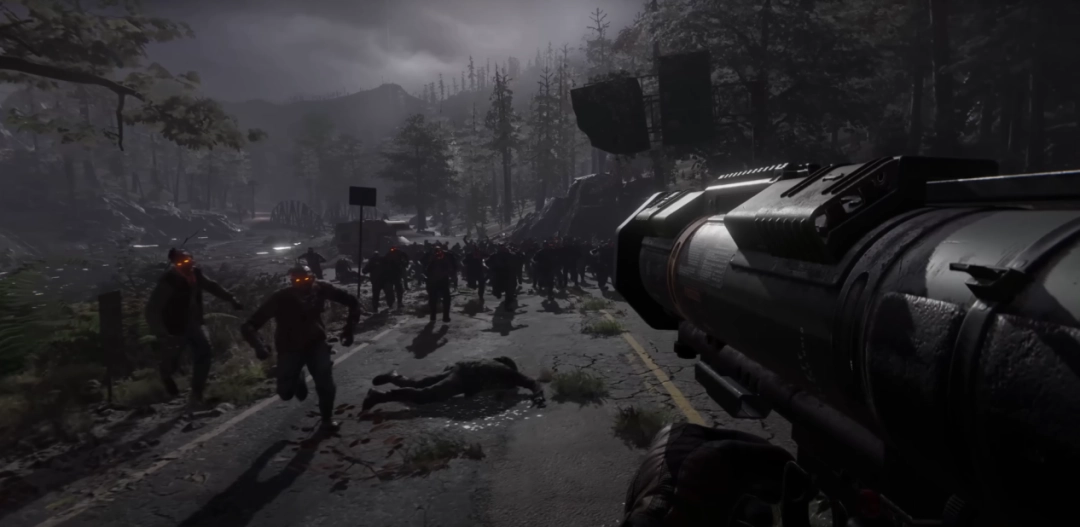
Honestly, after the release of Warhammer 40,000: Space Marine 2, many players were noticeably dissatisfied with Saber Interactive's ability to create horde-based games. This isn't to say that Warhammer 40,000: Space Marine 2 isn't enjoyable. The flashy executions by the superhuman Astartes, channeling energy into power weapons before unleashing fury, and the Emperor's Angels dismembering all human enemies with roaring chain swords—Warhammer 40,000: Space Marine 2's enjoyment comes with a significant technical barrier. You must invest considerable time honing your combat skills before you can experience that Khorne-possessed-like thrill on the eternal battlefield.
For us wage slaves who just want to roll our faces on the keyboard to relieve stress after work, the entertainment cost is too high.
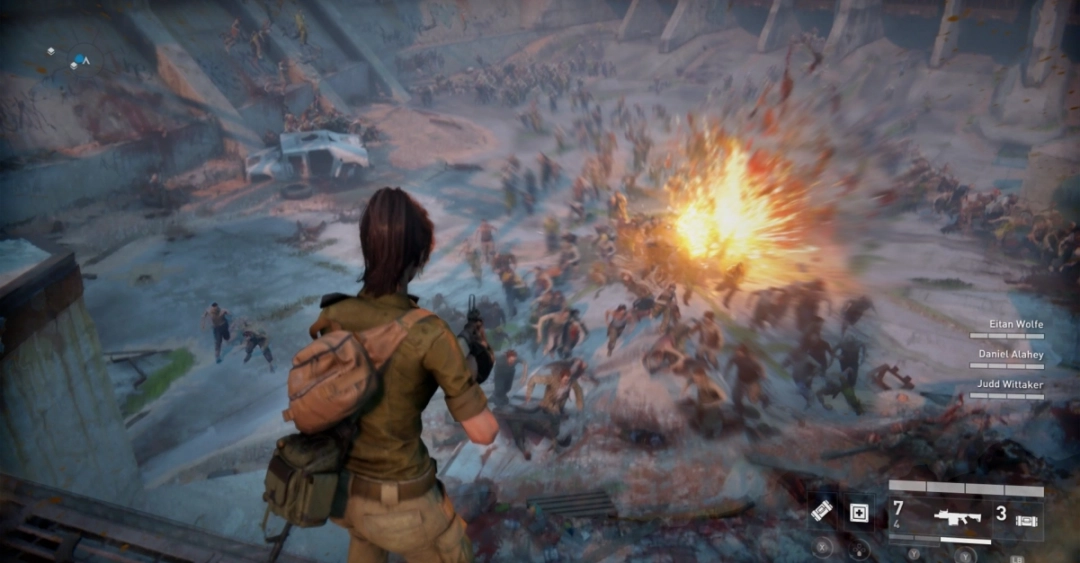
However, what many people have forgotten—or overlooked—is that Saber Interactive's most famous previous game works were not meticulously crafted horde games like Warhammer 40,000: Space Marine 2, but rather "spectacle-focused" titles that mindlessly piled on monster counts and visual effects.
First and foremost is World War Z, released in 2019. Adapted from the movie of the same name, this work focuses on being "fast, fun, and fierce." Saber Interactive seemed eager to cram thousands upon thousands of zombies onto a single path, letting you clear them all out in seconds with explosives and heavy weapons.
Then, flying corpse fragments, blood, and minced meat would smear all over the screen in front of the players.
Moreover, several recent games released by Saber Interactive clearly don't align with the word "fun": aside from Warhammer 40,000: Space Marine 2, Stormgate is a modernized RTS game with a retro flavor; Post-Apocalyptic Rebuilder focuses on hardcore simulation, where players practically bow down to serve electronic data, handling Everythinggj from laying bricks to repairing cities with heavy vehicles—it's hard to call it the kind of "throw away your brain and completely release stress" fun that everyone expects.
The good news is that this problem has been solved—John Carpenter's Toxic Commando is here, with Saber Interactive returning to their comfort zone, once again throwing out a "fast, fun, and fierce" fast-paced horde game.
The bad news is that this game is too fun, so much so that just thinking about waiting a few more months for the official release makes my craving for battle painfully intense.
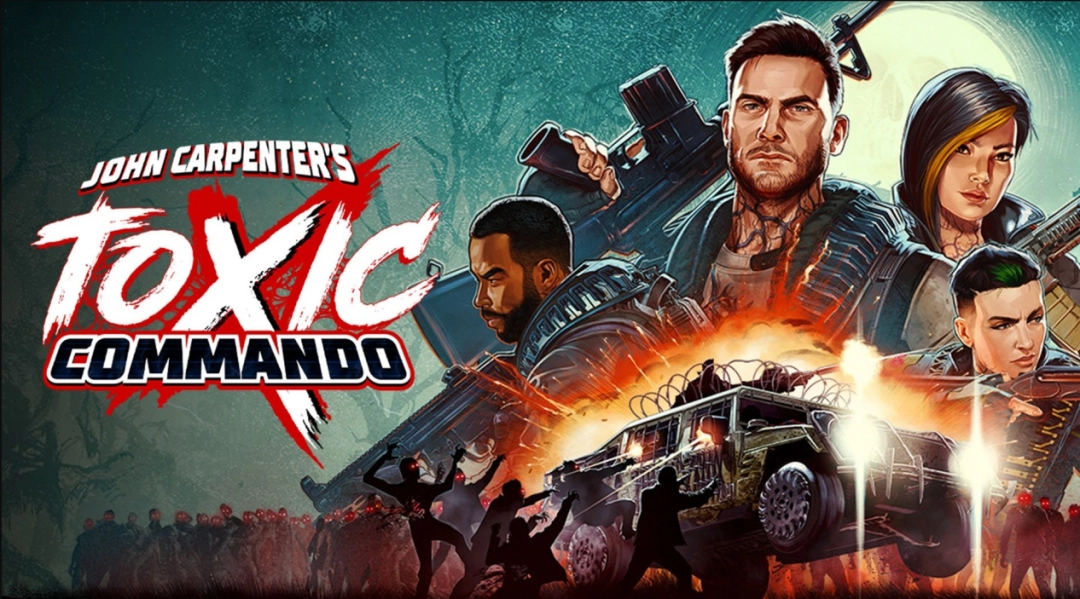
John Carpenter's Toxic Commando is a very standard Saber Interactive-style fast-paced horde fun game. Monsters surge like tides, overwhelming Everythinggj, while rifles, shotguns, grenades, and mortarsInsanely pour fire into mountains of corpses and seas of flesh, with heavy machine gun belts carving a crimson path directly through the monster horde.
Compared to players of Warhammer 40,000: Space Marine 2 struggling against insect swarms and Chaos enemies, pondering counter-strategies for various special enemies and engaging in QTEs, the human warriors in John Carpenter's Toxic Commando are more direct and violent. They thrive passionately amidst tide-like zombie groups, playing with various heavy weapons, shotguns, and vehicles in a mechanized fashion—so smoothly they could be described as "swimming dragons."
In fact, compared to its predecessor World War Z, John Carpenter's Toxic Commando is not just mindlessly fun; it offers a tactically satisfying experience.
The main reason is that the high presence of the class system and superpower system enhances the sense of achievement derived from player skill combinations and decision-making.
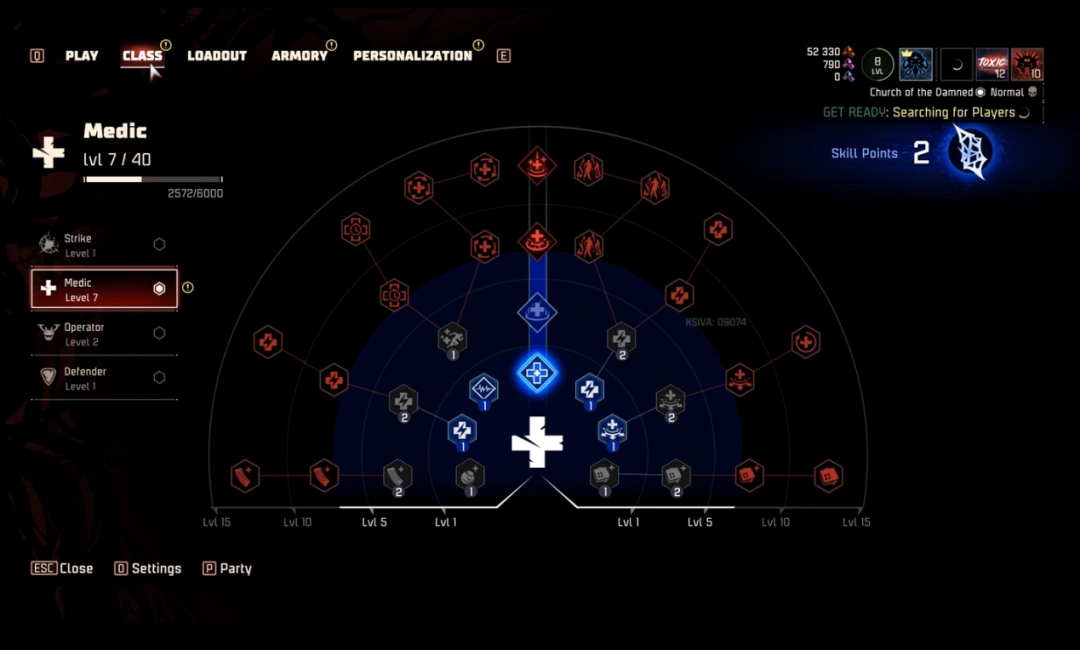
John Carpenter's Toxic Commando offers four classes in the demo, each with distinct roles and skill growth. Moreover, each class can unlock more superpower abilities as they level up, allowing players to deeply customize their skill trees and tactical approaches.
The Striker, true to its name, can channel superpowers to release a series of devastating shockwaves, instantly relieving pressure on the situation and serving as the absolute core of damage output. The Medic uses superpowers to heal teammates and restore their status. Their progression path allows them to focus on providing long-term team recovery of fake health—similar to pills in Left 4 Dead—or significantly extend skill cooldowns to fully replenish teammates' lost health at once.
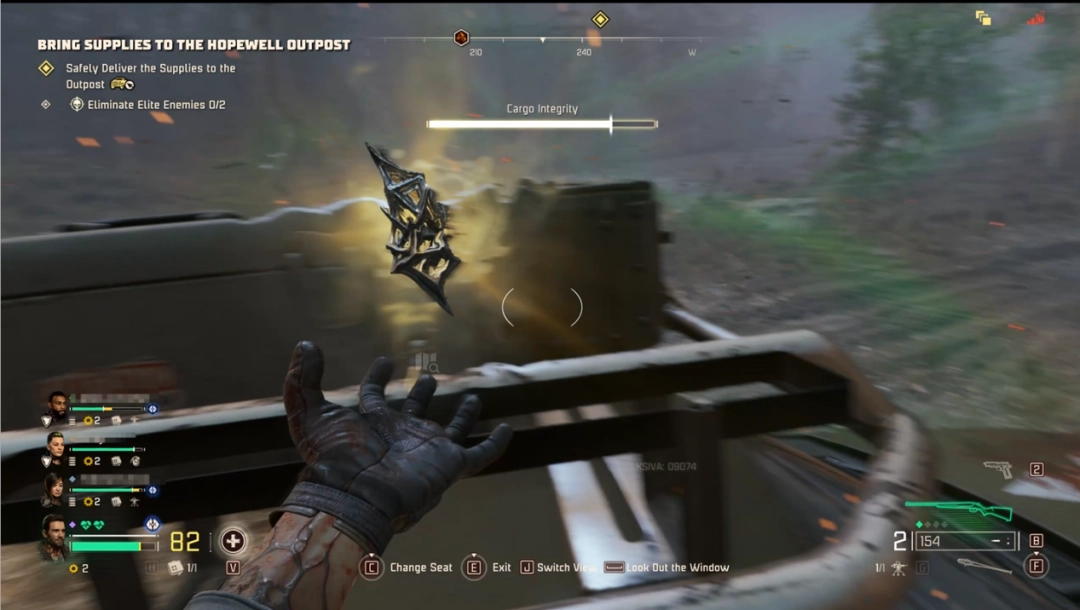
The Medic is here.
The Enforcer comes with combat drones, which are very useful for clearing scattered enemies encountered on the way. Currently, the gameplay seems somewhat similar to the Drone Master class in World War Z, with subsequent options to enhance scattered enemy handling or strengthen defense against hordes. The Defender can gather superpowers to release shields, somewhat similar to the psychic shields in Darktide, intercepting all opponents' projectile skills, and can further strengthen the skill tree to provide temporary shields to teammates within range.
It can be said that this set of skills and deep skill tree settings gives John Carpenter's Toxic Commando significantly higher build potential than World War Z. Players can fully customize their playstyle based on mission situations, facing various difficulties encountered in levels by reasonably allocating team skills.
You might say that for a monster sea like World War Z, players don't seem to need particularly specialized configurations; just mindlessly shooting is enough. As a similar gameplay "sequel" from the same developer, does John Carpenter's Toxic Commando really need so many tactical configurations?
Believe it or not, it's actually quite useful.
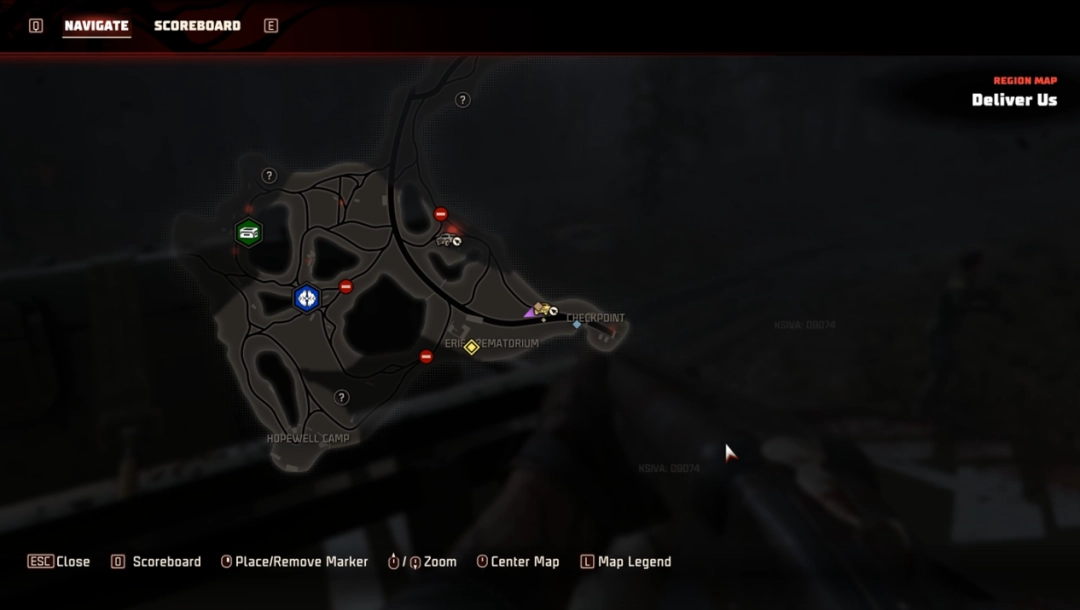
First, the small levels in John Carpenter's Toxic Commando use fixed maps, but mission locations and tactical resources are random. Although players still follow a linear progression, they have absolute autonomy over "when to advance the main storyline" and "how much resource to gather before fighting."
Furthermore, the heavy weapon system from World War Z makes a return in John Carpenter's Toxic Commando. Players need to search the entire map for strategic resources and then open weapon crates at resource points to obtain these powerful tools. Strategic resource points can also be used at key main story nodes, not only to repair some trap devices but also to deploy tactical support weapons like heavy machine guns and mortars.
Players basically need to wander around the map for a long time, gathering enough resources, to have full confidence in surviving the massive zombie hordes at mission nodes.
Therefore, how to configure your team to optimize damage output and survivability while searching the map is a key point to consider during team building.
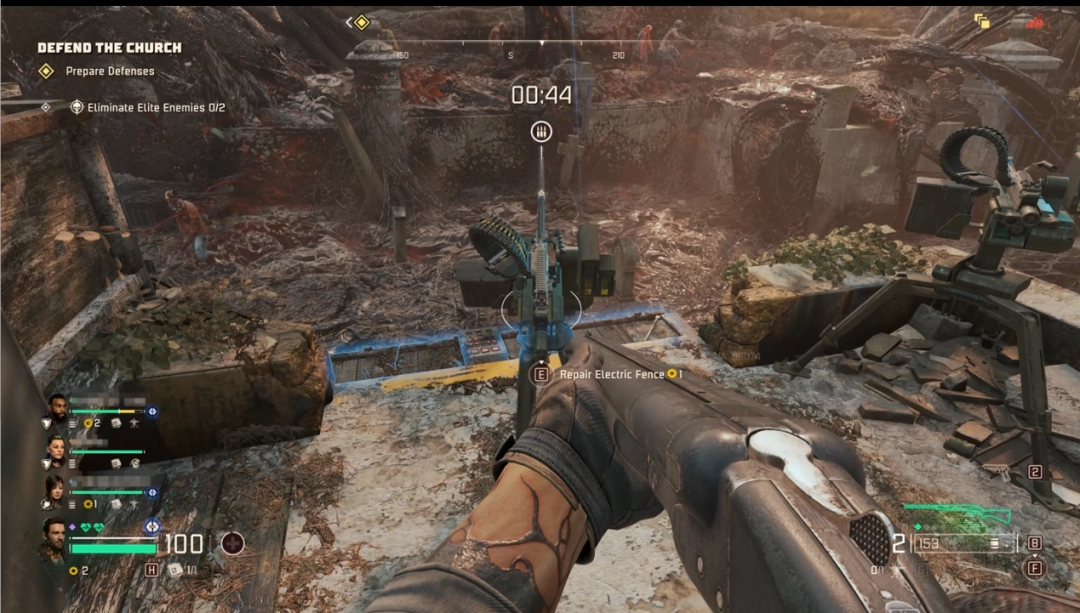
Moreover, compared to World War Z, John Carpenter's Toxic Commando features monsters with stronger and more aggressive attacks. Saber Interactive has clearly learned a lot about deep gameplay shooting from the development of Warhammer 40,000: Space Marine 2. John Carpenter's Toxic Commando features special infected mechanics similar to those in Left 4 Dead, Darktide, and Vermintide—amidst swarms of monsters, Controllers and Assassins occasionally burst out. The former directly controls players and inflicts high continuous damage, while the latter sneaks up from blind spots when players aren't looking, delivering one-hit kills.
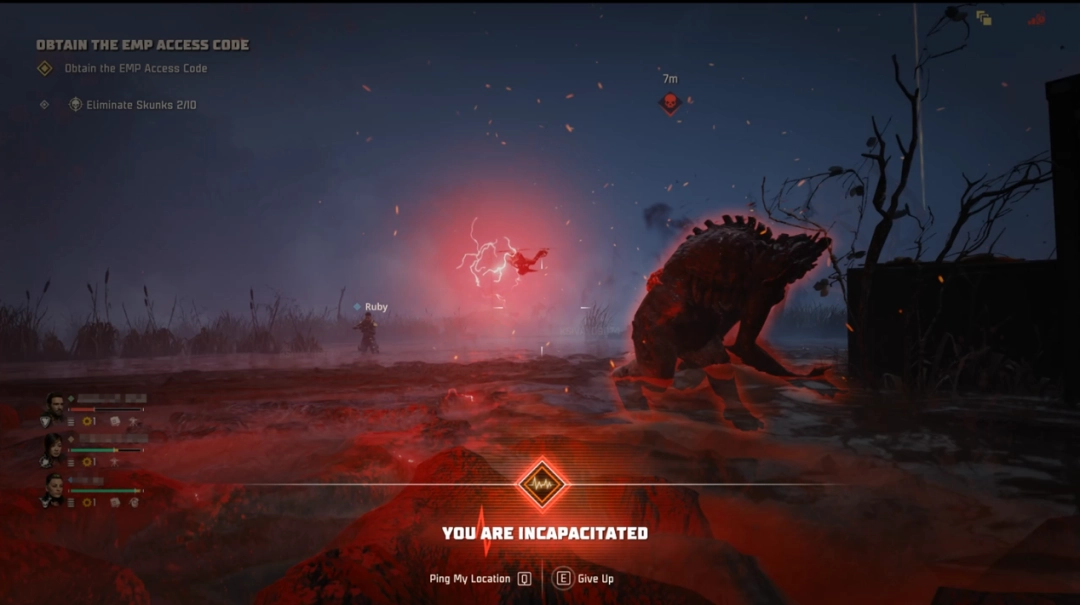
Besides special infected, the horde will also include some ranged elite units, or super-heavy elites positioned similarly to Tanks in Left 4 Dead. These opponents have the power to instantly deplete player health bars and destroy an entire team with a single gesture, requiring players to specialize certain team members for targeted handling.
These monsters have unique sound cues when they spawn. Although their instant-kill techniques are somewhat cliché, making high-difficulty matches tense and thrilling, the actual gameplay isn't constantly high-pressure. Saber Interactive surprisingly did well with the game's pacing, neither as flat as World War Z nor as relentlessly high-pressure as Warhammer 40,000: Space Marine 2.
The high-difficulty level experience in John Carpenter's Toxic Commando is well-paced, offering sufficient thrills while featuring appropriate difficulty design and an AI Director that understands "priorities," ensuring players never feel too tired or too bored.
Of course, this experience stems partly from the excellent level design of John Carpenter's Toxic Commando. On the other hand, its outstanding vehicle system also played a major role.
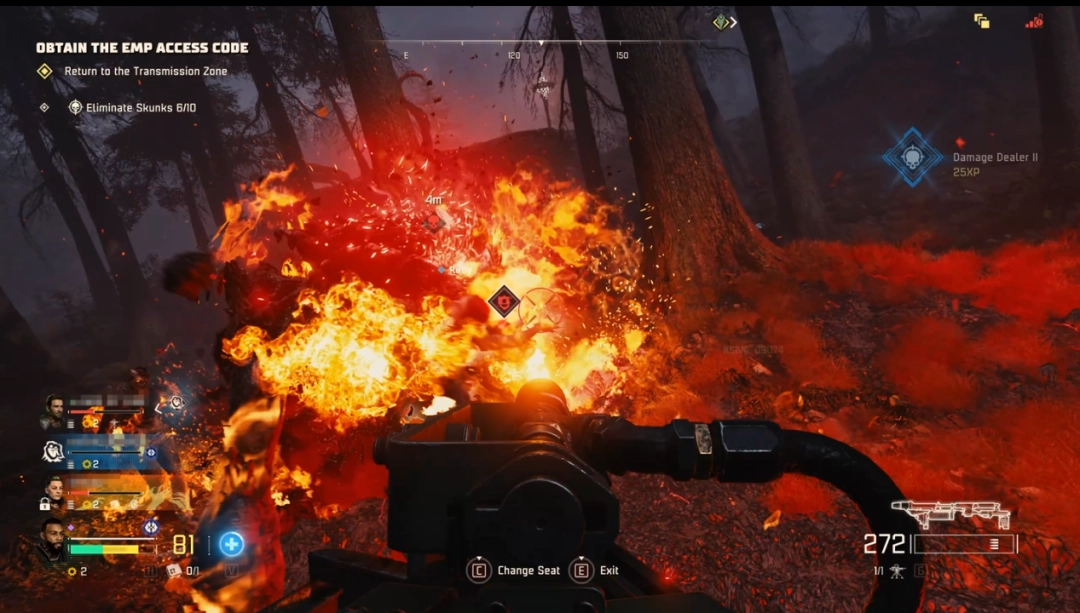
John Carpenter's Toxic Commando offers six vehicles in the demo phase. In each mission, players can find 2 to 3 random vehicles on the map. Each vehicle has different skills and focuses—for example, the ambulance can infinitely produce medical kits and activate a healing aura within a certain range, making it an excellent protective vehicle akin to a "high-difficulty daddy."
Besides literally laying mines, the mine-laying vehicle can use reverse tactics to lure monster hordes out of mission points into traps. It also has two infinite fuel generation slots, allowing players to drive around freely exploring the map without worrying about fuel issues.
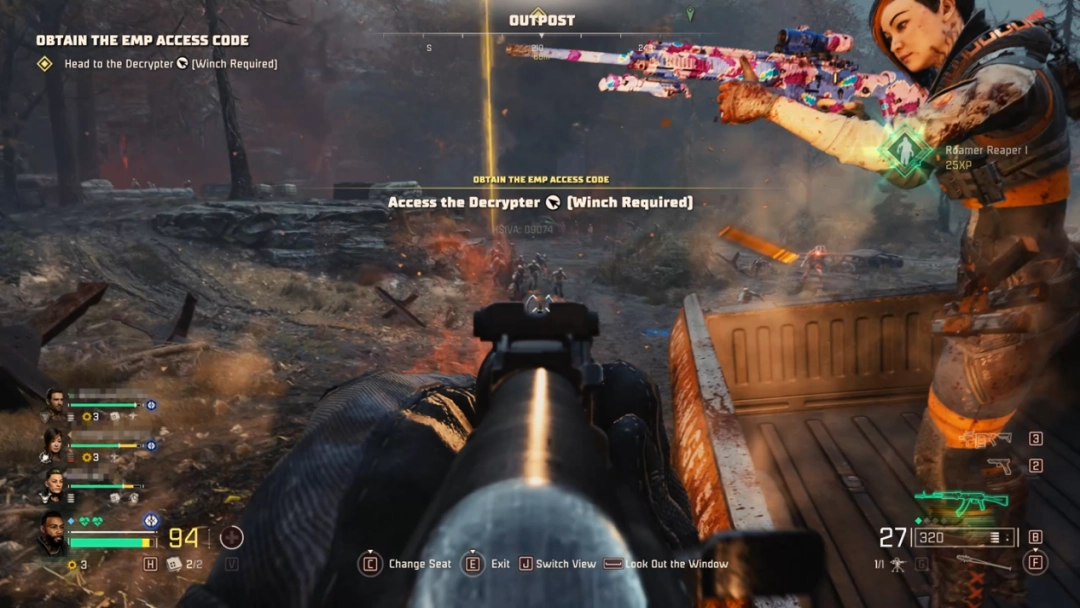
The flamethrower truck looks rugged, being a modified version of a standard American pickup. A high-damage heavy flamethrower is installed in the back seat, capable of burning elite monsters, hordes, and even teammates caught in the pile to a crisp.
The racing sedan's special skill is the most interesting, allowing consumption of a large amount of fuel for nitro acceleration. I vaguely remember a high-difficulty match where Friend A drove this "sports car," thoroughly implementing the guerrilla tactic of "advance when the enemy retreats, attack when the enemy is tired," gaining immense momentum and leading the monster horde on a wild chase—although the ending wasn't pleasant. Amidst laughter, we crashed, leaving all four of us dead on the spot.
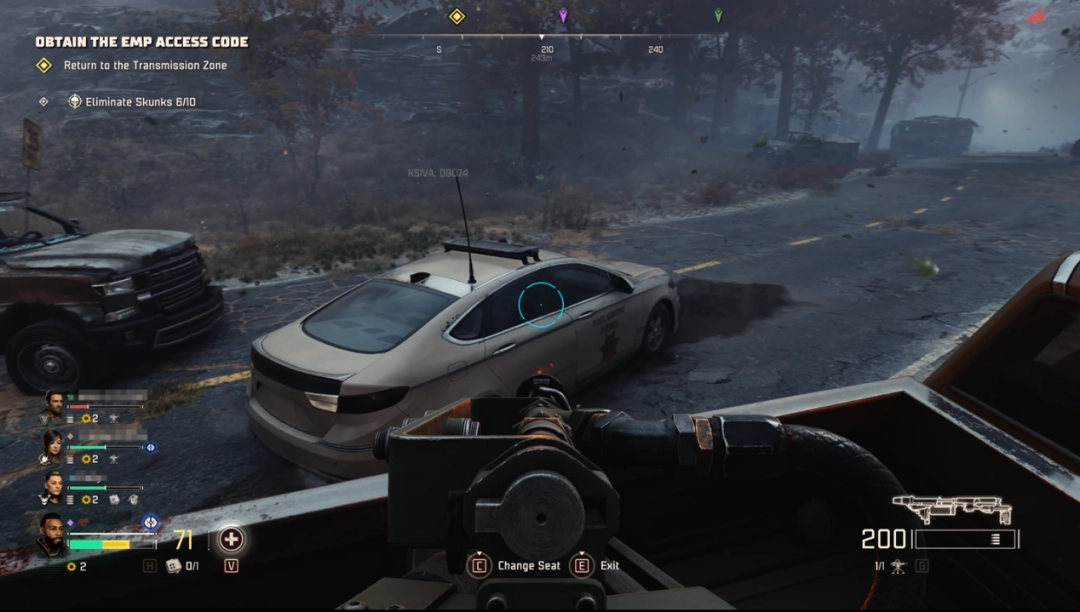
The police car's ability is simple and brutal—self-destruct. The advantage of this vehicle is that when the skill is activated, it acts like a large decoy explosive, gathering a large circle of nearby monsters together before setting off a huge firework. But the disadvantage is also obvious—once it explodes, you no longer have a vehicle.
Given that the mission maps in John Carpenter's Toxic Commando are not small, if you don't want to measure the post-apocalyptic wasteland with your own feet, you should use this vehicle skill cautiously.
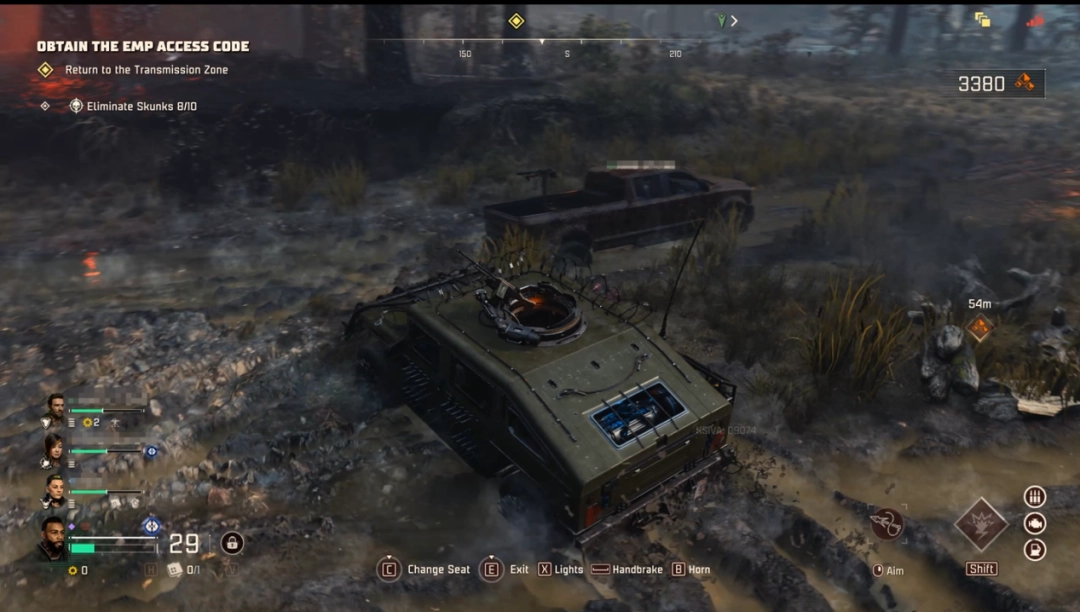
The strongest vehicle is called the Mavericks, a heavily armed military vehicle. The Mavericks boasts excellent protection and endurance, with a special skill being a large-area EMP pulse that can clear all monsters surrounding the vehicle at once. The gunner seat also features an HMG with 500 rounds of ammunition, providing powerful output for daily map clearing.
The only pity is that the Mavericks has a very low spawn rate, but encountering one guarantees a fun round.
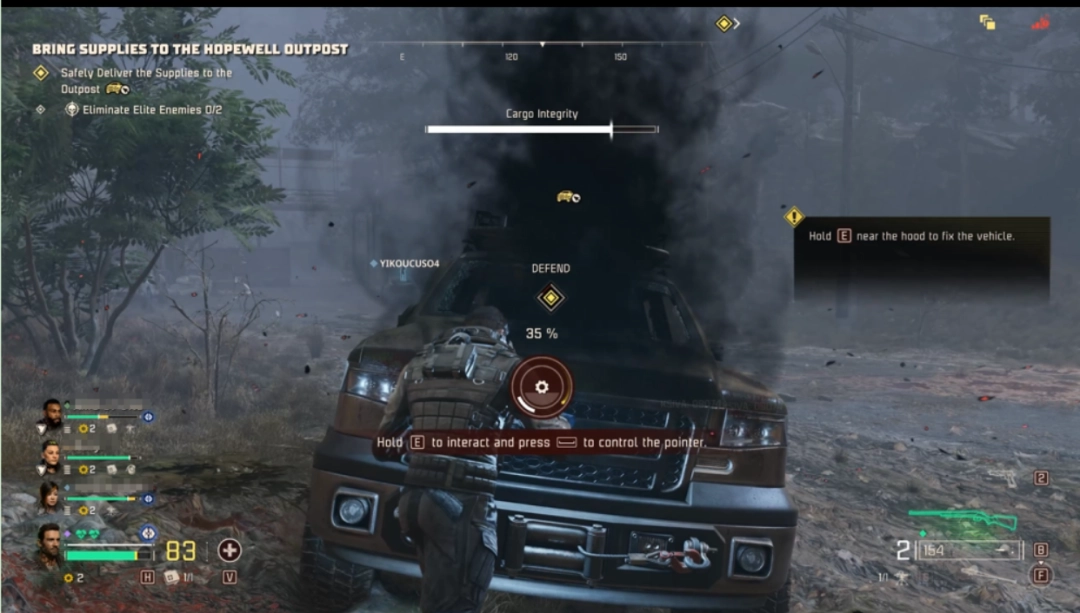
It can be said that Saber Interactive's vehicle system integrates very well with the linear sandbox maps. Players can rely on vehicles in the map to perform tactical maneuvers at any time, with the initiative to fight or retreat entirely in their hands. If combined reasonably with certain class skills and offensive weapons, the tactical flexibility and sheer enjoyment players can achieve are completely incomparable to World War Z and Warhammer 40,000: Space Marine 2.
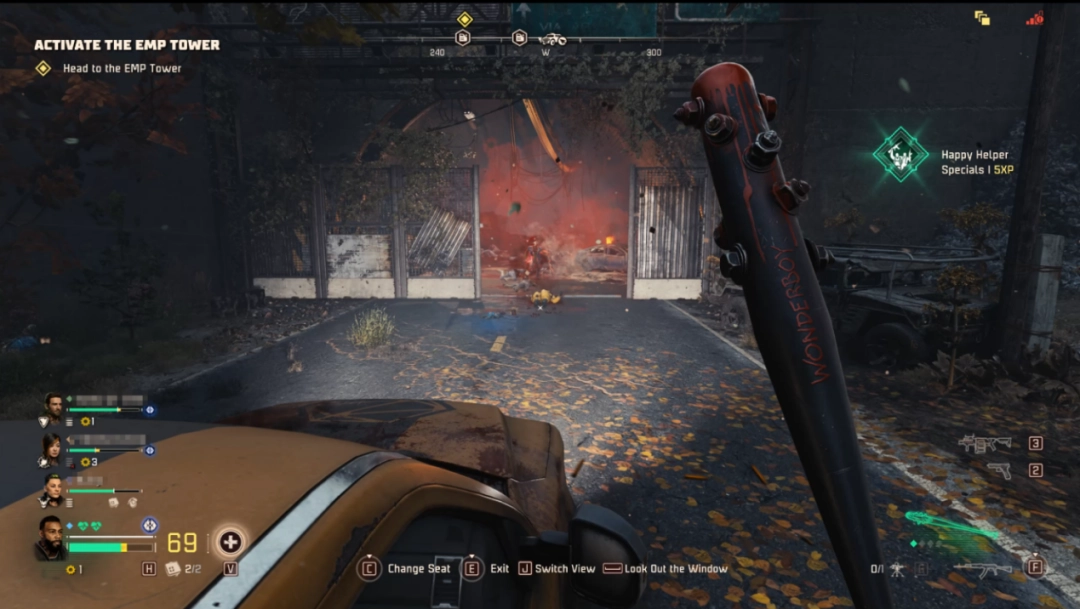
You can even use melee attacks in the vehicle
Judging solely by its current quality, John Carpenter's Toxic Commando offers an excellent gaming experience. Players not only have a sufficiently deep skill tree system and gunsmithing framework but can also rely on the highly flexible and randomized vehicle system and sandbox map structure to avoid the boredom brought by repetitive grinding in conventional horde games. More importantly, John Carpenter's Toxic Commando provides players with visually impactful heavy weapons while preparing balanced waves of monster hordes—It can be said that it has found a balanced point between sheer enjoyment and challenging difficulty.
If you are a veteran of World War Z or Warhammer 40,000: Space Marine 2, you might want to experience Saber Interactive's optimized signature "fast, fun, and fierce." If you are playing a horde-based game for the first time, John Carpenter's Toxic Commando is definitely a very suitable entry point for newcomers.
As long as Saber Interactive maintains its current quality and continues to fill in subsequent content and plans, the future of John Carpenter's Toxic Commando is definitely bright and promising.