

The interview is long, but if you are a loyal fan of 'Total War,' I recommend you read this interview.
This is far from just a promotional window or a bland press release. It's not just a few representatives from the development team chatting with the media to set the tone, and then moving on. It's a genuine exchange, where you might even hear developers pour out some old grievances. Although there isn't the urgent news everyone eagerly expects—after all, they have their own promotional plans—here, you can see many behind-the-scenes stories. About whether game developers love their own games, about the hectic, non-existent day-one patches of the past.
When I pushed them to pick their favorite 'Total War,' I got a satisfying answer—one that validated my absolute taste as a history buff. If you're impatient, here's the spoiler: it's Total War: Shogun 2.
Given the stature of the interviewees, this is probably the most authoritative fan certification on the entire Chinese internet. Before everyone uses their taste sticks to grade fantasy and history fans, let's clarify one thing—this is the first time in 25 years that Creative Assembly has collaborated directly with China (know that the localization of the 'Total War: WARHAMMER' series was done by民间高手). This indeed means something—whether it's the rising consumption power of the domestic game market or the loosening of stubborn British corporate genes, things have changed.
The two interviewees this time can be said to be the creators of 'Total War.' From the birth of the series to its works starting to sweep strategy game awards at various exhibitions, these two main creators have always been present behind the scenes. They are Kevin McDowell, Content Director of the 'Total War' series, and Scott Pitkethly, Combat Architecture Engineer of the series. Creative Assembly doesn't just make 'Total War'; they also make some first-person shooter games, but these two have truly been making 'Total War' for 25 years. In conversing with them, I realized one thing: playing things gets boring eventually, but creating things can last a lifetime.
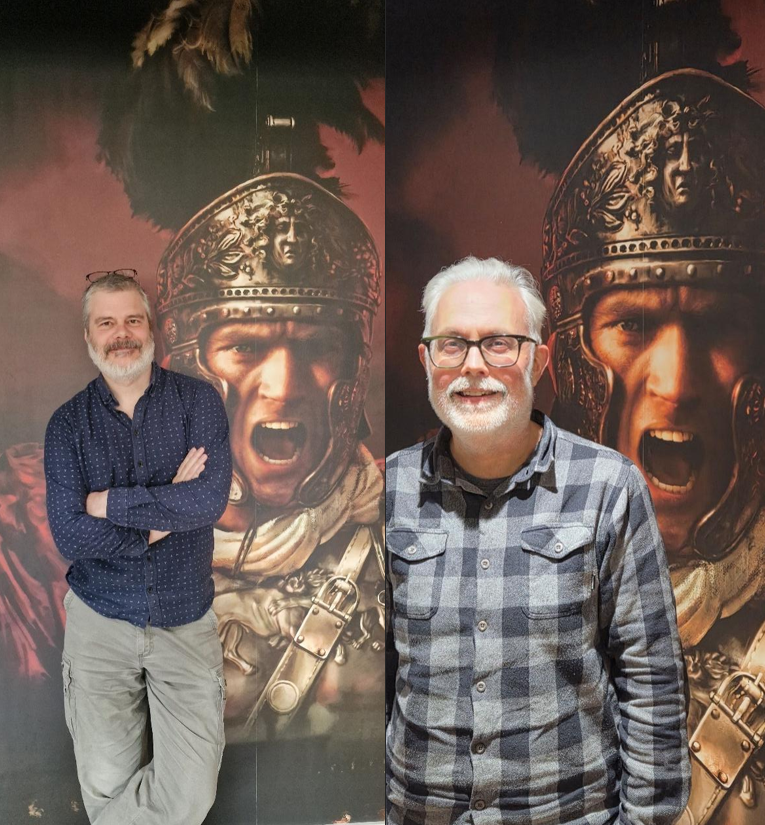
Left: Kevin McDowell, Right: Scott Pitkethly
Q:As other mainstream RTS games gradually faded from view, the 'Total War' series not only survived but became stronger. What do you think is the secret to the series' success?
Scott:Personally, I think it's mainly because there are no other games on the market that offer a similar experience. The 'Total War' series has a... I'd say, an interconnected experience.
Your long-term decisions on the campaign map directly affect the real-time battles within. Meanwhile, various settings in the campaign mode are reflected in specific battles, giving each battle a different context. For example, if a commander occupies your territory and you gather an army to take it back, that battle becomes much more meaningful than a standalone skirmish. I think this is one point.
Additionally, the series captures the war fantasies of many history enthusiasts—the dream of becoming a general and commanding troops on the battlefield. When we made the first Rome: Total War, we wanted to create the 'ultimate toy soldier sandbox.' Just like every child's dream, if you play this game, you are the commander giving orders, controlling every aspect of the battlefield. It's not just long-term strategic planning, but also real-time combat where every second counts. Strategic planning and real-time operation go hand in hand, complementing each other. Currently, no other game on the market offers this seamless, deeply integrated experience, which I believe is the core reason why the 'Total War' series continues to attract players.
Kevin:We started working on 'Total War' around 2000, when we were still an unknown small studio. To be honest, our competitors back then, looking back now, were some unreachable industry giants.
I don't know why those famous RTS games eventually disappeared. Maybe large companies like Activision (which originally published the 'Total War' series) moved on to make more profitable, bigger-name projects. But interestingly, our game has that vitality, that long-term appeal. Think about it, people are still playing Medieval II: Total War, an antique from twenty years ago.
I think the key reason is that we offer a unique depth of experience—just likeScottwhat was mentioned earlier, blending strategy and tactics, suitable for various types of people, allowing players to engage both intellectually and emotionally.
Our game is essentially a sandbox. Players can play in their own way,扮演 great leaders, and experience various epic battles and stories.
Scott:Another point is that the extremely deep battlefield simulation of the 'Total War' series makes the production process very difficult, but it also allows us to truly showcase our skills in battlefield details.
It's this meticulous attention to atmospheric detail that makes our games so special. You can see that the soldiers in the game have their own little ideas and act autonomously in this world, something you don't see in other games.
I remember clearly that when we first made Rome: Total War—oh, sorry, Shogun: Total War—the traditional large-scale RTS games on the market had already established a fixed development process. Our game was a bit weird and didn't follow those established methodologies—actually, it was because we didn't know much about the industry back then and didn't have the mindset of viewing the world as a 2D plane rendered in 3D. The terrain in RTS games is actually flat, but we were different; we decided from the start to create undulating hills and complex settlements.
Actually, doing this made the development process even harder. Not only from a technical and development perspective, but also from the player's perspective, in terms of understanding the game mechanics. You even need to zoom in to the range of a single soldier to see what's in their field of view to figure out if they can fire. For example, soldiers usually need to reach a high point like a hilltop to shoot because we implemented a true 3D line-of-sight system. Projectiles in the game, including arrows and cannonballs, are physical entities that fly across the battlefield.
It is precisely this level of deep simulation that gives rise to those unexpected 'charm moments.' In rule-based games that rely more on fixed routes and preset structures, you don't experience this charm. On the battlefield, you see troops genuinely clashing with each other, many people falling behind, soldiers pushing and shoving each other... These small moments simply don't exist in games with insufficient complexity.
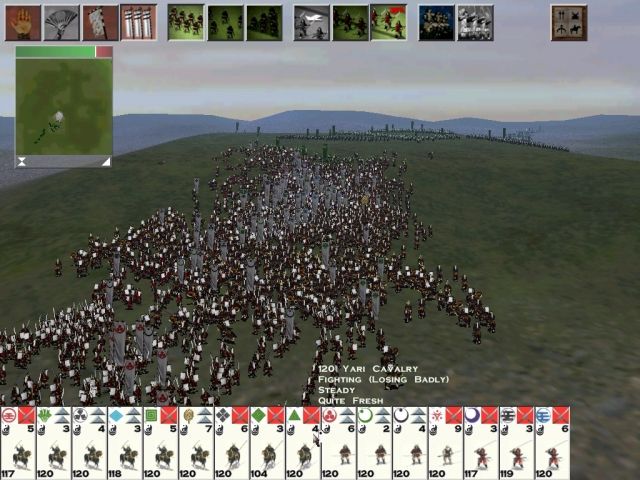
Q:Each installment of the 'Total War' series adds new elements, such as firearms, naval battles, and now magic. Are you concerned that these new elements might dilute the ancient battlefield atmosphere the series has always cultivated?
Kevin:Not worried at all. Our own understanding of the 'Total War' concept is actually very broad, perhaps even broader than some players imagine.
So, we're not afraid to explore those new challenges, as long as they fitScottthe core systems mentioned earlier, which include both campaign and battlefield gameplay. Ultimately, as long as it makes players feel interested, have fun, and get excited, we are willing to try it.
Over the years, we have tried many new things. For example, in Rome: Total War, we implemented siege warfare and urban street fighting; in Empire: Total War, we added complete naval battle gameplay; in Total War: Three Kingdoms, there was an RPG-style officer system; and Total War: WARHAMMER obviously added magic and various fantasy abilities.
Therefore, we believe the concept of 'Total War' itself is very flexible, and there are hardly any ideas we are unwilling to consider and try.
Scott:Exactly, 'Total War' is a series that draws from many sources. The fact that one installment presents specific content and style doesn't mean 'Total War' will always do so in the future, right?
For example, Total War: WARHAMMR emphasizes individual duels and the management of special abilities, but this isn't necessarily the gameplay we want for historical-themed games. So, the emergence of each new title doesn't mean it will become the fixed template for all future works.
First, our decisions must consider what settings are most suitable for the current IP. Of course, the core principles must remain intact—there must be a campaign mode, and battles must be realistic and interesting. These basic elements cannot be missing.
But when it comes to implementing specific themes, it doesn't mean the entire series will remain unchanged forever. When we make the next game, we'll make new decisions and think about what approach is most effective. It really depends on player feedback—on where they focus their energy while playing. Do we want them to focus more on micro-managing units? Or do we want them to think about strategy from a higher level?
Kevin:Actually, for many years, there has been a joking saying about Total War: Dinosaurs—we never seriously intended to make it, and we never will.
But we absolutely have the capability to do it! If we really, really wanted to, we could totally throw dinosaurs in and make a 'Total Dinosaur War'—but we don't want to do that.
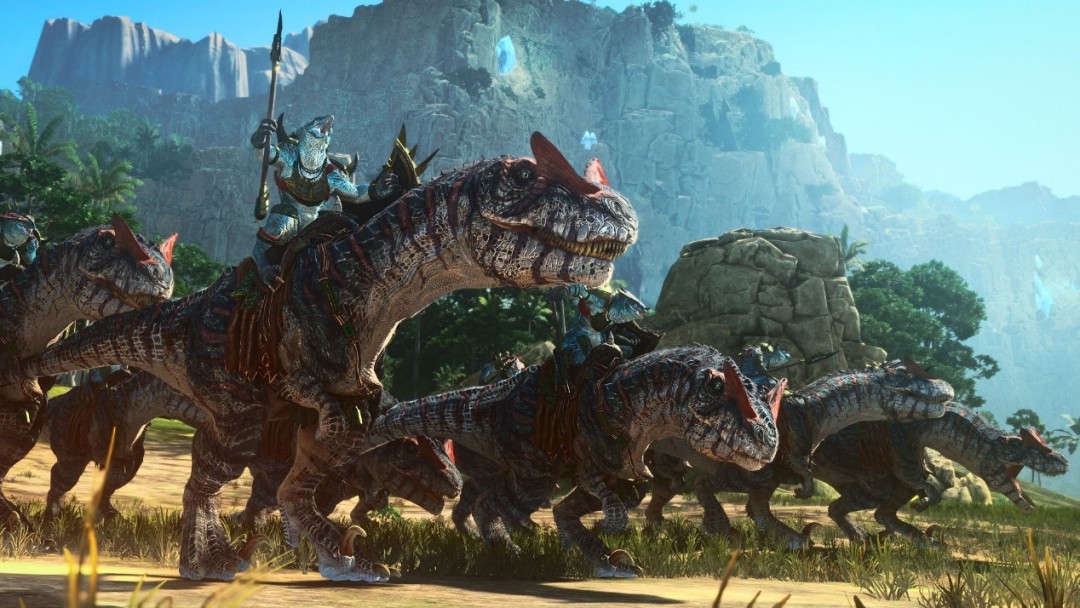
We've already done it!
Q:In your opinion, what has been the biggest change in the 'Total War' series over the past 25 years?
Kevin:Interesting question. Here's the thing, the two of us—Scottis the Lead Architect and Director, and I am the Creative Director with an art background. We each have our own perspectives on change.
From my perspective, the biggest change over the past 25 years has been the huge increase in content quality and complexity.
To put it in the simplest terms: when we made the first Rome: Total War, creating a new unit model only requiredone dayof time.
And now, even just making a regular unit model takes about 25 days. Over the past few decades, the scale and detail of video games have improved enormously. Although this consumes a lot of time and effort, at least for our game, it is absolutely worth it. This is indeed a huge change that has completely altered how we consider project scale and costs.
Scott:Yes, the constant trade-off between cost and effectiveness is a core theme of the 'Total War' series. This brings us back to our first question—why this series has existed for so long and why it is so attractive.
In most games using a tactical view, your camera is 80 meters in the air, and soldiers are tiny stick figures, so there's no need to add a lot of detail to characters. If we did that, we could definitely save a lot of money.
But what makes 'Total War' special is that you can zoom in on the battlefield anytime, anywhere, observing it in ways never before possible. Every object you see might have taken us a full 25 days to create. Even if you don't see these details at certain times, just knowing they exist enhances your emotional experience. And when you do zoom in, the sense of satisfaction is unparalleled.
This is the 'Total War' we have created—an 'epic beast' of strategy games. It is extremely difficult to produce, but precisely because of this, people keep falling in love with the series.
Kevin:When we first started working on 'Rome,' we had only one character designer, and he designed all the units in the game by himself. Now, it takes 25 people to do the same thing. Looking back, it's quite sentimental.
Scott:I believe technological development is an eternal challenge because technology is constantly upgrading. Just likeKevinsaid, whenever technology takes a step forward, graphics, audio, and visual effects improve accordingly, and players naturally have expectations for this.
But for us, every technological upgrade comes with a huge cost—the cost of content production suddenly increased by 25 times. So, each technological advancement makes our games more immersive. However, this also leads to higher demands on resources—both development resources and hardware performance.
Kevin:Every time we start a new project, I always emphasize to the art team during meetings—'Just stick to the specs of the previous generation, don't make any big moves.' And the result... haha.
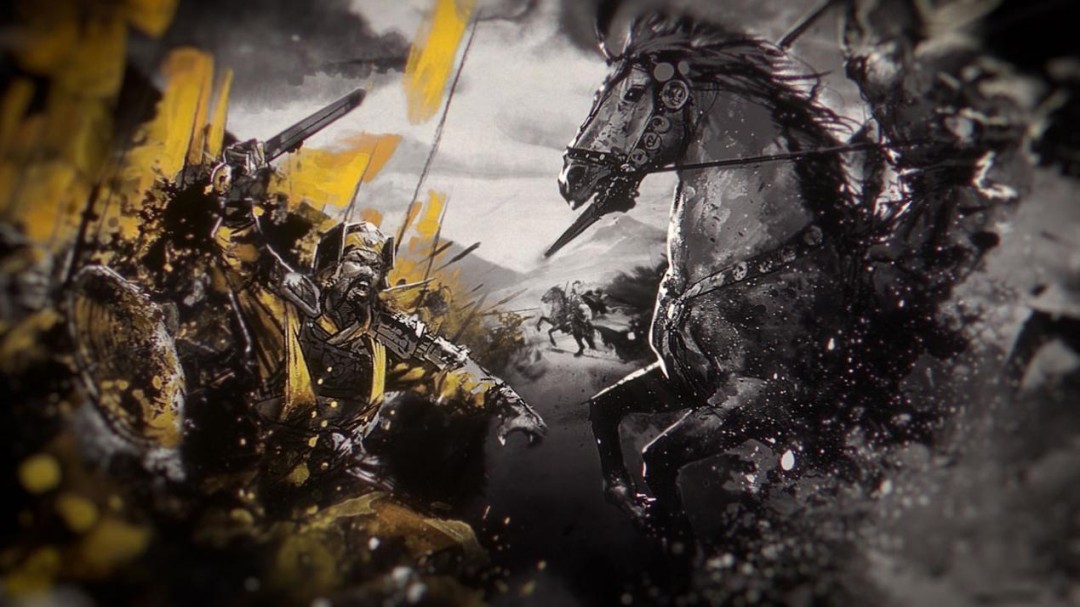
Big moves
Q:Which new improvements and changes in the series have impressed you the most?
Kevin:Counterintuitively, I think the technological advancements of the first game were the most disruptive. It was a huge leap, forcing a fully 3D game out of a basically 2D perspective game environment.
However, I'm not sure if that counts, since it was a long time ago. I want to mention a more recent example, about ten years ago, when we decided to make a 'Total War' venture into the fantasy genre.
When the plan for Total War: WARHAMMER started, we had no idea how difficult it would be or how much resources we should invest. Later, after talking with Games Workshop, we finally decided to go all in.
This is what we learned when working on fantasy themes—don't try to swallow the whole giant at once, but break it down into smaller pieces to tackle one by one.
Perhaps at the time, we didn't think much of it, but looking back at the final product—those giants, dragons, cool spell effects, the astonishing number of different unit types on screen, and those breathtaking combat animations—I believe the leap from purely human historical themes to adding magic and various crazy creatures is quite amazing.
Scott:My answer can be divided into two parts: new and old.
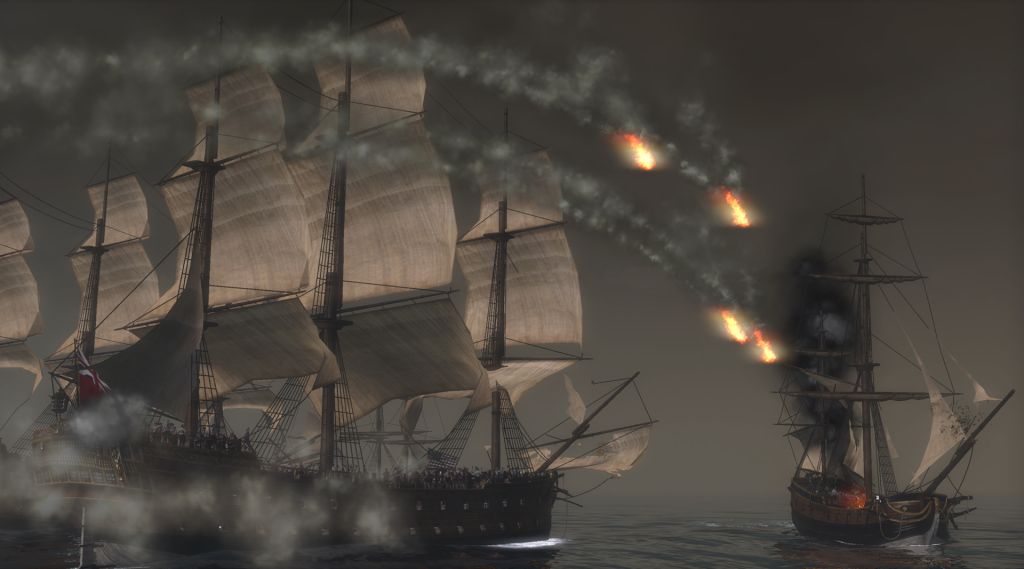
Back when we were making Empire: Total War, we introduced naval battles for the first time, and I was the one responsible for ocean rendering. It was a wonderful experience. At that time, game development technology was still evolving, and no one had relevant project experience. Since I didn't have other tasks, I threw myself fully into simulating the environment for naval battle scenes—a rare luxury of time that we seldom have now.
At that time, I delved into various related technical papers and created what I thought was a fantastic water effect for the time. Moreover, we simulated every element of naval battles to the extreme, such as sails that obeyed real physics. When cannonballs hit, they would flutter in the wind; you could blast holes through the sails or blow holes in the hull. You could even see the crew loading cannons on the ship. As developers, we had a lot of fun trying out these things ourselves.
I remember later, when the combat design team got involved, they completely broke down. They asked us how to balance this system because there were too many influencing factors. When ships rocked in the water and cannons fired, each hit landed on different parts of the ship. Sometimes ships sank quickly, other times it took a long time. We immediately answered—this is exactly the effect we want! Then, they had to give in and establish a new combat system to make the game playable and balanced.
The memories of those days are still vivid. At that time, we really took a huge step forward.
Kevin:At that time, we also had the most realistic ship models available on the market. How did we achieve this? We went to the National Maritime Museum in the UK. They had the design blueprints for all the ships. We paid a large sum of money to buy the usage rights for all the blueprints.
So, all the ships in our game were built strictly according to the original design blueprints. The amount of work involved in those blueprints was truly super, super massive.
Just as many as the pounds we spent.
Scott:I didn't know about this for a long time. It wasn't until many years later that I discovered the warship blueprints we used back then actually cost money.
Let's talk about the second point. This is a topic we are currently working on. Although it might not sound as cool, I think it's very important.
We want to make the 'Total War' series smoother—for example, by making it adaptable to multiple platforms. To do this, we must find ways to focus on solving a major longstanding difficulty of the series—multi-unit control. If you have 20 units and give them movement commands in a complex environment, where exactly should they go? How should they move to meet player expectations? If I drag and deploy a large number of troops in a very small space, what should the effect be?
These control schemes work in most cases, but there are always some inexplicable glitches. This time, we finally had enough time to thoroughly study this issue.
This is a long-term optimization project with a low return on investment for individual projects. But we are laying the foundation for all projects, so we need to dig deep to thoroughly solve the problem.
These tasks are invisible. If done particularly well, players won't even notice them. If they do notice, it means something went wrong—players will definitely ask, 'Why did it freeze again? Why can't I click anything?' Our goal is to make these operations smoother.
Yes, we have invested a lot of time and resources into this. Although it's not something flashy, I even hope players don't notice our optimization work and can just use the controls smoothly in the game.
Q:The current themes of the 'Total War' series focus on the era of line infantry and cold weapons before the widespread use of skirmishers. Is it due to engine and technical limitations that restrict the choice of historical themes?
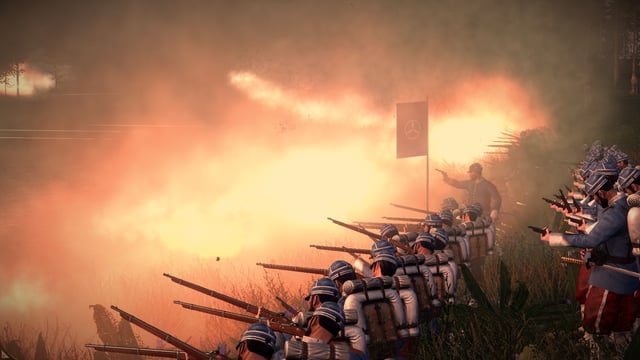
Scott:As a platform architect, one of my jobs is to strive to build a combat engine capable of handling all types of battles we want to cover historically. Because the difference between ancient warfare and the firearm era of Empire: Total War is huge, with a massive gap in between.
Actually, I think the most complex aspect of firearms is that they are weapons with flat trajectories, like rifles. So, once you mastered flat-trajectory weapons in "Empire: Total War," if you wanted to create a rapid-fire weapon in a more futuristic or sci-fi setting, like a machine gun, it wasn't technically that complex.
Personally, I think this is almost the most challenging part. The challenge isn't the underlying technology—which is actually quite simple—but the user experience. How do we present this to players? We also want to avoid being too rigid or too "line infantry"-style uniform, making Everythinggj feel more natural, organic, and dispersed. This is definitely a direction our engine wants to support and is continuously optimizing.
As for dispersed skirmish formations, we first need to ensure battlefield informationreadability. Players need to be able to distinguish which unit is which on the battlefield, so maintaining a certain degree of unified formation is essential.
It's not just about how individual units function, but also about how multiple units coordinate and how the AI controls them.
In certain settings, such as ancient warfare, you might want to see vast armies approaching in neat battle lines; whereas in more modern contexts, you might want to see the AI employing more skirmish tactics at the army level, resulting in completely different movement patterns for troops. These are different elements, and we want our engine to support all these different areas.
We want "Total War" to continue for a long time—therefore, we are working hard to build an engine that can handle any crazy ideas MOD authors come up with, and make the process as elegant and smooth as possible.
Q:As an orthodox historical title, "Total War: Pharaoh" seems somewhat lacking in terms of theme and unit variety. Why did you choose this theme?
Kevin:Sharp question. My main job today is to dodge them gracefully.
Actually, we have always had a special affection for the Classical Era. I feel that we have never truly delved deeply into that period—I mean the pre-Roman era. Unfortunately, the experiences from "A Total War Saga: Troy" and "Total War: Pharaoh" have also given us insights—we have very clear plans for the future. When developing games, regarding themes and gameplay, we will engage in closer and more in-depth discussions and collaborations with the community.
Scott:We know that players have always had high demands for historical themes. Yes, we did make mistakes in topic selection and audience research, but through this, we also want to state one point—historical themes are an important component of the "Total War" series, and always will be.
History is the foundation of "Total War."
Q:Over the past 25 years, the "Total War" series has continued to grow globally. Has the team gained any special experiences or insights in understanding and connecting with Chinese gaming culture?
Scott:We've been discussing the Three Kingdoms theme for decades. Probably ever since I joined the company, people have been talking about making a "Three Kingdoms" game. At first, I had no idea what they were talking about—that was 26 years ago. We put considerable effort into implementing the "County Region" system in the game.
Kevin:We did a lot of work with Games Workshop to help them recognize the importance of the Chinese market. We also learned a lot from this process, hoping to better support the Chinese market.
At the same time, we are very grateful to Chinese players. Although we couldn't interact face-to-face as we do now, you have always been very supportive of the development of "Total War." I remember about ten years ago, when we looked at the data, we were surprised to find that the traffic on Chinese forums was ten times larger than that of European forums!
In the near future, we will more actively establish better connections with various cultural circles around the world.
Q:Players have their own preferred historical topics. How do you choose the historical themes for the "Total War" series, and how do you handle conflicts with player preferences?
Kevin:It's hard to say. My view is that there is a group of players who like all "Total War" games; meanwhile, there is another group of players with very strong personal preferences, who only like specific regions or countries.
And I'm from Canada (not British), but as far as I know, Creative Assembly has a particular penchant for historical events involving Britain. These often serve as our starting point. (Laughs)
Scott:Historical fans are extremely serious about details. If we get the uniforms wrong, the color of the feathers on the hats incorrect, or the button colors wrong, they will not hesitate to point it out.
So, we take history very seriously. As I mentioned before, gameplay and immersion always go hand in hand, and whenever possible, we strive for absolute historical fidelity.
We collaborate with historical experts from various fields—those who write history books, the most renowned and sought-after professors and experts. We invite them to our company to communicate with us, review our games, tell us where we went wrong, or share additional interesting details.
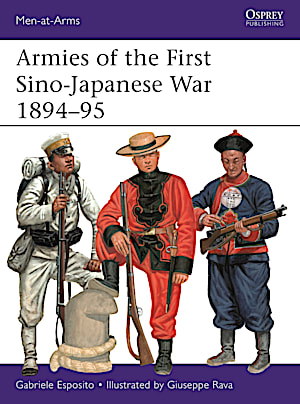
Our office is filled with an incredible number of history books—there's a separate Osprey section, with essentially one book dedicated to every historical military unit. Our team spends countless hours flipping through these books just to make the units in the game more accurate. These materials provide tremendous support for the game's production.
Q:Which "Total War" title is your favorite?
Scott:It's really hard to answer, as it's easy to be evasive. But I still want to say that I have affection for all the titles; they are all good memories.
The original "Total War" was my first major game project after graduating from university. I thought I knew Everythinggj, only to suddenly realize I knew nothing. I first had to figure out how to make games, and then build the "Total War" series from scratch—when I joined the company, the series didn't even exist yet. So, that game will always hold a special place in my heart.
Later, making the "Total War: Warhammer" series was like a dream come true. I used to paint "Warhammer" miniatures and play the "Warhammer" tabletop game when I was in school. If someone had told me back then that I would eventually make a living creating games based on the "Warhammer" universe, I would have pinched myself to see if I was dreaming. So, it was truly a dream-fulfilling experience.
I also really like "Total War: Shogun 2." In a sense, it distills the core gameplay of the series. Its purity and artistic aesthetic make it, in my opinion, the perfect entry among all "Total War" games.
So you see, this is a terrible answer—because you only asked for one, but I gave you a bunch.
Kevin:Well, I have an even worse answer here—my answer is basically the same as Scott's.
But I also want to add one more—although it might sound like I'm trying to please Chinese players, I do feel that "Total War: Three Kingdoms" has its own special qualities.
I say this because, for a long time, I believed that early "Total War" games lacked a key element: an emotional connection with characters.
Actually, we had this idea while making "Total War: Rome II"—you need to truly identify with an individual and build your empire from that person's perspective. But in "Total War: Rome II," this idea wasn't fully realized (only the family tree existed).
So, I believe "Total War: Three Kingdoms" is the entry in the series where we truly achieved this goal.
Scott:"Total War: Three Kingdoms" is indeed a very important title because it successfully blends fantasy (the Romance of the Three Kingdoms) with history. We wanted it to feel like a genuine, authentic historical "Total War," while also allowing players to experience the folklore and legends surrounding the Three Kingdoms. Balancing these two aspects was actually quite difficult.
We even designed an option that allows players to adjust this themselves—you can choose to play the side that leans more towards mythology and legend, or the side that is closer to historical simulation for that era. We call these two modes Romance Mode and Records Mode.
This was the only time we made such a design decision due to the nature of the subject matter itself—having both a foundation in legendary romance and roots in actual history.
Q:I miss Jeff van Dyck's composition work in the previous series. Is there a chance he might return to work on "Total War" in the future?
Kevin:We're old friends, so it's possible. There may be opportunities in the future.
Q:There are many novel units in "Total War: Warhammer." Which one did you find the most difficult to create?
Kevin:There are many; you'd have to look it up to know. I remember there was a huge thing (the Necrocolossus), part of the Vampire Coast faction, made entirely of pirate ship fragments, looking very imposing. Our artists spent about 35 days just to finish that model.
That's right. In addition to the studio's artists, we often collaborate with many freelance professionals. This isn't limited to the "Total War: Warhammer" series. If you were to compile a list of the top five or ten best character designers in the world, a significant portion of them would have participated in the production of the "Total War" series.
The concept artist for the Necrocolossus is a master in their field. I genuinely believe that only true masters could come up with such a design and achieve that level of quality.
Scott:My choice wasn't particularly difficult. In the early "Total War: Warhammer" games, there was a Dwarf Lord named Thorek Ironbrow. He sat on a throne carried by four other dwarves. I was baffled at the time—how do you make this unit? How do you keep him balanced on four independent units? And what happens if the litter falls apart?
Later, we modeled it as a single entity.
The rigging for this model was extremely complex; we certainly couldn't use infantry animations. We specially created a full set of complete animations for the entire unit, including the dwarves carrying the king's throne, and it worked out in the end. In hindsight, we realized how much this approach consumed our animation budget—but it did work, and we achieved the desired effect. So, sometimes, as long as it solves the problem and moves development forward, it doesn't matter if it's a white cat or a black cat.
Q:If you were to make a documentary about the 25-year history of the "Total War" series, which moment do you think could serve as the opening scene?
Kevin:You could use the original "Total War: Shogun." Actually, when this project first started, it was just intended to be a quick RTS cash-in, since RTS games were hot at the time. But from that singularity, the project kept expanding and exploding, until it finally launched.
Scott:It all started when a programmer wrote a 3D terrain rendering engine in assembly language, then showed it to the company founder, saying, "Hey, I want to make a game with this," and then—it actually got made.
However, if there were to be a documentary, I would hope it could include the development diary for the original "Total War: Rome." At that time, we were competing for release slots with another RTS game, which forced us to cut a large number of game mechanics and shorten the development time. Later, I had to cut a lot of content, otherwise the game simply wouldn't run. That period was absolutely hectic—but in the end, we managed to ship the project.
Although it felt like I was on the verge of a breakdown at the time, looking back now, it was quite an interesting experience.
Kevin:The entire team was anxious at the time. There was a bug that took us six whole months to find! Six months just to locate it. Besides that, there was also a mysterious bug involving random memory writes, which was extremely difficult to troubleshoot.
Scott:Completely elusive bugs—I encountered one again in "Total War: Warhammer II." To fix this bug, I rewrote the memory allocation, which took about three days. That was probably my first time serving as Technical Director, and the responsibility was entirely on me. If others couldn't find the bug, it was up to me to find it. It was incredibly stressful.
Sending patches to players back then was much more difficult than it is now.
Now with Steam, patches are automatically downloaded and updated. But back then, getting patches to players might have involved attaching them to the cover discs of magazines like "PC Gamer." Players had to get that disc and manually install the patch.
So, game developers at the time had to get things right from the start as much as possible. If problems arose that needed fixing, distributing patches was a difficult task.
Q:Finally, do you have any message for Chinese players?
Scott:To all Chinese players who have played "Total War," we express our heartfelt gratitude. If you love the "Total War" series, please share that passion with players around you. Also, please tell us what shines brightest for you in "Total War," and we will strive in that direction to make the game even better.
In conclusion, thank you very much for your continued support of the "Total War" series. Thanks to your support, we are free to create the works we desire.
Kevin:Thank you to Chinese players for your unwavering support over the past decade. We promise to stay in touch with you and become partners who work seamlessly together.
By the way, the 25th Anniversary Sale for the "Total War" series is currently ongoing. After readingScottandKevinthis interview, I hope you'll be interested in it—at least curious enough to check out "Total War: Shogun 2."
Total War 25th Anniversary Sale:https://store.steampowered.com/publisher/Sega/sale/TW25