

It has been five full years since PRAGMATA first made its appearance at a PlayStation online showcase. So, when I visited the PlayStation office in Shanghai, picked up a controller, and faced the demo of PRAGMATA—its first public reveal in China—my overwhelming feeling was one of "disbelief." If this ghost of a game, which has existed only as a "concept" since the beginning of this console generation, were to "drift" in front of you at a future exhibition or event, you would likely have the same reaction as I did.
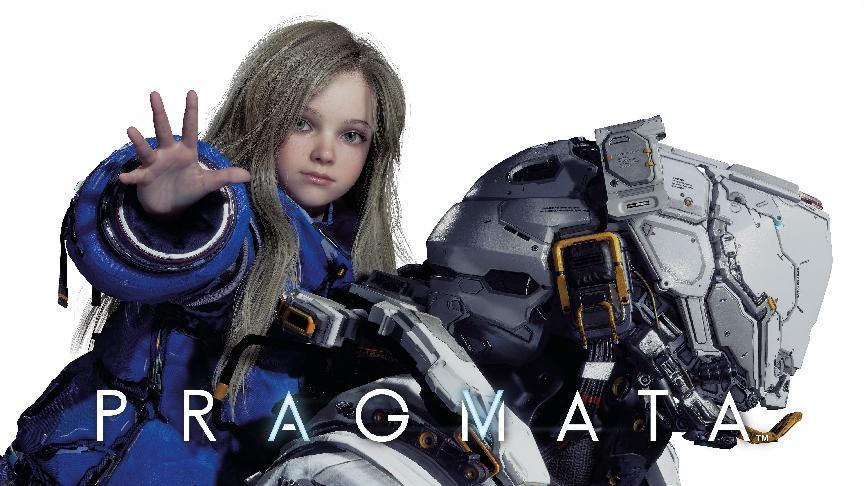
However, these are aspects outside the game itself. Regarding the game itself, after experiencing about 15 minutes of the early gameplay, I have developed considerable anticipation for PRAGMATA, eagerly looking forward to its release day to fully enjoy the complete version.
Overall, if we were to compare PRAGMATA to known titles, "Space Resident Evil" might be the most apt description. The core gameplay of PRAGMATA involves exploring interconnected, three-dimensional levels in a low-gravity space base, progressing through the story by solving puzzles and engaging in third-person shooter combat.
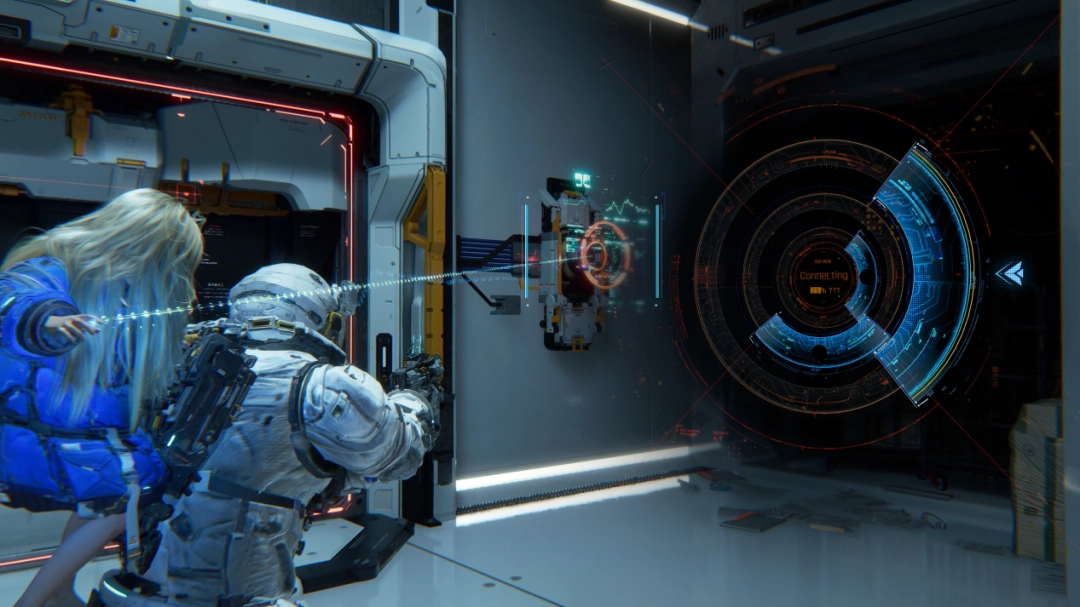
A hacking and lock-picking puzzle in the demo
However, at the basic linear structure level, PRAGMATA is different from any known linear game. After all, while there are many linear games featuring third-person shooter gameplay, it is indeed the first time in years to see a design that incorporates "grid-based" puzzle solving amidst aim-and-shoot mechanics, as seen in PRAGMATA.
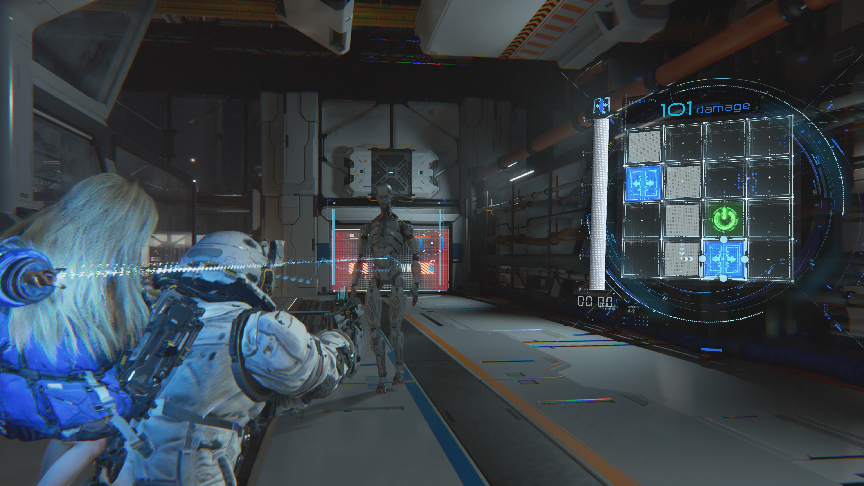
In the setting of PRAGMATA, robotic enemies in the lunar base are covered in armor. If you attack them directly with firearms, you will deal very little damage. Only by successfully hacking them through "grid-based" puzzle solving, causing their defense systems to crash, can your firearms deal normal damage.

Although PRAGMATA's gameplay is quite novel, experienced linear game players might question whether combining "aim-and-shoot" and "grid-based puzzle solving," which require vastly different mindsets, would cause discomfort and frustration due to frequent switching between these two modes. This is their biggest concern regarding PRAGMATA's unique gameplay. But no worries—in the following parts of this preview report, I will explain in detail why my attitude toward PRAGMATA shifted from skepticism to anticipation after playing the demo.
Regarding this point, Naoto Oyama, the producer of PRAGMATA, stated in an interview that the "shooting + puzzle" gameplay design was a key focus during the game's development. The refinement of this design is also the primary reason why PRAGMATA has been delayed multiple times since its announcement.
Compared to those organic, "growth-style" gameplay system designs, PRAGMATA's creativity indeed feels more like an intentional innovation grafted onto existing third-person shooter mechanics. This "patchwork" design process inevitably leads to many aspects requiring refinement during production. Producer Oyama's introduction aligns with my guesses about PRAGMATA and its gameplay before I actually got my hands on the game.
However, despite being a "patchwork" of mechanics, after five years of polishing, PRAGMATA's creative blend of "shooting" and "puzzle-solving" does show promising results. In fact, the promotional trailers released so far are somewhat misleading. In the demo version I played, third-person shooting did not play the dominant role in combat as many might have imagined.
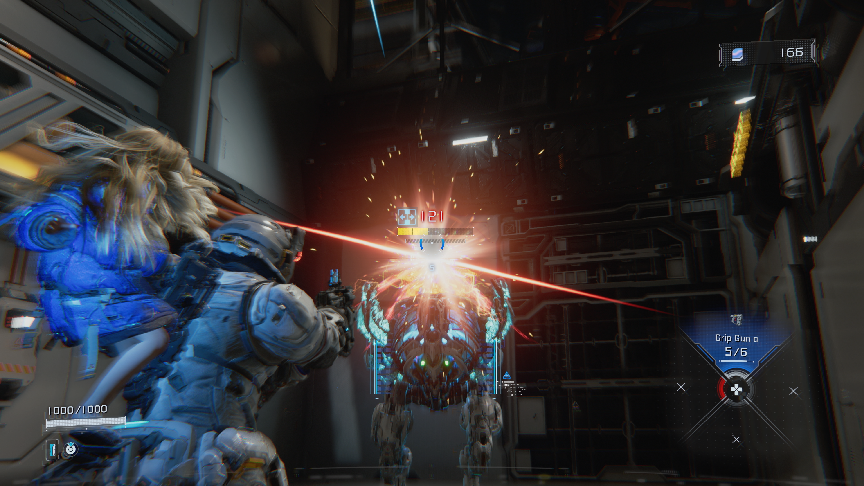
In PRAGMATA, the puzzle mechanic that incapacitates enemies is the true "combat" component. In fact, the puzzle-solving in PRAGMATA is equivalent to aiming and shooting in the Resident Evil series, while the shooting in PRAGMATA is equivalent to the "execution" step in Resident Evil, where you use a knife to finish off a zombie after knocking it down.
Once you understand this internal logic of PRAGMATA's combat system, the doubts that arose while watching the promotional trailers dissipate.
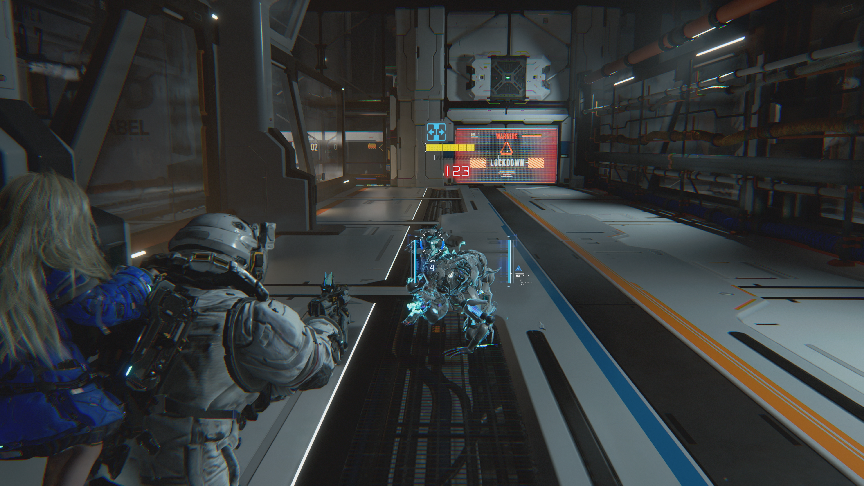
For instance, crucially, PRAGMATA does not employ designs like "bullet time" when the puzzle interface is open. While this might seem frustrating, it is intended to ensure synergy between the independent puzzle mechanics and the overall enemy placement. The puzzle mechanic involving enemies in PRAGMATA is somewhat similar to the disco mini-game in Yakuza 0. When "moving on the grid," you can choose the shortest path to reach the endpoint quickly, or take a detour through special tiles to gain beneficial effects upon completing the puzzle.
Once the puzzle begins, the spatial concept of "distance from enemies" transforms into the temporal concept of "how long the puzzle interface can safely remain open." If you are about to be surrounded by enemies, you might need to forgo beneficial effects to end the puzzle quickly, returning to the "real space" of the game to adjust your position within the level. However, if you have sufficient distance from enemies, you can try to collect all beneficial tiles in the puzzle interface at once, eliminating all enemies during the incapacitation period after solving the puzzle, without waiting for the next "move-puzzle-shoot" cycle.
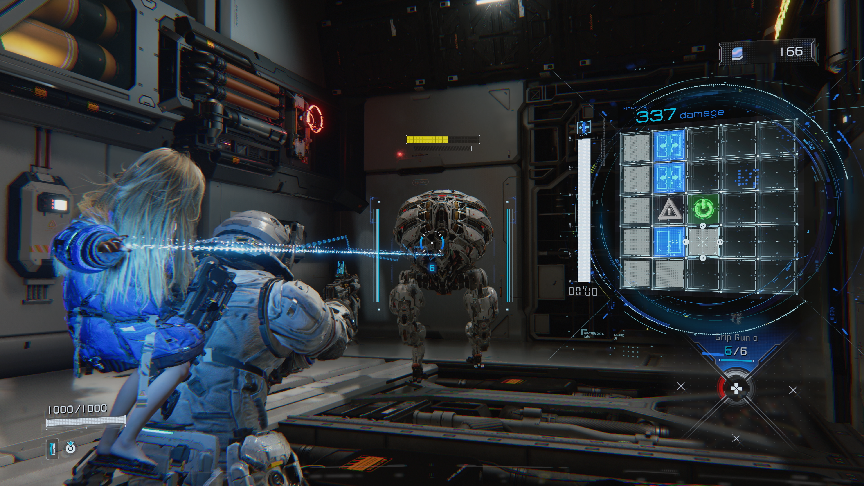
Building on this foundation, PRAGMATA introduces various weapons and items with different effects to add variability to this basic strategic interplay.
In terms of weapons, the "Shockwave Gun," similar to the shotgun in the Resident Evil series, deals massive damage to incapacitated enemies at close range. This provides a fallback option for one-shot kills during the "puzzle-solving" phase, even when rushing in and out without obtaining buffs. Another weapon in the demo, the "Stasis Net," can simply and brutally trap certain enemies in place for a period of time, offering players a dual buffer in both time and space, thereby reducing decision-making pressure.
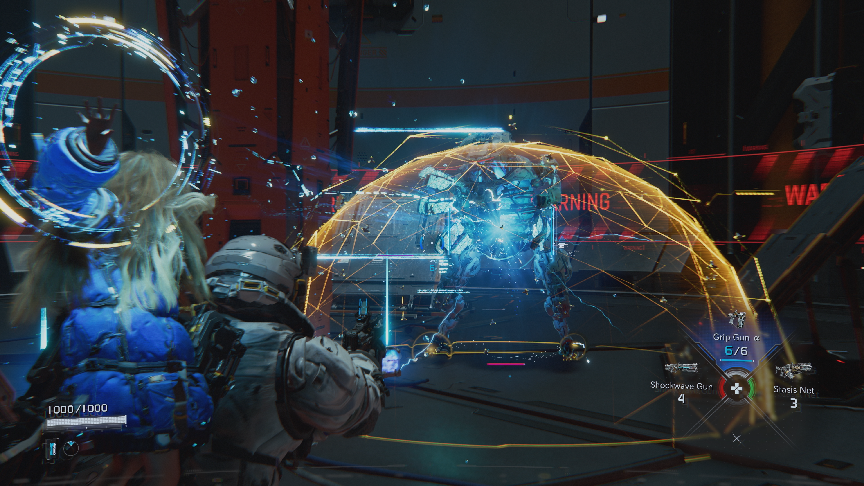
In terms of items, the PRAGMATA demo introduces a special type of item that "influences subsequent combat and puzzle-solving content." Upon pickup, these items add path tiles with new beneficial effects to future puzzles, providing players with more options for their solving routes.
In this demo, only items that increase player defense appeared in the levels. However, it is predictable that the full version will feature items with various new effects. The functionality of these items will directly influence the player's puzzle-solving strategy, while their rarity will affect decision-making throughout the level progression. After all, these items take effect immediately upon pickup. If you know the upcoming combat encounter is not difficult, you can wait until after the battle to pick up the item, saving it for harder fights later on.
Furthermore, neither weapons nor items in PRAGMATA adopt the strict resource management design seen in the Resident Evil series. Players do not need to worry about inventory space for these items, only about the timing of their use. In other words, rather than being "carryable supplies" that require trade-offs, these items are more like "rage" or similar resources in action games. Once familiar with the level content, players will ultimately be able to maximize the utility of these items.
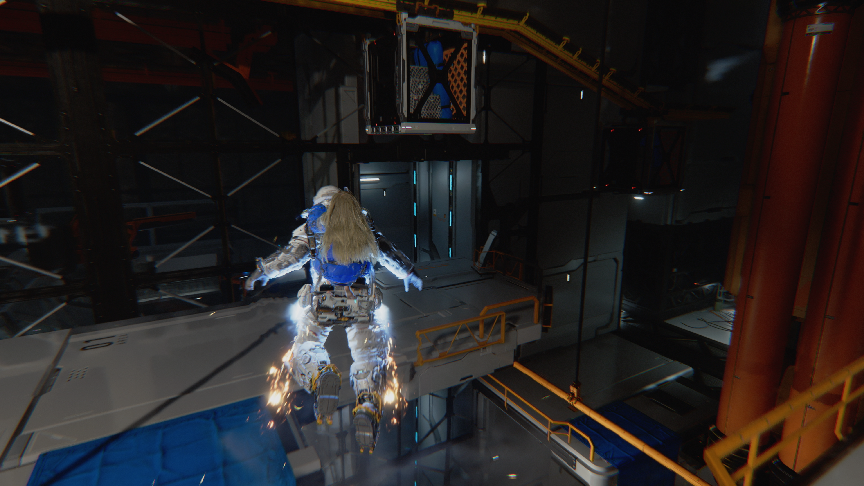
From the content above, it is easy to see that although PRAGMATA features innovative gameplay, at its core, it seems to remain a linear action-adventure game with high replay value, akin to Capcom's specialties like Onimusha and Resident Evil—games where you "get better as you play, and play more as you get better."
And this is precisely why my feelings toward PRAGMATA shifted from doubt to anticipation. It is a bit difficult to explain, but I can only say that if you have ever been captivated by Capcom's linear games, you will surely understand my journey of thought.