

Recently, the Ministry of Education updated and released the "Undergraduate Major Directory for Regular Higher Education Institutions (2025)," adding a new major called "Game Art Design." This is the first time the word "Game" has appeared directly in a major's name—previously, game-related majors were called "New Media Art Design." Undoubtedly, this shows that game culture, as a subculture, is gradually being accepted and recognized by mainstream culture. Of course, this acceptance is not limited to games alone.

Just this February, the International Olympic Committee officially announced that the first Esports Olympics will be held in Riyadh, Saudi Arabia, in 2027. With the endorsement of the Olympic Committee, esports has finally taken its seat at the table. This shows that globally, mainstream culture's view of gaming and esports is becoming increasingly positive. Games and gaming behaviors are no longer seen merely as a waste of time, but as a new form that can be called "art" and regulated as a "sport."

Therefore, under this trend, esports tournaments naturally flourish. Or rather, it is the increasingly mainstream and standardized nature of esports that has led global mainstream culture to praise it. The two reinforce each other and continue to evolve.
For example, in the summer of 2024, the inaugural Esports World Cup concluded in Riyadh, the capital of Saudi Arabia. With a total prize pool exceeding $60 million, covering 21 esports titles and attracting approximately 1,500 players from around the world, its massive scale and high commercial value compelled mainstream society to marvel and reassess the influence of gaming and esports.
Besides major events like the Esports World Cup, independently operated game tournaments are also receiving significant attention. According to overseas data firm Esports Charts, viewership trends for esports events globally showed steady growth in 2024, with major tournaments gaining more attention. It can be said that global esports has entered a mature development phase.
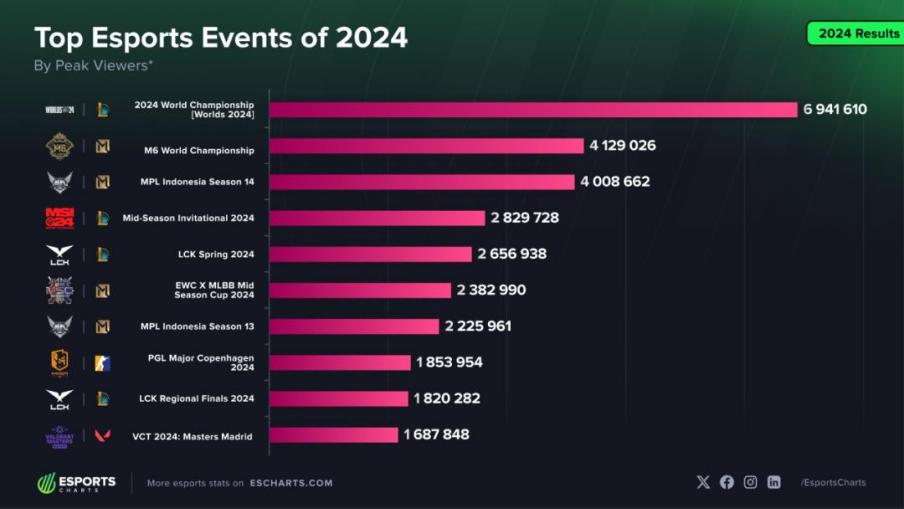
However, truly mature esports development requires more than just temporary popularity; it depends on who has a more perfect tournament system. In this era of mature esports development, only more refined tournament mechanisms and better ecosystem building will allow esports to surpass the game itself and continue to thrive. In this regard, there is a ready-made example—and you have surely heard its name.
This game swept the global market in 2017, loved by countless players for its excellent battle royale gameplay, and was even nominated for Game of the Year at The Game Awards that year. Its popularity even drove many internet cafes to upgrade their hardware, prompting many new players to buy GTX 1060 graphics cards. This game is the famous PUBG.
Compared to the game itself, PUBG esports is more mainstream. Both PUBG players who enjoy battling in-game and pure esports viewers who enjoy the thrilling spectator experience favor these tournaments. Today, we can see that PUBG tournaments have gained significant attention globally. The reason for this success? I believe it is PUBG esports' tournament system, which serves as an industry benchmark.
This isn't just hype. After PUBG swept the global market, the developers quickly began laying the groundwork for esports. Its success did not happen overnight. In 2018, PUBG held the first PUBG Global Invitational in Berlin. Since then, PUBG esports has hosted 50 official events and established the global esports system "Road to PGC" to support regional and third-party tournaments.
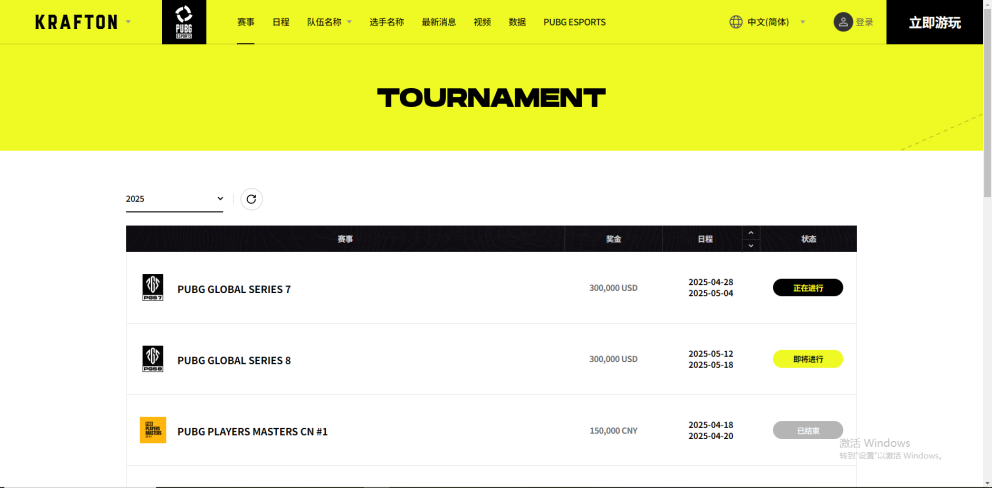
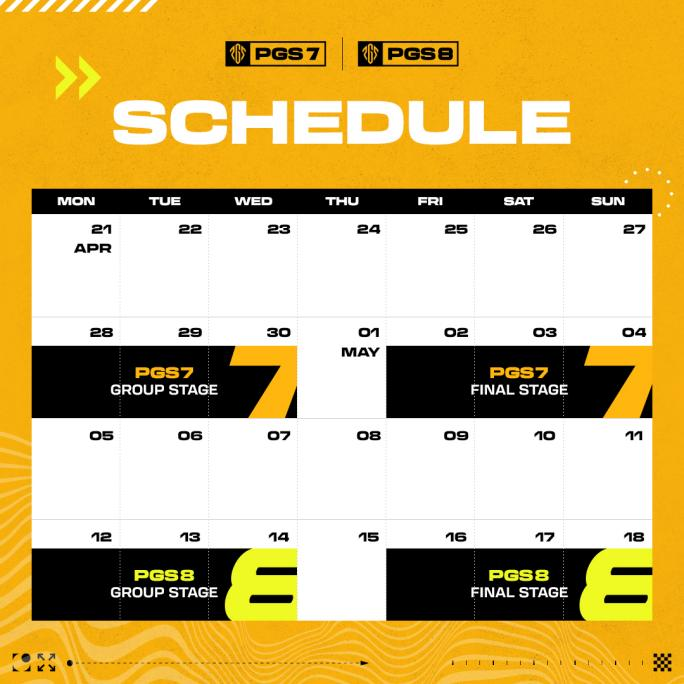
The most recent tournaments are the PGS Global Series 7 & 8, held from April to May 2025. Through these events, we can perhaps see in microcosm why PUBG esports leads the way in competitive gaming.
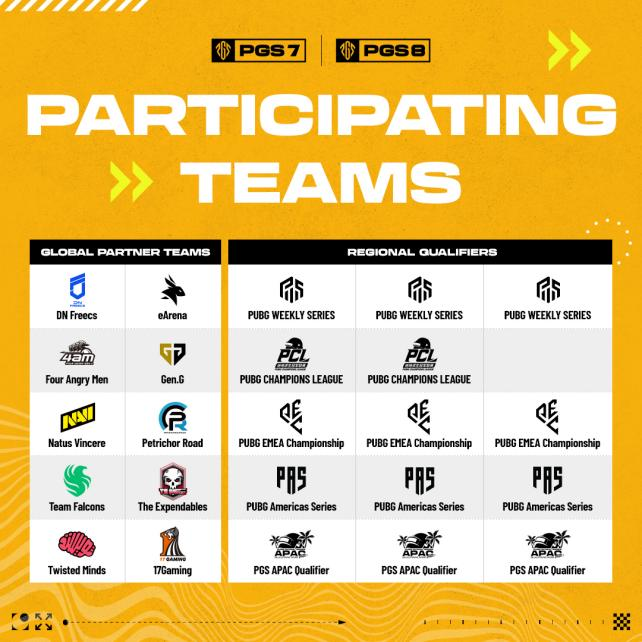
This tournament features 24 top teams from around the world competing for a prize pool of $300,000 per event. As you can see, participating teams include not only global partner teams but also those that qualified through regional leagues.
In terms of format, both PGS events adopted the classic two-stage system. A three-day group stage determined the 16 teams advancing to the finals. The grand finals then crowned the champion based on points accumulated over 18 matches across three days. For the battle royale genre, this format is clearly both entertaining and fair.
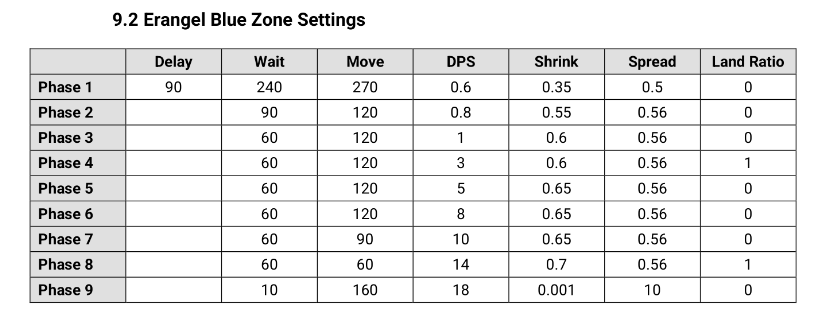
Those unfamiliar with PUBG esports might wonder: no matter how reasonable the format, battle royale games inherently involve random elements. How can fairness be ensured for different teams amidst this randomness? To answer this, I specifically looked into the 23-page Standard and Universal PUBG Esports Ruleset. This document not only covers off-game considerations such as player eligibility, team qualifications, and event sponsorship, but also discloses many in-game mechanics.
For example, the shrinkage range of the blue zone (safe area) on the game map is clearly defined with data. Factors affecting strategic roles, such as latency, wait times, and movement ranges, are all listed in tables.
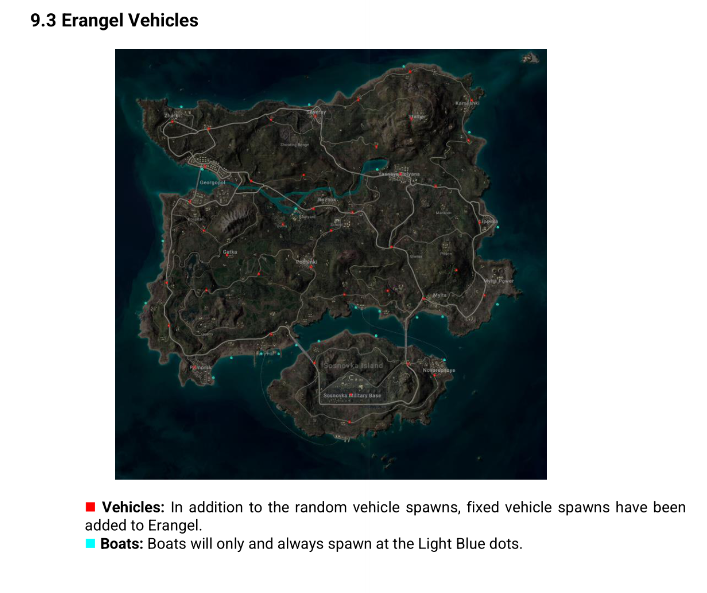
Another example is vehicle distribution on the map, which includes both random seeds and fixed spawn points. This ensures that teams heading to pre-planned strategic rotation points do not suffer unfortunate situations due to a vehicle failing to spawn.
More importantly, these data differ somewhat from what players experience in regular gameplay. In other words, this is a set of rules specialized for esports. After countless adjustments by balance designers, PUBG esports has achieved fairness in game mechanics as much as possible. Under this rule set, each match retains the original randomness of the game, keeping the viewing experience engaging and connected to daily gameplay. At the same time, appropriate numerical adjustments and transparency eliminate unfairness caused by randomness, preventing unlucky outcomes. Ultimately, this ensures that each match relatively accurately reflects the full strength of the participating teams, while providing viewers with a tense and exciting esports viewing experience through the players' standout or blunder-filled plays, which serve as the biggest variables.
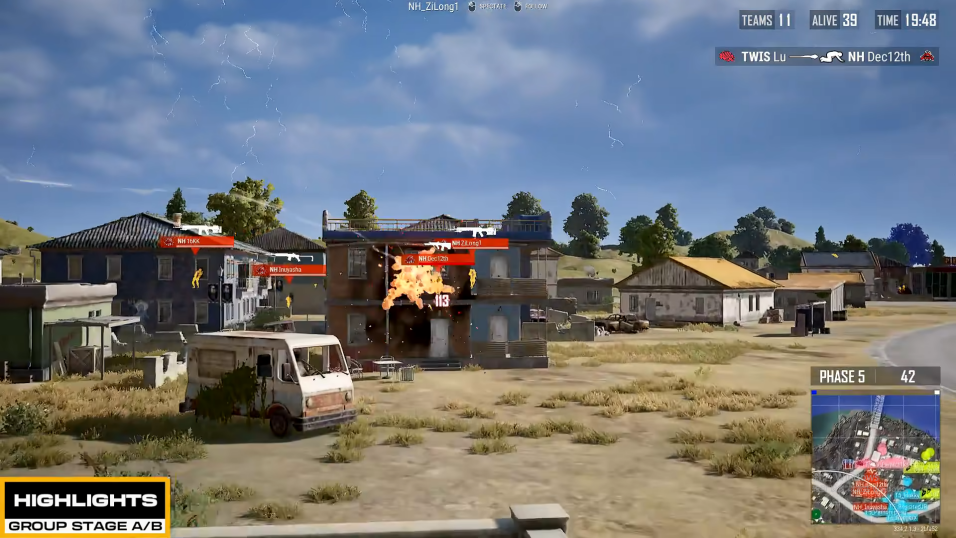
This approach of eliminating unstable factors and prioritizing player mechanics and teamwork—or rather, competitiveness—was evident in the recently concluded PGS7 group stage. For instance, on the first day, we witnessed an impressive play where a grenade was thrown from an extreme distance, hitting a wall precisely and knocking down an NH team player behind it.
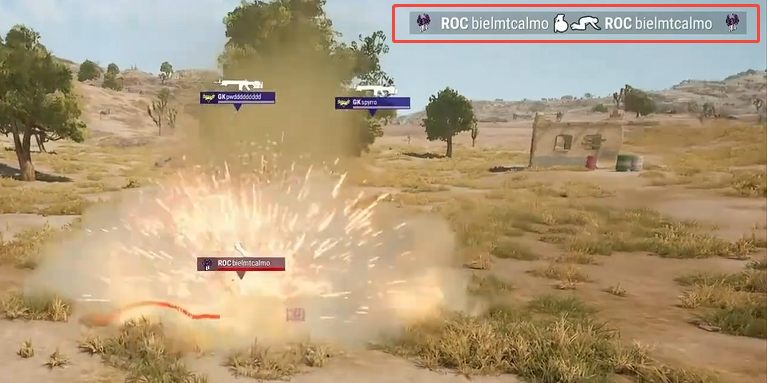
On the second day, we saw ROC player bielmtcalmo attempt a low-health breakout. He intended to throw a smoke grenade to disrupt enemy vision but accidentally pulled out a grenade instead, blowing himself up in a humorous mishap.
There are many similar examples, which we won't list one by one here. However, you can see that PUBG esports cleverly solves the classic problem of "esports becoming less enjoyable to watch" by balancing game mechanics and player skill. And PUBG esports addresses this issue not just within the matches themselves.
From a viewing perspective, due to the special nature of battle royale games, neither first-person, third-person, nor god-view map perspectives allow viewers to grasp the full situation. Moreover, in esports matches, situations can change in an instant. Relying solely on director switches during the live broadcast may not be enough—not because the directors are incompetent, but because even the most professional directors can struggle in such complex scenarios.
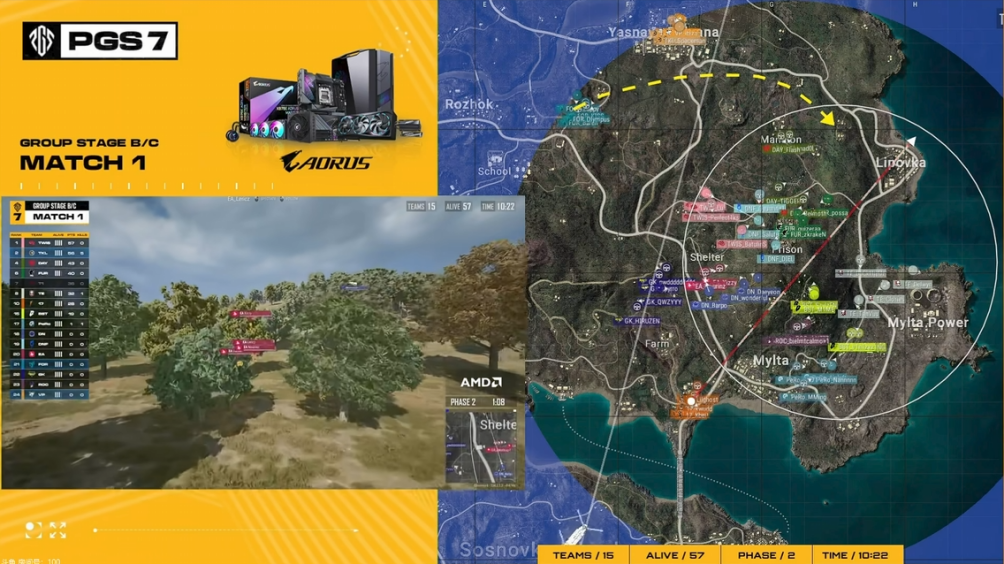
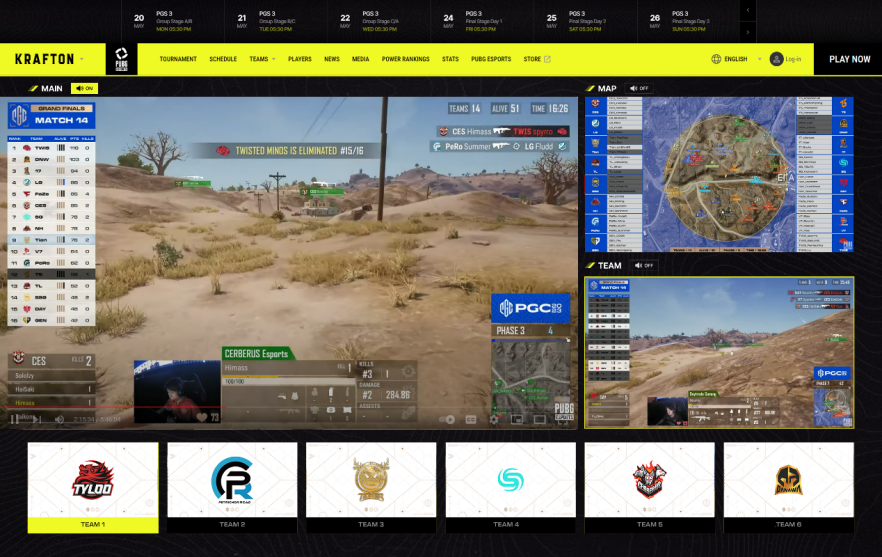
Thus, in the PGS7 broadcast, not only did the directors do their best to show player movements from various angles, but the PUBG esports officials also went the extra mile. On the official PUBG esports website, you can actively switch between map views and team channels. If you're more hardcore, you can open multiple small windows to create a surveillance room view, giving you complete control over match information. This kind of viewing experience might be optional for viewers, but it must be available, and PUBG esports chooses to provide this option to meet audience demands.
In short, whether in terms of game rules, tournament systems, or viewing experience, PGS 7 & 8 clearly demonstrates how the PGS Global Series delivers an ultimate audiovisual feast for PUBG fans worldwide. But this is not all; there are many more excellent tournaments like this.
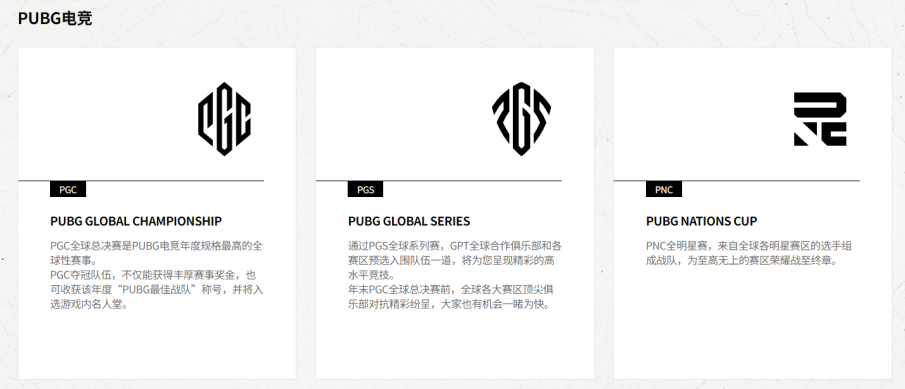
The PGS Global Series is just one part of the PUBG esports system. In addition to the recent PGS events, you can look forward to high-specification, high-prize ultimate global tournaments like the PGC Global Championship, as well as various regional tournaments around the world. This mature tournament structure provides stability and competitiveness to each region, making the entire system highly active. This is thanks to years of accumulation and the unifying power of the PUBG esports officials over its various formats. Thus, we see PUBG esports taking the lead in the battle royale genre.
Returning to the present, the shocking debut of the PGS 7 & 8 Global Series and the infinite enthusiasm of players and viewers confirm one thing: if this momentum continues, PUBG esports will likely lead not just the battle royale genre, but the entire esports industry. After all, in terms of maturity and tournament performance, it is advanced enough to be studied by countless other tournaments.
By then, we may see a more standardized, systematic, and healthy new era of esports—and these are exactly what PUBG esports is striving for right now.