

At the end of July this year, during Nintendo's third-party Direct presentation, Japanese veteran publisher SQUARE ENIX occupied three showcase slots. Besides announcing the imminent release of "Dragon Quest I & II HD-2D Remake," the most significant reveal was naturally "Octopath Traveler 0," which merges the worldviews of two mainline titles and the mobile game. In comparison, "Eliot's Thousand-Year Tale of Adventure," also from the "Asano Team," seemed somewhat overshadowed between these two heavyweights.
That said, it remained the game I was most "interested in" at the SQUARE ENIX booth during this year's Tokyo Game Show. Let me clarify: it was by no means the biggest attraction at the SQUARE ENIX booth. With the "national RPG" "Dragon Quest I & II HD-2D Remake" leading the charge and "Final Fantasy Tactics: The Ivalice Chronicles," representing the peak era of SRPGs, following behind, even so, I still felt that "Eliot's Thousand-Year Tale of Adventure" possessed a rare quality of "experimentation," something SQUARE ENIX titles have been lacking in recent years.
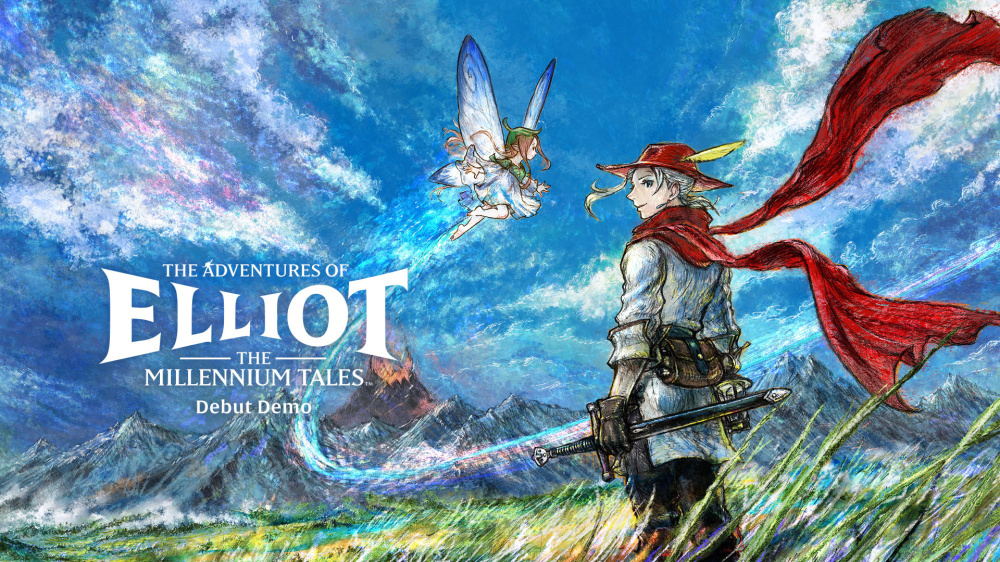
As one of only two new IPs at this year's SQUARE ENIX booth, "Eliot's Thousand-Year Tale of Adventure" is the Asano Team's first non-turn-based game developed using the HD-2D format. Although at first glance, familiar elements like 3D-style scene presentation and a sword-and-sorcery fantasy worldview might lead people to associate it directly with most previous games developed by the Asano Team, playing it firsthand completely overturns this perception. Players with richer gaming experience will immediately recall another classic series that has changed video game history multiple times.
Honestly, I can hardly find a better description for "Eliot's Thousand-Year Tale of Adventure" than "a Zelda game with Asano Team flavor." I mean, it's not just a similarity in design philosophy or concept; it really is a "Zelda" game, specifically the kind old-school fans love, like "Link's Awakening" or "The Minish Cap," commonly known in the community as "2D Zelda."

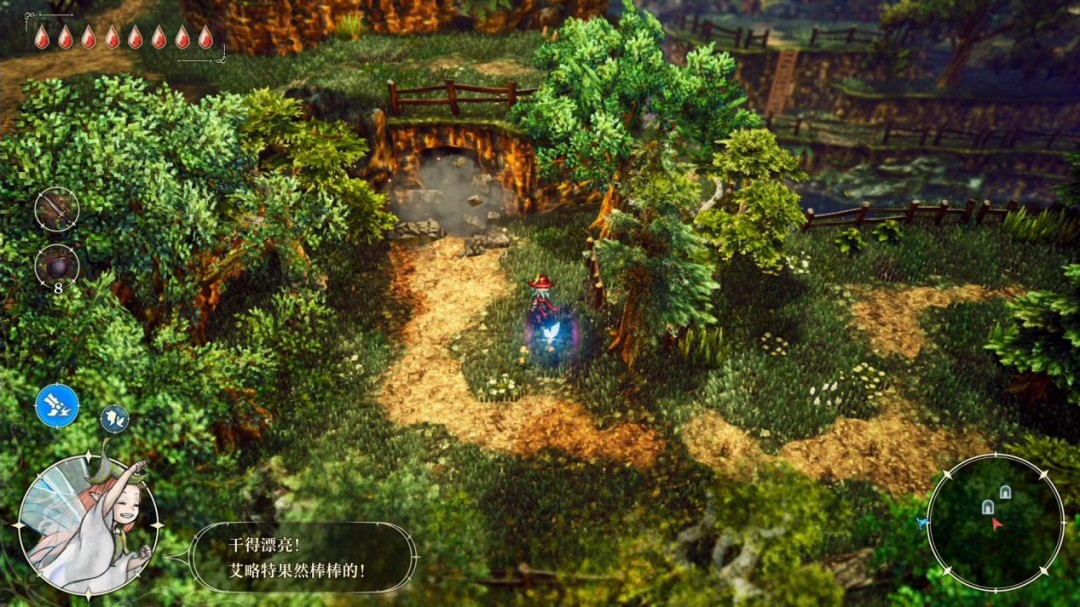
So, what exactly is "2D Zelda"? Abstractly speaking, it refers to a content creation model that integrates combat, puzzles, and exploration interactions at an ultra-high concentration within a "pseudo-open" flat map, before the emergence of the "open world" framework. More concretely, it means "you can cut grass and enemies," "rocks can be blown up with bombs," "behind the blown-up rocks are caves," and "inside the caves are puzzles and treasures"...
And "Eliot's Thousand-Year Tale of Adventure" has all of this. Not only that, it expands upon these foundations in a way that aligns more closely with the "Asano Team" style, giving the entire game a stronger JRPG flavor. For instance, it introduces more systematic equipment and skill systems, allowing actions like "swinging a sword," "shooting arrows," and "placing bombs" to be played with greater variety and better matching modern players' control habits.
To avoid information overload, let's start from the beginning with a brief introduction to this game:
The story of "Eliot's Thousand-Year Tale of Adventure" takes place in a fantasy world with a mild post-apocalyptic style. Unlike many similar works, most humans huddle within cities, while hostile creatures known as "Barbarians" roam outside the city walls. Only those with exceptional skills, the "Adventurers," venture beyond the protection of the walls, and the protagonist of this game, "Eliot," is one of them.
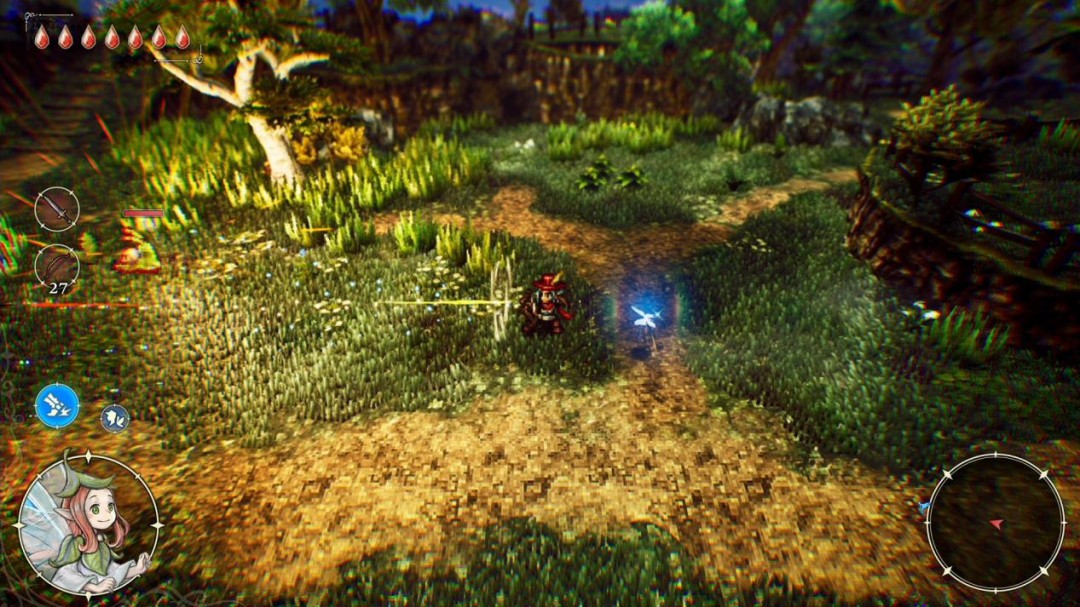
As mentioned earlier, the underlying structure of "Eliot's Thousand-Year Tale of Adventure" is an action game with typical "2D Zelda" characteristics, making its controls and systems extremely simple. In the early demo version of the story, Eliot can equip traditional weapons like an "Iron Sword," "Shield," and "Bow," allowing him to duel individual enemies or, at the risk of self-harm, use "Bombs" to eliminate large groups of foes.
Since I call it "Zelda," environmental interaction-based exploration gameplay is naturally included.
Therefore, in the game, players can use an iron sword to slash through weeds and discover "Rupees" hidden within. Alternatively, you might see rock walls blocked by debris; placing bombs around them could reveal dungeons hiding treasures. In the demo, it not only perfectly replicates the most quintessential exploration aspects of "2D Zelda" but also makes minor adjustments based on its own standards to address the common issue of "effort not matching reward" found in the original series.
In this demo, every dungeon players can explore hides rewards that feel truly "worth it." The best of these is a special weapon called the "Kusarigama" (chain and sickle). Its attack patterns and range differ significantly from traditional iron swords, offering a striking contrast to the game's somewhat "conventional" gameplay style.
But perhaps fearing that these elements combined were still too simple, the Asano Team added today's most familiar "Stamina" and "Perfect Parry" mechanics to the action basis of similar games. While the "Shield" can block attacks from a single direction, it consumes stamina. Conversely, a well-timed "Perfect Parry" can stun enemies, creating more openings for attacks.
Of course, up to this point, it hasn't exceeded our understanding of "2D Zelda." If it were merely a simple imitation of "2D Zelda," I wouldn't have such high interest in it. In fact, "Eliot's Thousand-Year Tale of Adventure" does feature unique mechanics and systems that carve out its own puzzle-solving and combat styles on top of the "Asano Team Zelda" foundation.
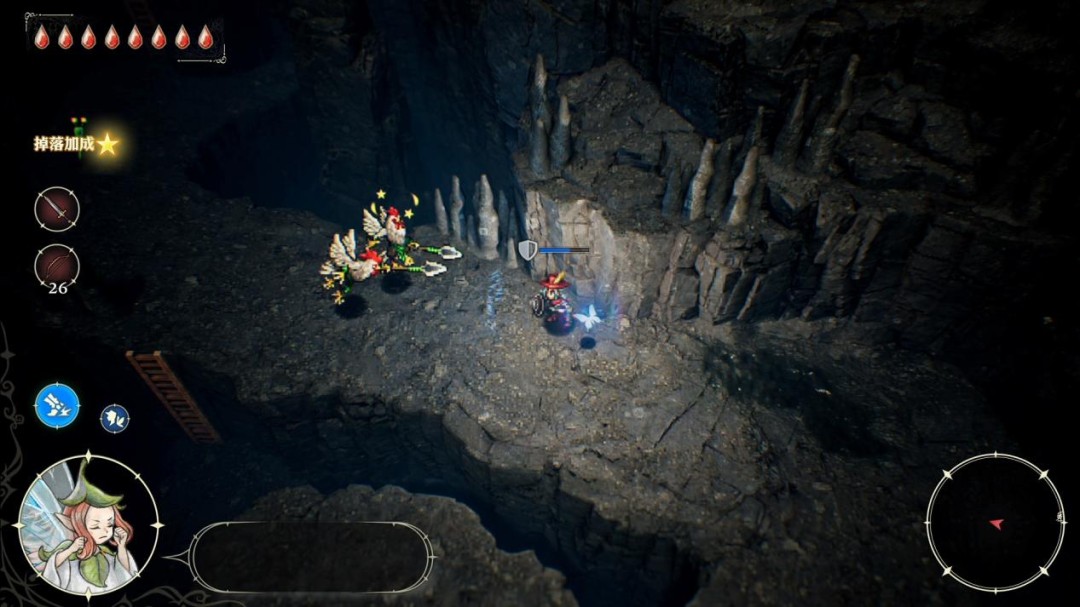
One of these is a special magic ability from Eliot's partner, the fairy "Faye." In addition to standard weapon attacks, Eliot can use different fairies' magic for movement—sometimes, this magic is also key to breaking through dungeons.
In the demo, players can use two types of magic: "Wind Ride" and "Swap Position."
The former is easy to understand, equivalent to sprinting. Note that if you cannot perfectly control your speed and direction, Eliot will trip and fall after colliding with obstacles.
The latter is more interesting. "Eliot's Thousand-Year Tale of Adventure" is actually a "dual protagonist" game featuring "ambidextrous" controls. If you operate Eliot using only the left stick, Faye will follow behind the player, occasionally harassing and attacking enemies. However, if you use the right stick, you can directly control Faye's actions.
Faye, flying at low altitude, can directly cross gaps or water surfaces. By using "Swap Position" on top of this, Eliot can reach locations that were previously inaccessible. In the demo, there was a dungeon that required exploration through different uses of "Swap Position."
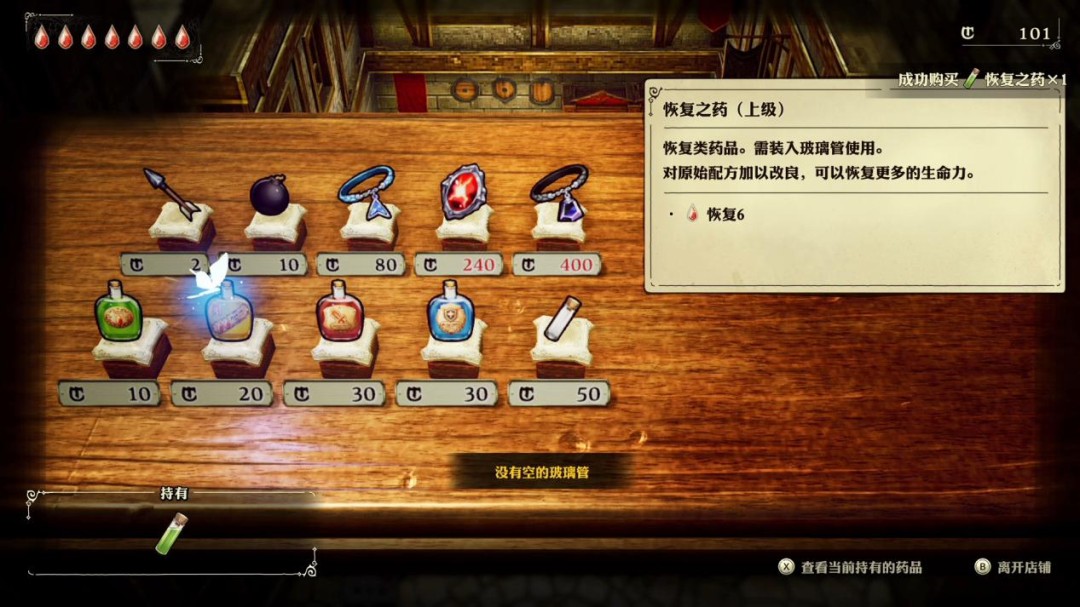
The "Equipment Effect" system brings more variation and tactical choices to the game's combat. In the game, players can find equippable items called "Magic Stones." There is a limit to how many can be equipped. Besides simple stat boosts, some Magic Stones alter the nature of attacks. For example, some allow bows to fire an additional homing arrow each time, others significantly increase the range of sword beams, and some even reduce damage taken from bomb self-explosions.
Although the demo playtime wasn't long, we already encountered dozens of different Magic Stones, each with unique effects. The addition of this system allowed me to see different combination strategies in combat. Perhaps after the official release, the combination of weapons and Magic Stones will become the aspect that best reflects player individuality in this game.
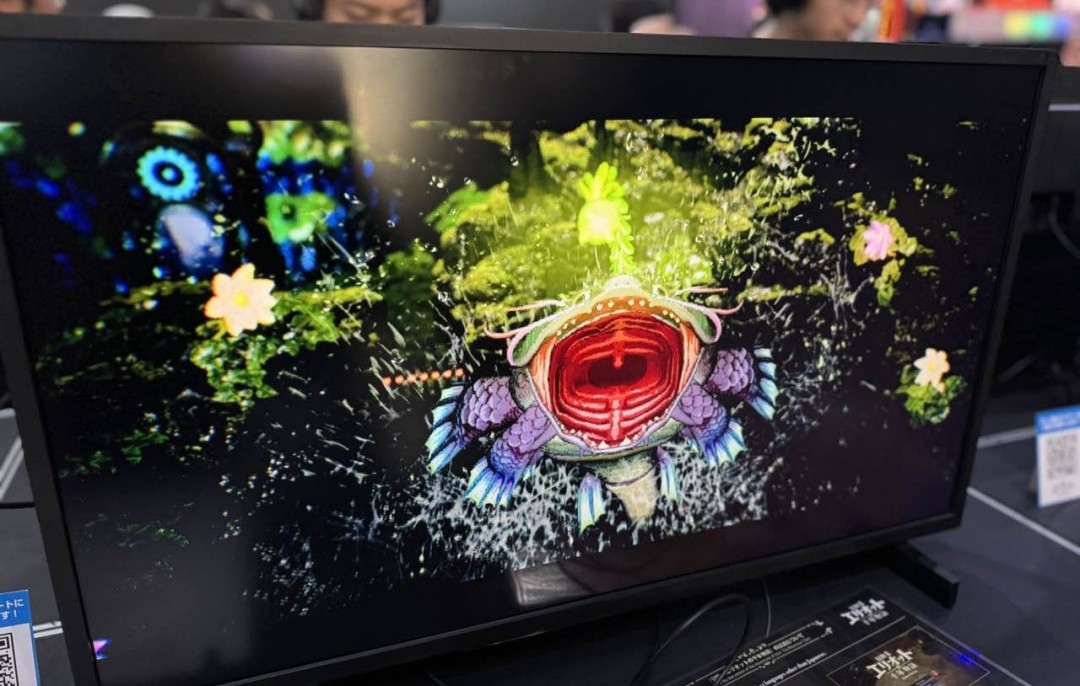
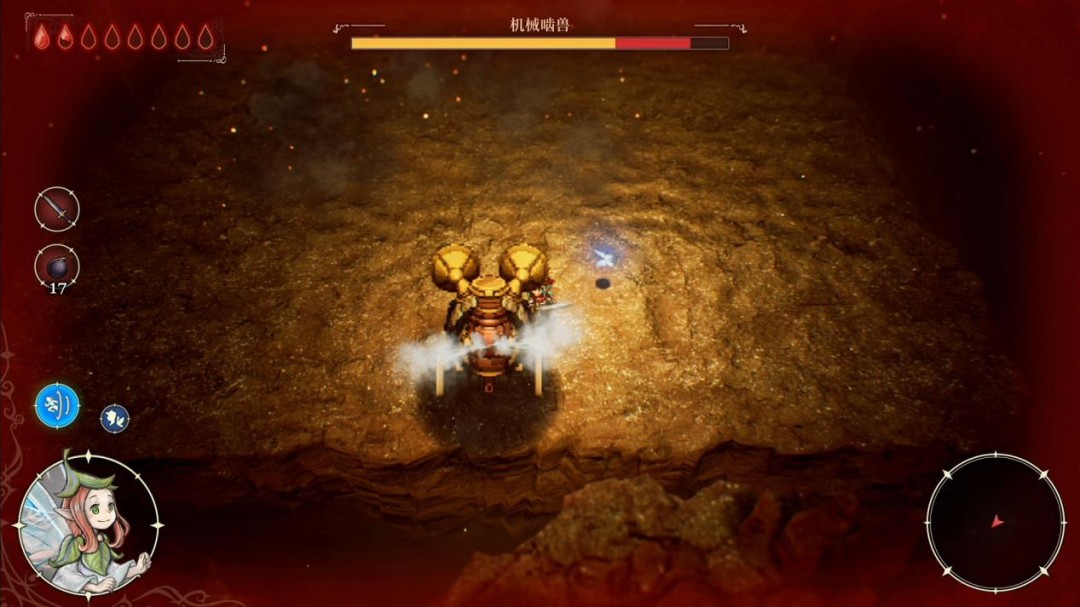
However, if you've been following this game, you probably know that its appearance at this Tokyo Game Show wasn't its debut. Actually, a demo version identical to the one at the event had already been released on the Nintendo Store prior to this. Perhaps because of this, SQUARE ENIX prepared a dedicated boss battle at the venue for players already familiar with the game's controls. Even the design philosophy of this boss battle can be described as an absolute embodiment of the "2D Zelda" spirit—
The enemy in this mechanic-driven boss battle is a giant catfish-like monster that periodically absorbs and devours Everythinggj around the player, including objects... How about it? Do these details alone already serve as a strategy hint? This combat design, which combines basic systems with monster mechanics, is precisely what makes this type of game interesting.
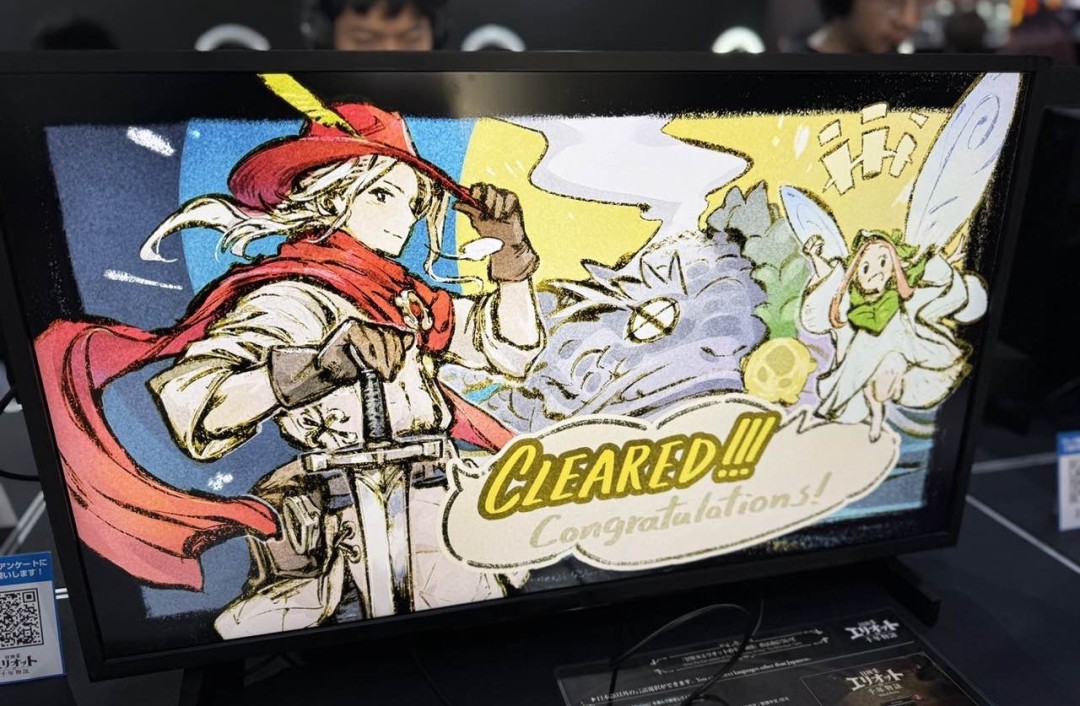
Although the content we saw in this session was still limited and carried a certain sense of déjà vu, this does not detract from the solid quality of "Eliot's Thousand-Year Tale of Adventure." Both the battle presentations and control feedback reach an upper-tier standard for 2D games. More importantly, its appearance might truly break the fixed impressions SQUARE ENIX and players have of the "Asano Team" and "HD-2D," which is undoubtedly a good thing.