

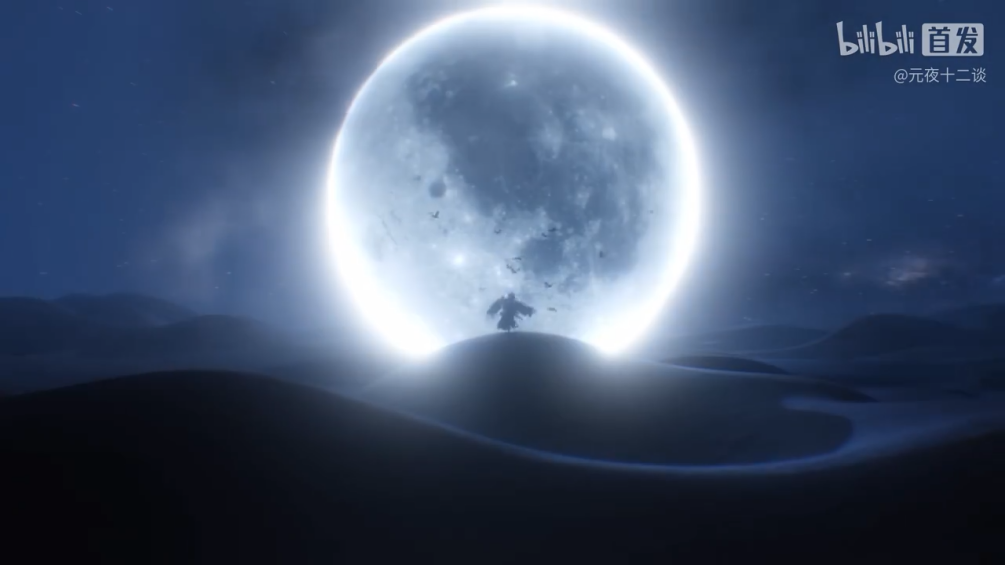
A few days ago, a new game featuring strange folklore themes titled "Twelve Tales of Yuan Ye" released its PV. It was the Lantern Festival, and the "Yuan Ye" in the game's title corresponds perfectly to the occasion. Coincidentally, not only was the release time special, but the content was also quite unique—the blood moon scene in the PV corresponded to the "Red Moon Shining on Shangyuan" spectacle seen on the Lantern Festival. These coincidences叠加 together even evoke a sense of occult mystery.
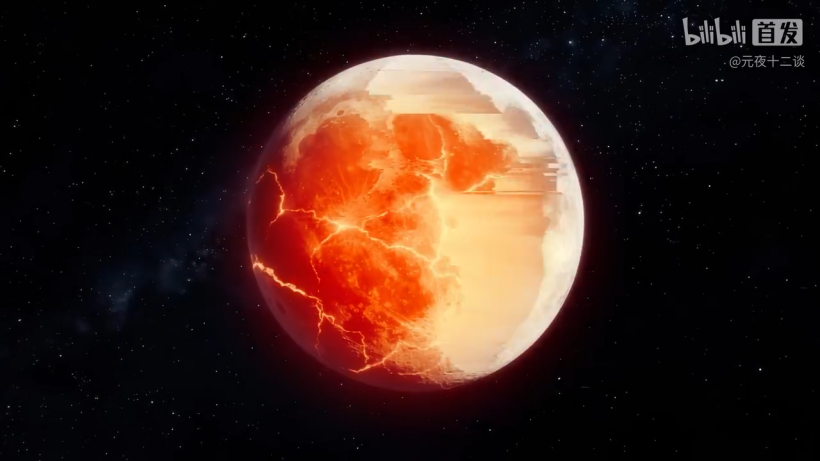
Looking at it this way, as a new game featuring strange folklore themes, "Twelve Tales of Yuan Ye" offers an intriguing occult opening with a touch of "Meta" flavor. But what's even more interesting lies ahead—its developer is none other than Yoka Network, the creator of "Legends of the Three Kingdoms."
To be honest, when I first saw this PV, I couldn't associate it with Yoka at all.
However, perhaps it is precisely because of this crossover that the trailer for "Twelve Tales of Yuan Ye" exhibits a unique flavor. Keep in mind that Yoka has already demonstrated artistic prowess worthy of the name in "Legends of the Three Kingdoms," and their in-depth research into traditional culture ranks among the top tier in the gaming community. Therefore, this flavor is quite distinct.
Let's start by discussing the most obvious and prominent aspect: the visual presentation of the entire trailer.
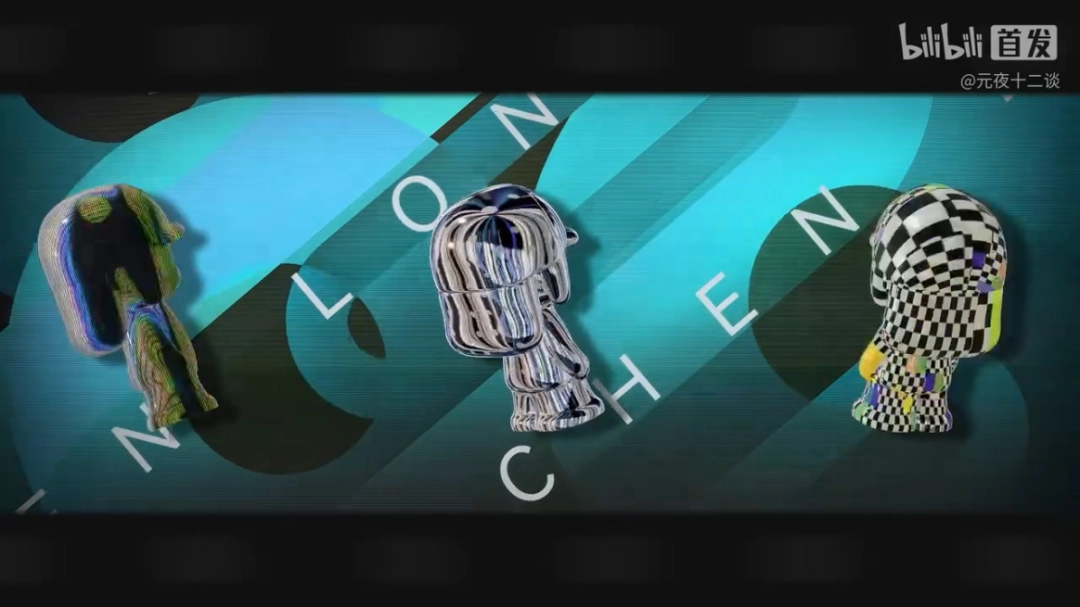
In the trailer's motion design, we can see a wealth of acid design elements originating from the 1960s. For instance, the 3D dolls used during scene transitions feature a distorted, flowing metallic rendering style. If you look closely at the background, you can even spot scan lines from an interfered CRT monitor. This style unifies retro and futuristic aesthetics, appearing both trendy and bold.
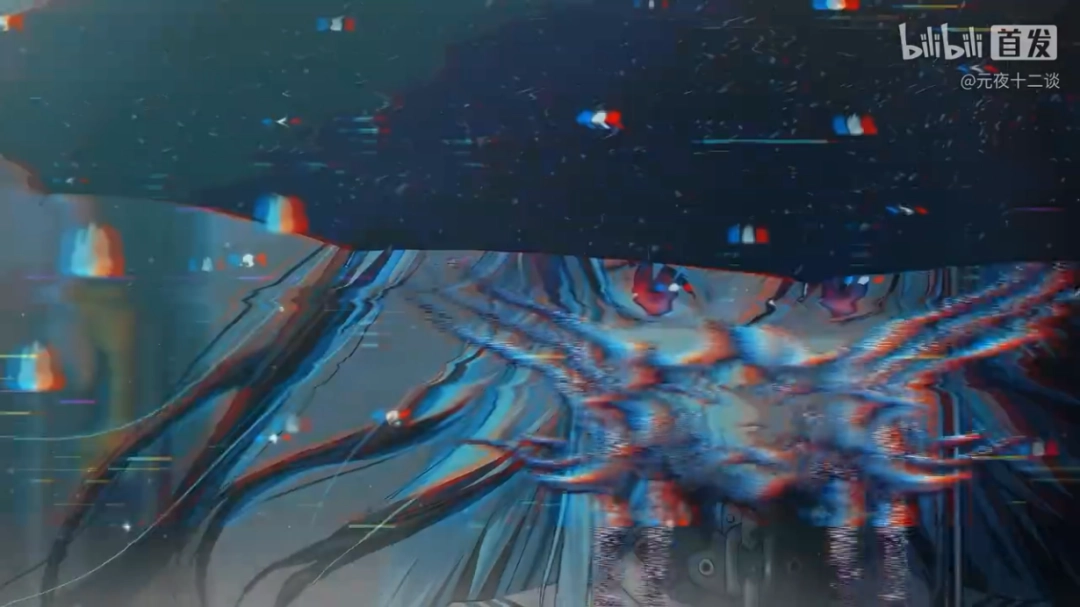
Additionally, when masks flash across characters' faces, there are many details belonging to glitch art. You can see that the overall image undergoes RGB color separation processing, while the masks feature scan line jitter effects. Typically, this artistic style appears in cyberpunk works. Seeing this visual treatment inevitably brings to mind nighttime skyscrapers, piles of neon lights, endless rain, and puddles on the ground.
What is appealing is that, compared to the modern and trendy visual techniques, the specific content of this trailer is incredibly traditional and meticulous. Overall, "Twelve Tales of Yuan Ye" accurately enters a surreal situation based on reality—as the production team puts it, "discovering the impermanence of life within ordinary daily routines."
Therefore, you can see many objects in the trailer that carry cultural depth and connotation.
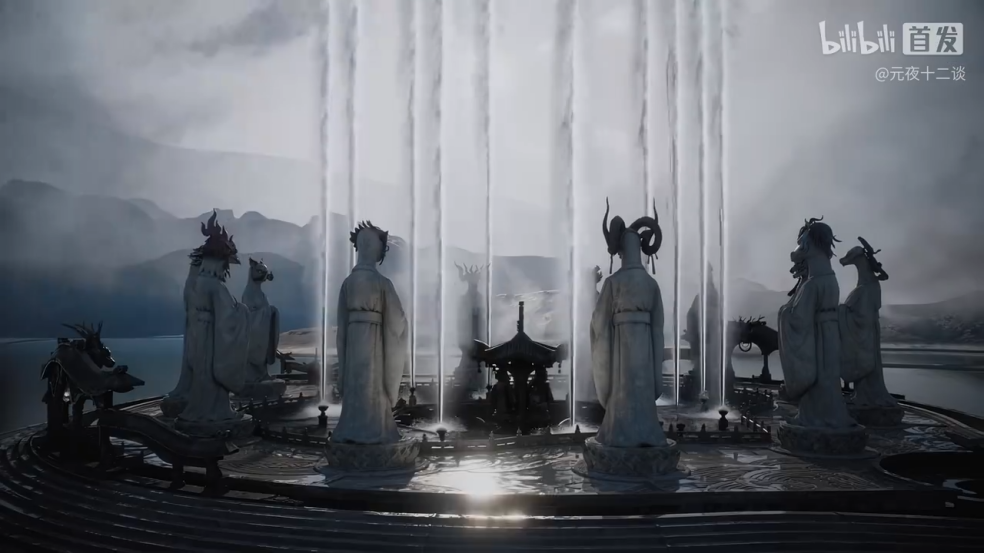
For instance, at the beginning of the trailer, twelve pottery figurines wearing zodiac Nuo masks appear. They face a fountain in an embracing posture, making the scene resemble a seal or altar. Even though sunlight is present, the overall atmosphere remains gloomy.
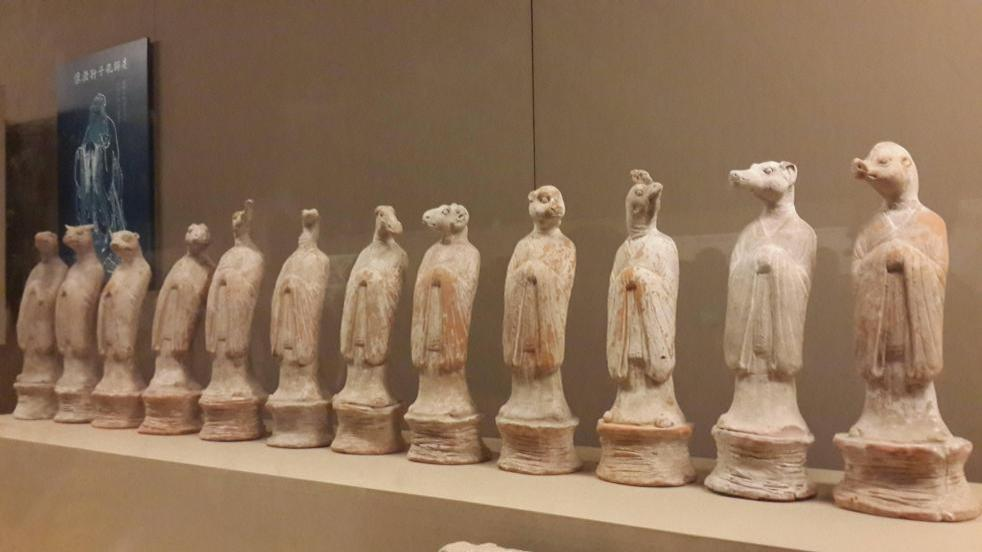
According to official introductions, "Twelve Tales of Yuan Ye" draws inspiration from folkloric allusions and the Chinese Zodiac system, making the origin of these pottery figurines quite obvious. They are the real-world "Twelve Zodiac Pottery Figurines," often used as tomb guardians in ancient burials to "suppress evil" and "ward off bad luck." Arranged according to specific orientations, they serve to protect the peace of the deceased's soul.
Furthermore, the trailer includes numerous literary references and adaptations of allusions, some of which may feel unfamiliar, while others will seem incredibly familiar.
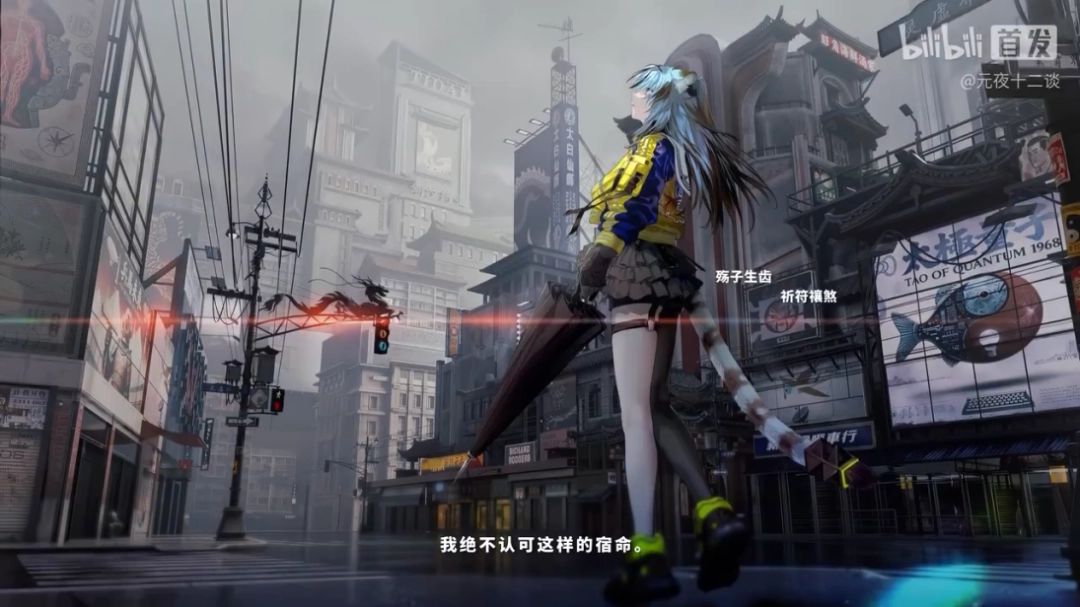
For example, the text "Shangzi shengchi, qifu rangsha" (Children who died young with teeth grown require talismans to ward off evil spirits) appears in the trailer. In the "As I Have Heard" volume of "Yuewei Caotang Biji," there is a record stating: "It is commonly said that children who died young without having grown teeth have no evil spirit; those with teeth do... I once sought out such books, only to find they merely calculated based on the year, month, day, and hour stems and branches, with no profound mystery. Claiming that certain days encounter ominous spirits requiring specific talismans for resolution is merely using deceitful words to extract money." Ji Yun actually held a critical view of this folk belief, considering it "deceitful words to extract money." In "Twelve Tales of Yuan Ye," whether "Shangzi shengchi, qifu rangsha" refers to an anomalous phenomenon or human manipulation remains to be discovered by players.
Beyond literature, "Twelve Tales of Yuan Ye" also portrays scenes vividly. The trailer features the scene of "hanging a sword under an arch bridge to suppress floods and slay dragons," which is also related to traditional folklore.
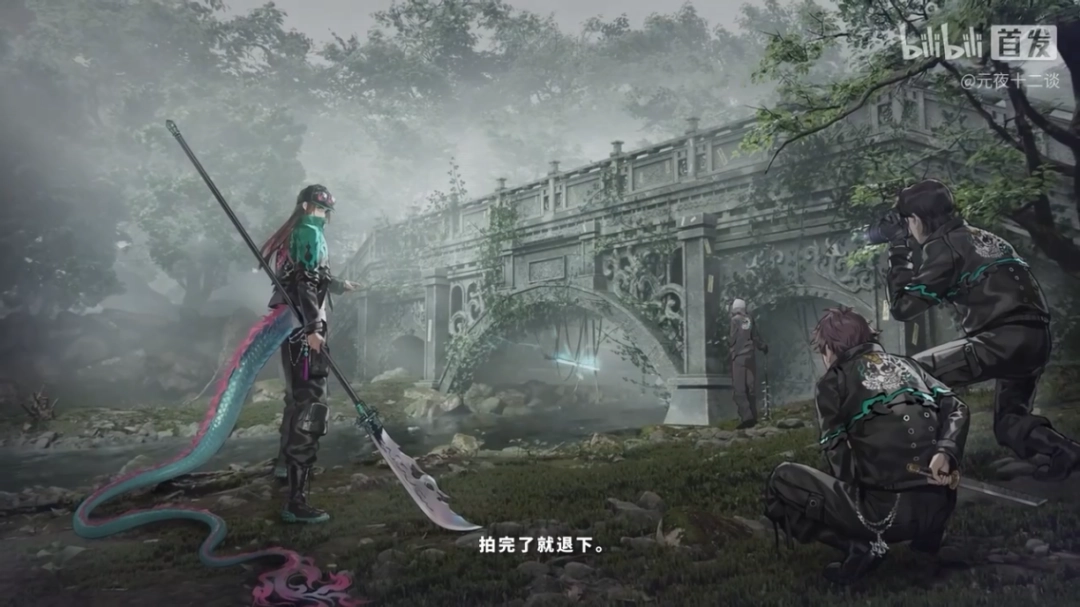
This depicts the ancient culture of the Tujia people in southwest China. According to folklore, hanging a dragon-slaying sword under a bridge can prevent the bridge from being damaged during "Zoujiao" (rising water levels). Such ancient legends serve as excellent inspiration for artistic creation.

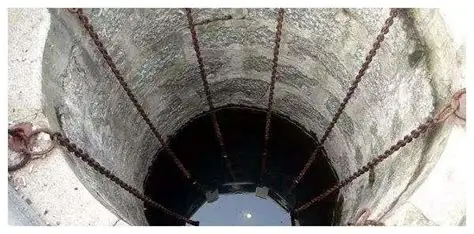
Similarly, there is the classic urban legend of the Locked Dragon Well. In the trailer for "Twelve Tales of Yuan Ye," a Locked Dragon Well covered in chains and loosening appears. Along with its mutation, anomalies such as typhoons occur in that world, but the truth remains unknown to all.
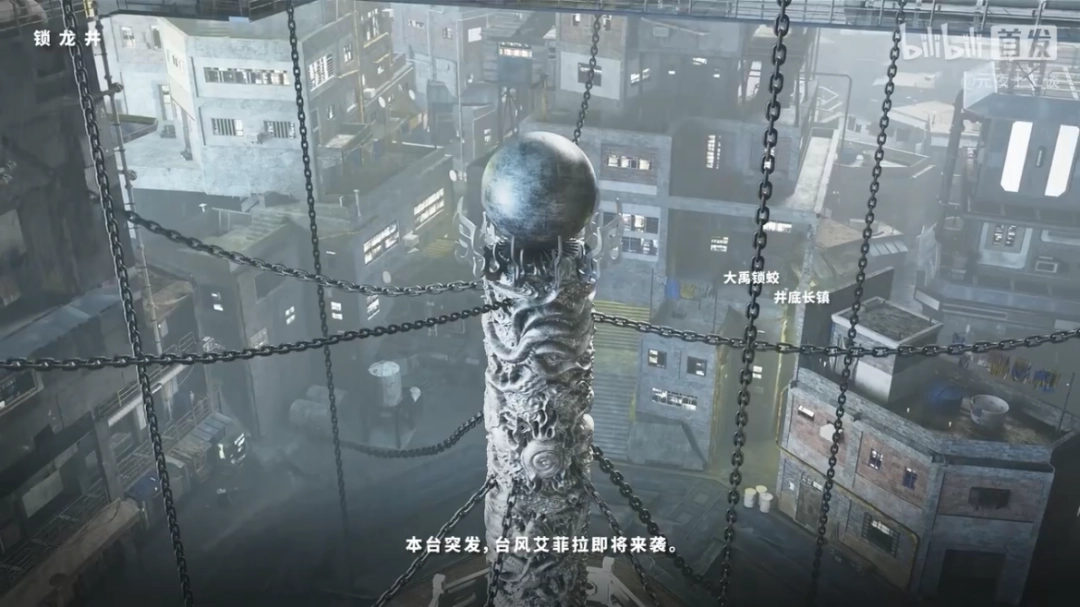
The phrase "Dayu locks the flood dragon, imprisoned at the bottom of the well" is actually a real-world commemoration of Dayu's flood control efforts. As the story spread, it accumulated layers of meaning over time, giving rise to countless ghost stories. Of course, you can also see that the Locked Dragon Well in the trailer differs somewhat from reality, as "Twelve Tales of Yuan Ye" incorporates visual elements from the urban legend of the "Dragon-Locking Pillar," deconstructing and reconstructing various tales to weave a new story.
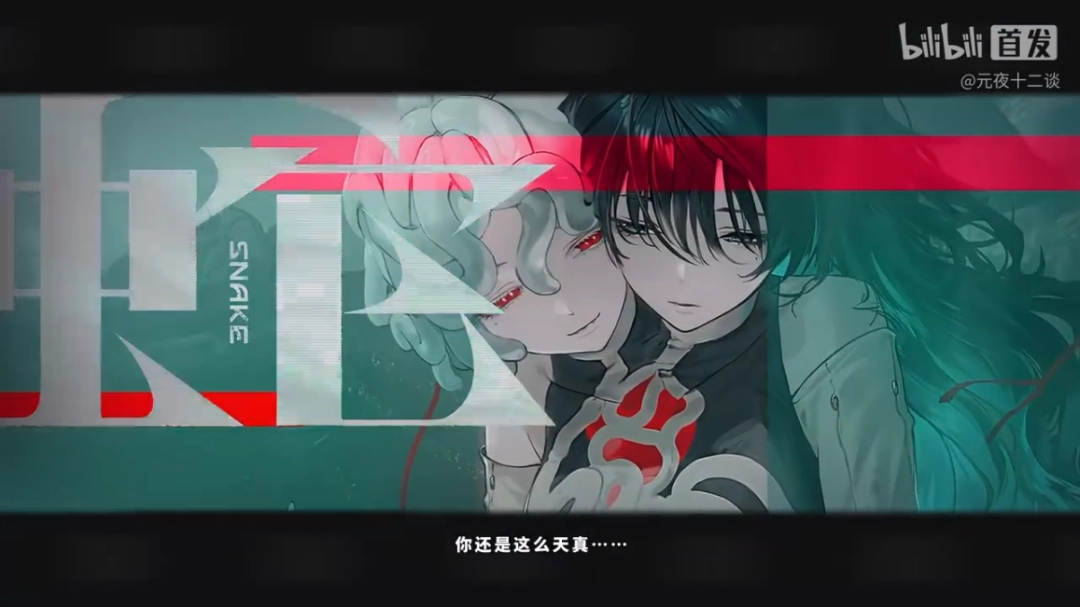
In the trailer, the best manifestation of this new interpretation of traditional stories is a two-headed snake woman with two beautiful maiden heads. From the text "Flooding Jinshan" and "Under Leifeng Pagoda, hatred separated for a thousand years," it is clear that its source is one of China's four great folk tales, "The Legend of the White Snake," with the two heads representing the White Snake and the Green Snake.
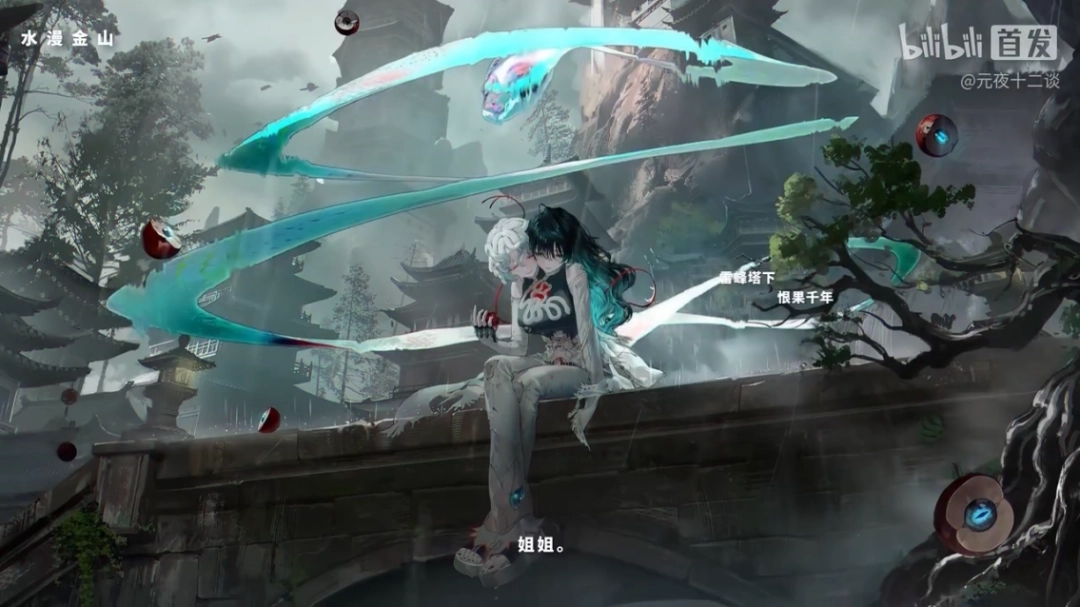
In the late Ming Dynasty, Feng Menglong included "Lady White Permanently Imprisoned Under Leifeng Pagoda" in his collection "Jingshi Tongyan," which fully recorded the legend of the White Snake. Later, folklore added more跌宕起伏 details of love stories, ultimately shaping the rich characters of the White Snake, Green Snake, Xu Xian, and Fahai. Although modern artistic deconstructions have diversified the relationship between the White Snake and Green Snake, the image of a two-headed snake merging the two is truly a first.
Speaking of which, you can see that the first half of the "Twelve Tales of Yuan Ye" trailer showcases numerous traditional folk legends related to the twelve zodiac animals, classic folk allusions, and even urban legends that persist to this day, all presented in a distinctly modern artistic style. You can also see this tendency on the game's official website—each zodiac animal has its own interesting little story.
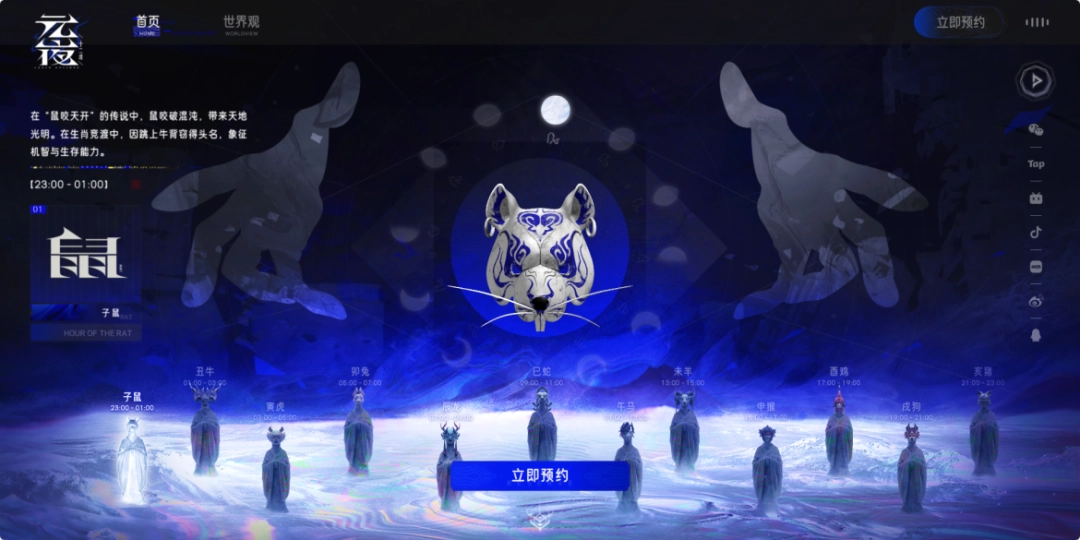
Therefore, when discussing a work with such a unique theme, we must examine whether it captures the essence rather than just the form. If it merely stews various Chinese ghost story elements together, the so-called "Chinese Strange Tales" become mere fashion accessories, and those fantastical or eerie scenes fail to truly integrate with the content, thereby affecting the game's final expression.
Praiseworthy is that in the latter half of the PV, we seem to see "Twelve Tales of Yuan Ye" skillfully integrating those seemingly scattered stories into a central axis.
First is the unity of core settings. As the saying goes, "Remove the mask, and you are human; wear the mask, and you are divine." On the night of the full moon, during the Nuo dance—the oldest Han Chinese ritual dance for worshipping gods, driving away plagues, and celebrating—we combine the folklore of the twelve zodiac animals with Nuo masks, and Nuo masks with Nuo dances, linking folk culture together. This allows "Twelve Tales of Yuan Ye" to draw vitality from long-standing traditional culture, leaving a strong first impression.
Next is the mystery surrounding the player's role. According to official materials, in this game, players will embody a Feng Shui detective with double pupils, walking the boundary between light and dark in the city, investigating incidents that appear ordinary but hide anomalies. By deciphering clues and turning the wheel of fate, players will gradually touch upon the hidden truths of "Nuo" and the world's operation. Making the player a detective is indeed the best way to drive the story.
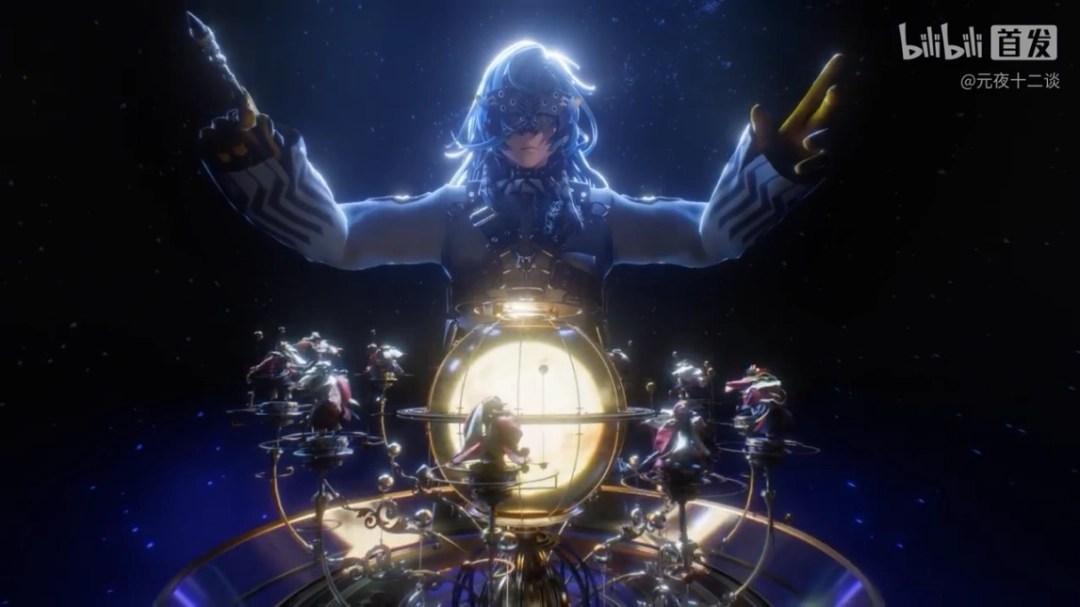
Several segments of actual gameplay in the PV also leave room for speculation about the game's mechanics. It might be a 3D box-garden exploration game where players act as detectives, investigating sites where anomalies have occurred to ultimately uncover the truth behind Everythinggj.
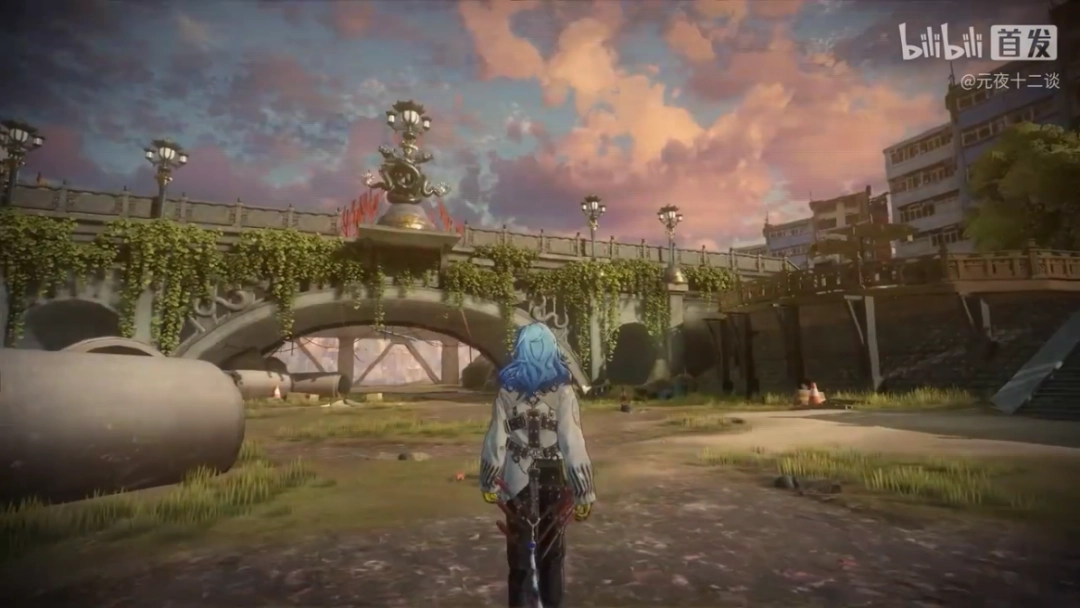
However, what satisfies me most is the small easter egg at the end of the PV: in daily life, the protagonist still has to hustle for money, handling all kinds of requests with no taboos. Sometimes they must take on miscellaneous tasks like counseling or pet retrieval, and even sell lucky crystals.
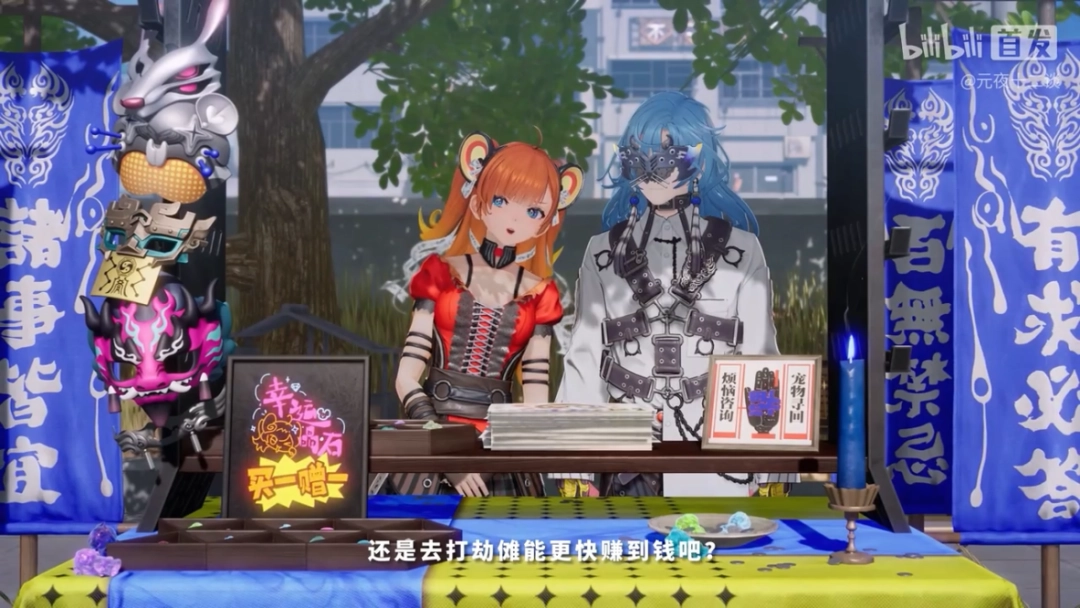
But... it is precisely within this calm daily life that anomalies are more likely to lurk. Ghost story games, especially Chinese-style ones, emphasize not how strange things are, but how normal they appear. Just like the technique of leaving blank space in traditional Chinese painting, it focuses not on what is present, but on what is absent—only through the interplay of void and substance can emptiness surpass presence.
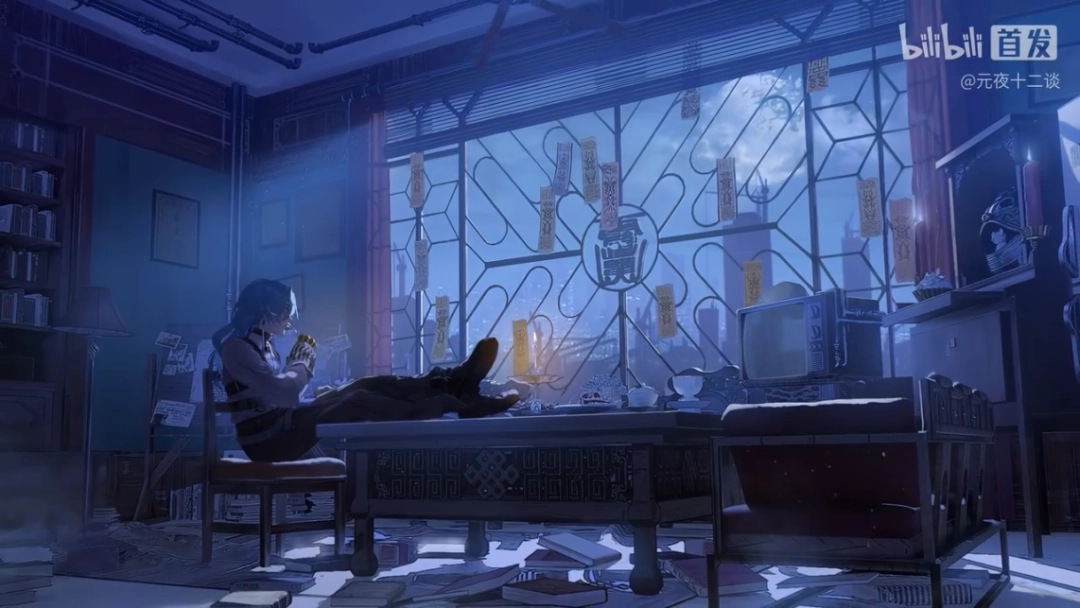
Thus, the slightly humorous daily life shown at the end of "Twelve Tales of Yuan Ye" feels like the calm before the storm. No one knows what chain of events these tiny requests might trigger, nor how the passersby before us might eventually become foreshadowing. Such exploration is surely what countless players wish to see in the game.
Overall, this PV is conceptually mature and excellent, with its efforts to create a "New Chinese Strange Tale Punk" style showcasing Yoka's ambition. The only regret is that we didn't see specific gameplay demonstrations of "Twelve Tales of Yuan Ye" in the PV—who wouldn't want to use special abilities to solve cases at supernatural scenes?
However, as a debut PV, it has clearly exceeded its mission. If Yoka can maintain this sensitivity to traditional culture, the future development of "Twelve Tales of Yuan Ye" is certainly worth anticipating.