

As the spiritual successor to the "Fate and Conquest" series after nearly a decade of absence, Stormgate has received significant attention and support from many Westwood fans since its announcement. After playing the game myself, I was surprised by its faithfulness to reference materials. Passion alone cannot fully describe the Slipgate Ironworks team's dedication to classic RTS—it's likely that even if former colleagues reunited, they might not be able to recreate this memorable and soul-stirring experience.
Their efforts have received the reward they deserve. Currently, Stormgate has garnered 4,300 reviews on Steam, with an overall rating of nearly 90% "Very Positive," breaking the impossible balance where small-scale RTS games are either critically acclaimed or commercially successful, but rarely both. Meanwhile, as an independent title without the backing of established veterans, Stormgate sends a clear signal: becoming a blockbuster isn't the original intention of all games; priorities need not be inverted.
This is also an important experience conveyed to us by the game's lead designer, Brandon Casteel, and creative director, Frederik Schreiber. When you try to sniff out the creators' behind-the-scenes talent, the answer often returns to passionate love. Wanting because you can't have it, choosing to create because it doesn't exist—exceptionally straightforward, yet possessing an untouchable purity. Similarly vibrant stories, as a counterpoint to the increasingly bloated industry, coexist with discouraging daily routines. Sunrise in the east, sunset in the west, born in the morning and dead by dusk, give people a sense of change and aliveness.
This is precisely the significance of Stormgate. It is destined not to see a day when everyone crowds the streets for it, but there are always people willing to withdraw from the crowd for it, leaving this overcrowded broad road. This is far more difficult than it sounds, hence such stories deserve to be remembered and found by true enthusiasts. In the many decades to come, we will continue to see the birth of the next Stormgate and be repeatedly inspired by it.
Q: Stormgate bears many shadows of "Command & Conquer"! Could you share which specific RTS games, or even non-RTS games, inspired the development team's creative thinking?
Brandon:We're glad you felt the charm of Stormgate! Accurately capturing that feeling which resonates with players is something we are quite proud of.
Clearly, the game draws inspiration from "Tiberium" in Command & Conquer and the Red Alert series. Beyond that, we drew significant nourishment from games like KKND (Krush Kill 'n' Destroy) and Warcraft, even attempting to synthesize elements from many other titles! Starting from childhood memories, we dug into the core joys unique to RTS games, striving to recreate the magic of RTS from the late 90s to the early 2000s. Personally, as a designer, it was also important to extend this charm into new areas—such as new base management mechanics, the high-risk environment brought by Storm resources themselves, and our "Dogma" and "Expert" systems. We hope Stormgate delivers both the classic experience players remember and offers its own unique content.
Q: Classic-style RTS games are no longer mainstream. Why choose to create a title like Stormgate at this particular moment? What was the driving force behind the entire project?
Brandon:Stormgate is by no means a precise product calculated by science; it is a love letter written with 100% passion for RTS. For those writing this love letter, falling in love is not just about improving life, but an absolute necessity. Our CEO, Fred, has been waiting for this chance to confess his love since 2014. Jokingly speaking, ever since we encountered the RTS genre in our youth, we had already anticipated today. For instance, when I was a child, I would use Microsoft Paint to hand-draw imagined RTS scenes. In short, this game was born from our deep love for RTS. Fortunately, our publisher was willing to support this beautiful vision.
Q: The Chinese market once experienced a period rampant with piracy. Back then, cracked RTS games often had their background music removed to reduce file size, causing many players to miss out on experiencing authentic RTS soundtracks. The only standout track seems to be "Hell March." Given that Stormgate's music is excellent, could you discuss the music creation process for an RTS game? For example, how do you choose themes, and how do you collaborate with composers?
Frederik:For us, music is an indispensable part of the game. In the past, RTS audio usually had only two channels: UI sound effects (including unit voices and action sounds, etc.) and background music. In Stormgate, the sound effect details have become very rich—from the breeze rustling through leaves to epic intense battlefields, Everythinggj has a sound. Regarding background music, we built upon "core tracks" for the three factions (one per faction), deriving and expanding all other tracks while ensuring overall stylistic unity. In terms of overall melody and timbre, we focused more on a dark industrial atmosphere, occasionally incorporating heavy metal elements, intending to convey the oppressive feeling of the apocalypse through strong main melodies.
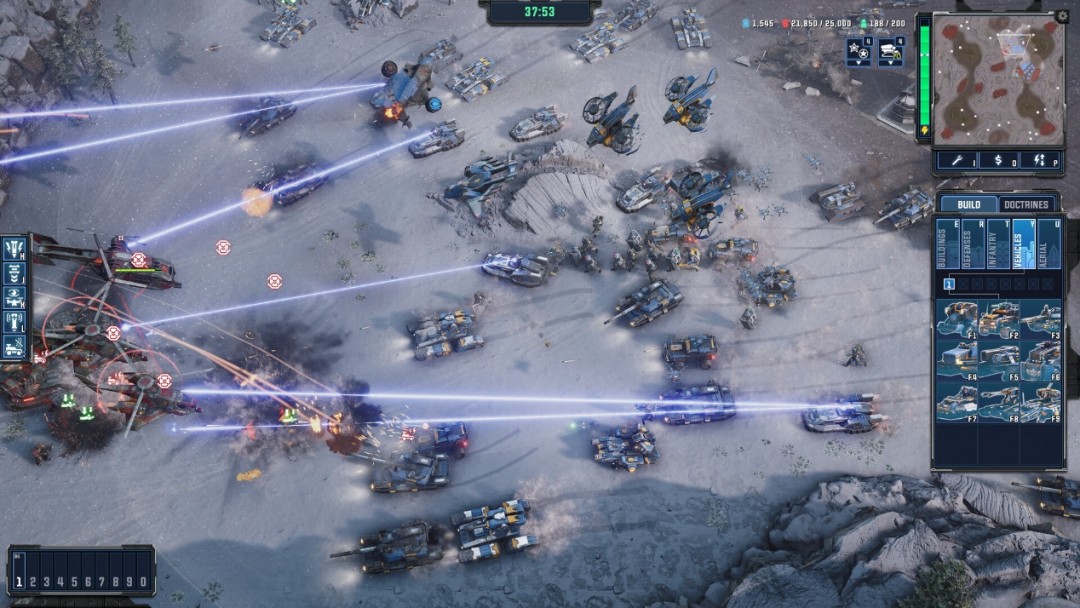
Q: The recognizability of units in the game—especially infantry—is still somewhat low. However, personally, I find the hardcore, semi-realistic style more appealing than cartoon styles. How did you make trade-offs between visual realism and gameplay clarity?
Brandon:RTS games have always been complex rule monsters, making it extremely difficult to borrow experience from other genres. First, we must ensure each faction possesses a unique and consistent artistic language that reflects its background and philosophy; this is the primary goal of art design. Regarding style, we found a just-right balance between "cartridge futurism" and semi-realistic visuals, much like action movies from the 90s—exaggerated yet serious, unlike many RTS games that focus solely on recognizability and readability. These aspects are certainly important, but too much of a good thing can be harmful—over-pursuing readability often means sacrificing one's own style and tone.
Frederik:Actually, not just RTS, but all competitive games face similar challenges. The higher the recognizability of the art style, the weaker the visual uniqueness often becomes. Therefore, most competitively inclined RTS games adopt a cartoonish style, which contradicts our original intent. We aimed to present a dark and gritty realistic texture—while also considering unit and faction readability. Although the combination isn't perfect, we have done our best to optimize unit recognizability through extensive design efforts.
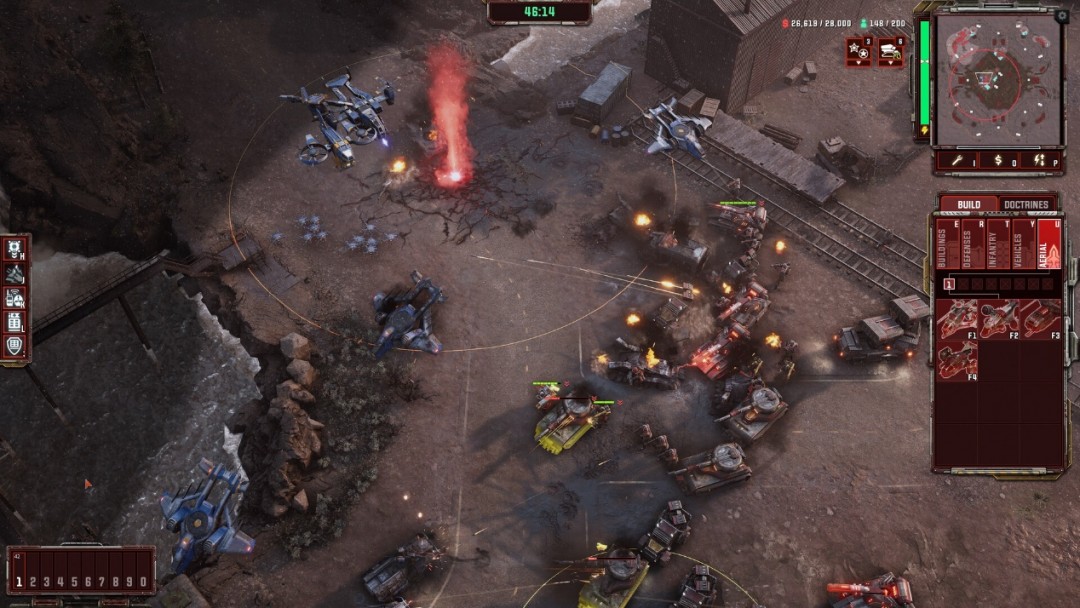
Q: Out of curiosity—did the team consider using live-action cutscenes, like in the old days, instead of the current 3D animations? If so, why was this approach ultimately not adopted?
Frederik:We certainly considered it! We also love the live-action full-motion video (FMV) cutscenes characteristic of the 90s. But that technology is somewhat dated—back then, a video that played smoothly in-game was comparable to today's ray tracing technology. But nowadays, casually inserting some live-action 4K videos might seem a bit cliché. Therefore, we preferred to utilize the powerful capabilities of Unreal Engine to create original fully 3D characters.
Q: In recent years, many RTS games have introduced sandbox modes or more long-term progression systems, but Stormgate currently only features two-faction campaigns. Was this a fixed core requirement from the start, or will new modes be added in the future?
Brandon:Stormgate was initially aimed at recreating the most classic RTS experience. We have always hoped that veteran RTS players would feel at home with the game's core experience. Therefore, up to now, we remain focused on the game itself and have no post-launch update plans to share.
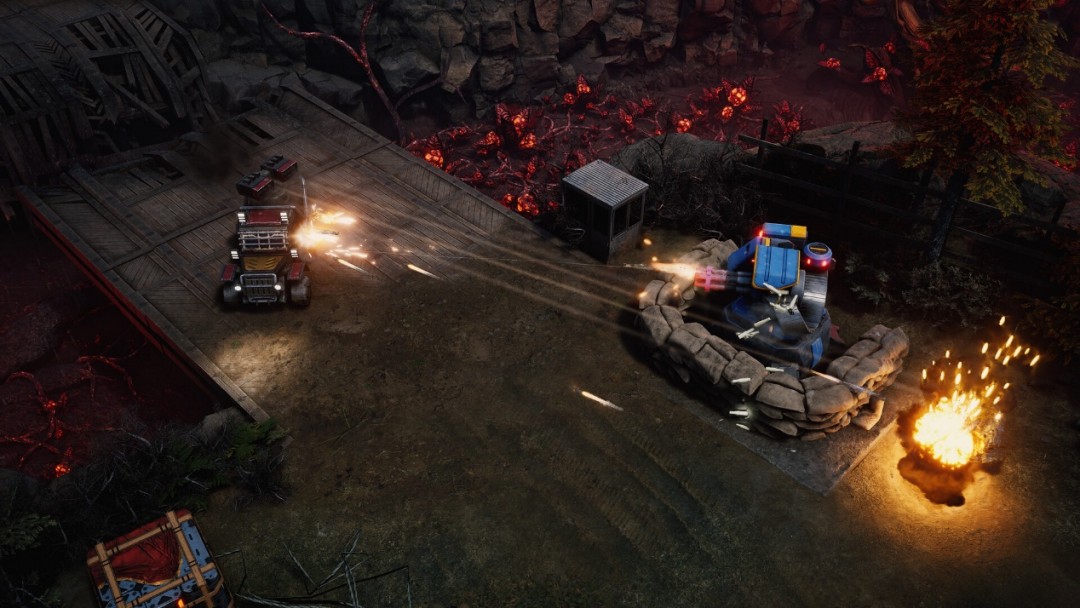
Q: I'm about to finish the campaign for the "Dynasty" faction and have encountered the third faction, "Veti." Can you reveal some details about this faction's gameplay differences, how to unlock it, and the format of future updates?
Brandon:We delayed the release of Veti in April 2024 mainly to ensure the integrity of the current two-faction core experience.
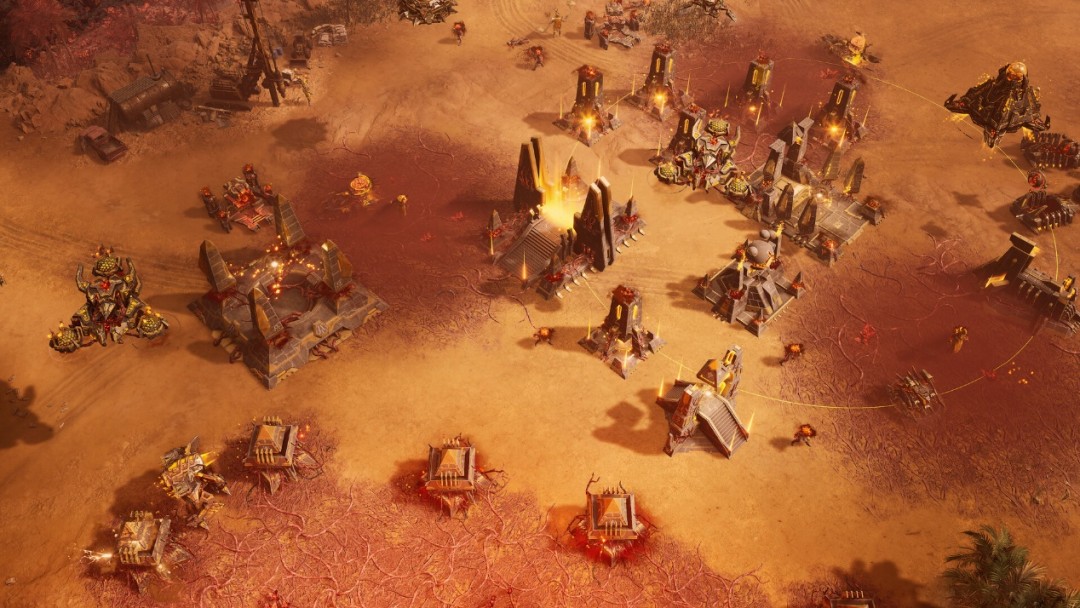
As you can see, Veti is a heavy-firepower faction that can convert dying enemies into disposable "Enlightened Soldiers" via the "Conquest Aura." These units are not just cannon fodder; when more details are revealed in the future, you will discover that, as part of the Veti war machine, they will play a very unique role—
Veti are slumbering behemoths awakening; to them, humans are merely livestock waiting to be tamed.
Q: In the team's view, what is the core essence of classic RTS? Is it base management, battlefield performance, or overall competitiveness?
Brandon:As a system designer, I made many different attempts regarding mechanism synergy and functional integration in Stormgate. Personally, the significance of Stormgate lies in returning to the roots of RTS. Many RTS games try to find "revolutionary evolution," thereby straying from the core that players love. A true RTS game needs interesting base building, distinctive units, and a sufficiently immersive world—you need to let players remember those crazy moments in the game, such as upgrading the factory to unlock missile silos, or training a super soldier who can destroy a tank with a single grenade!
Q: Finally, we have a broader question for creators of RTS games: How do you view the future of this genre? Should it continue with the classic magical formula, or strive to explore entirely new directions?
Brandon:I hope RTS can become a more inclusive genre. Indeed, in this era, RTS players are often overlooked, misunderstood, or simply ignored. They need more attention from developers, someone to understand their demands. At the same time, strategy games are all-encompassing; if RTS recognizes only one mode of expression, wouldn't that be a huge detriment?
Moreover, I feel there is a widespread misconception in today's gaming industry—that success is judged solely by whether a game becomes a blockbuster. The vast majority of games do not achieve this. While it may not change the overall atmosphere of the industry, I still want to say: this industry is broad enough to accommodate games that aren't so "big."