

Who is the biggest winner of ChinaJoy 2025? The long queues at the HarmonyOS gaming zone early in the morning provided an undeniable answer with its strong "presence." HarmonyOS brought over 50 major games to players, including Honor of Kings, Light and Night, Girls' Frontline 2: Exilium, NBA Peak Showdown, Jade Dynasty 2, Plants vs. Zombies 3, and more. In addition to the impressive lineup, HarmonyOS allowed players to experience various game black technologies built on the HarmonyOS ecosystem. They even brought an AITO M9 car to the site to showcase futuristic HarmonyOS in-car gaming, attracting considerable attention from players and visitors.

But before delving into these topics, allow me to build some suspense by introducing an old friend you may already know—Soul Knight, a critically acclaimed Chinese indie game that has been around for eight years, and Mr. Cao Kan, Partner and COO (Chief Operating Officer) of its developer, ChillyRoom Studio.
According to Cao Kan, the reason Soul Knight appeared at the HarmonyOS gaming zone of this year's ChinaJoy is that the team recognized HarmonyOS's massive installed base and user advantages. According to official HarmonyOS news, the number of terminals running "HarmonyOS 5" has already exceeded 10 million, and more and more games are entering the HarmonyOS gaming ecosystem, marking a new stage for HarmonyOS gaming. For a game like Soul Knight, whose mainstream users are young people who love to follow trends, it is essential to capture this new territory.
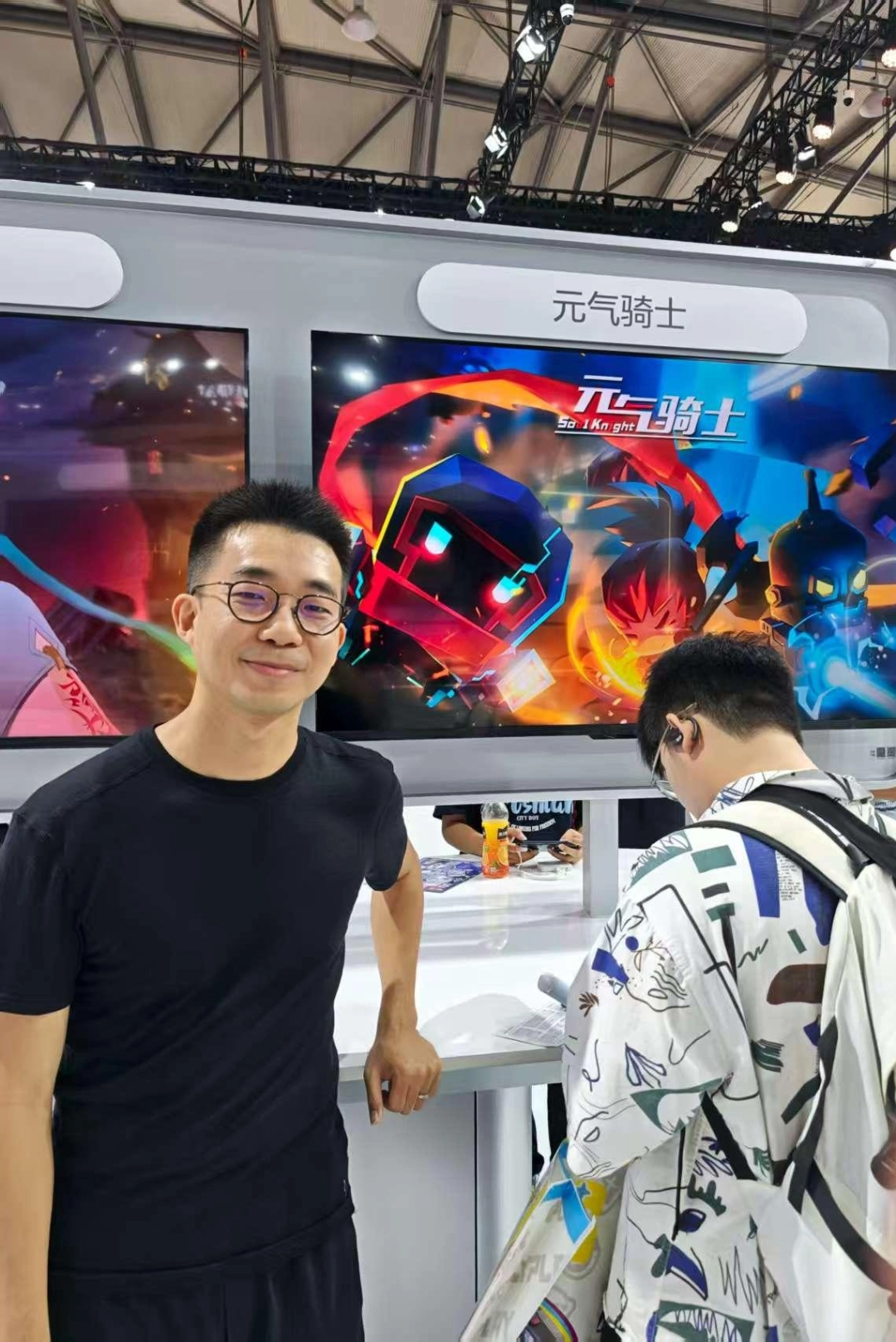
Cao Kan and players trying out the HarmonyOS version of Soul Knight at the event
Although it is an eight-year-old game, the HarmonyOS version of Soul Knight is not a simple port. According to Cao Kan, the HarmonyOS version shows significant performance improvements, mainly in game startup and loading speeds. While playing on Android devices often resulted in lag, the HarmonyOS version runs even more smoothly and stably than the iOS version. On this basis, the HarmonyOS version of Soul Knight also adds the unique "Tap" LAN multiplayer feature of the HarmonyOS ecosystem, making it more convenient for players to team up with friends during gatherings.
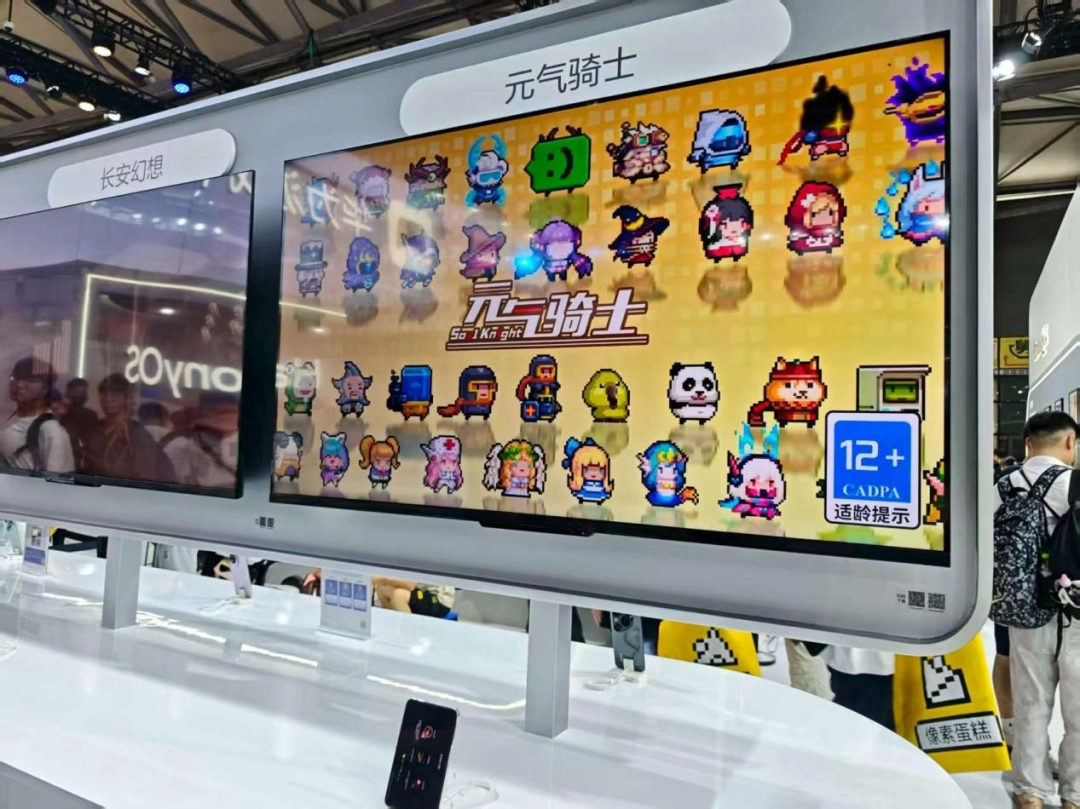
Regarding whether they benefited from being early adopters on the HarmonyOS platform, Cao Kan admitted that, thanks to the relatively closed app market environment of the HarmonyOS system, their team, as one of the early developers to release a HarmonyOS version of their game, indeed received more exposure and user traffic from the platform. Although he didn't examine the specific data closely, he acknowledged that the HarmonyOS version of the game increased player LTV (Life Time Value) by 50%, which is undoubtedly an impressive performance for a game that has been online for nine years.
During the game adaptation process, Cao Kan and his team also received significant help from HarmonyOS. For example, as an eight-year-old game, Soul Knight's code is somewhat outdated by today's standards, but thanks to HarmonyOS's excellent work on engine porting and low-level adaptation, the porting difficulty was much lower than they had anticipated. Moreover, even if some features were missing along the way, proactively providing feedback to HarmonyOS would result in them offering solutions, even sending personnel to assist on-site. This efficiently resolved issues while avoiding embarrassing situations for developers, such as "leaking underlying game code."
With such conditions in place, Cao Kan also stated that their future new games will strive to launch first on HarmonyOS. For example, their next title, Mo Shou Gu Cheng (Ink Defense: Lonely City), a survival-themed historical war game, is currently being adapted for the HarmonyOS system. Considering that more developers adapting their games to HarmonyOS will likely lead to intense competition, establishing good cooperative relationships with HarmonyOS early on will definitely be beneficial for small and medium-sized teams like ChillyRoom Studio.
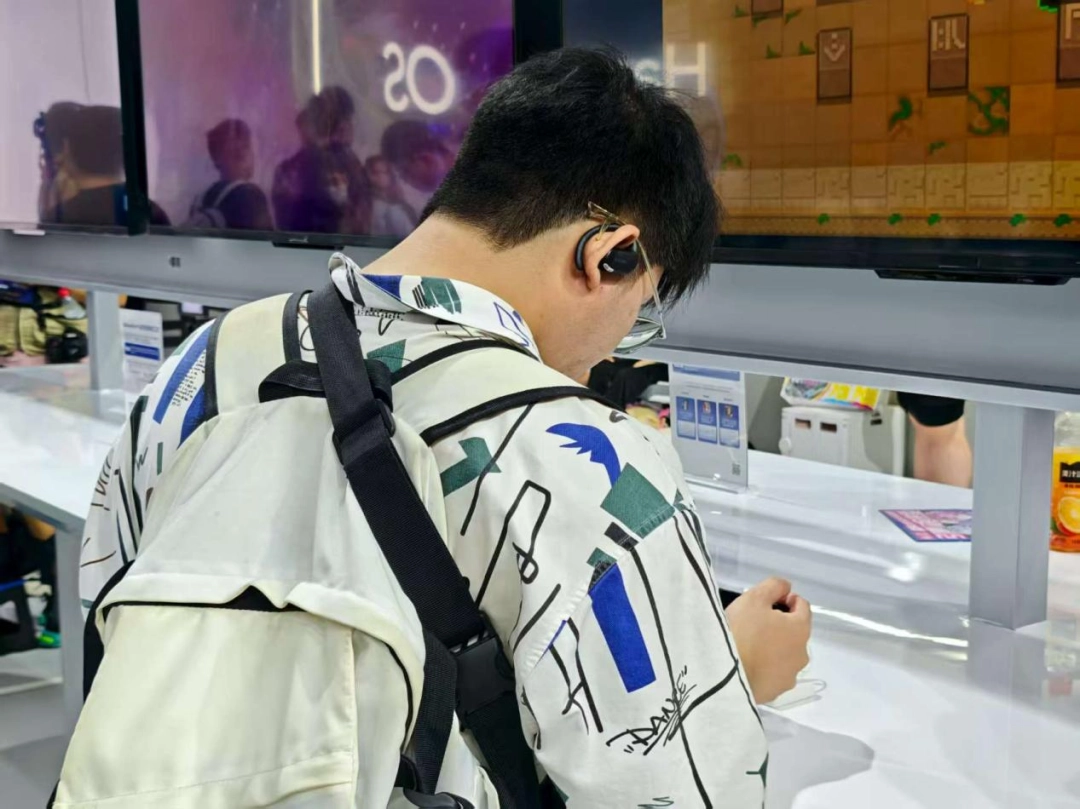
Of course, the experiences of Cao Kan and Soul Knight are just a microcosm of the many exhibits at the HarmonyOS gaming zone during this ChinaJoy.
Today's HarmonyOS gaming already boasts massive device support and a complete content ecosystem. In addition to optimizing older games, the emergence of various game black technologies is also the foundation for HarmonyOS to let players personally experience the charm of HarmonyOS gaming, which offers "different performance, intelligence, and gameplay." Taking this ChinaJoy as an example, the over 1,000 square meter HarmonyOS gaming zone includes four major areas: Popular Games Zone, Game Trial Zone, Full-Scenario Experience Zone, and Stage Interaction Zone, comprehensively showcasing innovative technologies in the HarmonyOS ecosystem gaming field and allowing players to immersively feel the new HarmonyOS world. Thanks to these efforts, HarmonyOS has the strength to attract more developers and works to join the HarmonyOS gaming family.
So, what specific black technologies are involved? Let's look at the results accumulated by HarmonyOS gaming over the years through specific game performances.
First up is the previously mentioned "Tap to Team Up" feature. As the name suggests, when users bring two HarmonyOS devices close together, the "Tap" function can quickly trigger the game teaming interface, enabling a zero-effort multiplayer teaming experience. At the ChinaJoy HarmonyOS booth, in addition to Soul Knight, another game called Chaos Kitchen also supports this feature. Simply tap two phones together to instantly form a team, eliminating the cumbersome traditional invitation process and providing an ultra-convenient way to play together anytime, anywhere.
In addition to "Tap to Team Up," this feature also supports "Tap for Nearby Fast Transfer" and "Tap to Share Games."
The former, based on distributed soft bus technology, can achieve transmission speeds of over 100MB/s at close range, allowing players to directly share game resource packs with friends, saving data usage and waiting time for downloads. Taking the game Best Club as an example, sharing its 1GB resource pack via "Tap" takes only 10 seconds, greatly reducing transmission time and eliminating the need for friends to download it again.
The latter is also based on distributed bus technology, allowing players to directly share game content with nearby friends via the device's "Tap" function. For example, the wildly popular mini-game Sheep Match adapted this feature at the HarmonyOS booth this time. With it, sharing exciting in-game moments among players will become simpler and more efficient.
Besides "Tap," players at the event could also experience Legends of the Three Kingdoms, a classic card battle game that uses AI large model intent recognition to input game commands via voice control; Duole Guandan and Flying Chess Battle, which allow online battles with nearby companions even without an internet connection, free from ads and interruptions for uninterrupted gameplay; and high-quality 3D mini-games like Dawn Reborn and Raiden: Awakening, designed for fragmented entertainment needs in mobile scenarios, allowing players to start playing anytime with fewer steps, or even maintain high frame rates and ultra-smooth graphics without downloading. With these technologies, traditional mobile fragmented entertainment methods may undergo earth-shaking changes in the near future. Considering the rapid rise of China's mini-game market, if HarmonyOS can apply these developed technologies to actual player scenarios early on, it might have the opportunity to lead all other manufacturers in the next generation of mobile gaming ecosystem layout.

Moreover, thanks to the rapid development of the HarmonyOS ecosystem in recent years, players now have more diverse ways to interact with games.
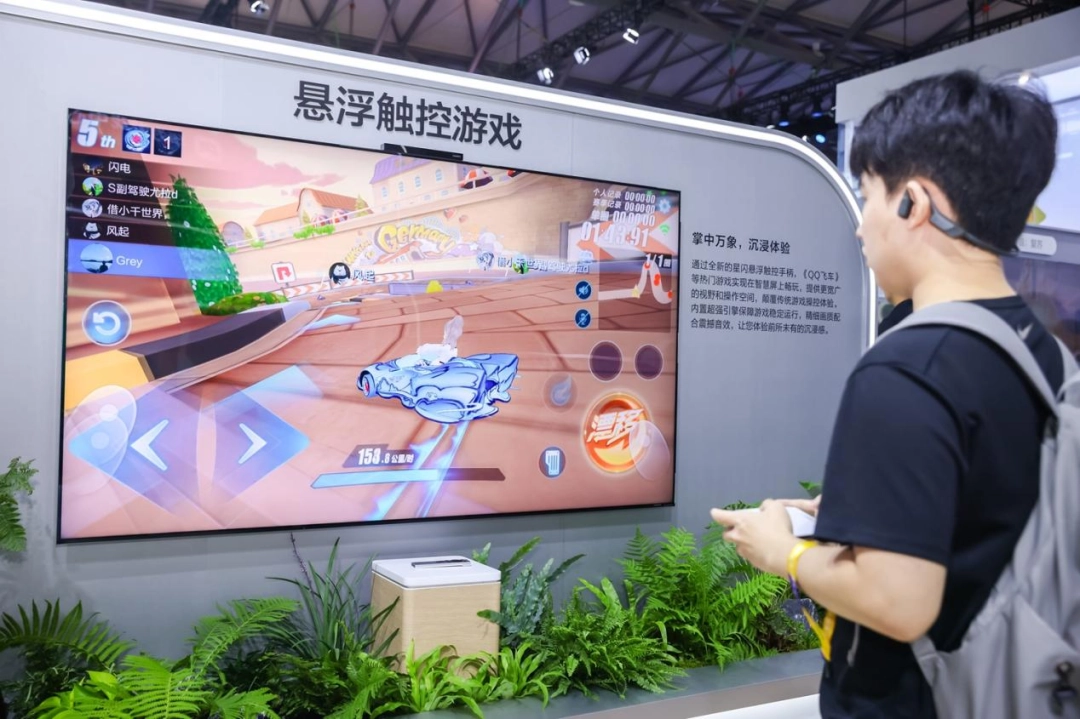
For instance, in the HarmonyOS zone at this ChinaJoy, players can experience the new StarFlash floating touch controller on HarmonyOS smart screens, bringing operational innovations to games like QQ Speed and Subway Surfers. Besides the wider field of view provided by the large screen, floating control enables real-time tracking and mapping of two fingers, effectively solving hand-eye coordination issues when playing on large screens. This helps players enjoy a more immersive gaming experience while reducing control errors.
Furthermore, leveraging the rich device types in the ecosystem such as smartphones, tablets, TVs, and even car head units, HarmonyOS can now provide players with a more comprehensive and convenient "Super Full-Scene Gaming" experience. When playing BlazBlue: Chaos Effect, an action game that heavily tests player operation and device input response latency, you can seamlessly switch operations between your phone, HarmonyOS PC, smart screen, and car head unit. In the smart screen scenario, the phone can act as the computing center for the smart screen to handle large games, and also serve as a touch controller. In the car head unit scenario, players can enjoy an immersive gaming experience by combining the ultra-wide car screen with ambient lighting and surround sound. The AITO M9 brought to the ChinaJoy site was used to demonstrate these functions. Seeing the constant crowd of players gathered around this car in the exhibition area shows that HarmonyOS's efforts in the intelligent ecosystem have certainly been worthwhile.

Of course, if you feel that the aforementioned games lack somewhat in scale and influence, don't worry. This year's HarmonyOS gaming zone also features six popular game areas—Honor of Kings, Light and Night, NBA Peak Showdown, Jade Dynasty 2, Plants vs. Zombies 3, and Girls' Frontline 2: Exilium. These areas not only create an immersive new HarmonyOS world for players but also bring HarmonyOS-specific experience optimizations to these currently popular games. If you visited the HarmonyOS zone during the exhibition, it would be hard not to notice their presence.
For instance, at the Honor of Kings booth, besides the new hero Sun Quan becoming the center of attention, you could also experience the enhanced gameplay of this popular MOBA mobile game, powered by the HarmonyOS Ark Engine. With deep optimization based on the Ark Graphics Engine, the rendering and display speed of the HarmonyOS version of Honor of Kings has significantly improved, achieving a 21% improvement in touch responsiveness compared to the previous generation, providing players with a better control experience. Meanwhile, thanks to optimizations in the Ark Scheduling Engine, the smoothness of the HarmonyOS version of Honor of Kings has also improved, achieving excellent performance where the Mate 70 Pro can run stably for 5 hours without charging. Additionally, with the support of Audio Kit from the Ark Multimedia Engine and Gvoice technology from Honor of Kings for voice chat noise reduction, as well as the upcoming support for nearby fast transfer similar to Huawei Share, allowing players to directly share game resource packs with nearby friends to save data usage and download wait times, these optimizations and features finally give Honor of Kings users on HarmonyOS devices something to be envied by players on other platforms.

Of course, the reason for such a rich display of game black technologies ultimately stems from years of gradual platform technology accumulation by HarmonyOS. These technologies have also been used to help developers in different fields further expand the content of the HarmonyOS ecosystem.
For example, to help developers quickly and comprehensively understand HarmonyOS gaming, the HarmonyOS Game Center has created and launched the HarmonyOS Game Developer Services website. The webpage integrates professional technical resources and case libraries, helping developers quickly locate needed content through clear knowledge graphs. Meanwhile, a series of online public courses led by HarmonyOS technical experts have also been launched. These courses break down the development process through practical teaching, helping developers improve efficiency. In terms of development tools, as of now, the HarmonyOS development kit covers most mainstream game engines, supporting over 380 third-party SDKs and more than 110 game development libraries, significantly simplifying multi-terminal adaptation and feature integration processes.
Of course, this full-chain service empowering game adaptation for HarmonyOS is undergoing continuous adjustments and upgrades. For instance, the newly launched HiSmartPerf and GPM toolsets provide full-cycle support for performance tuning during development, offering in-depth analysis of game performance data such as CPU, GPU, and power consumption. These tools cover the entire game development process, helping developers precisely identify performance bottlenecks and create higher-performance, more stable game products.
Furthermore, the HarmonyOS Game Center has provided substantial policy support to developers in recent years, including the "Hongfei Plan," which has offered over 400 million in policy support to developers so far. The budget for this plan will continue to increase, with an expected investment of billions in comprehensive incentives in the future, covering large, medium, and small game developers. HarmonyOS will also improve its full-scenario HarmonyOS game incentive system, including various business policies such as full-scenario innovation incentives, joint operation incentives, and mini-game incentives, allowing more developers to fully unleash their creativity and capabilities on the HarmonyOS platform. As incentive policies deepen, partners who layout in the HarmonyOS ecosystem early will build differentiated competitive advantages and share the benefits of ecosystem growth.

In summary, whether you are an ordinary player using HarmonyOS devices or a developer hoping to bring your works to the HarmonyOS platform in the future, the massive user base and development potential currently possessed by HarmonyOS as an emerging platform are evident to all.
According to official data, there are currently over 6,500 HarmonyOS games, and the HarmonyOS gaming ecosystem covers multiple terminal types including smartphones, PCs, tablets, and smart screens. More and more games are joining the HarmonyOS gaming ecosystem. Whether it's the release of the official HarmonyOS versions of Honor of Kings and Game for Peace, or the launch of the limited closed beta test server for Golden Spatula, it represents the accelerated adaptation of top mobile games to HarmonyOS. Additionally, more game publishers are accelerating their layout on HarmonyOS, with many new titles choosing to launch first on HarmonyOS and achieving impressive results on the platform. Compared to the awkward situation of lacking technology and games a few years ago, HarmonyOS has clearly transformed into a mature platform that is no weaker than, and in some aspects even surpasses, the Android and iOS camps. As long as it maintains this forward-moving momentum and harmonious co-creation, the future HarmonyOS gaming ecosystem is bound to bring more surprises and possibilities to players and developers.
And all of this is worth looking forward to, isn't it?