

Capcom's new title PRAGMATA, which has been delayed multiple times since its announcement in 2020, remains a mystery to players. How does the novel "shooting + puzzle" combat mode actually perform? What is the story behind the blonde girl "Diana," who tried to "cutely slip away" in the delay announcement? Many people expect accurate answers to these questions.
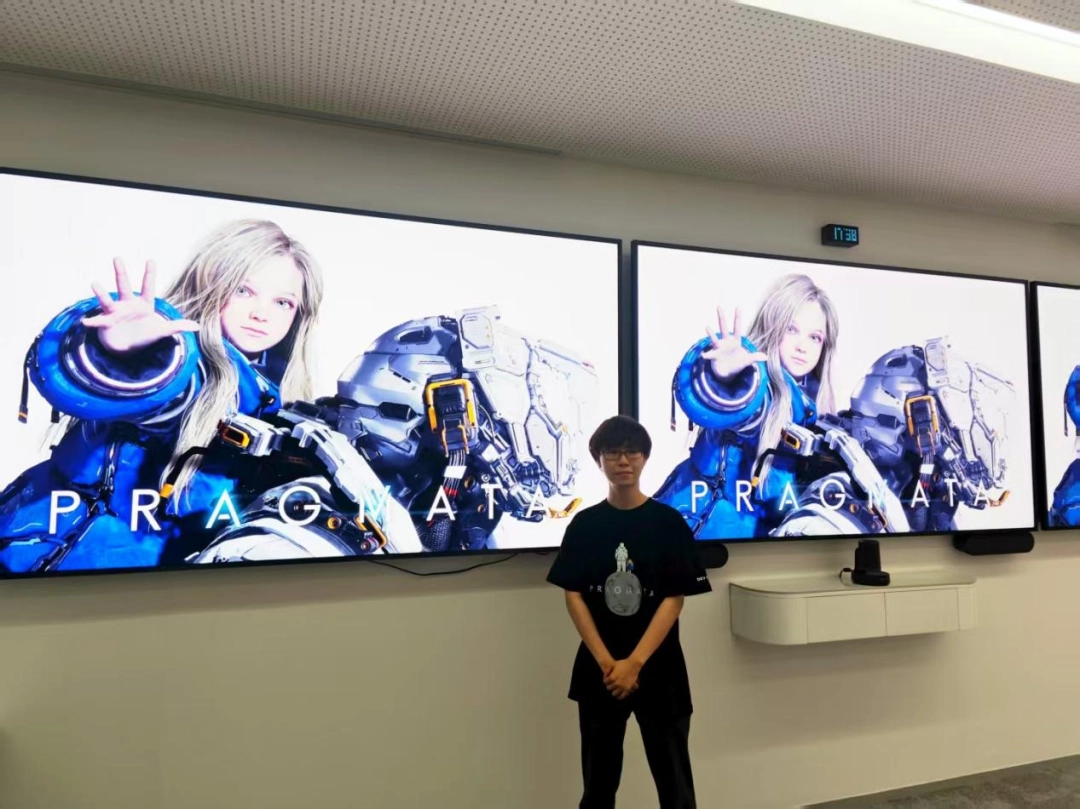
Thanks to the invitation from Capcom and PlayStation, we visited the PlayStation office in Shanghai, where we played about 20 minutes of the early game content and conducted a face-to-face interview with the game's producer, Mr. Naoto Oyama. As an emerging producer within Capcom, Mr. Oyama appeared slightly shy in front of the media cameras. However, when asked about the game, he seemed to flip a switch and talked enthusiastically about various details of the design and production. It's evident that PRAGMATA is truly his labor of love.
If you're curious about this new game and its emerging producer, this interview is definitely not to be missed.
Q: Will the overall progression of this game be relatively linear, or will there be parts that allow players to freely explore the lunar base?
A:First, each level has its own independent content, and within levels, players have a certain degree of freedom to explore, discovering and obtaining special items and equipment. After completing a level, players proceed directly to the next one. Overall, this is how the progression in PRAGMATA works.
Q: What previous game projects have the development team members of PRAGMATA worked on?
A:The jacket I'm wearing today is the uniform of Capcom's First Development Division. Including myself, all members of the PRAGMATA development team come from the First Development Division. This division was responsible for producing the well-known Resident Evil and Devil May Cry series, meaning they have rich experience in developing action games.
Q: PRAGMATA underwent many delays after its announcement. What was the process like during this period? Looking back now, have there been any changes to the game content compared to the initial planning?
A:PRAGMATA released its first concept trailer in 2020. At that time, the trailer already showcased the basic gameplay: players control astronaut "Hugh" for combat and robot girl "Diana" for puzzle-solving. This design was established at the project's inception and has remained unchanged since.
Later, we experienced multiple delays, primarily to polish the gameplay further. Since PRAGMATA's gameplay is quite novel, we were concerned that players might find the controls complex and give up before finishing. Therefore, to make PRAGMATA's gameplay more complete and appealing, we tried many different forms and repeatedly tested and refined the existing mechanics, which took considerable time.
Actually, from the game's announcement until now, we have been developing and adjusting the gameplay of PRAGMATA. We finally feel it's about ready. Therefore, we are releasing this demo version to everyone, and we hope you will look forward to it and support us.
Q: Approximately how long will it take to complete PRAGMATA?
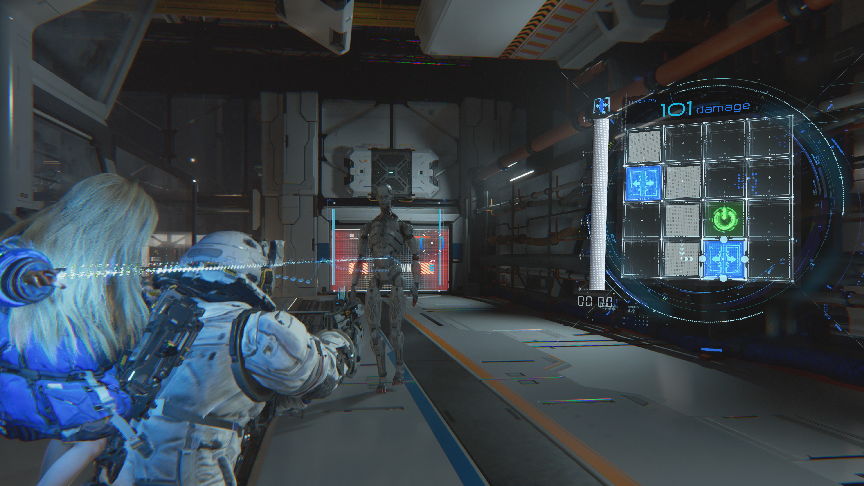
A:Since PRAGMATA is still in development, I cannot disclose the exact completion time. However, you can refer to the scale of the latest Resident Evil series titles (Resident Evil: Requiem).
Q: You mentioned earlier that the development team adjusted the control schemes for "Hugh" and "Diana" many times. Were other control methods designed during internal trials? With "Hugh" handling combat and "Diana" solving puzzles throughout the game, how do you avoid players feeling repetitive experiences in the mid-to-late game?
A:Many gameplay ideas we tried earlier might sound fun if described now. However, in game development, turning ideas into reality means we can't keep all those whimsical elements. So, we ultimately chose the form that PRAGMATA presents today.
Regarding the current gameplay, as you mentioned, players might feel it's repetitive and lose interest. This is something we've been carefully trying to avoid, which is why we delayed the release multiple times and conducted extensive internal testing. The demo version you just played was released only after numerous refinements to ensure it wouldn't feel boring.
PRAGMATA will officially launch in 2026. Until then, we still have some time to make final adjustments and improve the game. So, please bear with us a little longer.
Q: On Bilibili, the most viewed video on Capcom Asia's official account is the 2021 announcement video for PRAGMATA's delay. Did you anticipate such a huge response to a simple delay notification? Did this phenomenon create any new impacts within the project team?
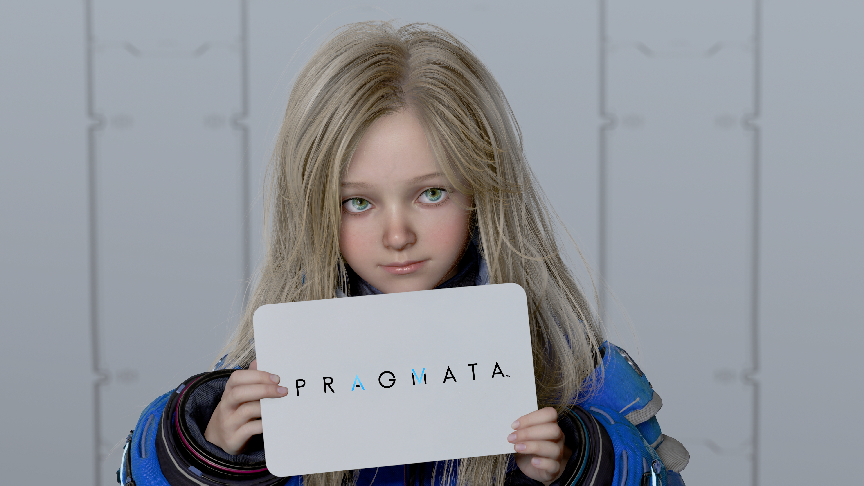
A:Yes, although we hoped Chinese players would like our work, the response greatly exceeded our expectations. Actually, when we released the delay announcement, it wasn't just to inform players that "the game might be released later." We hoped to show our latest production progress through "Diana's" performance in the video. Later, we found that players showed such great enthusiasm for PRAGMATA's "delay" video, which indicated their recognition of our project. As developers, we felt very happy about this.
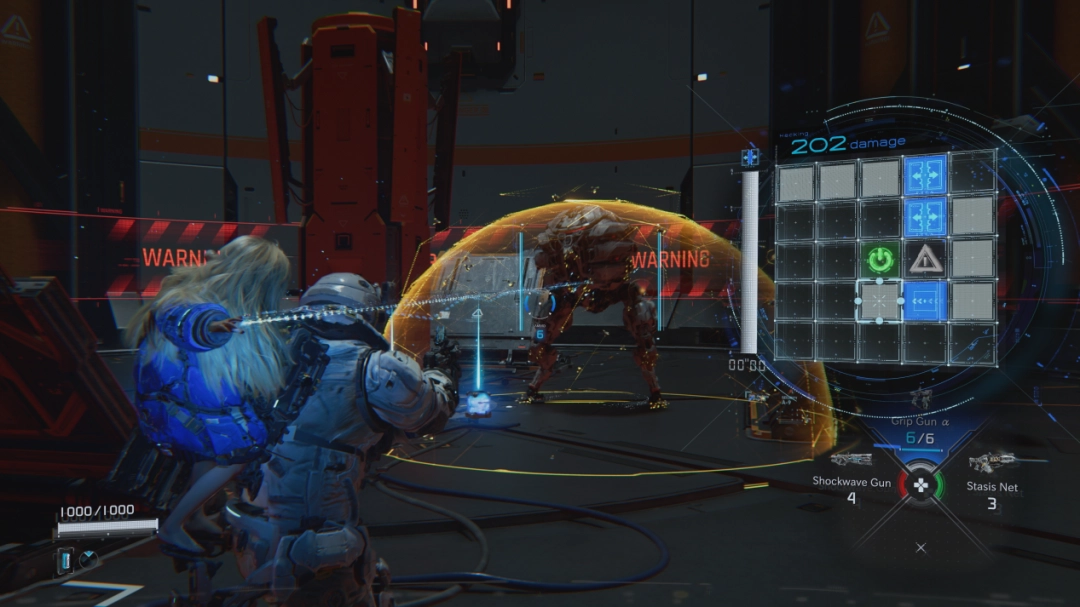
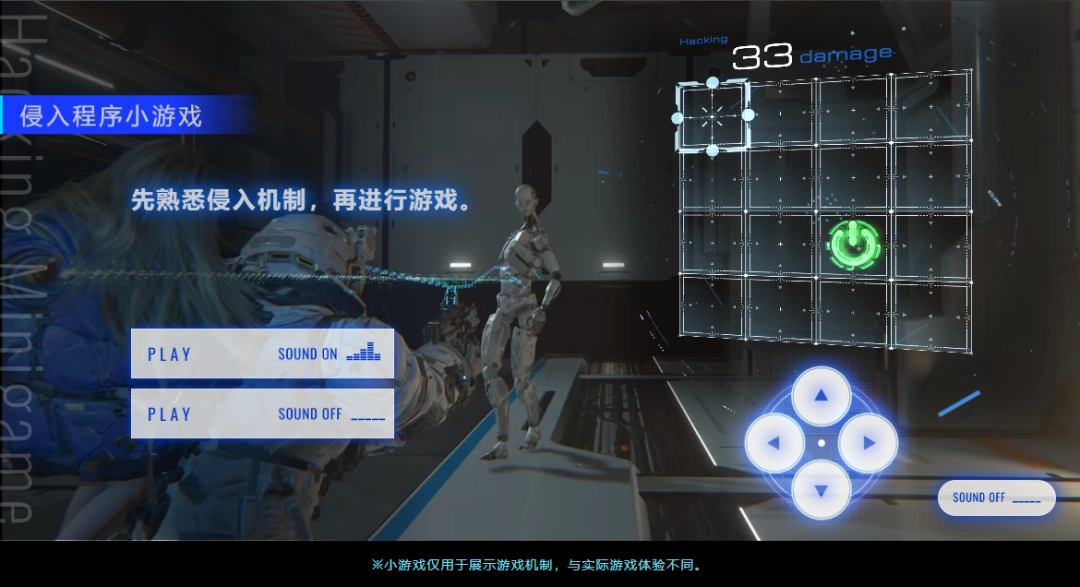
Q: During the demo, I noticed that the puzzle areas are basically 3x3 or 4x4 grid arrays, with a maximum of about 3 special path points. I wonder what the upper limit of puzzle difficulty is? Will there be larger areas and more path points?
A:Regarding this point, we hope you'll experience the specific details firsthand in the full release. However, I can reveal that, as you noticed in the demo, the grid size for puzzles varies depending on enemy difficulty. Currently, we have 3x3, 4x4, and even 5x5 grids—the stronger the enemy, the larger the grid. Of course, we also adjust puzzle difficulty accordingly to ensure players have a good experience.
Q: A company called "Delphi" appeared in the game PV. Could you introduce what kind of enterprise this company is?
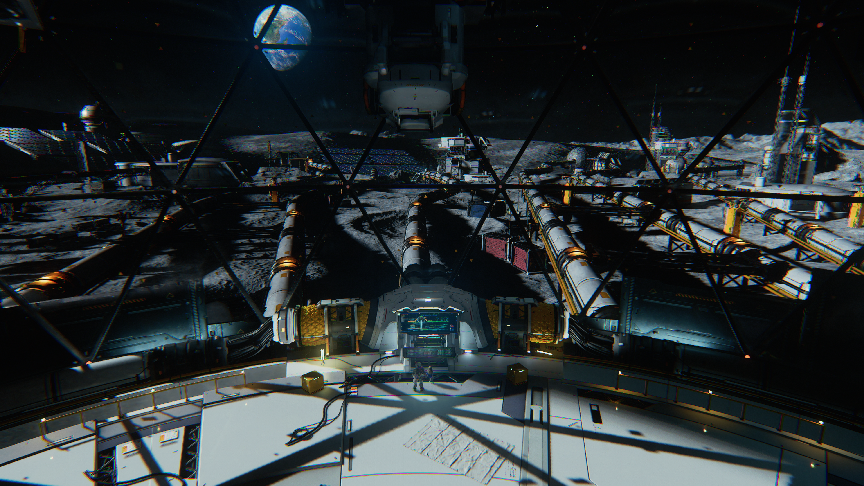
A:As mentioned in the PV, the stage for PRAGMATA's story is a base on the lunar surface. This base extracts "Lunar Silk" from "Moon Ore," which can be 3D printed into various objects. "Lunar Silk" is used for development across many levels, such as creating chips and even cars.
PRAGMATA's worldview is set in such a near-future background, and the company "Delphi" is responsible for researching and managing "Lunar Silk."
Q: For players accustomed to action-adventure games like Resident Evil, they may be more skilled at shooting mechanics than at the puzzle-solving aspects involving "Diana." Some of these players have expressed doubts online about PRAGMATA's game mode, wondering if inserting puzzles during combat might interrupt the flow of aiming and fighting. For players less adept at puzzles, will PRAGMATA offer ways to simplify or skip the puzzle segments?
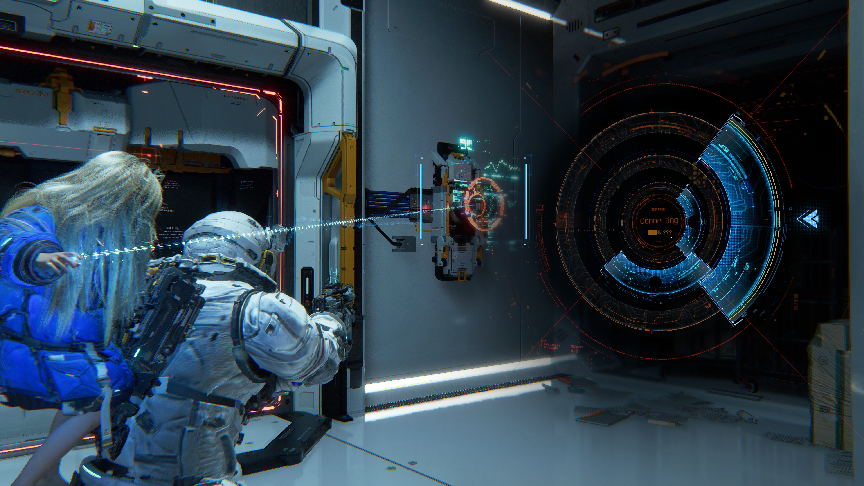
A:In the game, we have designed some upgrade options and weapons that can simplify the puzzle-solving parts. As you may have noticed during today's experience, Hugh Williams has a weapon called the "Stasis Net," which hinders enemy movement within a certain range. Using it when surrounded allows enemies to stop temporarily, enabling smoother puzzle completion. As the story progresses, players will acquire more helpful equipment and weapons, so please look forward to it.
Q: What aspects will PRAGMATA's growth and upgrade elements focus on? Will it involve strengthening weapons to make puzzle-solving easier, or other aspects that enhance character performance?
A:In PRAGMATA, we will include various growth elements such as weapon upgrades and character level-ups. Depending on the player's style, increasing base stats or enhancing the performance of weapons like the previously mentioned "Stasis Net" can improve the gameplay experience. Of course, we will release more information about the specific upgrade system in the future, so further answers to this question will have to wait until then.
Q: During the demo, I noticed that whether in combat or exploration, "Diana" provides some simple hints to "Hugh Williams." Apart from these simple hints, what other functions did Mr. Oyama add to the character of "Diana" when making this game?
A:First, at the gameplay level, players will simultaneously control both "Hugh Williams" and "Diana," engaging in offense and puzzle-solving respectively. Additionally, "Diana's" hacking ability allows her to infiltrate various devices in the lunar base. The scanning function activated by pressing the "Square button" is also one of "Diana's" abilities.
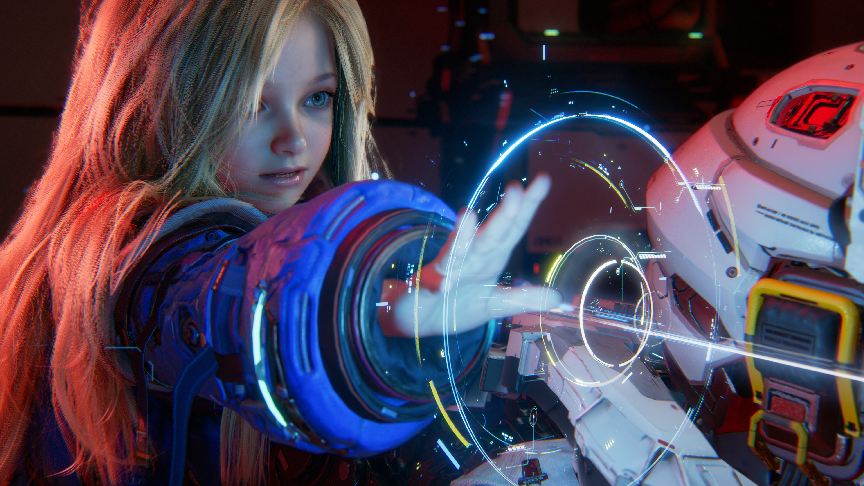
In terms of storyline, "Diana" is not purely a character who needs protection. As seen in the opening cutscene, when "Hugh Williams" is injured and unconscious, "Diana" uses nanomachines within the base to save him. In the subsequent story, we will depict more details to show that they are partners who support each other, rather than "Diana" being unilaterallyprotected by "Hugh Williams."
Q: Besides the initial blue outfit, will "Diana" have more replaceable costumes in the game? If so, will they affect the real-time rendered animations in the game?
A:I can't answer that question for now, but feel free to use your imagination.
Q: The demo version ends abruptly right after the boss appears—which is quite unusual. Why was it arranged this way?
A:In future demo events, we will provide versions that allow players to fully experience boss battles. Since PRAGMATA utilizes a new gameplay concept, this time we only offered a 20-minute demo showcasing the most basic content of the game.
Q: During puzzle-solving in PRAGMATA, time flows normally. In similar games, time usually slows down or even stops completely in such situations (like QTE sequences). Why did PRAGMATA decide to do it this way?
A:This question actually goes back to the basic gameplay design of PRAGMATA. In PRAGMATA, we adopt a design that fully integrates combat and puzzle-solving, so time flows normally during puzzles. If time were stopped during puzzle-solving, the unity of the process would be broken, potentially interrupting the player's "flow."
Q: The combat system I experienced seems to be the basic part. Could you describe what the full combat experience will be like? Which skills does the game mainly test? For example, shooting, puzzle-solving, resource management, etc.?
A:I may not be able to answer this question specifically. However, I can say that we won't force players to reach a fixed level of skill in any particular area. How to grow and upgrade weapons and abilities during the process is for players to consider based on their own style. Players can tackle the game in different ways through this process.
Overall, PRAGMATA tests the player's ability to analyze and think based on the situation after becoming familiar with the gameplay. Since puzzle elements are incorporated into combat, time management becomes crucial. Players need to make quick decisions for their next move while anticipating potential scenarios several steps ahead.
Regarding resource management, among the three weapons shown earlier, the "Grip Gun"'s ammo regenerates automatically over time, while the "Shockwave Gun" and "Stasis Net" have limited ammo and are discarded once depleted. Therefore, players need to consider when to use these weapons. However, these types of weapons appear frequently during exploration and combat, so resource management won't be as meticulous as in the Resident Evil series.
Q: There are several different types of enemies in the demo, such as ordinary robots that perform melee attacks like zombies, and reconnaissance robots that fly and attack remotely... In subsequent stages, as players upgrade and improve their skills, how will PRAGMATA further increase level difficulty? Will it create more challenging new enemy types, increase the number of enemies, or increase the difficulty of puzzles?
A:Each level features a wide variety and large number of enemies. Since the demo covers the early part of the game, you might see at most two robots appearing simultaneously. However, there are actually more enemies in later stages. That said, we won't simply increase difficulty by "spamming" enemies. By enhancing abilities according to their own strategies, players can better handle these situations.
Q: During the demo, I noticed that the legs of humanoid robots could be destroyed. Will this kind of "part destruction" mechanic appear with later enemies? Can I target weaknesses specific to different enemies using this mechanic?
A:Yes, for the initial humanoid robots, attacking their legs will cause them to break, slowing their movement speed; attacking the head causes significant damage. The spherical robots with two legs that appear later in the demo also have weaknesses that can be targeted. During actual gameplay, players should pay attention to these changes and attack accordingly.
Q: PRAGMATA is a rare new IP announced by Capcom in recent years. How was it proposed and successfully greenlit?
A:Besides super popular IP series like Resident Evil, Devil May Cry, Street Fighter, and Monster Hunter, Capcom has also been striving to launch many new IPs. PRAGMATA is just one of them.
Q: Does PRAGMATA support custom key bindings? Currently, the puzzle section requires operation via four buttons in the function area. Can this be changed to operate via the right analog stick?
A:If we changed it that way, players wouldn't be able to adjust the camera angle during combat. Under our current design, allowing players to freely remap keys while maintaining the original gameplay experience is somewhat difficult. Therefore, we will provide some limited key remapping options.
Q: What is the meaning behind the game title "PRAGMATA"? How does it relate to the game itself?
A:The title comes from the philosophical term "Pragmatism." Simply put, it values the outcome of an action more than the process itself. We felt this concept resonated with the AI in the lunar base and the overall worldview of our game. Thus, we adopted this title.
Q: Many works feature a partnership between a little girl and a large, mindless robot. However, in PRAGMATA, this setting is reversed—the little girl is a robot, and the big guy is human. Is there any particular meaning you wanted to convey with this?
A:Actually, there wasn't any special consideration for this setting. Indeed, as you said, we often see combinations of a little girl and a large robot, where the big robot protects the girl. But as mentioned earlier, the relationship between "Diana" and "Hugh Williams" is one of mutual help and protection, not just the girl being a passive character needing protection.
Q: As a fictional story, PRAGMATA could have been set in many places. Why did you ultimately choose the Moon?
A:PRAGMATA is a near-future sci-fi game. If a sci-fi story were set in the distant future on other planets, it would be difficult for people today to imagine the scenery. To make it feel more familiar, we set the background on the Moon, which can be seen with the naked eye today.
Q: In PRAGMATA's promotional images, the first "A" and "M" in the title are highlighted with bright light. Was this done for a special reason? Does it relate to the subsequent plot?
A:If you observe closely, you'll notice that the highlighted parts of these two letters are the outer part of "A" and the triangular arrow shape in the middle of "M." These two arrows, one pointing up and one down, can represent various opposing relationships in PRAGMATA, such as the opposition between Earth and Moon ("one above, one below") and between humans and AI. Of course, we hope players discover the specific meanings themselves in the game.
Q: This question involves some personal judgment. After meeting Producer Oyama today, I felt he was relatively young, younger than the typical Japanese game producers in our impression. Is the entire PRAGMATA development team also a relatively young team?
A:Actually, I'm one of the younger members of the team. Not everyone is as young as I am; there are many senior staff members with extensive development experience. Although I'm relatively young, I'm not a rookie who has only been with the company for two or three years. In fact, I might not be as young as I look (laughs).
Overall, compared to other projects, the average age of the PRAGMATA development team is indeed younger. It could be described as a "senior mentoring junior" team within Capcom. Besides me, Mr. Kawata, who worked on the entire Resident Evil series, is also part of the production team for this project, which is driven by multiple producers.
Q: Finally, do you have any message for Chinese players?
A:PRAGMATA is a brand-new action game with considerable effort put into the combat experience. We hope to bring players an unprecedented gaming experience. For localization, we are providing full Chinese subtitles and voiceovers in PRAGMATA. We hope Chinese players will enjoy our game. Thank you all.