

Coming to your senses, you find yourself in a dimly lit living room—Tokyo outside the window is shrouded in endless heavy rain. On the other side of the room, a girl who looks under twenty years old casts a cold gaze at you. Faced with a stranger who suddenly appears in the room, her face shows more disappointment than surprise. The noose hanging from the ceiling tells you that a tragedy seems to have been successfully avoided due to your sudden appearance.
This is the opening scene of the indie game "Rain98." The girl in the room introduces herself as "Amebara Rena." At the center of the BitSummit venue held in Kyoto, Japan, this gloomy electronic novel game formed a strange contrast with the surrounding noisy crowd, and every experiencer standing in front of the screen couldn't help but be influenced by the world on the other side of the screen.
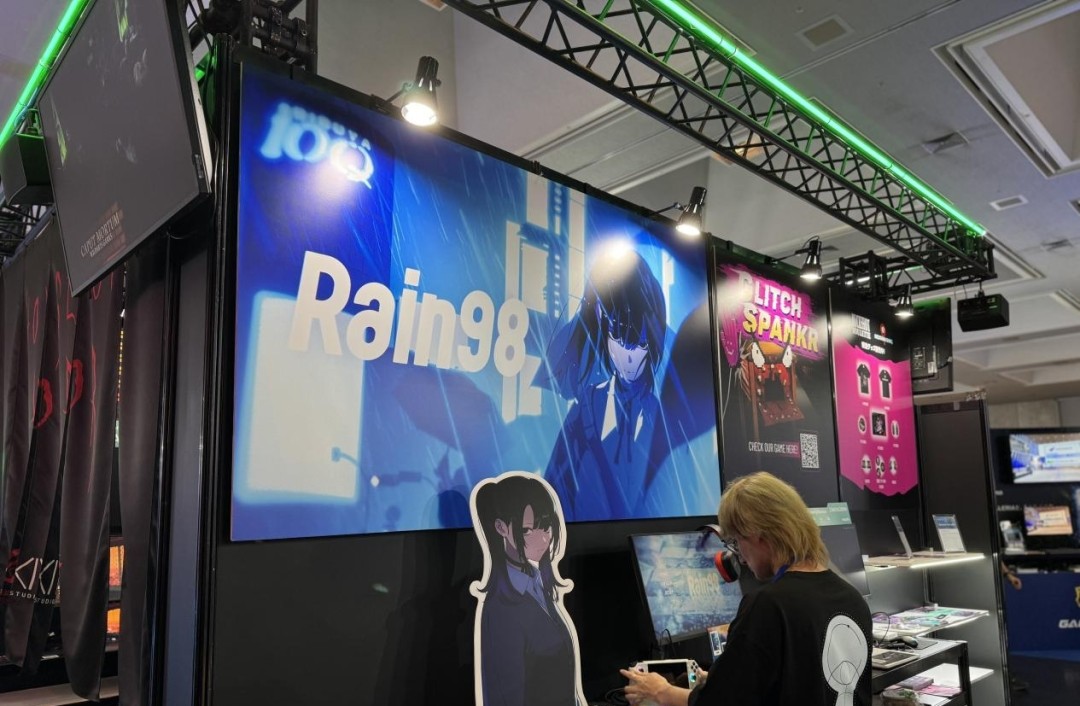
The setting of "Rain98" is Tokyo, Japan, in 1998. In the history we know, this was a turbulent era: the impact of the burst bubble economy showed no signs of ending; Japan's domestic employment rate hit new lows several times; the "Lost Decade" plunged society into unprecedented anxiety, while rising rates of juvenile crime and suicide branded the boys and girls of this era as the "lost generation." Rena is just such a person; her plans disrupted by the player, she slumps on the sofa and lights a cigarette.
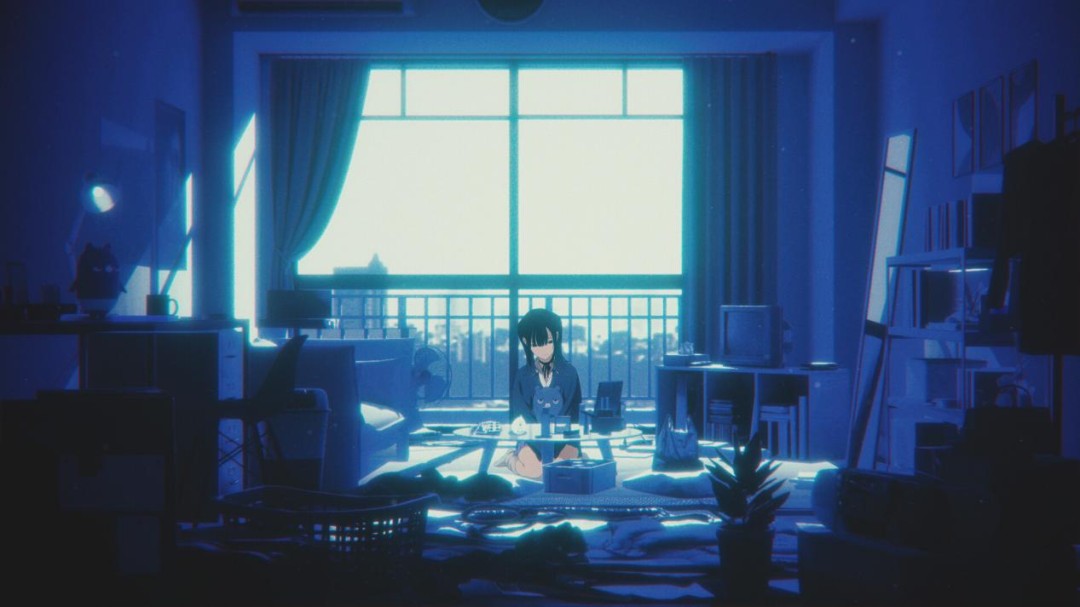
Without any plot or backstory setup, the story of "Rain98" simply begins. The entire process and atmosphere rendering are reminiscent of some experimental animations from the 1990s—in the apartment living room tinted blue by the sky outside, the player from 2025 and Rena from 1998 meet eye to eye, while the radio in the background broadcasts negative news about the "ice age" and low employment rates.
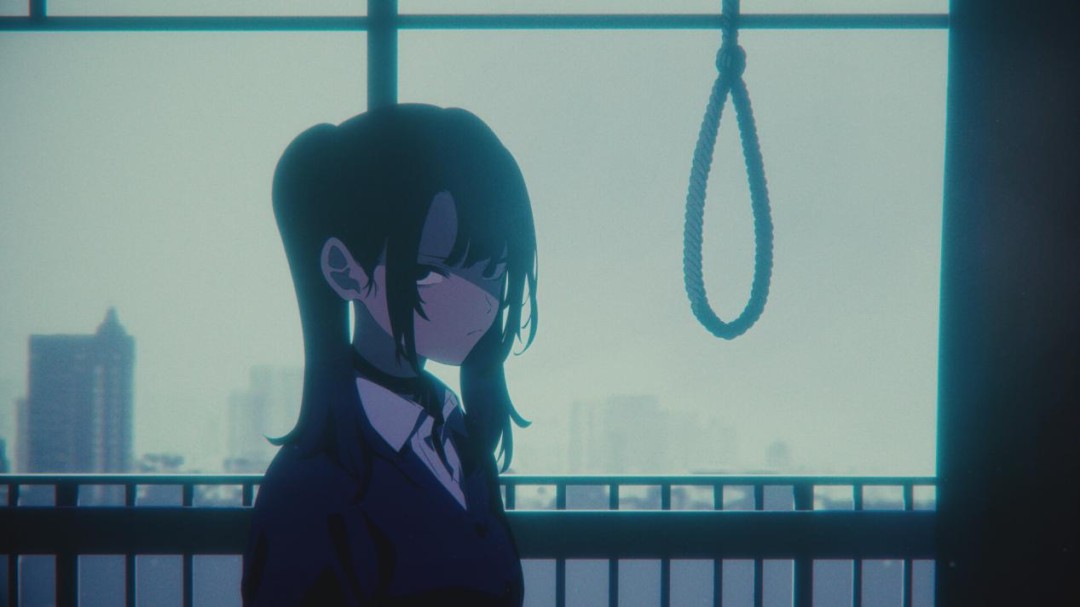
There is no life in Rena's cold eyes, and her tone is low, as if she has no interest in anything. But precisely because of this, she easily accepts the player's claim of coming from 2025. It is only when she hears that the world twenty-seven years later is "also full of troubles" that she first reveals a mocking smile, ridiculing humanity for never learning.
Faced with the player who has nowhere to go due to sudden "time travel," Rena allows them to stay in her home conditionally, using the bathroom as their temporary residence—the story of this work begins with the start of their cohabitation.
Unlike common visual novels today, "Rain98" does not use the typical "background" plus "character sprite" presentation. Apart from the apartment living room where Rena usually stays, all scenes in the game are composed of independent shots. This technique is costly but creates more depth for the game's narrative—Rena's actions and expressions change with the dialogue and scene transitions. Under the overall dark blue tone, every frame you see is filled with an illustrative, independent aesthetic.
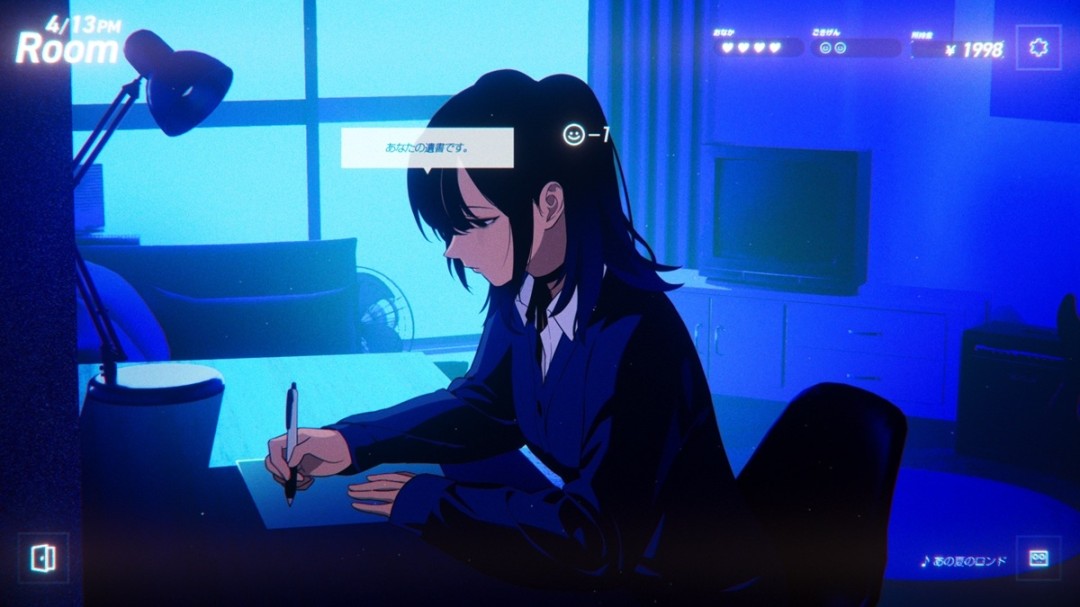
However, what attracts me most about "Rain98" remains its portrayal of characters and society during the specific time period of the "late 1990s," as well as the contradiction between "time travel" and the "end of the world" in the story.
Although the content of this demo was very limited and the narrative scenes were confined to this dimly lit apartment living room, it didn't prevent players from glimpsing the lifestyle of people in the late 1990s through this small space—old-fashioned radios broadcasting social news, CRT televisions, pop music posters, and "egg-shaped" electronic pets discarded after losing their novelty. What players heard and saw seemed to be covered by a retro filter filled with graininess.
From Rena, you can see most of the characteristics of the "lost generation"—Western-style tops paired with miniskirts and loose socks, maximizing the restoration of the image of Tokyo high school students in the 1990s as remembered in history. In terms of personality, Rena's nihilistic words and actions are also a silhouette of how people of that generation perceived the future and society. Rather than believing that "Everythinggj will get better," they pinned their hopes for the future on the "end of the world" mentioned by the French poet Nostradamus in "Les Prophéties."
It seems that the player's existence has already negated the possibility of the "end of the world." Nevertheless, Rena firmly believes in and anticipates the arrival of the "end of the world." In the game, she claims to be the terrifying king "Angolmois" from Nostradamus's "Les Prophéties" and asks the player to assist her in her "World Destruction Plan."
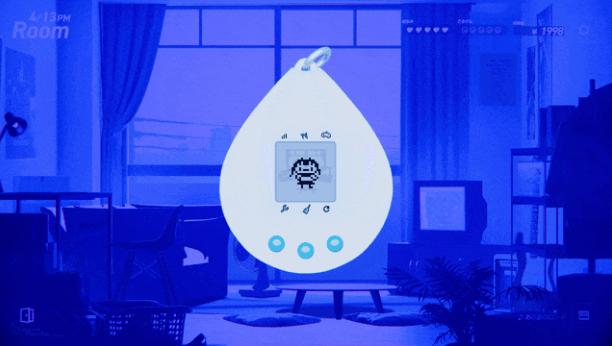
But unexpectedly, the tool Rena uses to realize her plan is a small booklet called the "Angel Passport." This booklet also has its real-world prototype—in 1998, something called the "Heaven's Passport" began to be sold to teenagers and quickly became popular in Tokyo.
The product positioning of the "Heaven's Passport" was a spiritual consumer item aimed at encouraging the "lost generation" to do good deeds in response to the high rate of juvenile delinquency. In terms of usage, holders could place a sticker in the passport for every good deed they performed. It was said that when the entire passport was filled with one hundred stickers, the holder could have one wish granted.
However, the "Heaven's Passport" does not have a strict definition of what constitutes a "good deed."
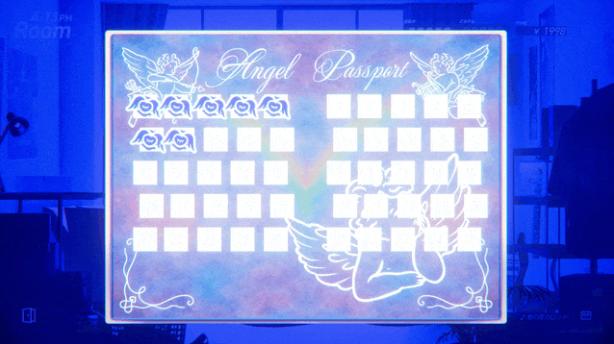
In the demo, as the first step in assisting the "World Destruction Plan," the player was asked to help Rena clean up her messy living room. After clicking and tidying up the room in order, Rena placed a sticker on the "Angel Passport," and the demo content ended abruptly there.
The staff member at the booth told me that one of the player's goals in "Rain98" is to gradually fill up this "Angel Passport" through interactions with Rena. The so-called "interactions," in addition to basic "dialogue," will appear in the form of various mini-games set in the 1990s background.
In fact, aside from the time travel at the beginning of the story, we didn't see much that defied common sense during this demo. Even by the end of the demo, I still didn't know if Everythinggj in the game was truly as it appeared on the surface—I didn't know if Rena really possessed the power to "destroy the world" as she claimed, why I had traveled back to the late 1990s, or even if the Tokyo outside the window truly existed.
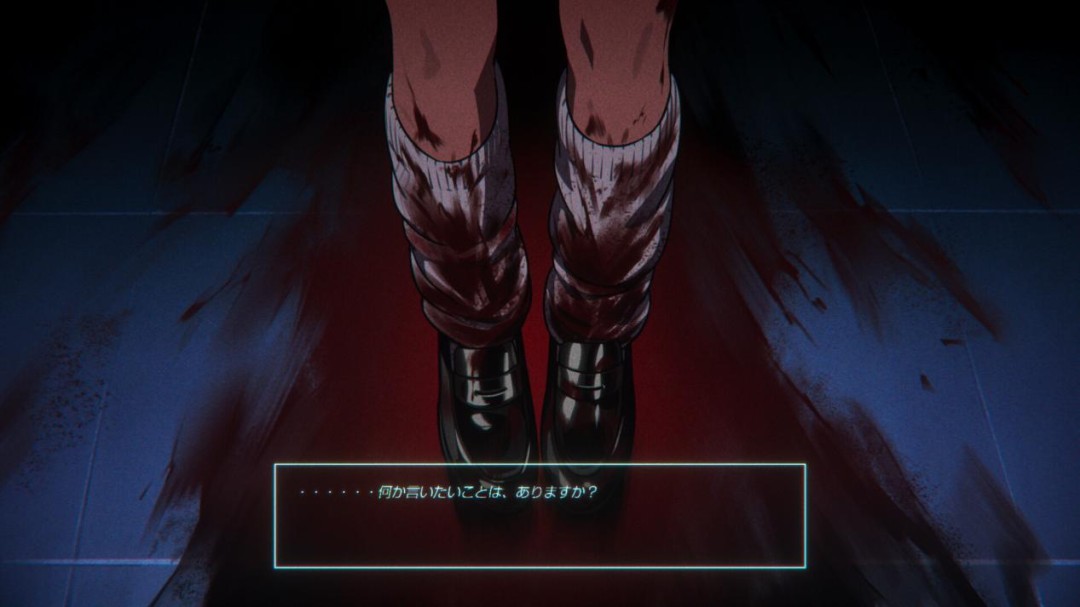
Conversely, in just these short ten minutes, "Rain98" accurately conveyed its charm to the players on the other side of the screen: exquisite visuals and sound effects, distinctive character designs, and unique atmospheric creation allow it to fundamentally distinguish itself from other visual novel games—everyone who plays up to this point instinctively feels curious about the subsequent story.
Worth mentioning additionally is that the heroine Amebara Rena in "Rain98" has complete voice acting—the voice actress Rio Tsuchiya, who voices her, had already won the support of many fans for portraying a certain "low-emotion idol." In the game, her voice truly matches Rena's lonely and cold character image... I think this is probably the most suitable voice I can imagine for Rena.
Currently, "Rain98" is still in development. The game is expected to launch within 2025 and will support sixteen languages, including Simplified and Traditional Chinese.