

To be honest, before officially experiencing The Ninth Psalm, I held certain prejudices against it—its clichéd title and eye-catching art style made it easy to associate with some stereotypical impressions from memory.
For example, color usage similar to the Persona series, cinematography akin to Baccano!, and jazz-flavored game music featuring classic diva vocals accompanied by violins.
If you place The Ninth Psalm's poster alongside the aforementioned entertainment works, there would hardly be any noticeable dissonance. Almost every touchpoint designed to impact players deliberately pays homage to successful commercial cases.
Similar creative approaches are not rare in the indie game scene, such as Witch Spring and Origin of Fate—learning from successful works is evidently easier than forging new paths blindly.
However, whenever I try titles with strong stylistic tendencies, I worry they might evolve into fan games through excessive homage rather than showcasing the developer's personal vision as commercial products.
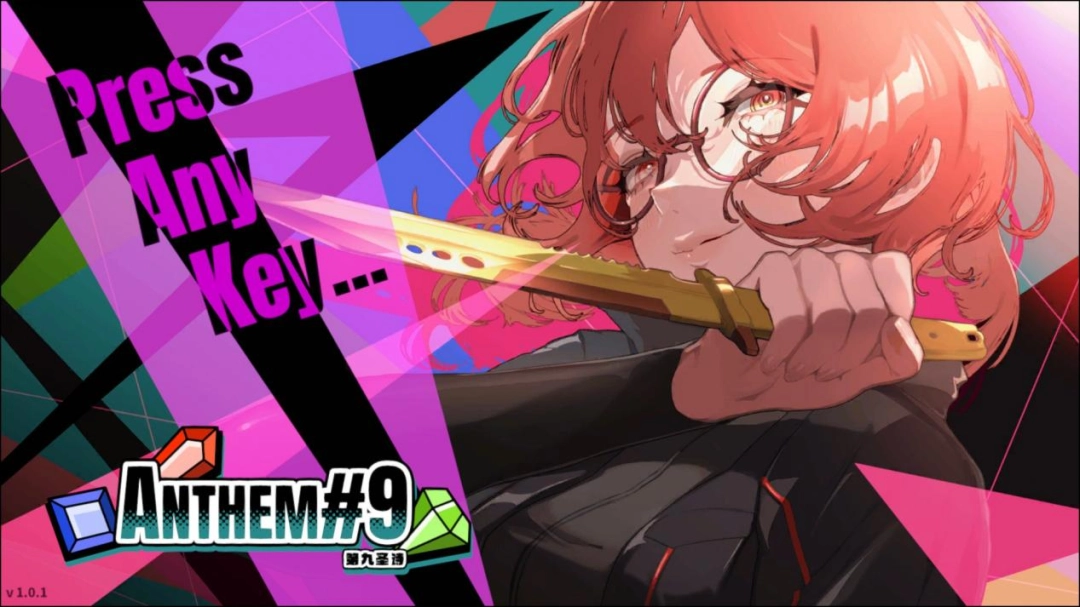
After formally experiencing the game, these fragmented stereotypes intensified. Whether it's dynamic UI design concepts, extensive use of accent colors, character makeup designs, or dungeon atmosphere creation, every aspect has clear targeted goals.
However, it must be said that successful commercial cases are effective tools—while The Ninth Psalm may lack the unique personal aesthetic seen in independent works like Morsels, following proven formulas ensures stability without risking catastrophic failure.
The Ninth Psalm's art style, reminiscent of classic masterpieces, offers players a mature auditory and visual experience.
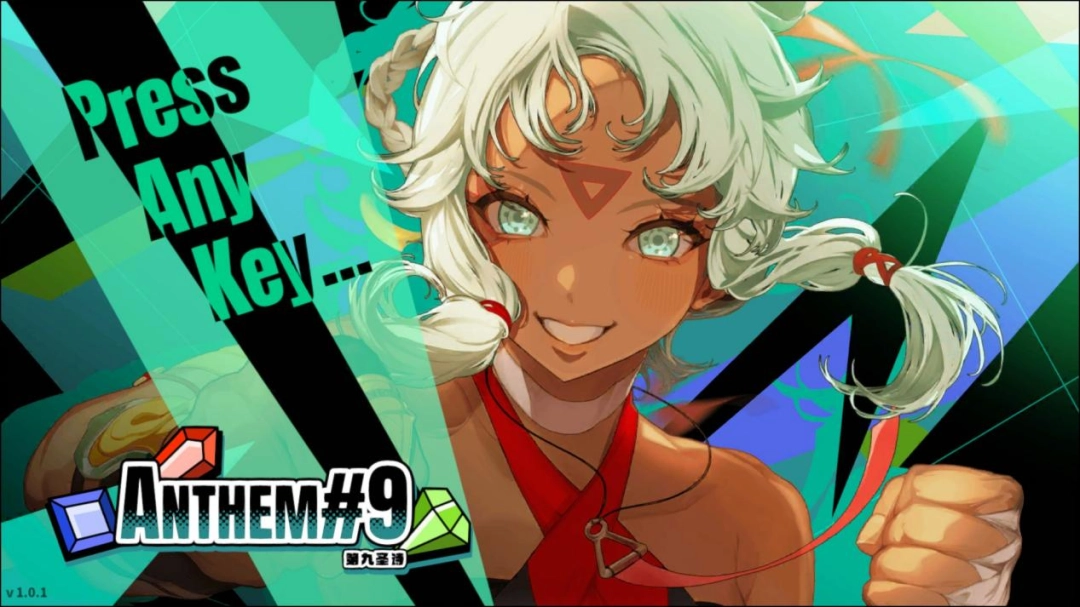
Sounding good and looking good are crucial. If you're not into abstract styles like retro CRT effects, pop art, or low-poly aesthetics, market-tested art styles will obviously make your game more acceptable to audiences.
Although this may invite criticism from hesitant players, it will also attract those who appreciate this specific style. If you don't mind borrowing and learning from established art styles, The Ninth Psalm offers an excellent audiovisual experience, with higher production values than similar titles becoming one of its core competitive advantages.

Once the game's art style has captured the player's attention, The Ninth Psalm reveals its unique core gameplay—a strategic roguelike system built around three-colored gems.
The Ninth Psalm is neither a typical Deck-Building Game (DBG) nor a traditional turn-based roguelike. Instead, players must use randomly allocated gems each turn as COST to activate skill combinations constructed progressively throughout the game.
This gameplay mechanic is indeed uncommon but not complex. For instance, if a skill requires two red gems, players simply need to click the corresponding number and color of gems from the pool to activate it.
If players possess multiple red gems, they can continuously activate skills after consuming enough quantities; the game does not limit the number of actions a player can take in a single turn.
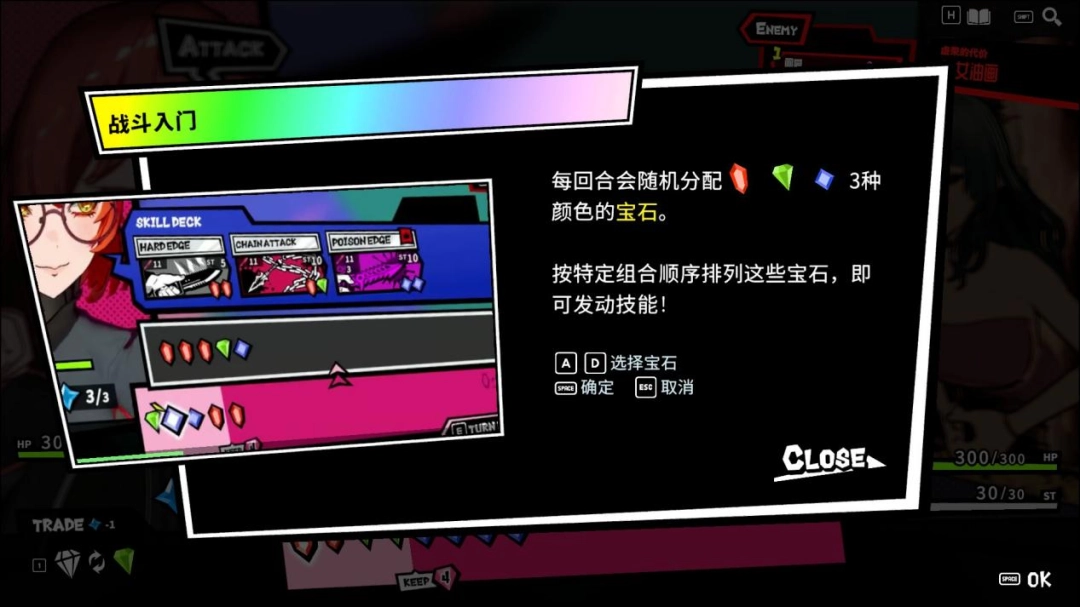
Hearing this, players familiar with card games may have already realized—although The Ninth Psalm doesn't feature hand cards like traditional card games, the gems function similarly to hands, while skills are akin to pairs or straights. Players simply need to combine individual gems into formulaic sets to execute moves and deal damage.
From a certain perspective, The Ninth Psalm has a hint of "VS" flavor from Yu-Gi-Oh! or shares similarities with match-three games. A slight difference is that even identical moves may have different activation COSTs. To enhance strategic depth, dungeons also provide interest points that can change the gem colors required for moves.
Therefore, compared to similar titles, The Ninth Psalm requires not only building skill combos but also adjusting skill COSTs. Beyond DBG elements, the gameplay adds another layer of customization and tuning.
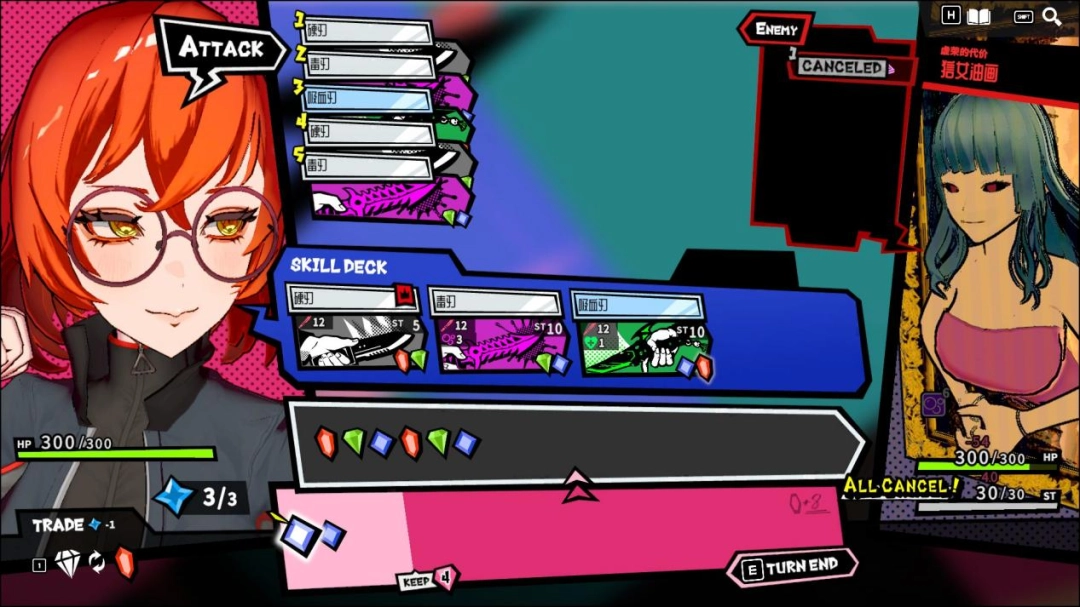
Notably, The Ninth Psalm provides players with advanced techniques to simplify spellcasting—after casting a previous move, the last gem's color can be carried over to the next move. This means players only need to adjust skill COST colors until they connect end-to-end, saving one gem per skill. Consequently, casting three different skills requires only four gems.
Under these rules, players can use a limited number of gems to achieve hit counts far exceeding expectations, and upon meeting conditions, unleash pre-set finishing moves, receiving high positive feedback in both visual presentation and gameplay.
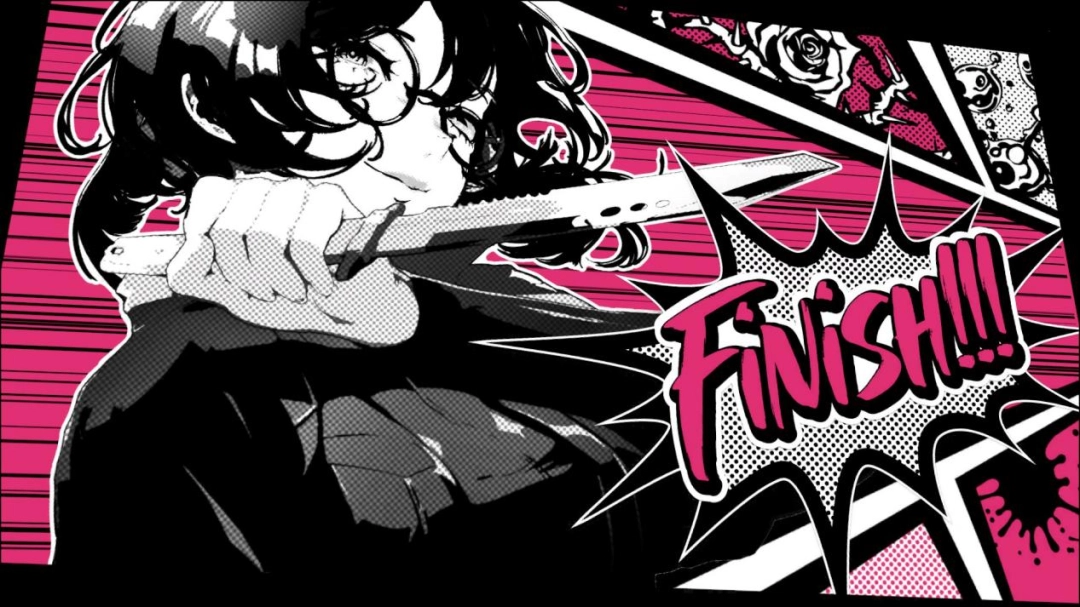
The Ninth Psalm excels at utilizing common gameplay elements found in turn-based RPGs, resulting in subtle differences from traditional roguelike titles in terms of detail.
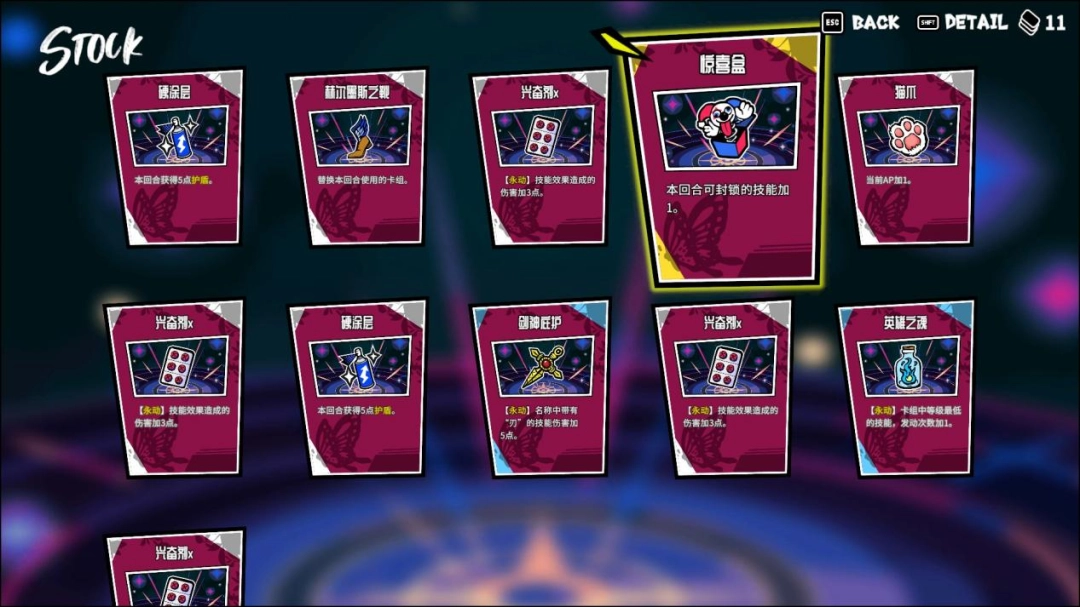
For instance, the often-mocked "cheesy triple choice" mechanic is retained in The Ninth Psalm, but selected content becomes part of another deck-building layer, only taking effect when drawn and chosen during combat.
The ability to cycle and store in-game blessings is another distinctive feature of The Ninth Psalm, requiring players to consider the dilution rate of unused components when choosing enhancements.
As a result, beyond skill construction and gem tuning, the game adds another layer of blessing card building, further enhancing the replay value of the roguelike progression.
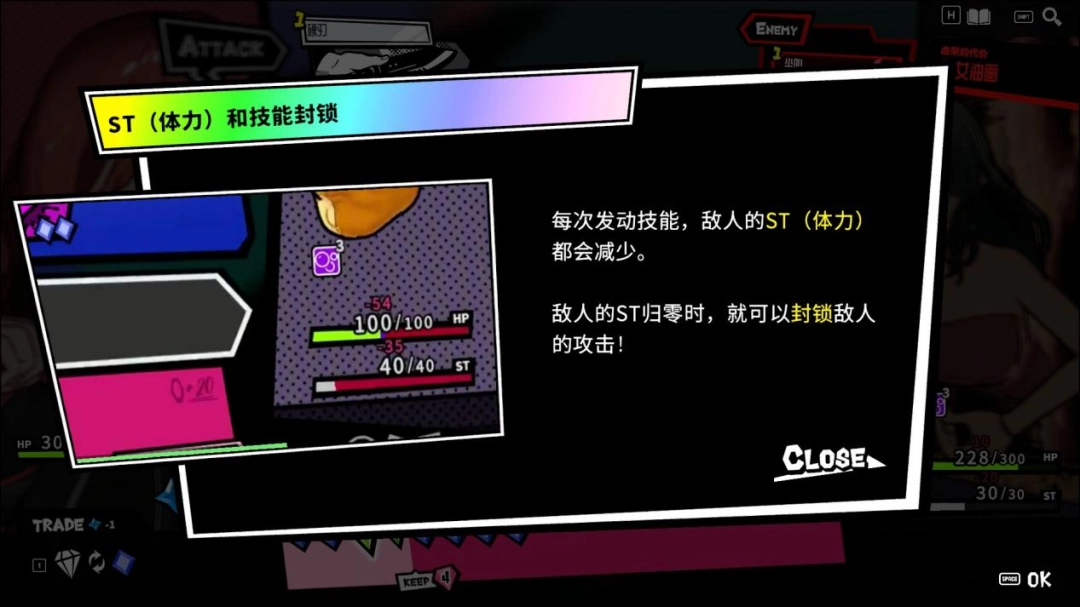
Beyond modifying basic mechanics, The Ninth Psalm introduces a stagger-like blocking mechanism—enemies have a stamina bar beneath their health bars. If players deplete it within a turn using moves, they can sequentially block enemy intentions. Depleting it multiple times consecutively completely seals enemy actions and grants bonus rewards for unleashing powerful finishing moves.
Consequently, The Ninth Psalm delivers turn-based combat that balances satisfaction and strategy, with random gem colors serving as variables. Players must strive to achieve higher hit combos each turn to completely restrict enemy actions.
Of course, random gem colors won't always align with player preferences, leading to inevitable hand management issues common in card games. However, The Ninth Psalm still provides strategic options—by spending special action points, players can reverse the order of enemy intentions, allowing them to strategically block more dangerous enemy moves when their combos aren't sufficient to fully seal off opponents.
Through progressively layered strategic mechanisms, The Ninth Psalm fully showcases its charm, making me stop viewing it with prejudice. After all, this gameplay is rarely seen in other roguelikes, fulfilling the desire for freshness among players seeking novel mental stimulation.
It may lack maturity in certain details, but there shouldn't be major issues regarding fun factor.
As for those less polished details, while not fatal, they are worth mentioning.
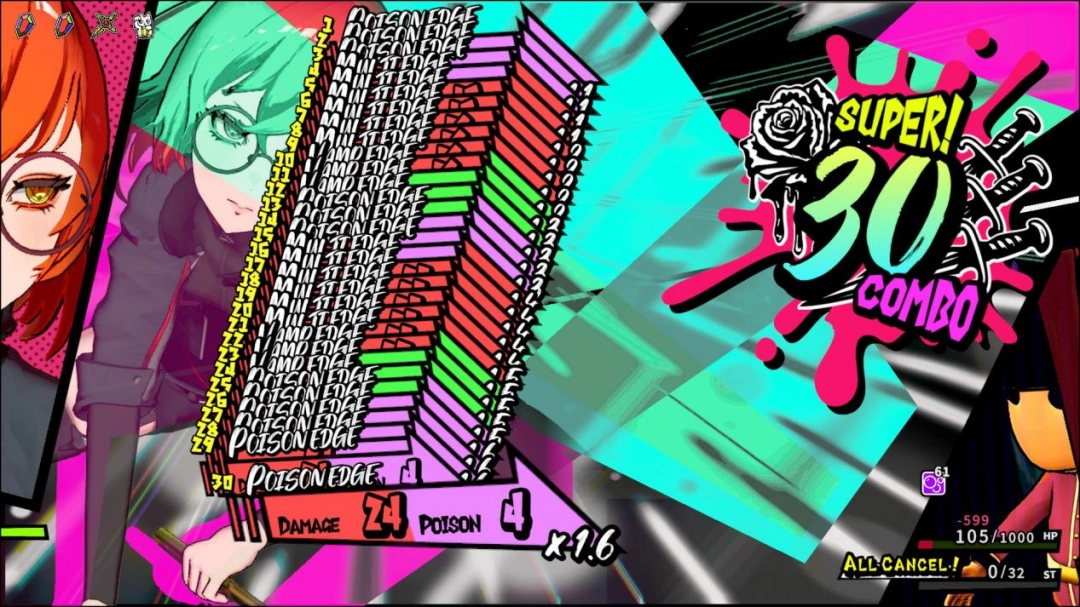
Take interaction feedback timing, for example—The Ninth Psalm invests heavily in cinematic details to enhance combat flavor. A single battle resolution involves confirming moves, tallying hits, highlighting key moments, and finally concluding with a dramatic finish. While first-time viewers may find the satisfying combat feedback elevates the atmosphere to a mini-climax, repeated exposure quickly reveals underlying issues.
In other words, The Ninth Psalm schedules damage calculations during hit counting. The game deducts enemy health at the point of confirming damage multipliers, before proceeding to cinematic presentations and settlements.
So here's the question: since damage calculation has already occurred, the final dramatic finish only leaves screen shake and hit feedback. Despite powerful consecutive direct hits, the character's health bar shows no fluctuation.
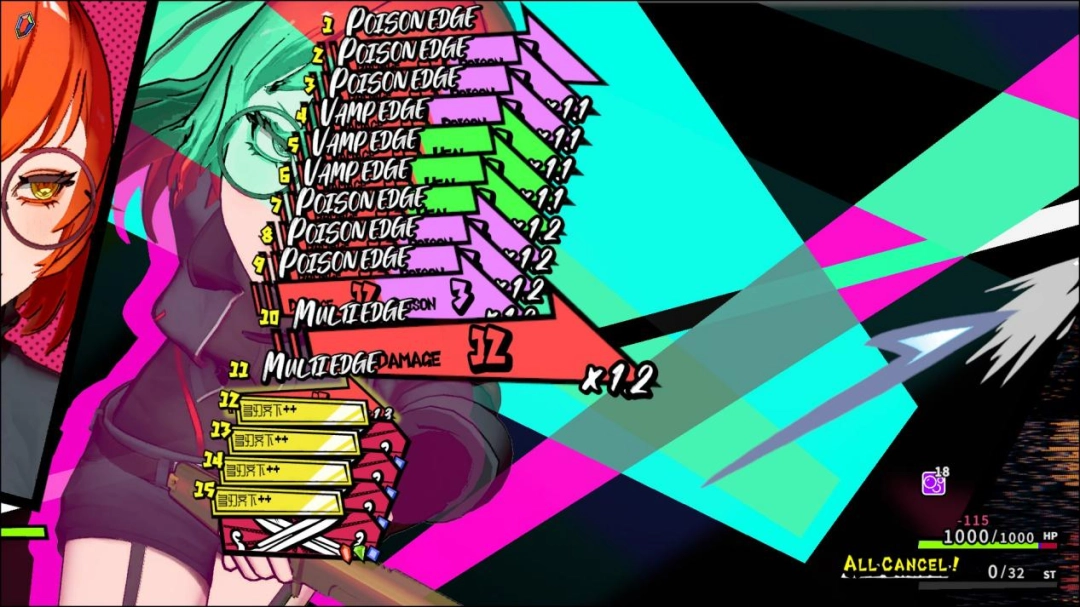
Intuitively, health reduction should be tightly linked to direct hits, but disjointed presentations actually diminish the feedback intensity. Redundant confirmation steps clearly do not contribute to the game's satisfaction factor.
The Ninth Psalm invests heavily in artistic details not only during combat but also in tower-climbing level selections, battle starts and ends, entering and exiting interest points, and before and after boss fights. One can predict that a dungeon roguelike meant to emphasize fast-paced fluidity becomes considerably sluggish due to excessive cinematics.
It's important to note that The Ninth Psalm is not strictly an RPG. Unlike the Persona series, which features clear and rich segment allocations allowing exploration, dungeon crawling, and character storylines, appropriate cinematic embellishments can provide players with brief rests during gameplay transitions.
Roguelikes typically don't have many transitional phases, as players are constantly rushing between battles. Yet the game forcibly inserts numerous detailed embellishments at unnecessary transition points, causing these artistic resources to significantly degrade in perceived quality as players accumulate more playtime.
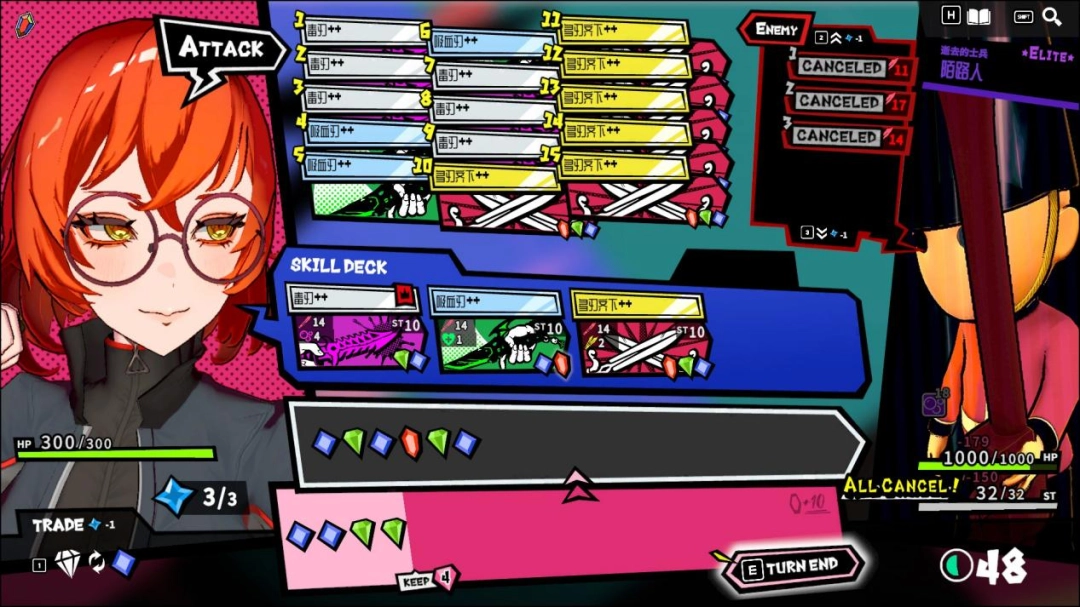
Furthermore, as a roguelike that emphasizes strategic puzzle-solving, The Ninth Psalm incorporates time limits into its progression. Although these limits rarely affect player performance on lower difficulties, the game imposes them purely as a penalty without offering any rewards for managing time effectively.
I can understand the developers' desire to create a sense of pressing decision-making, but applying this even to non-challenge stages in PvE makes players wonder—perhaps the game's strategic depth isn't sufficient, forcing it to rely solely on punitive mechanics to increase difficulty.
In fact, the game could simply add a mechanic where remaining time earns extra gems for the next turn. Even gaining just one or two additional gems would transform this purely punitive design into a beneficial strategic option, enabling conservative fast-play resource accumulation for future bursts, thereby greatly improving the overall experience.
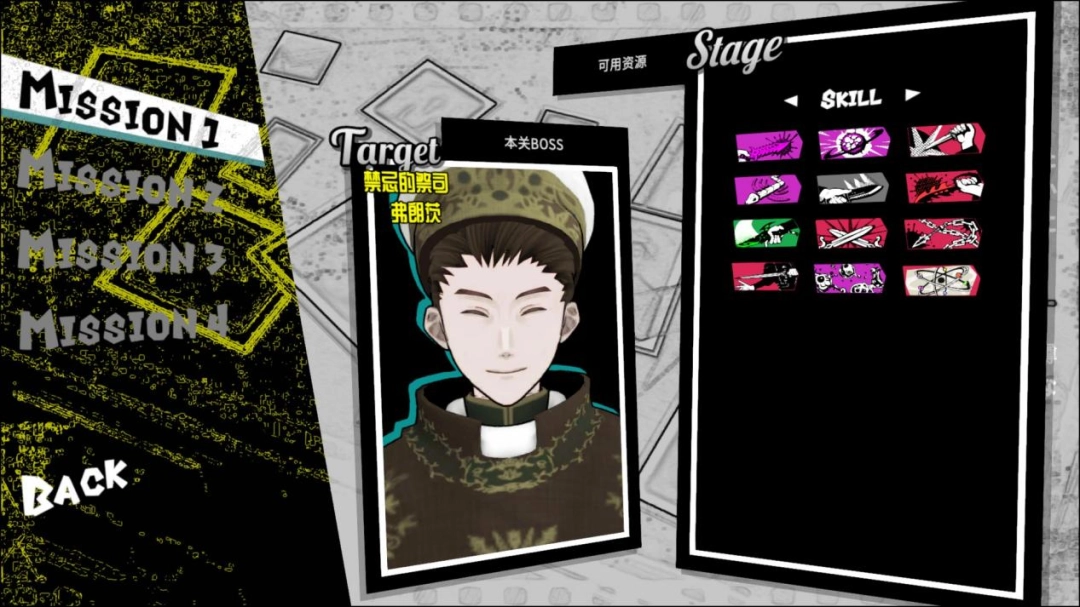
Frankly speaking, I don't particularly dislike adding time limits to levels, but given the game's generous production standards that include elaborate animations for various interactions, the constrained operational time available to players can become quite frustrating. The Ninth Psalm fails to deliver a sufficiently comfortable and smooth pacing plan.
Such contrasting examples are plentiful. To emphasize the importance of visual aesthetics, The Ninth Psalm makes compromises in many areas, creating tension rather than harmony with gameplay.
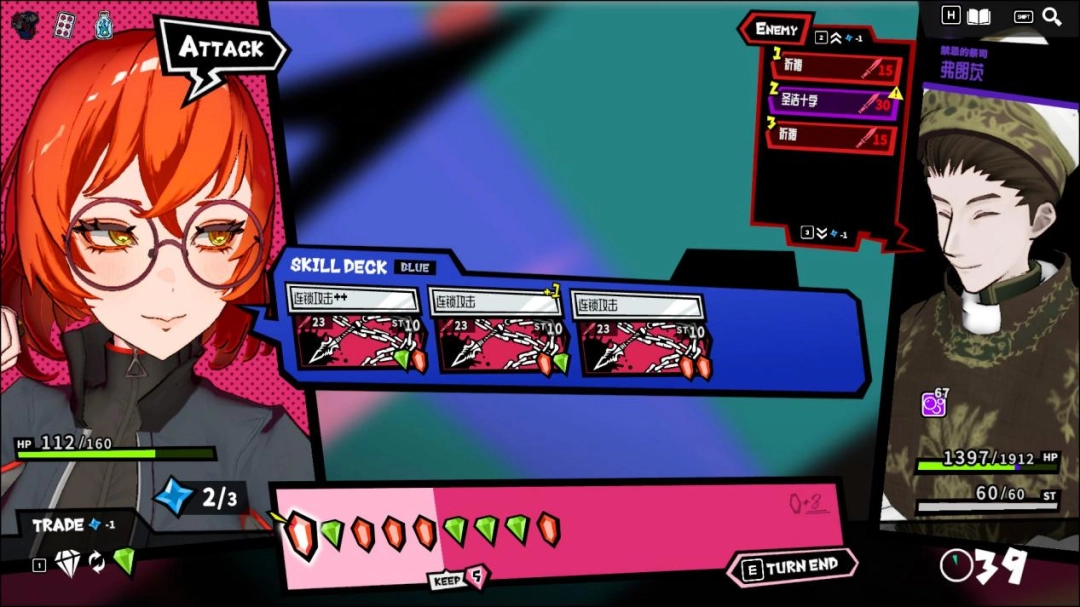
Take UI display interactions, for example—during gameplay, most icon UIs do not interact with the player's cursor. In other words, hovering over BUFF icons does not trigger any tooltip text boxes.
Perhaps for overall visual aesthetics, all additional display content has been placed within the time-stop function—if players wish to check BUFFs, enemy traits, or intentions in timed levels, they must press specific keys to enter the paused observation phase.
Players familiar with RPGs may recognize this design, which roughly corresponds to characters entering a flow-state observation phase.
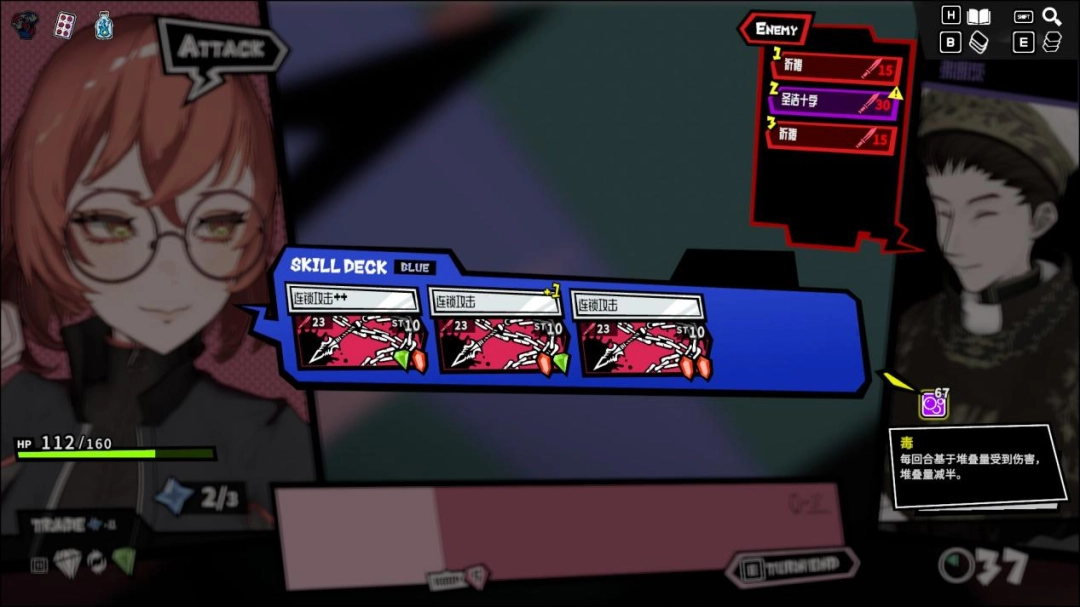
On the surface, this design isn't particularly problematic. However, if the game didn't have time limits and hadn't sacrificed interactivity for visual flair, wouldn't the observation phase be redundant? It would become a trivial task in any turn-based game, solvable by simply moving the mouse without requiring any additional input.
Combined with the game's overall progression structure, The Ninth Psalm resembles a project lacking a clear outline, where ideas are stacked onto existing foundations as they arise, followed by attempts to maintain and refine them. From this perspective, many contradictory and redundant detailed carvings find reasonable explanation.
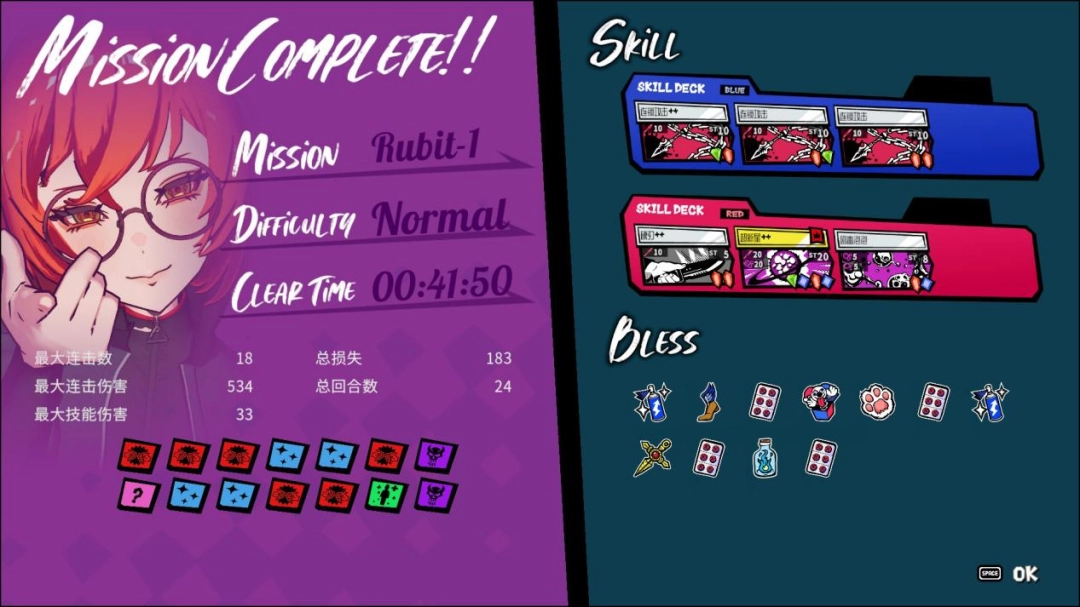
The Ninth Psalm happens to be the developer's debut title, likely built step-by-step from scratch based on their previous gaming experiences, forming the entire game's structural framework.
Perhaps the developer wanted to include every good idea that came to mind, or maybe, as their first project, they aimed to compensate for limited development experience with richer production details.
Thus, this sincerity might have been misinterpreted by me as misplaced priorities, much like a novice cook who can no longer improve the flavor of a dish and instead focuses excessively on plating—it represents the maximum effort they can currently muster.
Thinking this way, I have reconciled with many of the game's design details—after all, the game itself remains enjoyable.