

At 16:00 on August 3, 2025, following its record-breaking performance in early July, Fantasy Westward Journey PC Edition welcomed another historic moment—its peak concurrent users (PCU) across all servers reached a new high of 2.93 million.
If you don't know just how astonishing this figure is, take a look at the current state of the PC client game market.
Since the Chinese gaming industry entered the mobile era, the once highly competitive PC client game market has fallen into relative silence—although the overall scale continues to rise, good news such as "new versions triggering player surges" or "record-breaking peak concurrent users" seems to be becoming increasingly rare.
On one hand, the massive mobile game market inevitably diverts operational and development resources from various publishers, objectively slowing down the development progress and growth speed of PC client games. On the other hand, the PC client game market has basically entered the era of stock competition. The major PC client games still in operation have gradually stepped into the "long-term operation" phase, fraught with traps and difficulties. In this phase where standing still means falling behind, every move is perilous.
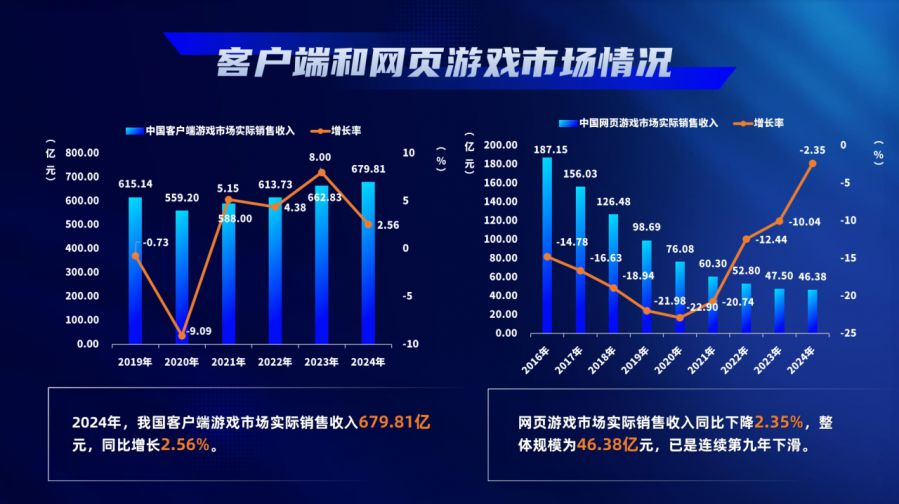
Data source: "2024 China Game Industry Report"
From 2019 to 2024, the overall growth rate of the PC client game market was not encouraging, with most growth coming from top titles
What does "long-term operation" actually mean for a game?
Firstly, for most games, "long-term operation" itself is an insurmountable threshold. The ruthless filtering of the internet means that if a game product cannot dominate upon release, it may not even reach the threshold to face the "long-term operation dilemma."
Even for "top student" games with solid gameplay, strong foundations, and favorable timing, long-term operation poses severe challenges. The late stage of a game's operational life is usually accompanied by serious player churn, increasing revenue pressure on publishers, which in turn accelerates numerical inflation within the game. Consequently, player assets depreciate significantly, and the burden of grinding or spending increases, leading to further loss of players who cannot bear the pressure... It can be said that the vast majority of game products will sooner or later fall into this vicious cycle, gradually exiting the top tier.

Pessimism about MMOs is not uncommon
However, Fantasy Westward Journey has managed to stand out in this rather unclear landscape—it seems to have broken through the predicament facing long-operated games to some extent.

What does breaking the concurrent user record twice within one month signify?
It is important to note that daily concurrent users remain the industry gold standard for testing a game's vitality, especially for a game like Fantasy Westward Journey where concurrent users are closely tied to point-card revenue. A breakthrough in concurrent users directly signifies a surge in the game's commercial data. Breaking the record twice within one month further indicates that the game is not relying on single major events or benefits to "boost numbers," but is truly on a path of sustained upward development. Considering the current lukewarm state of the domestic PC client game market, stuck in "stagnation," the significance of Fantasy Westward Journey's breakthrough at this time is even greater.
So, how has Fantasy Westward Journey achieved such a feat, consistently maintaining its top position from start to finish and becoming a model for the MMO industry?

The most important reason is the "irreplaceability" of Fantasy Westward Journey.
Without exaggeration, even today, Fantasy Westward Journey's legendary economic system has no equivalent competitors in the industry.
From the initial game design phase, a "stable currency system" was a key design goal for Fantasy Westward Journey. Every source of gold coin production is closely tied to the duration of players' point-card usage, ensuring stable and controllable output rates. This prevents players from mass-producing gold coins through intensive grinding as seen in other games, eliminating potential oversupply in circulation.
Not only distribution, but the consumption channels for in-game currency have also been meticulously designed. Unlike common "experience equals leveling up" games on the market, leveling up and developing characters in Fantasy Westward Journey itself requires consuming substantial gold coin resources. Moreover, the value of consumed gold coins is directly linked to the increase in combat power, ensuring the high-value attribute of the currency and preventing gold coins from accumulating uselessly and becoming worthless.

Building on this foundation, player-to-player trading injects vitality into the circulation of this economic system. In actual gameplay, not all players have the time or financial resources to compete for the title of "strongest on the server." Once their character's combat power reaches a "serviceable" level, many casual players choose to halt their numerical progression and sell their "surplus" gold coins to top-tier players. Through this process, casual players gain tangible benefits, top-tier players acquire further growth resources, and the game completes a cycle of currency production and consumption, achieving a "triple-win" situation.
Meanwhile, Fantasy Westward Journey was among the first MMOs in China to deeply cultivate the online social sector. Diverse social relationships such as guilds, sworn brotherhoods, master-apprentice bonds, and marriages not only represent social connections within the virtual society, but almost every type of social relationship brings tangible improvements to character strength—marital relationships unlock exclusive skills, both masters and apprentices receive experience and item rewards during the "veteran guiding newbie" process, and guilds are large organizations encompassing multiple core growth paths and resource generation points.
Under this design framework, players easily form connections with others in the game world spontaneously, creating strong emotional bonds. Once formed, these bonds are difficult to replace, allowing Fantasy Westward Journey to early on凝聚 a highly sticky player base, laying a solid foundation for long-term operation.
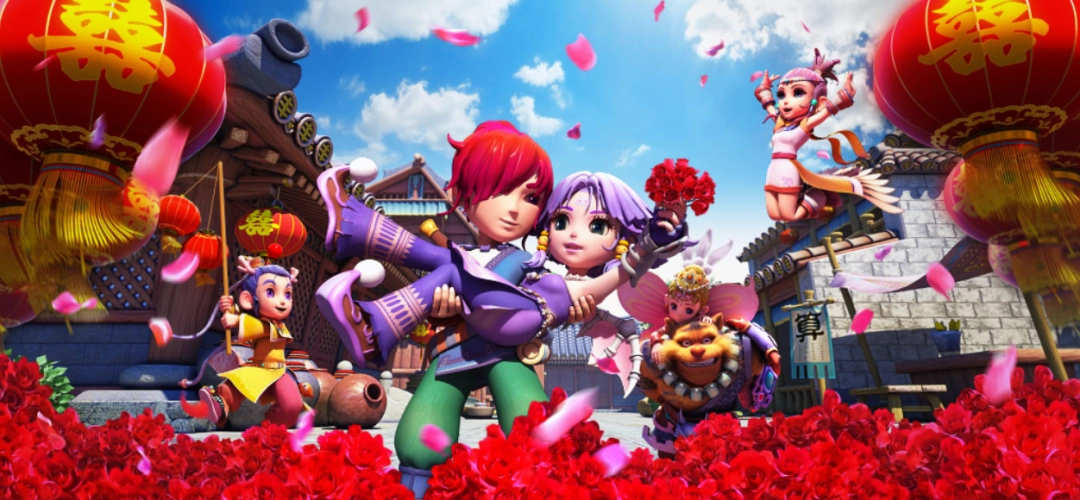
However, these are merely the foundation for Fantasy Westward Journey becoming an "evergreen game." In practice, even the most well-prepared "student" must face the "major exam" of long-term operational challenges.
As they age, players gradually take on responsibilities related to family, work, and life, and many of them no longer have the abundant time and energy they once had to invest in the game.

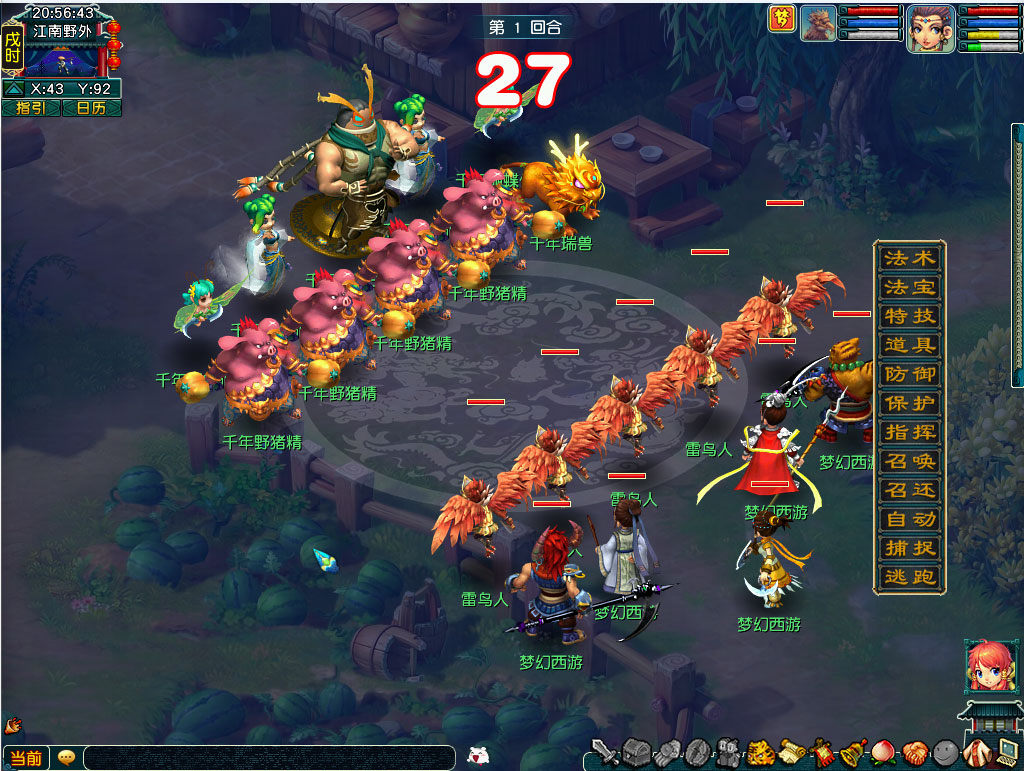
Early Fantasy Westward Journey tutorial
Take my college roommate, Lao Shi, as an example: During college, he bought a high-spec laptop specifically for Fantasy Westward Journey, just to sneak in some playtime during breaks between classes. Even after graduating and entering the workforce, he maintained his daily routine of catching ghosts and clearing daily tasks... However, daily work plus commuting has significantly compressed his gaming time, leaving him only fragmented moments to play.
I heard that he is preparing to get married soon. He said that by then, he might become a "casual player," occasionally logging in to participate in events and the like.

Fantasy Westward Journey's classic weekend event "Subduing Demons" (commonly known as ringing bells)
Clearly, the common industry practice of "giving benefits to returning veteran players" is unlikely to bring them back. Even if they return temporarily, the mismatch between life burdens and the game will push them away again.
On this point, Fantasy Westward Journey has acted quite wisely.
If life's burdens drive players away from the game, then the significantly reduced-burden "Free Play Server" opens its arms wide to welcome them back.
Compared to the "Time Server" which uses the original point-card billing method, the biggest feature of Fantasy Westward Journey's "Free Play Server" is the introduction of a free-to-play model, allowing players to enjoy the game with zero barriers without having to carefully calculate online time costs, enabling them to freely explore every corner of the Fantasy Westward Journey world.

The game version has returned to the classic "12 sects, 12 characters" format, significantly simplifying the progression system by removing complex progression lines such as summon beast advancement. Appearance and equipment systems have also been comprehensively streamlined, drastically reducing the cost of developing individual characters and pets, allowing returning players to quickly rediscover "the feeling of back then."

With sincere and bold gameplay changes, coupled with the return of classic summer events like the "Thousand-Year Cicada King," the enthusiasm of returning veteran players was fully mobilized. Coinciding with the monthly classic gameplay event "Sect Breakthrough," the popularity of both the Time Server and Free Play Server peaked simultaneously, making the breaking of the peak concurrent user record seem natural and "unsurprising."
Furthermore, Fantasy Westward Journey has never stopped refining its core competencies, including its turn-based gameplay, economic system, and social systems. From the earliest expansion pack #Funtime Home to the recently updated Gathering of Heroes in summer 2025, each expansion pack brings players new gameplay, activities, storylines, and more, keeping the game feeling fresh.
In this way, Fantasy Westward Journey has kept pace with the times during its continuous operation, stabilizing its existing player base while attracting fresh blood, creating milestone achievements together with both old friends and new acquaintances.
Many people often say that playing Fantasy Westward Journey is about "nostalgia." But when you truly step into the world of Fantasy Westward Journey, you will discover that it offers far more than just "past emotions." This sentiment accompanies you from the moment you raise your first pet, craft your first endgame equipment, earn merit in your first guild war, or meet the companion who journeys alongside you. Like aged wine, it becomes increasingly aromatic yet never fades.

Therefore, the enduring success of Fantasy Westward Journey is neither a "miracle" nor a matter of luck or chance, but the inevitable result of a mature and responsible product's wholehearted investment across multiple dimensions.
I believe that the online record of 2.93 million is far from the upper limit for Fantasy Westward Journey. The phrase once uttered by Jay Chou, "Everyone plays it; it would be strange if they didn't," was not empty talk. To this day, the value of these words continues to increase.