

"Xiao Hai" Zeng Zhuojun lost.
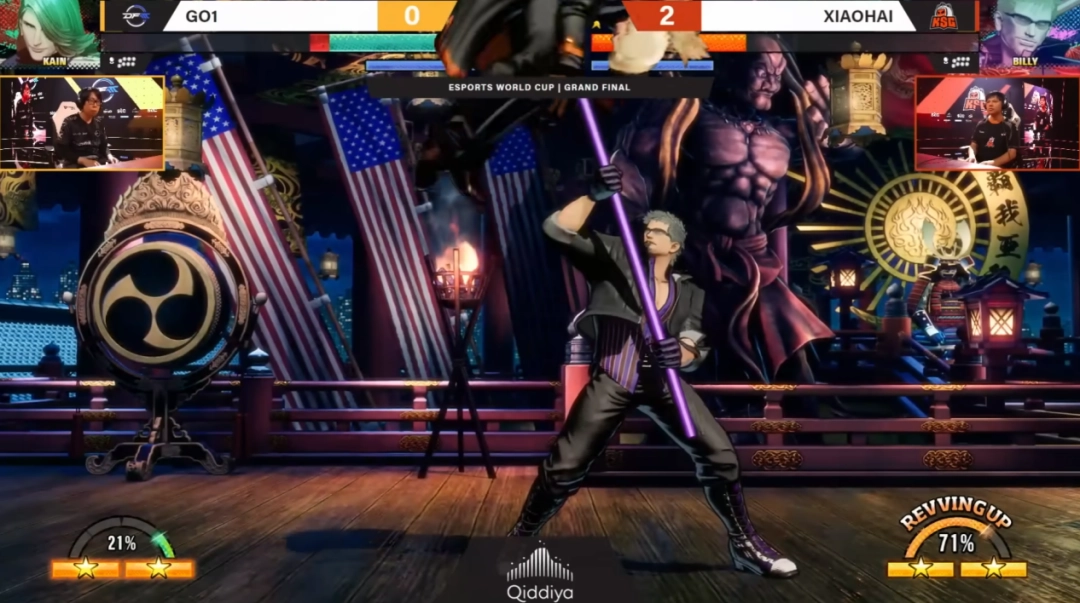
At the 2025 Esports World Cup, during the Grand Finals of the Fatal Fury: City of the Wolves event, Chinese player Xiao Hai, playing as "Stick" Billy Kane, fought fiercely until the eighth round. Throughout the previous schedule, Xiao Hai maintained his dominance as the "GOAT" of SNK series games, crushing opponents with his superior raw performance. Almost all spectators believed he would once again lift the Fatal Fury: City of the Wolves championship trophy, just as he did at EVO Japan and CEO USA.
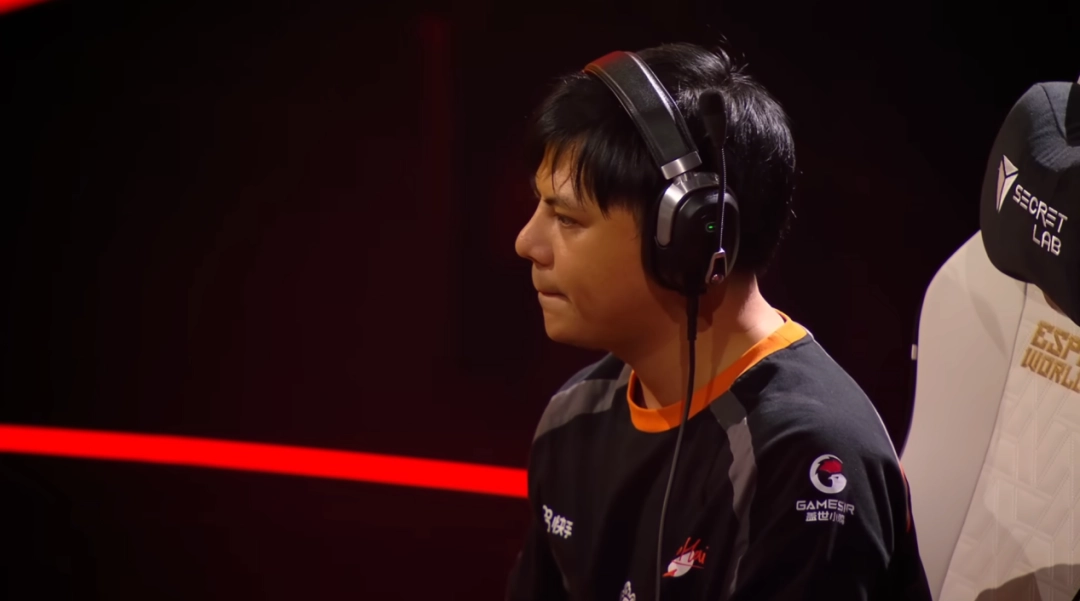
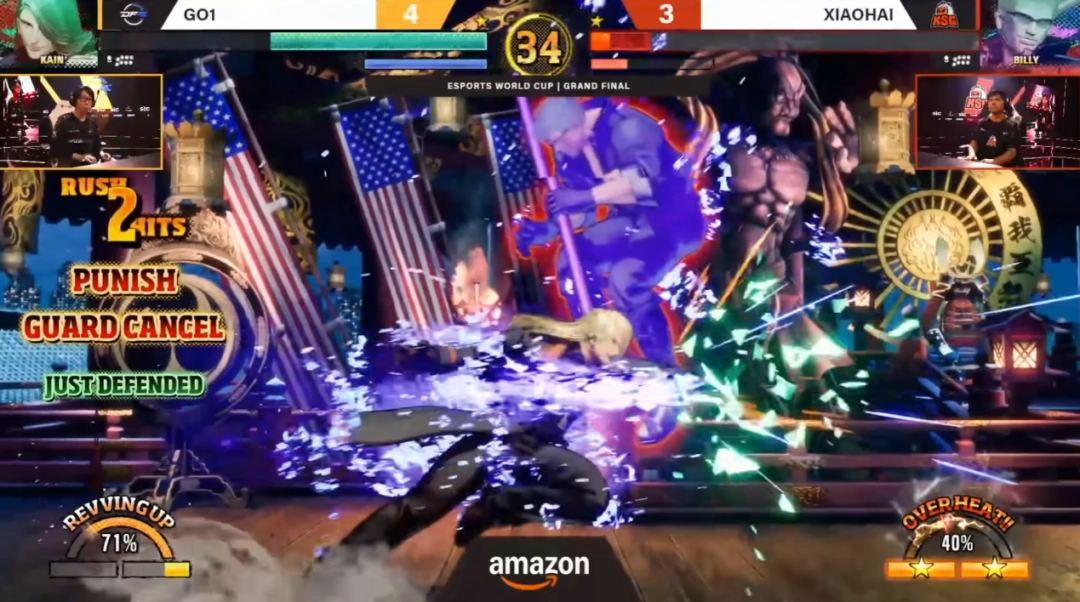
Until the first five rounds of the finals, Xiao Hai and his opponent GO1's "Uncle" Kahn were evenly matched. Xiao Hai even gained the upper hand with a 3:2 lead thanks to his highly proficient neutral game. However, when GO1 changed strategy to avoid neutral exchanges, frequently using 26BD rushdown plus frames and consuming REV gauge with Super Special Moves, Billy—who lacks cheap reversal options like Shoryuken—fell into a huge disadvantage. Until the end of the match, Xiao Hai failed to formulate effective counters to this strategy, ultimately losing three consecutive rounds despite having superior neutral skills, thereby losing the match.
To be honest, like many voices online, my initial reaction was also that "Kahn is broken." A character with fireballs, DPs, setups, and nearly unpunishable frame advantage on block is indeed quite excessive. However, calming down after the match and thinking carefully reveals that almost every player in this tournament was using characters commonly referred to as "broken."
Every version of every fighting game has its corresponding "meta-defining character." Just as Season 4 of GGST is being dominated by Potemkin's "Carry" and "Fafnir Strike," and Street Fighter 6 is plagued by Rashid's "Shoryu-spam," the current environment of Fatal Fury: City of the Wolves indeed has so-called "T0 characters."

Potemkin's armor command grab caught you
Apart from Black Angel Terry defeating favorite Kahn (played by Fenliqi) with his aggressive "champion-style" gameplay, the Top 8 roster was almost entirely monopolized by the T0 trio: Kahn, Billy, and Hokutomaru. Kahn boasts high-reward super moves, solid normals, fireballs, DP attacks, and orb-setting capabilities; Billy's superior range gives him the best footsies in the game; and Hokutomaru possesses extremely broken aerial mobility options like double jumps and air feints. They are undoubtedly the absolute meta of this version, and Xiao Hai's choice of Billy naturally falls within this T0 tier.
However, despite both being T0 characters and Xiao Hai having an advantage in raw human performance, his loss implies deeper reasons. Reviewing the match reveals that Xiao Hai's most direct cause of defeat was his inability to timely counter Kahn's "meter-draining" tactics.
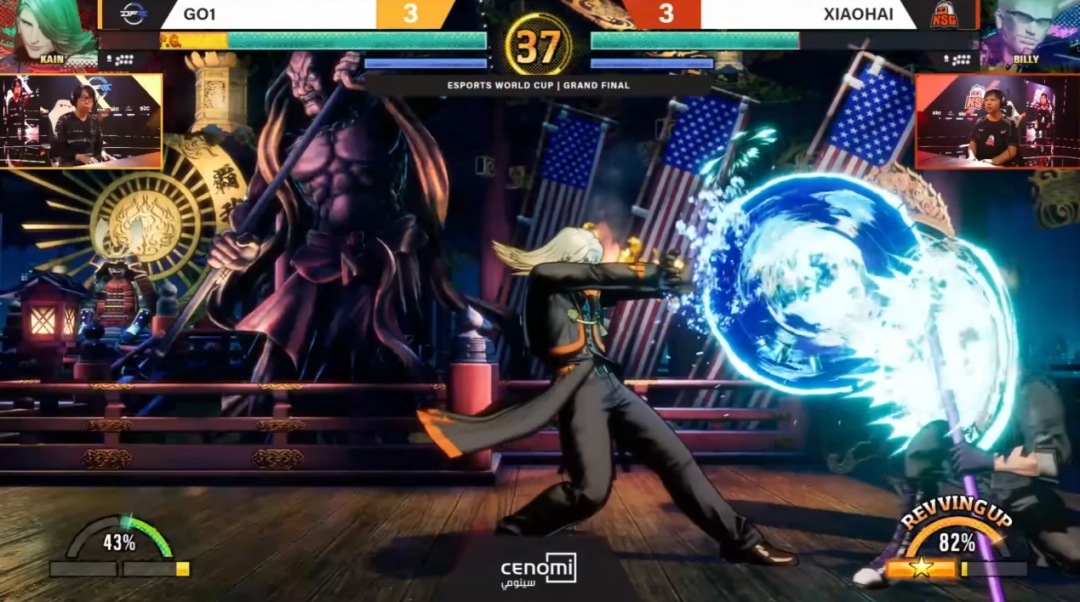
This move can actually be countered. It requires players to be extremely proficient in Fatal Fury: City of the Wolves' "Just Defend Counter Reversal" system and to precisely judge the timing and distance for reversing super moves. For a top-tier professional like Xiao Hai, achieving this level of counterplay is entirely feasible after dedicating some time to extensive practice.
The issue is that before this tournament, Xiao Hai lacked the awareness to prepare extensive countermeasures against this move. When such variables appear as a "first-time kill" tactic in matches, even the strongest professional players struggle to devise reasonable counters under the extreme time pressure of live competition. Moreover, since the EWC format is single-elimination without resets for adjustment, the situational pressure on players is even greater.
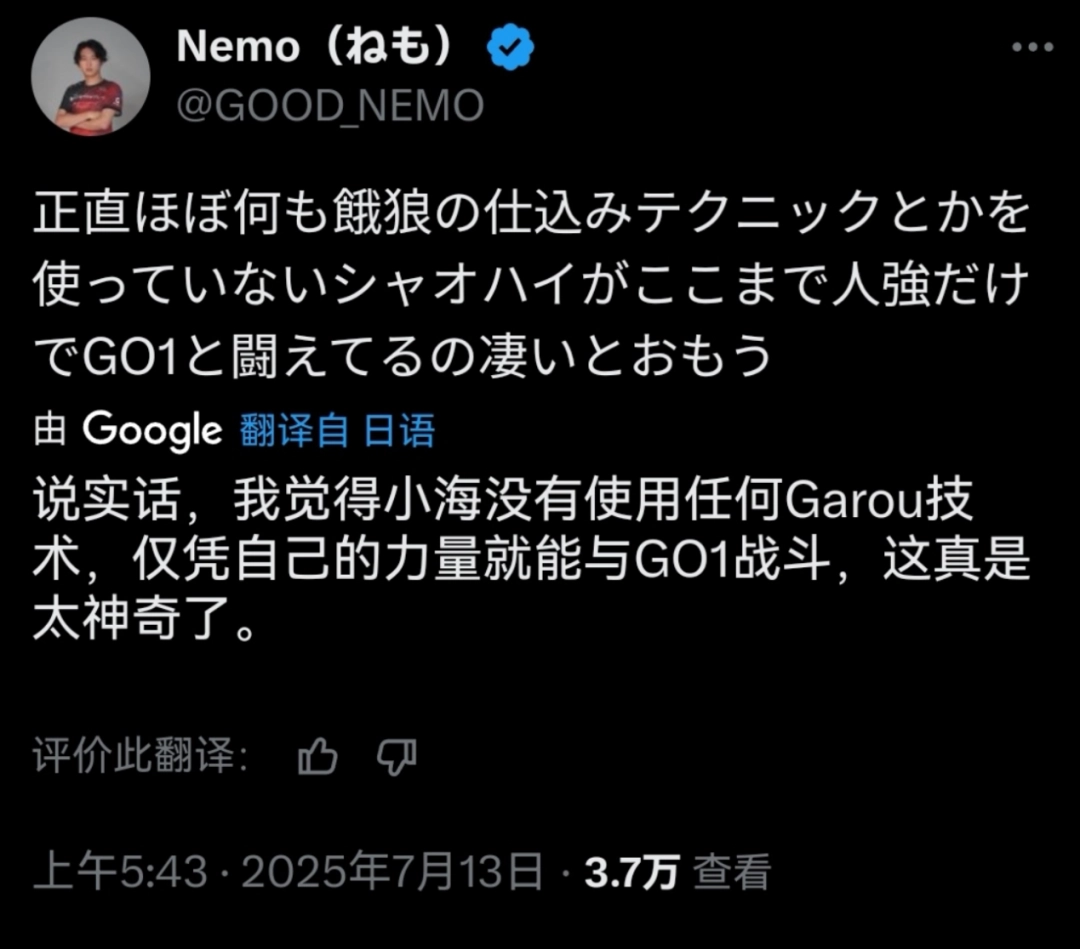
After the match, Japanese player Nemo commented, "Xiao Hai was almost purely relying on his raw human performance to compete against GO1, without utilizing Fatal Fury-specific techniques, which is truly amazing."
In fact, such situations of "lack of countermeasures" frequently occur in other fighting game tournaments. Even players with immense raw skill, like Muroniku and Xiaobao, are often defeated by opponents' hidden tricky moves in various fighting game esports events. This phenomenon becomes even more common during the early to mid-stages of game version updates.
So, why did Xiao Hai lack countermeasures against this move?
The fundamental reason lies in the fact that China's fighting game esports ecosystem is still not mature.
Although the gradual improvement of domestic internet conditions and increased manufacturer attention to the Chinese market have led to a resurgence in China's fighting game community—with emerging "prodigies" appearing frequently and veteran core players persisting—we remain somewhat of a "lost generation" in terms of the fighting game tournament ecosystem.
As arcade culture gradually declined, fighting game communities abroad (especially in Europe, North America, and Latin America) did not shrink significantly along with arcade halls. Their pro players established traditions early on, such as bringing their own input devices or even monitors to weekly store tournaments, and they are well-versed in organizing various large-scale events. Japan, being the birthplace of fighting games and tournaments, holds first-mover advantages in many aspects.
Players in these regions enjoy a more convenient competitive environment from a young age and find it easier to locate high-level opponents for training. To explore the meta and find counters, they can simply take a subway or bus to reach large-scale tournament venues, avoiding arduous travel.
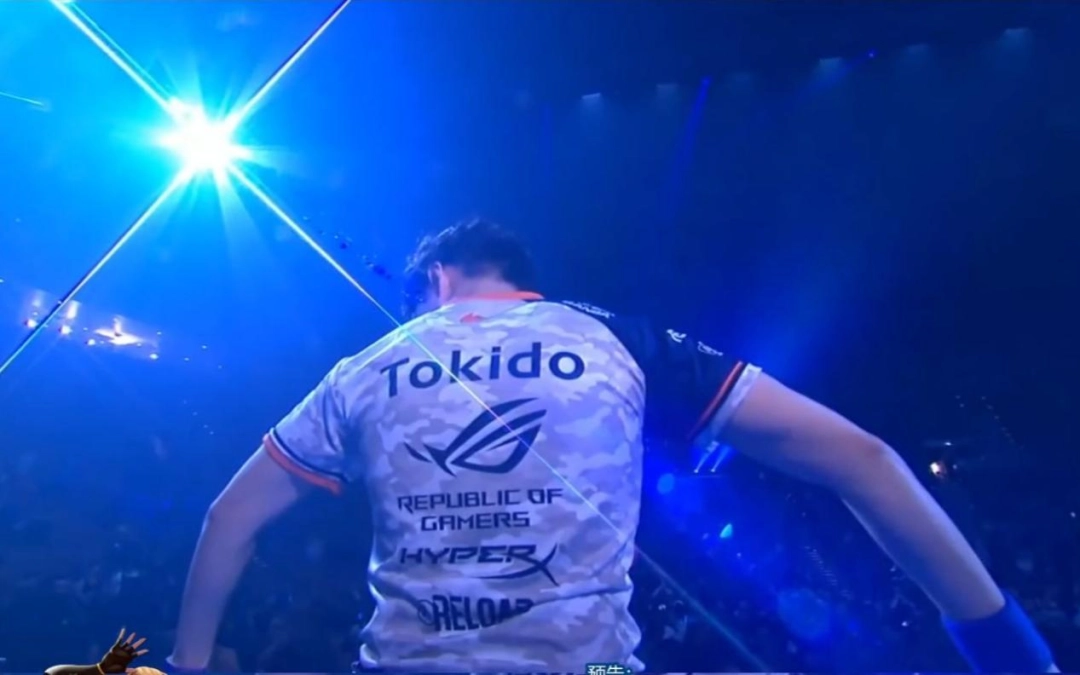
However, for players from developing regions, the situation can be described as severe.
Local small-to-medium-sized tournaments in these regions are often absent, while participating in various international top-tier and large-scale events usually means players must cover their own visa and ticket costs to go abroad. Arslan, a super-top-tier "Tekken" player from Pakistan, is a prime example. To attend EVO Japan, he endured three consecutive days of layovers. Upon arriving in Japan, he couldn't exchange Pakistani currency, leaving him without food for an entire day. Winning under such circumstances can only be described as a miracle.
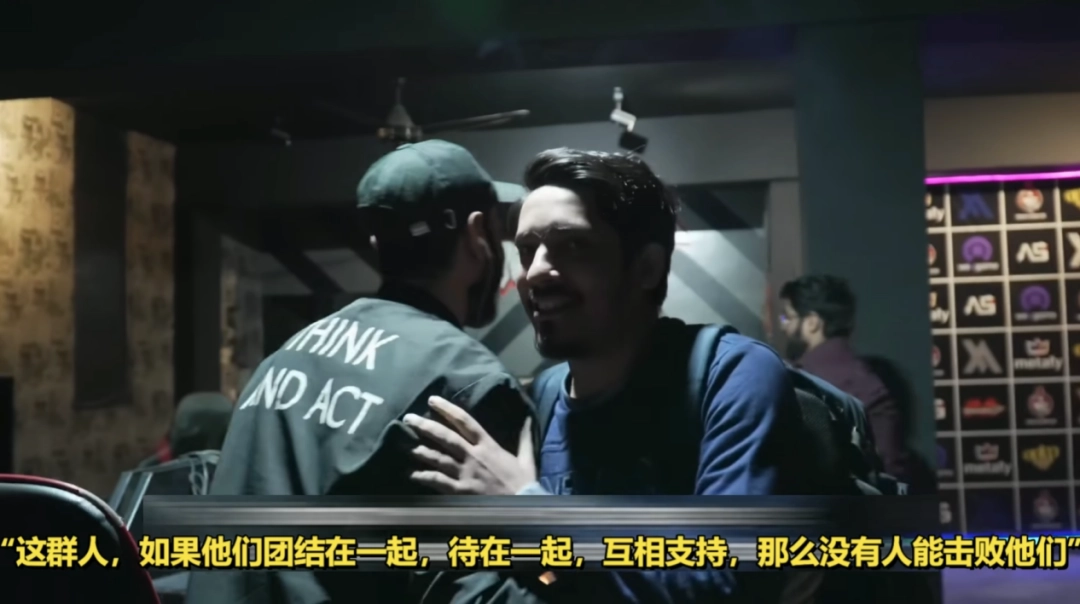
After achieving success, Arslan immediately set out to improve the "Tekken" tournament system in his hometown.
Our situation is certainly not as dire as Pakistan's, but the immaturity of the tournament system itself means significant travel burdens for professional players.
Furthermore, the lower competitive level of local tournaments makes it difficult for players from developing regions to timely grasp the meta and fully develop their characters. Meanwhile, the lack of influential events reduces opportunities for top players from other countries to visit and exchange ideas. In such a relatively isolated environment, deviations in game understanding easily arise—this was a key reason why Xiao Hai failed to promptly identify Kahn's most "cheap" tactics. Indeed, there wasn't a sufficiently strong Kahn player domestically to pressure Xiao Hai during his preparation.
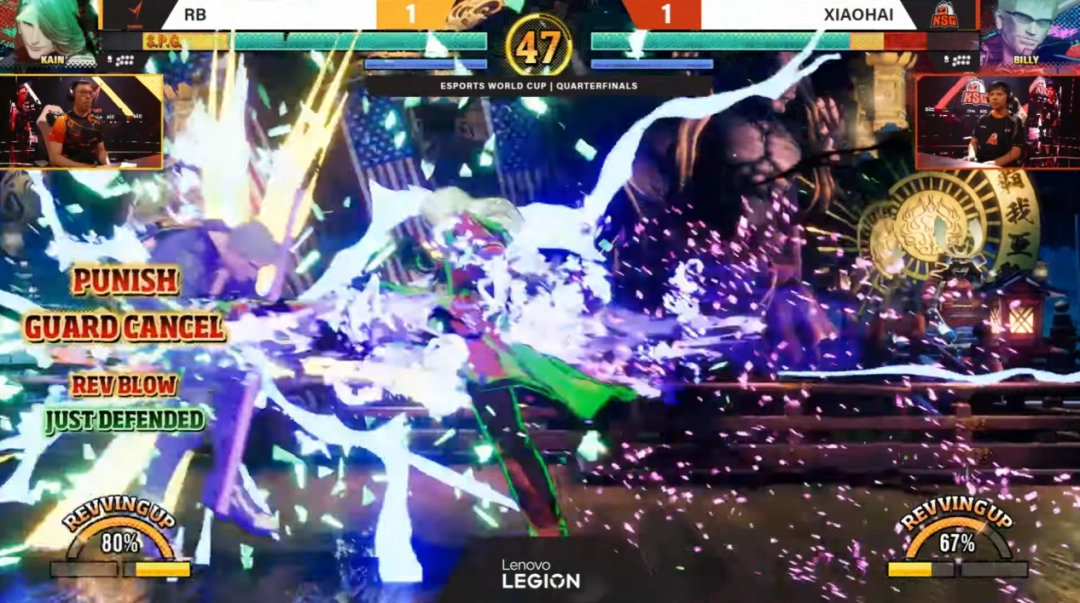
In fact, the impact of "lack of countermeasures" began to show during the Top 8 match against RB. Xiao Hai heavily relied on "forward dash + heavy kick" in his neutral game, which Kahn could easily counter in SPG state. Consequently, Xiao Hai had to adjust on the fly. It's hard to say if this affected his subsequent neutral play, but he did significantly reduce the usage frequency of this move in later matches.
Now that we fully understand the severity of the situation, what steps should be taken to change this status quo?
The answer is simple: leverage our "traditional strengths." If the tournament system is incomplete, build a complete one from scratch. If there are no regular leagues or high-spec large-scale events to cultivate players, then damn it, let's organize a high-spec large-scale event ourselves.
We are pleased to see that in recent years, numerous domestic tournaments such as "King of Warriors WW" and "Hero Asian Champions League ACL" have been held continuously. Dedicated areas for fighting game enthusiasts to interact and play at major gaming conventions are also gradually expanding. At previous Nuclear Union events, the recently concluded Bilibili World, and the upcoming ChinaJoy, fighting game players have been actively competing on the main stages.
The SNK Championship Series, abbreviated as "SCS," stands out among these major events. Featuring two titles, The King of Fighters XV and Fatal Fury: City of the Wolves, SCS has reached the pinnacle of domestic fighting game tournaments in terms of scale, participant diversity, and the prestige of its qualification slots.
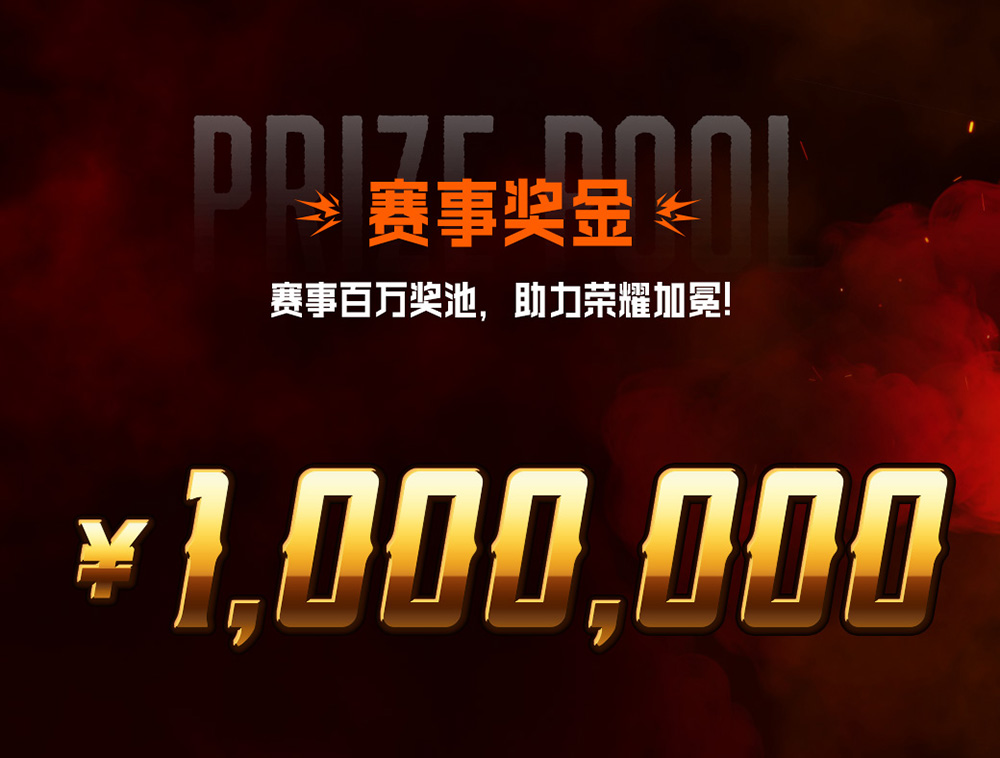
First, regarding tournament rewards, one of the core elements attracting top professional players, the total prize pool for this event reached 1 million RMB. Additionally, SCS offers multiple direct qualification slots for EWC and SWC throughout the stages. Keep in mind, the SWC held at the end of the year boasts a staggering total prize pool of $2.5 million...
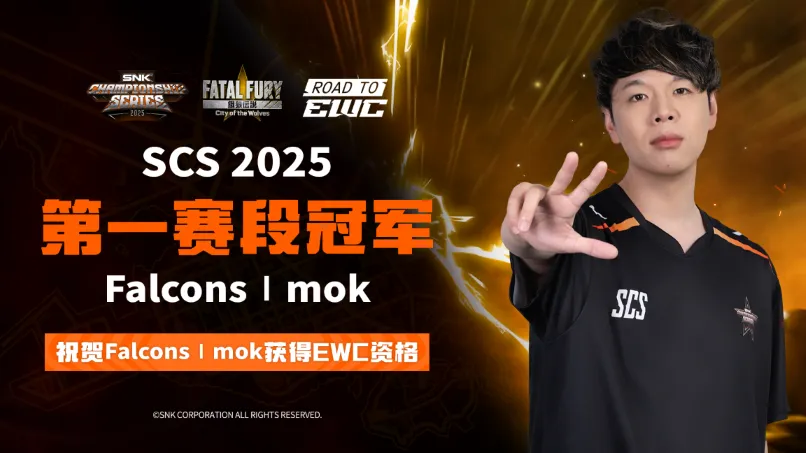
Such substantial potential rewards not only attract many top domestic players but also draw numerous well-known international competitors. The champion of the Fatal Fury: City of the Wolves event in SCS Stage 1 was Mok from Japan. To compete for the prize money, participants must give their all, eliminating any notion of "hiding tricks" or "saving strategies." Under such "heavy rewards," every "brave warrior" will exert maximum effort.
Therefore, regardless of who wins the championship, the experience gained from major tournaments will serve as valuable nourishment for our players, paving the way for their further improvement.
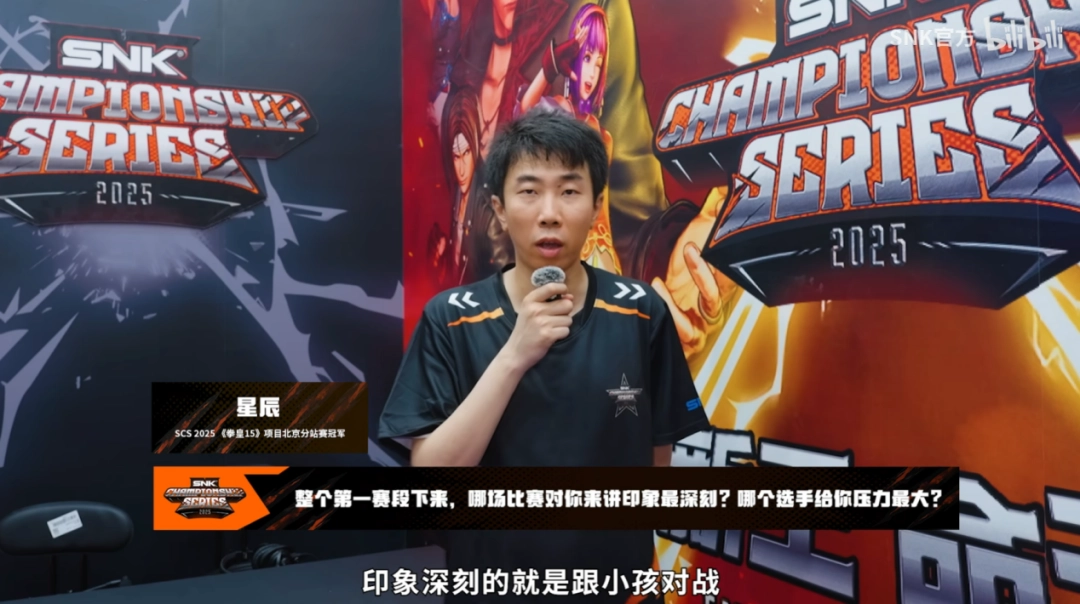
Beyond prize money and qualification slots, another significant impact of SCS is cultivating the next generation of top-tier professional players from the ground up. Such large-scale tournaments provide emerging domestic players with an excellent opportunity to compete against legendary veterans in a high-pressure environment outside of regular training. In the Grand Finals of the first stage, Chinese player Xingchen defeated the legendary veteran Xiao Hai in The King of Fighters XV, where Xiao Hai holds dominant sway, and successfully claimed the championship.
After the match, Xiao Hai highly praised and acknowledged Xingchen's gameplay and performance. Surely, in the foreseeable future, more such rising stars will shine on the competitive stage of Chinese fighting games.
In early August at Shanghai's ChinaJoy, the outcome of the SCS Stage 2 journey will be decided. This stage features not only Yunwu, the formidable Chinese player who took second place in the previous SCS, but also renowned international powerhouses like MADKOF and M', along with many promising future stars of Chinese fighting games.
If your passion for fighting games hasn't faded, consider attending in person or tuning in online. Regardless of who ultimately claims the stage championship, it will represent a solid step forward for China's fighting game esports scene.