

To be honest, even now, my boss doesn't understand why I'm so interested in The Weather Archive, a free PS VR2 software with an educational tool nature. After all, from any angle, there are far too many games on the PS VR2 platform that are more "worth" experiencing than it—until last week, I thought so too.
And then, I endured the most unbearable summer of my life.
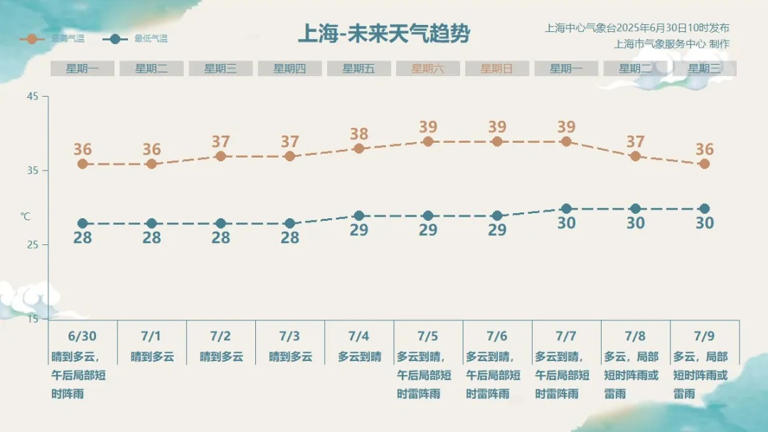
In early July in Shanghai, the maximum temperature repeatedly reached 39°C, the air was as humid as jelly gel, and occasionally large hailstones fell. Under such infuriating and detestable weather, my damn laptop fan went on strike. To avoid the computer completely crashing under red-hot roasting and burning my half-written draft to ashes, I had to ride my bike for half an hour under the midday sun to the repair shop.
Along the way, assaulted by heat rays, countless thoughts flashed through my mind—I recalled the ancient tale of two children debating the sun. One child said the sun is closer in the morning because it looks larger; the other said the sun is closer at noon because it feels hotter. Then Confucius arrived, slapped both little rascals, and scolded them, saying that instead of babbling nonsense, they should hurry up and call Hou Yi to shoot the sun down.

Then came the combo of heading to the repair shop (air conditioning at 22°C for rapid freezing), leaving the repair shop (39°C for slow-cooking over high heat), and returning to the office (26°C for low-temperature freshness locking)—as expected, my immune system couldn't take the torture and self-destructed on the spot. I happily contracted a seasonal cold and fever, resulting in three days of sick leave.
Lying in bed, I gritted my teeth, "Damn, why is it so hot this summer?" After cursing this out, I suddenly remembered that I had cursed the same thing last year, and probably the year before too... It was only then that I suddenly remembered there was a game on PS VR2 called The Weather Archive.
Adhering to the principle of dying with clarity, I put on the deathly heavy VR headset.
Strictly speaking, The Weather Archive is not a game; it's more like an interactive teaching aid, or even a multimedia projector. Players... or rather, users, after entering the game, need to watch several short科普 videos about climate change and learn environmental knowledge ingrained in their DNA since compulsory education, such as global warming, carbon emissions, and the El Niño phenomenon.
These short videos are solid in content, with detailed popular science explanations. The development team analyzed extensive meteorological data from the pre-industrial era (1850) to the present, combined with accessible voice narration, effectively answering the dead-loop spaghetti code behind the phenomenon of "summers getting continuously hotter."
Friends living in the south may have this experience: recent summers have been as hot as steamers, with sweat sticking to the skin, impossible to shake off. The wetter it gets, the hotter it feels; the hotter it feels, the wetter it gets. It's like stepping on your own foot to lift yourself into the air, eventually steaming you alive.
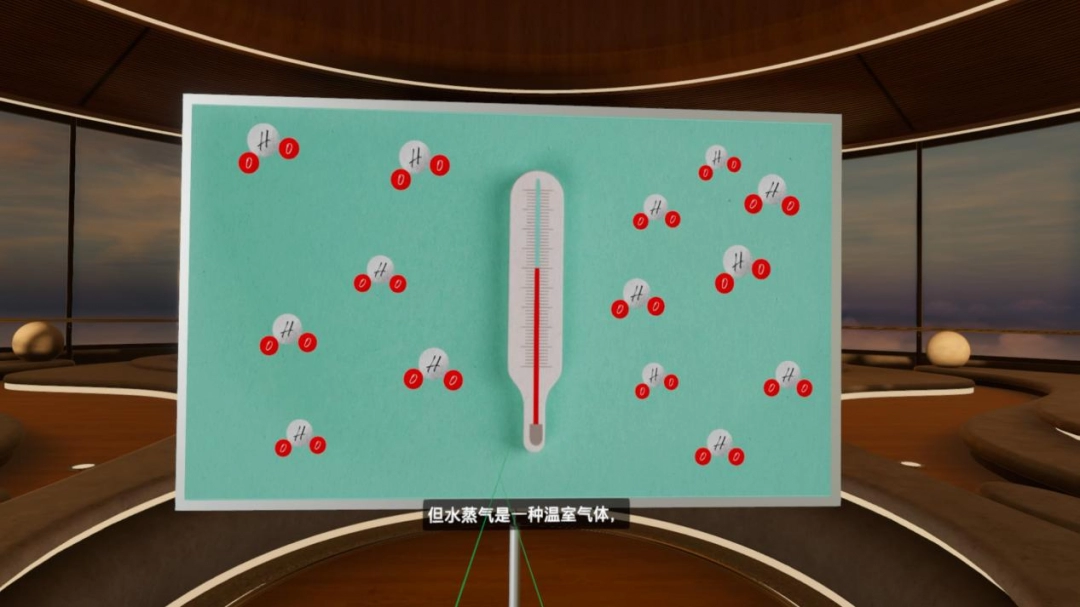
If you're curious about the reasons behind this phenomenon, the "Greenhouse Gases" video in The Weather Archive actually records it—water vapor is itself a greenhouse gas. It not only increases human perceived temperature but also blocks sunlight reflected back into space, further exacerbating the greenhouse effect. Unfortunately, for every 1% increase in temperature, the air can hold an additional 7% water vapor, and this 7% water vapor will make the air even hotter...
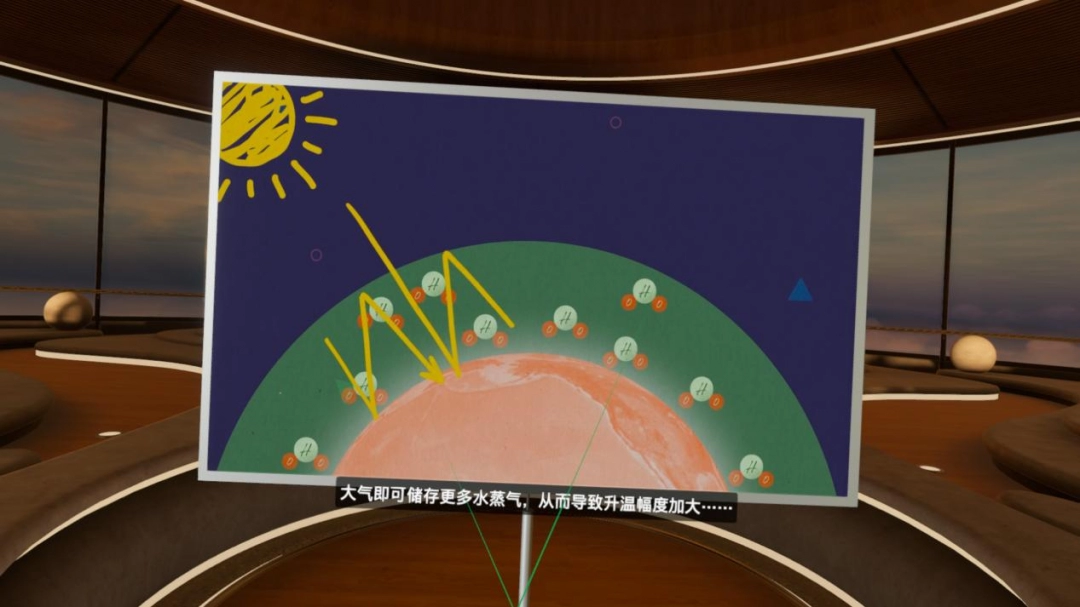
That's not all. If the temperature rise is higher and happens to melt the permafrost in various parts of the Arctic, the methane accumulated underground for tens of thousands of years since the last ice age will emerge again, joining forces with water vapor and carbon dioxide. This leads to hotter temperatures, more melting permafrost, more methane release, and even hotter temperatures... until one day the Earth finally relieves its gastrointestinal distress and finishes farting. By that time, coastal nations like the Maldives might truly become the sunken Atlantis.
The Weather Archive has produced similar video clips for almost every cause, process, and consequence of climate change, ranging from the sources of greenhouse gases to the impact of ocean currents on climate, and even to wildlife populations and financial losses caused by extreme weather. It covers Everythinggj.
However, no matter how refined the production, the format of these short videos being "screens within VR"注定 means they cannot leverage the advantages of the VR platform. Most of the time, I preferred to take off the headset to save my nose bridge from pain—after all, the PS VR2 is really heavy.

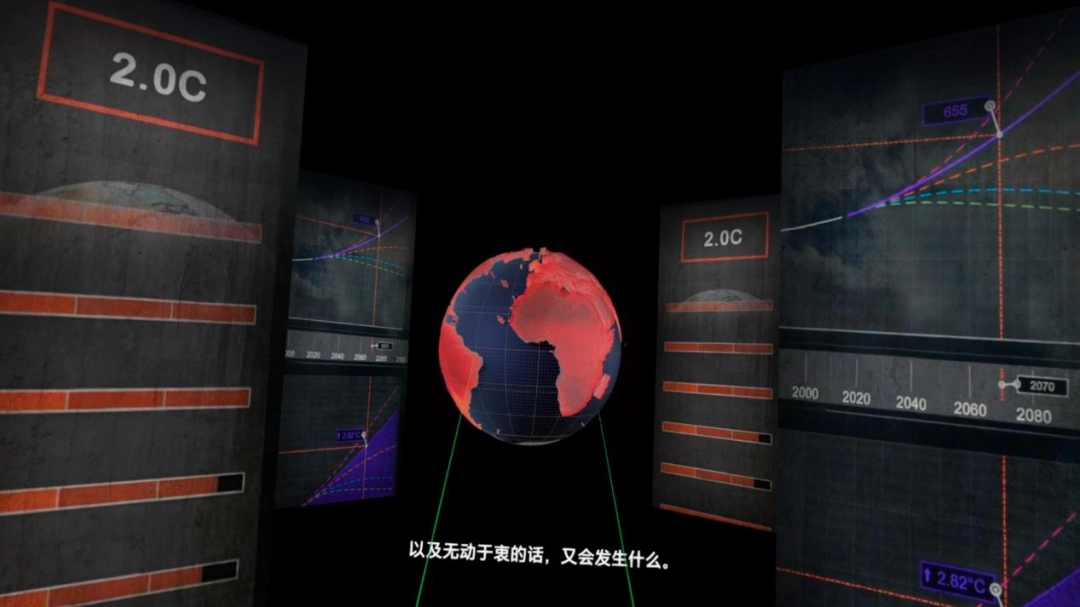
Fortunately, while "video clips" constitute the main content of The Weather Archive, they are far from the entirety of this game. The core experience of this title is actually the globe in the center of the screen—it encompasses all meteorological observation data from 1850 to the present, includes all major and minor meteorological events throughout 2019, and features a "future world line prediction" model calculated by supercomputers.
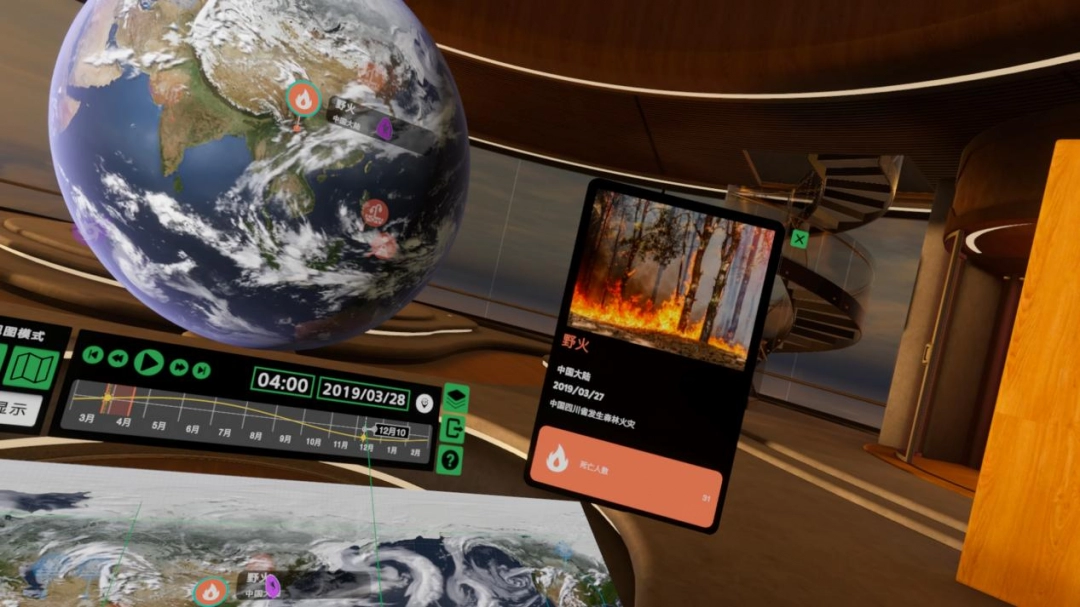
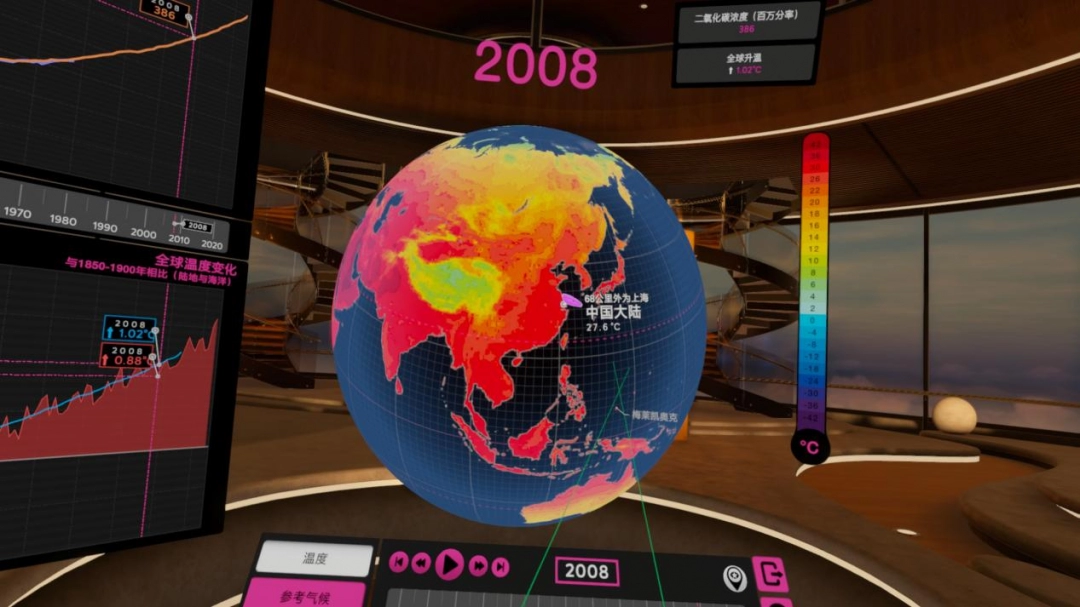
After finishing the "tutorial" of popular science videos, players can freely explore points of interest on this virtual Earth. Using the PS VR2 controllers, players can "grab" any time and location on this globe—corresponding data tables such as temperature changes, solar irradiance, ocean current impacts, and greenhouse gas emissions will appear in the headset, allowing for easy comparison with just a glance.
I immediately adjusted the timeline to 2008. In my vague memory, the summer that year shouldn't have been as exaggerated as now—sure enough, the average temperature in Shanghai in July 2008 was only 27.6°C. In contrast, July 2024, hailed as the "hottest on record," had an average temperature of 30.5°C in Shanghai. And this "hottest" record will likely be broken again this year—even every future summer will become more unbearable.
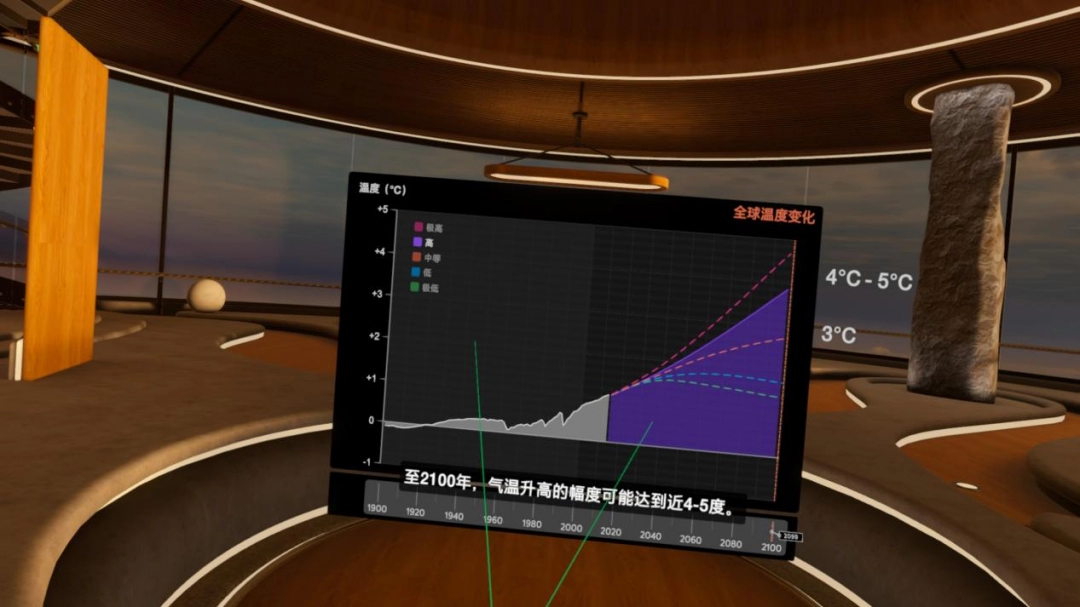
This isn't just talk. As mentioned earlier, The Weather Archive includes five future Earth weather scenarios simulated by supercomputers. The most optimistic scenario is SSP1-1.9, a world line where all humanity suddenly breaks through AT Fields, completely abandons fossil fuels and high-emission industries, casts aside divisions and conflicts caused by unequal energy distribution, and goes all out to implement the Paris Agreement—think about it, this is just dreaming. After all, earlier this year, the world's second-largest carbon emitter just announced its withdrawal from the Paris Agreement, and wars driven by energy continue to burn around the globe.
The problem is, even in this "dream world line," global temperatures will still rise by 1.5°C by the end of the century amidst the "spaghetti code loop" described earlier—and in the most pessimistic predictions, this increase will triple...
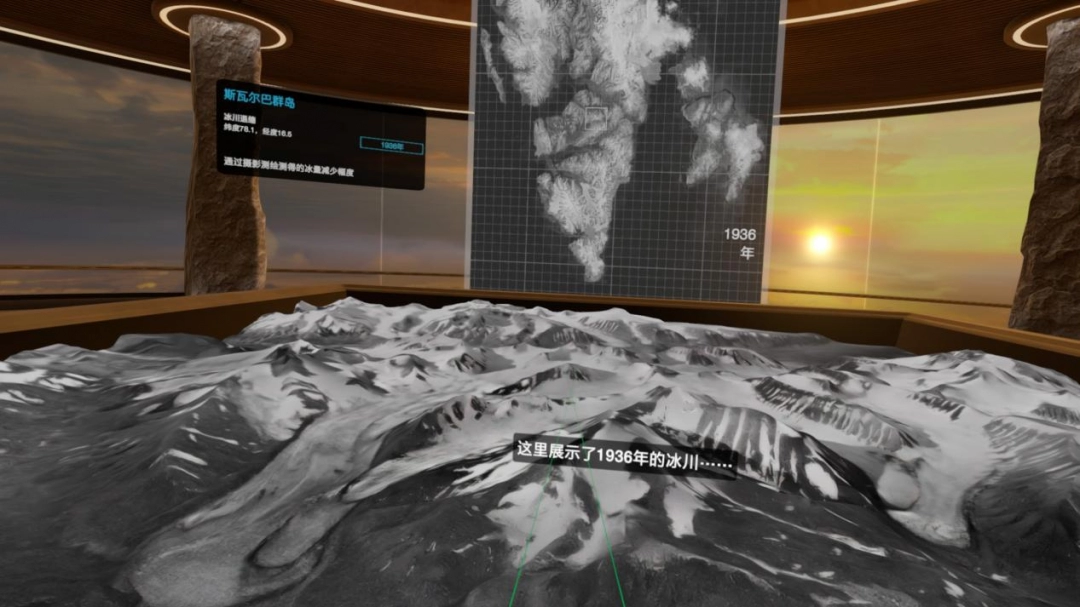
Regarding the impact of rising temperatures, The Weather Archive also prepares several intuitive "model teaching aids" for players, which is one of the few moments where this title fully leverages the advantages of the VR medium. In these scenes, players can use the VR headset to visit the skies above the Arctic glaciers, the seabed of Australia's Great Barrier Reef, or the aftermath of hurricanes in Southeast Asia, experiencing the effects of climate change "face-to-face."
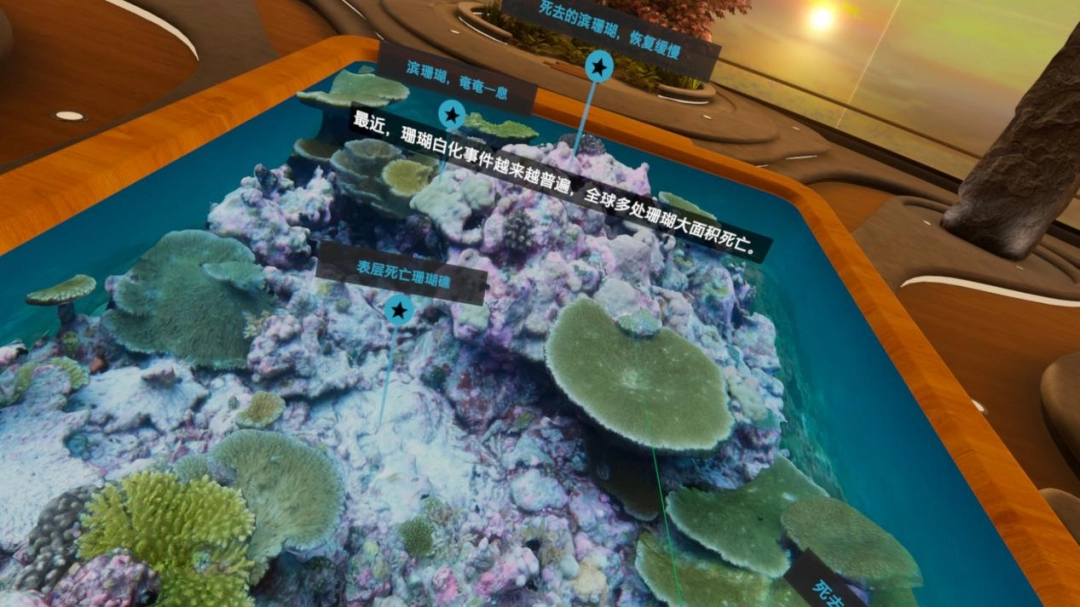
Of course, this so-called "face-to-face" experience and "VR platform advantage" are relative results. Due to the game's lower development cost and scale, these VR scenes contain almost no interactive elements, and the scene scale is quite limited. But keep in mind, The Weather Archive is just a small-scale, free-to-download popular science game—compared to simple images, text, or videos, this "immersive" 3D modeling is obviously more persuasive.
Finally, I want to add one more point: in The Weather Archive, I did not see the "condescending" preachiness typical of traditional environmental propaganda works, nor did it ramble on about meat, eggs, milk, and tropical rainforests. Most of the time, it simply presents facts, analyses, and evidence, leaving the step of "drawing conclusions" to the players themselves—in this regard alone, it can be considered an excellent popular science work.
As a "game," The Weather Archive is not particularly fun, nor does it fully leverage the advantages of the PS VR2 platform. However, as a "teaching aid," its sense of immersion and professionalism are likely unmatched—from this perspective, it is indeed more suited for museums or geography classrooms in elementary and middle schools.