

An old joke circulates in mystery circles: There's a corpse in a locked room. Classical mystery uses precise logic to find the killer; neo-classical mystery says the whole house was built for the sake of the locked room; narrative trickery says you are the corpse; and social school mystery turns around to condemn the society that created the killer...
"Kill the Shadow" is a rare puzzle game on the market centered around "social school mystery." Rather than focusing on how the crime was committed, it seems more concerned with why the perpetrator did it. Additionally, its unique "Chinese Neon" art style and fictional setting add a layer of mystery to the work.
At the recently concluded WePlay Culture Expo, we had the privilege of conducting an exclusive interview with the development team behind "Kill the Shadow." We believe this interview will give players a deeper understanding of the creative concepts and philosophy behind this work.
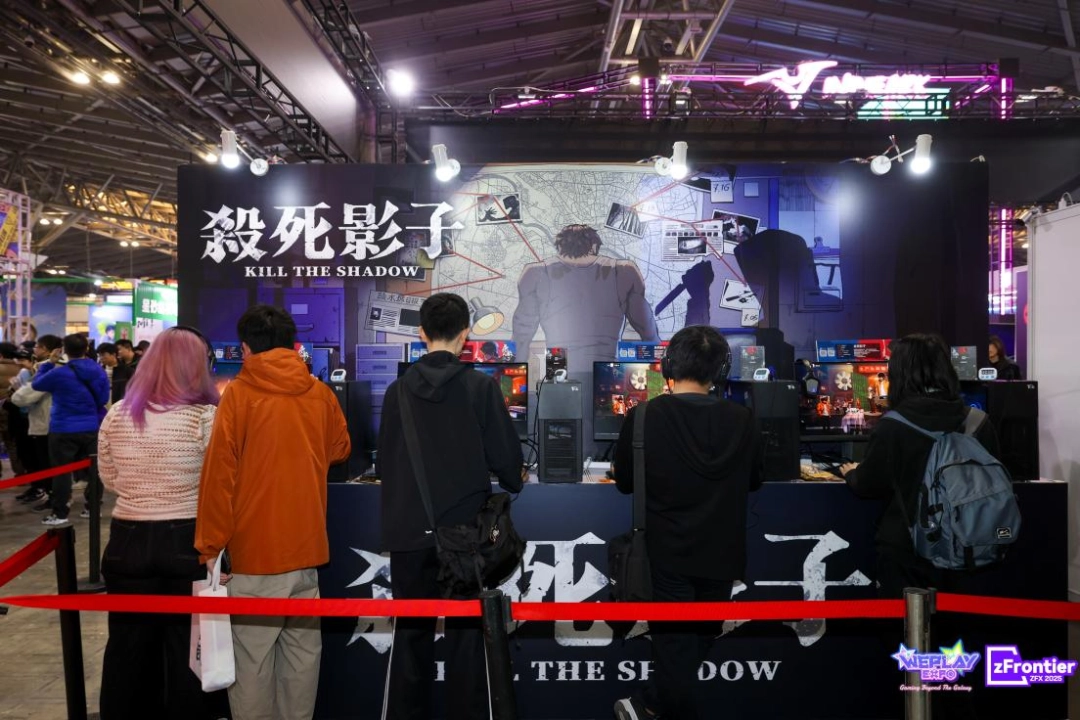
Q: What are the core genre and worldview of "Kill the Shadow"?
A:"Kill the Shadow" is a detective game focused primarily on narrative, with puzzle-solving as a secondary element. The story is set in a parallel fictional world where Darkwater City is divided by a quarantine wall into South City and North City, controlled by two factions that have no interaction. Our protagonist, Ah Guang, returns to South City with an accidentally obtained pass after being trapped in North City for ten years. The player's experience begins on the day of his return.
The game has a clear main storyline but also includes rich branches and multiple endings—we put considerable effort into this aspect. Players can freely choose the direction of the plot according to their preferences, such as convincing someone through force if persuasion fails, or choosing dialogue over violence. Every choice is available to the player, leading the story toward different outcomes.
Q: "Kill the Shadow" is currently in the polishing phase. Can you reveal any new game mechanics or system optimizations?
A:Before the polishing phase, our core gameplay was already well-established—thus, few new mechanics were added. However, we did optimize some systems, such as adding a branch map system that allows players to quickly jump to key nodes after completing the game to experience different branch plots. For example, in the Demo, most players encounter the death of a certain character on their first run. When players discover a branch where this character survives, they can use the branch map system to skip tedious, previously experienced content, significantly enhancing the player experience.
Additionally, we optimized UI and interactions to make interface information richer, more intuitive, and cooler. There are many similar minor optimizations, which I won't list individually here.
Q: The art style of "Kill the Shadow" is described as "Chinese Neon." How did the development team apply this to the game?
A:The core reason we adopted this style was to serve the game's worldview and narrative, not merely for aesthetic appeal.
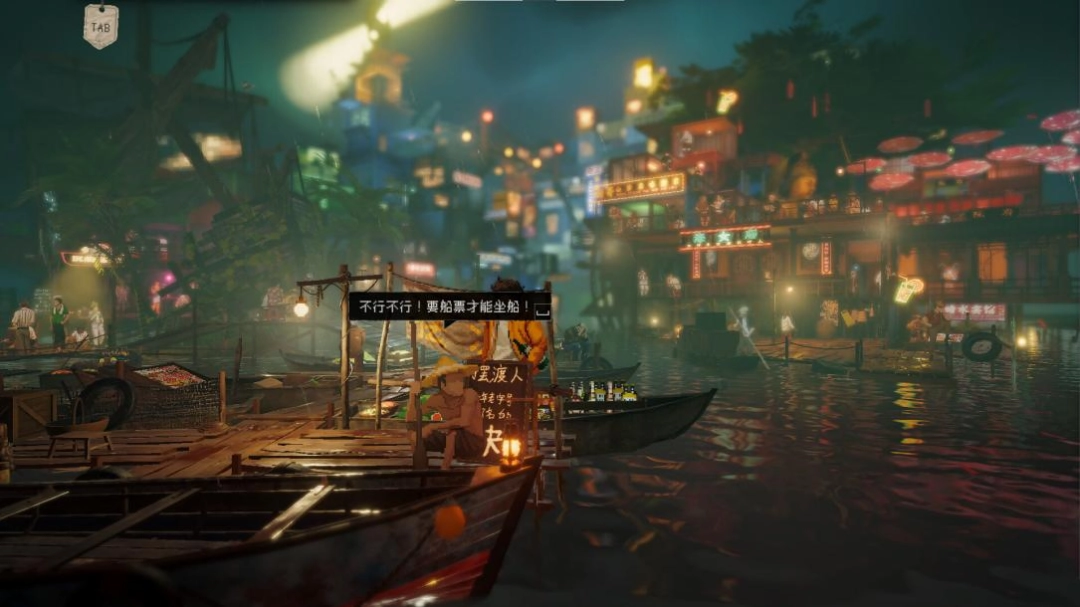
From the very beginning of the design process, we established the world background, worldview, and relationships between characters. Our goal was to visually convey to players the fusion and clash between local ideologies, culture, and religious beliefs, and incoming waves of foreign thought through our art and environments. The final result organically combines traditional Chinese cultural symbols with Western cultural elements like neon lights.
Additionally, this design draws inspiration from cyberpunk styles seen in many films and TV shows, where the underlying premise often highlights the wealth of the upper class, the poverty of the lower class, and intense social contradictions. We also referenced real-world Hong Kong architecture. Although Western-style buildings dominate Hong Kong, its origins as a small fishing village suggest the existence of many ancient structures. Furthermore, many ancient buildings in scenic areas today are adorned with various neon lights, which served as another source of inspiration.
In short, the "Chinese Neon" style in "Kill the Shadow" was created through step-by-step exploration and optimization, drawing heavily from real-world references rather than being built on thin air.
Q: "Kill the Shadow" features many distinct scenes. How did the development team manage the atmosphere of different environments?
A:We first differentiated the stories behind each scene design—each chapter aims to express something different, with varying themes.
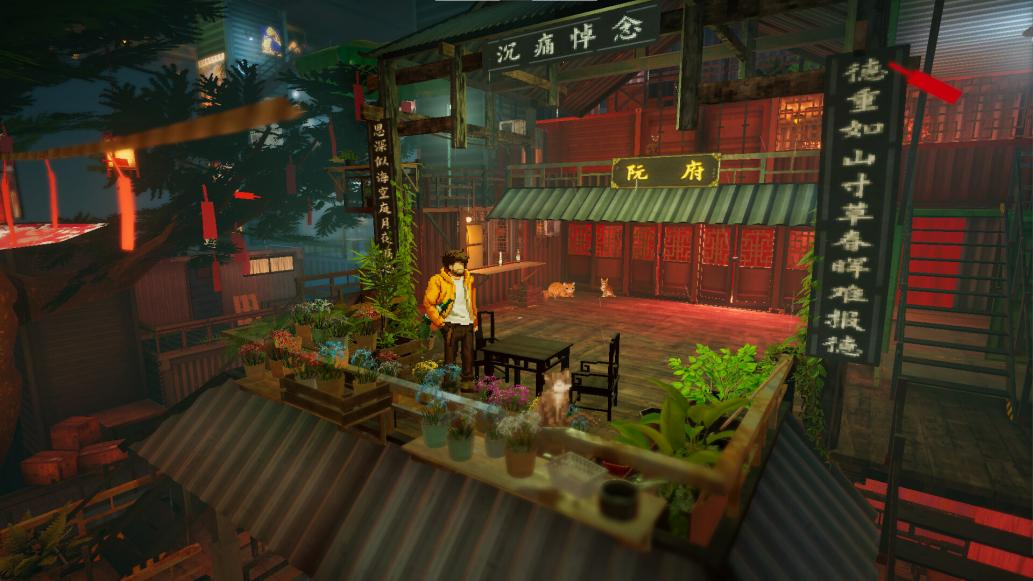
Each chapter sets its tone based on "impression words," combining them with the plot theme to derive the atmosphere. The factory represents the bitterness, endurance, and hunger suffered by workers over ten years, corresponding to a dim color palette. The Kowloon Walled City-like area hides oppression and exploitation beneath a facade of false prosperity, featuring a colorful, chaotic mix with many neon hues... Designers create initial concepts for each scene, which artists then execute, intuitively presenting the designers' intentions while adding their own artistic expression.
Q: How do you coordinate the unity between 2D pixel characters and 3D environments?
A:Since our characters are pixel-based, the entire environment needs to maintain a pixelated feel. Therefore, we deliberately lower the resolution of 3D scene textures and manually adjust the pixel effect of each texture through multiple iterations to ensure the pixel size matches the characters. This task is quite complex because there are many models, and each texture has different densities, resulting in a significant workload—first ensuring color consistency, then uniform pixel density.
Q: The Deduction Wall is one of the core mechanics of "Kill the Shadow." How did the team design the connections between clues?
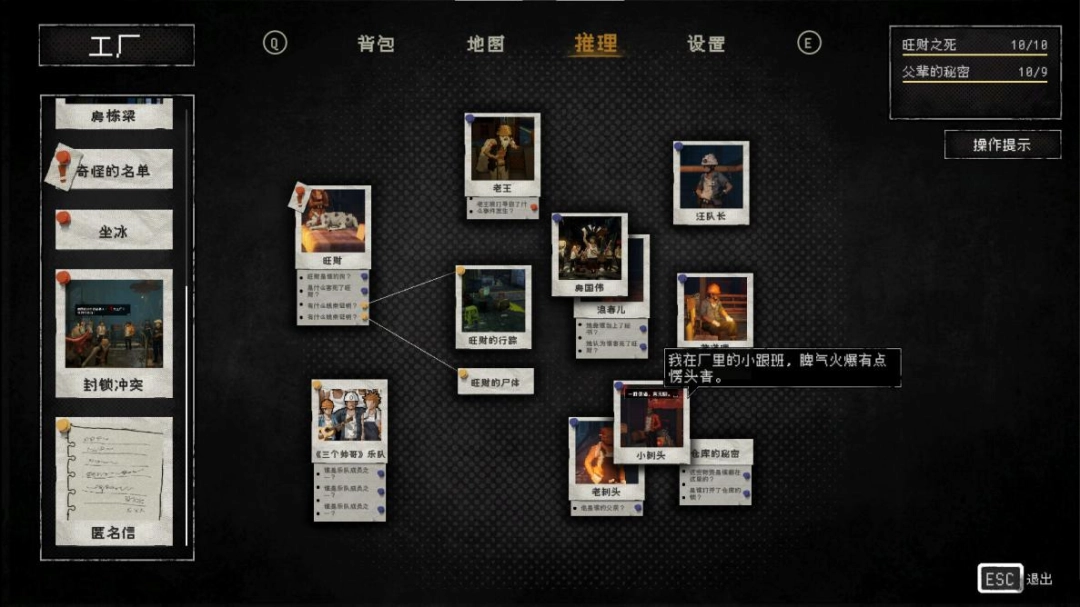
A:This relates to the core gameplay loop—after encountering a case, players must collect clues, evidence, and testimonies from relevant personnel, then deduce and investigate before revealing the truth, leading to different endings based on player choices. After collecting so many clues and pieces of evidence, we needed a way to present them to players for intuitive review and deduction, which was the starting point for designing this system.
Connections between clues are reflected through different questions—each clue block serves as an answer while also raising its own questions. For instance, the clue block "Wangcai's Death" raises questions like "Whose Dog.exe was Wangcai?", "Who killed Wangcai?", and "What evidence proves Wangcai was killed?" To help players distinguish between types, clue blocks are assigned different colors to reduce deduction difficulty.
Q: During the clue-linking process, are there any intentionally designed wrong branches? For example, could incorrect connections lead to missing the truth and triggering a specific BAD END?
A:We actually considered such designs initially, as they would provide players with rich, interesting, and varied endings, but we ultimately removed this part. There were two main reasons: first, redundancy, as players can already reach some BAD ENDs through plot choices, making it unnecessary to duplicate this in the deduction system; second, positioning, as "Kill the Shadow" focuses on narrative experience over puzzle-solving complexity, so we did not add extra difficulty or functionality to the deduction system.
Q: Regarding another core mechanic of "Kill the Shadow," "Time Rewind," can you discuss the design philosophy behind this feature?
A:In the current version, Time Rewind is a tool that helps players visually review possible case scenarios after a case concludes, so it isn't central. However, in the initial version, it was a crucial system—our original design had the protagonist repeatedly dying and respawning in the factory area, gaining new knowledge and questions with each rebirth, and entering the next cycle with this information to gradually approach the final answer. We invested immense time, energy, and passion into creating this experience, but ultimately found the content volume too vast for our small team with only one writer. While it had its own charm, limited by time, budget, and capacity, we couldn't perfect it... So, we eventually abandoned this mechanic in favor of a traditional linear RPG structure, but added multiple endings, branches, and attribute systems.
Nowadays, our expectation for it is more akin to a CRPG without combat.
Q: To what extent do players' free choices impact the game? Do they merely alter small episodic plots, or do they completely颠覆 the direction of the entire ending?
A:Both types of impact exist. First, most consequences are contained within a single chapter; if we didn't constrain cross-chapter effects, early choices would spawn exponentially increasing possibilities. So, we try to confine major impacts within chapters, though some key choices do affect the final ending—I'll keep the details under wraps for now.
Q: The development team describes the narrative of "Kill the Shadow" using the "social school mystery" format. What were the considerations behind choosing this format? Does this mean the game places more emphasis on players' reflection on the plot?
A:Yes, that is precisely why we categorize it as social school mystery—we want players to see "Kill the Shadow" not just as a pure puzzle game, but as an experience where, after solving relatively straightforward and enjoyable mysteries, they delve deeper into the complex relationships between people. Each character may have their own motives, thoughts, and goals. How these play out is for players to discover within the game. Therefore, the social school mystery style proposed by Seicho Matsumoto fits our game perfectly.
Q: Multiple factions appear in the game, such as the Imperial Remnants, the Firefly Gang, and the Imperial Court. How are their relationships constructed? And what role do they play during gameplay?
A:Constructing these factions is actually quite complex, as our plot underwent many rounds of restructuring, overhaul, and optimization. Some factions, like Old Dad and the Firefly Gang, have been carried over from our student projects since the beginning; others, like the Imperial Remnants or the Great Ning Dynasty, were settings added after 2023 and 2024.
Building these factions serves two purposes: firstly, to convey the ideas and emotions we wish to express to players, and secondly, to fill gaps or deficiencies in the worldview, making it more vivid and the conflicts between people more realistic. We aim to avoid making characters in the story mere puppets driven by the plot—whether they are player-controlled characters or NPCs.
Q: In "Kill the Shadow," the protagonist seems able to develop romantic relationships with multiple female characters. Will this significantly impact the plot? Will there be dramatic love triangle scenarios, and will differences in these relationships affect the ending?
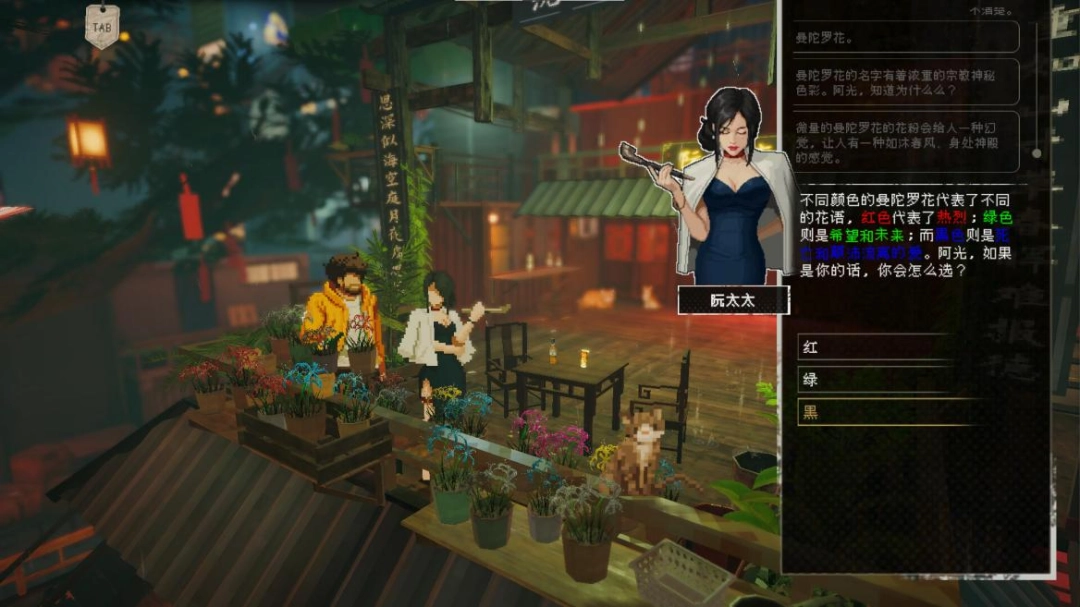
A:Not really, after all, "Kill the Shadow" is not a harem fantasy game. These romantic relationships fall into two categories: one develops naturally through the plot, such as Mrs. Ruan or Doukou, who may develop ambiguous feelings for the protagonist after sharing many experiences; the other is purely comedic, like Guo Wei's mom—her son is in his twenties and is the protagonist's subordinate at the factory. Regardless of the type, there will be no harem-style scenarios where multiple heroines compete for one man.
During the plot, players might sense a subtle ambiguity between the protagonist and certain characters—but Ah Guang, as a sigma male, keeps things restrained. Players are free to speculate on future developments; we won't force any romantic pairings, leaving room for fan creations and imagination.
Q: How long is the first playthrough of the game? Will the presence of multiple endings significantly extend the playtime?
A:The first playthrough takes about 7 to 10 hours. If you want to experience multiple endings, unlock all branches, and achieve full completion, it could take significantly longer, likely over 30 hours.
Q: What is the current progress of polishing? Approximately when will the game be available to players?
A:Currently, "Kill the Shadow" is in its final optimization phase. We are still working on translation, LQA, QA, voice recording, and bug fixes. Therefore, it will take some more time to stabilize the game and increase its completeness before it can meet the players.
The release date is definitely within 2026, but the specific date has not yet been determined.
Q: Finally, do you have any message for the players?
A:Hello everyone, thank you for playing our game. We hope you can appreciate the intersecting conflicts between people in our story. Characters who appear to be villains may have deep backstories and hidden truths. If you uncover these stories, form genuine emotional connections with the characters, and feel their joys and sorrows, happiness or pain, that would be wonderful. Thank you all! Our Chinese voice-over demo version will also be updated on Steam soon! We hope you follow, download, and enjoy!