

After sitting for a long time, my body should have felt uncomfortable.
But at that moment, my brain completely blocked out the soreness in my lower back. My eyes were fixed on the large screen on stage, afraid of missing any exciting moment of the match.
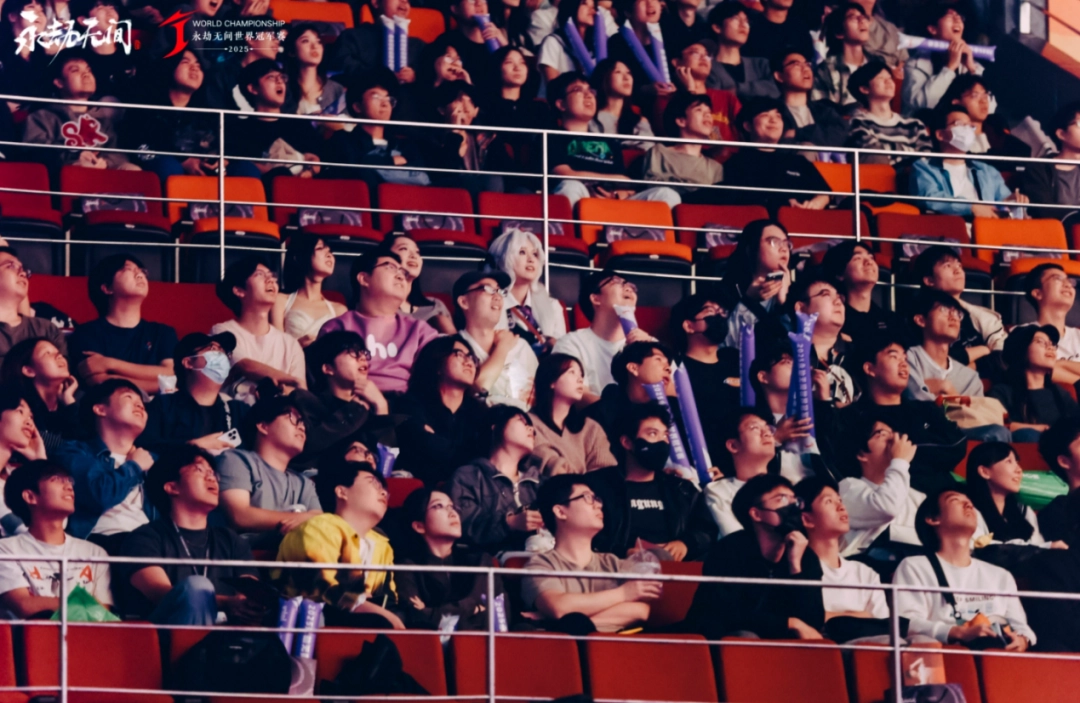
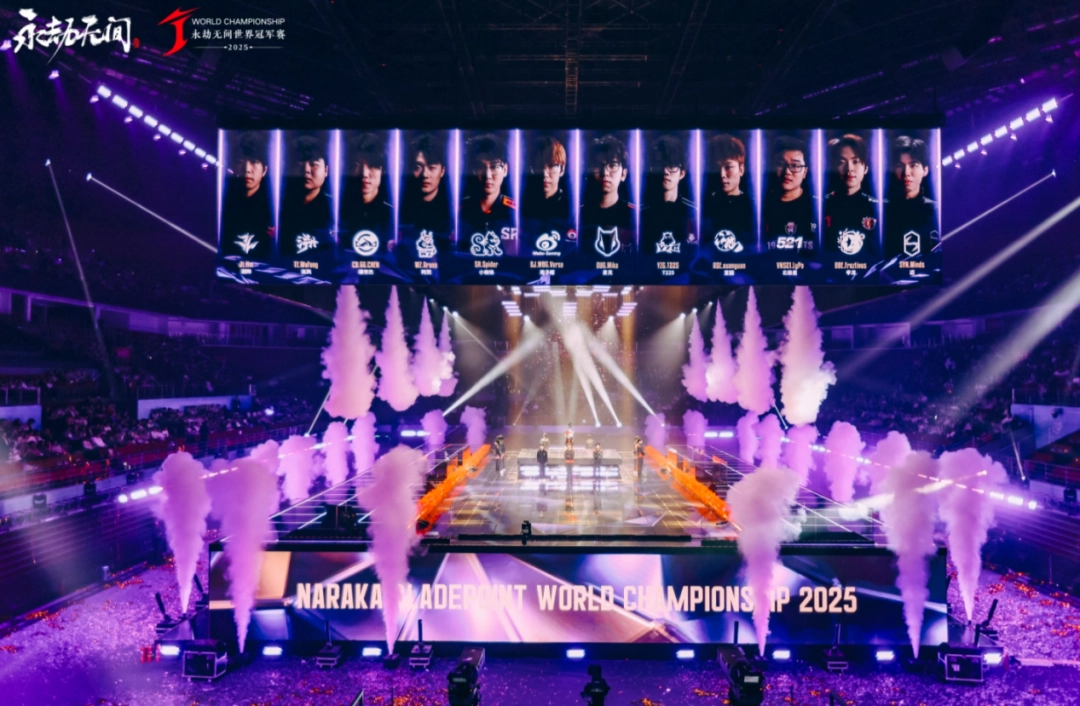
Sitting beside me were Naraka: Bladepoint players from all over, all here for tonight, for the finals of the 2025 Naraka: Bladepoint World Championship, and to welcome the new king at Shenzhen's "Spring Cocoon" Gymnasium. During the matches, every narrow gamble and every thrilling comeback drew bursts of cheers and shouts from the live audience.
As the decisive match of the Solo Tournament's "Nine Sons Seizing the Throne" drew to a close, the final poison zone began to shrink. The distance between the remaining three players grew closer and closer until, crossing the critical threshold, blade and sword lights ignited the entire arena. "Wu Feng," who was not favored to win, used clever positioning to avoid direct confrontations and preserve his health, then used ranged weapons to finish off the remaining low-health players, successfully winning the championship of the Solo Finals.
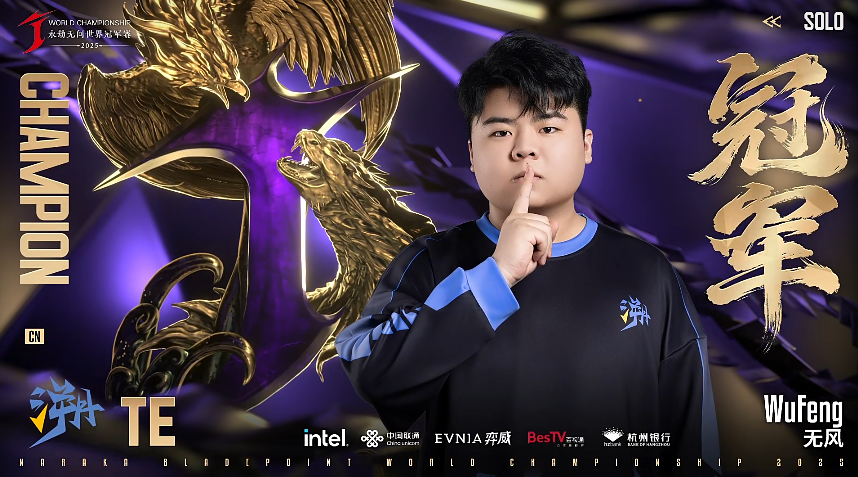
The moment "Wu Feng"'s victory appeared on the screen, the entire arena erupted. Cheers and applause thundered, announcing the birth of a new king.
On the second day, after Team SR successfully lifted the trophy in the Trios Finals as expected, the atmosphere at the venue reached another climax.
During the first day's matches, a "Naraka fan" sitting next to me watched with great focus, shouting out loud at every brilliant play and unexpected reversal. Regarding Wu Feng's unexpected victory, this fan, whom I had just met, said it was both surprising and reasonable. "Everyone on that stage is a master. It's precisely because anyone could win that the match was so exciting."
I deeply resonated with his words.
The exciting moments of the competition extended far beyond the decisive final instant. This captivating charm was destined even before the opening.
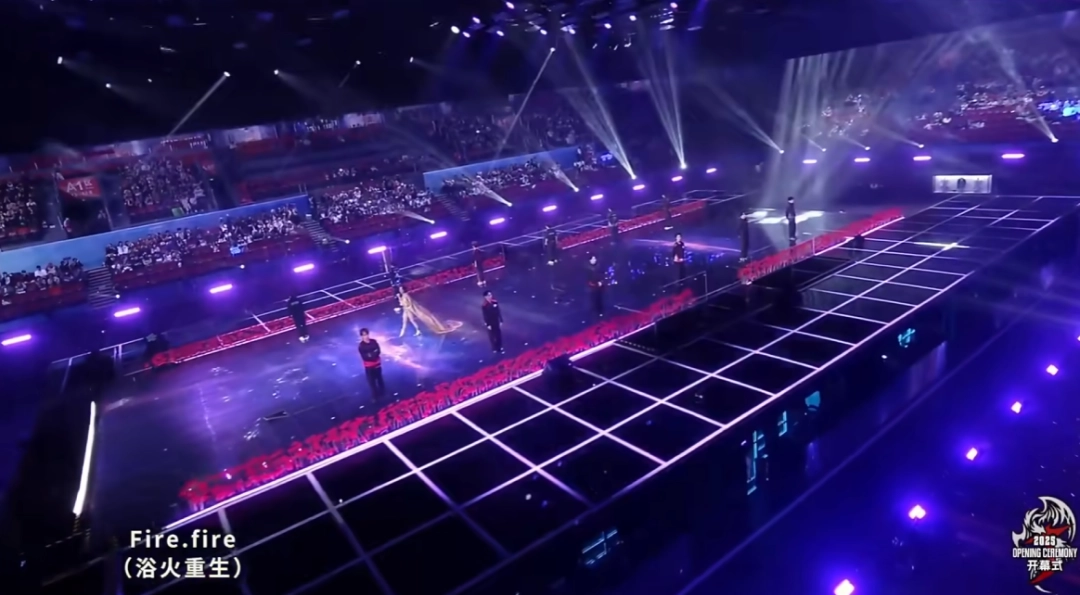
The atmosphere at the Solo Finals was ignited as soon as Curley Gao began singing "Flame of Fate." As the promotional song for Naraka: Bladepoint's second anniversary and a common lobby BGM, "Flame of Fate" is considered by many players to be the most "Naraka-flavored" song. Whenever the melody plays, memories of their early days in Morus Isle surface. And when the chorus of this year's theme song, "Breaking the Cocoon," exploded with battle intent, and the twelve competitors marched out from the lights, no words were needed to describe the overwhelming sense of pressure and glory as top masters gathered to decide their fate.
On the second day, the opening of the Trios Tournament also featured a performance by famous singer Hu Yanbin. As the melody of the collaboration theme song "Crossing the Infernal Realm" drifted over the "Spring Cocoon" Gymnasium, many players recalled moments when they transformed into the collaboration character "Zhang Qiling" from "The Lost Tomb" and dominated the game.
After the opening show, the main event, the Finals, officially began.
Compared to many "FPS Battle Royale" tournaments, the spectator appeal of Naraka: Bladepoint competitions is truly unique.
In traditional Battle Royale tournaments, we often see this scenario: to ensure victory, players judge where to position themselves early based on the shrinking zone and terrain, then use long-range poking and "camping" tactics to survive. While tactically brilliant, this style is quite "unpleasant to watch." There are large amounts of uneventful downtime with little confrontation throughout the match. Truly exciting and intense firefights usually only concentrate in the final circle, lasting briefly and ending before the audience has had their fill.
The Wuxia action combat gameplay of Naraka: Bladepoint naturally has an advantage in spectator appeal. Compared to the monotonous bullet spam of modern weapons, every move of ancient weaponry, every arrow and strike, possesses its own aesthetic beauty. Visual feedback like successful Parries and combo executions is clear and intense. Even viewers unfamiliar with the game can intuitively feel the intensity of the confrontation and the sophistication of the players' skills.
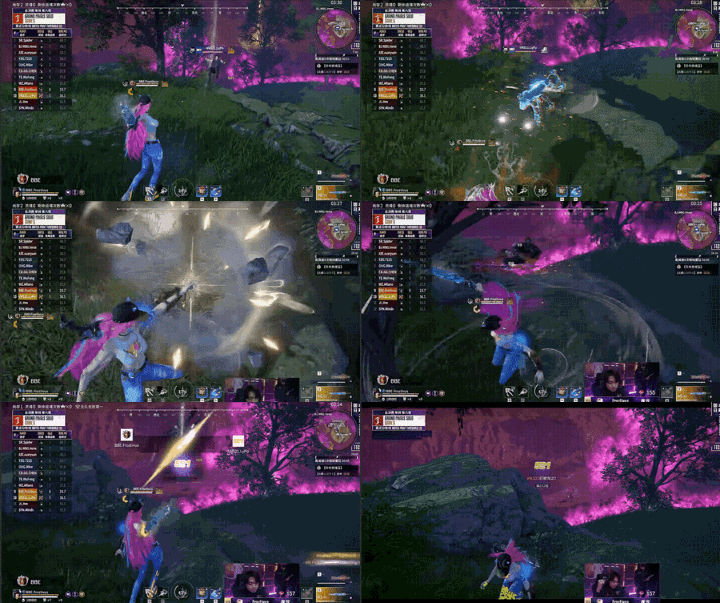
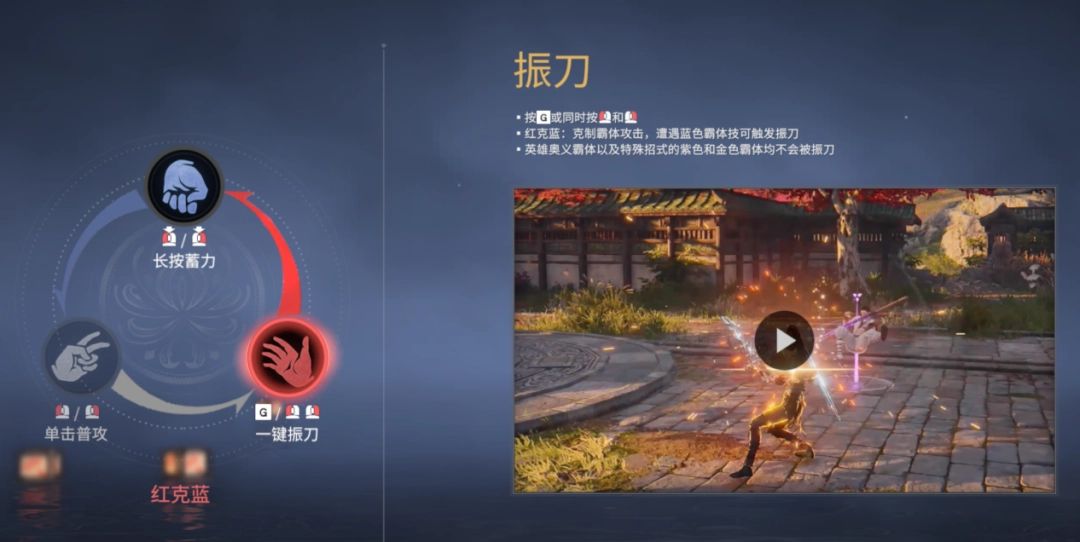
In terms of gameplay mechanics, Normal Attacks, Super Armor, and Parries counter each other, creating a "rock-paper-scissors" dynamic of visceral combat where every hit lands with impact. The long Time-to-Kill (TTK) ensures that every encounter becomes a psychological battle and a test of reaction speed spanning multiple rounds. Reversals of fortune happen frequently, allowing exciting confrontations to last longer.
The addition of resource contention mechanics like the "Rebirth Realm" further encourages players to engage actively. It proactively creates conflict points, merging the dull operational phase with combat, turning it into a resource-grabbing stage where fighting is necessary for development. This makes combat frequency in matches much higher. Especially when the "Rebirth Realm" appears, if multiple teams are fighting within it simultaneously, directors even need to rely on replay systems to fully present the intense clashes on every battlefield to the audience.
Thus, we saw how the ceiling-level individual skills of the players were infinitely amplified and showcased within this framework.
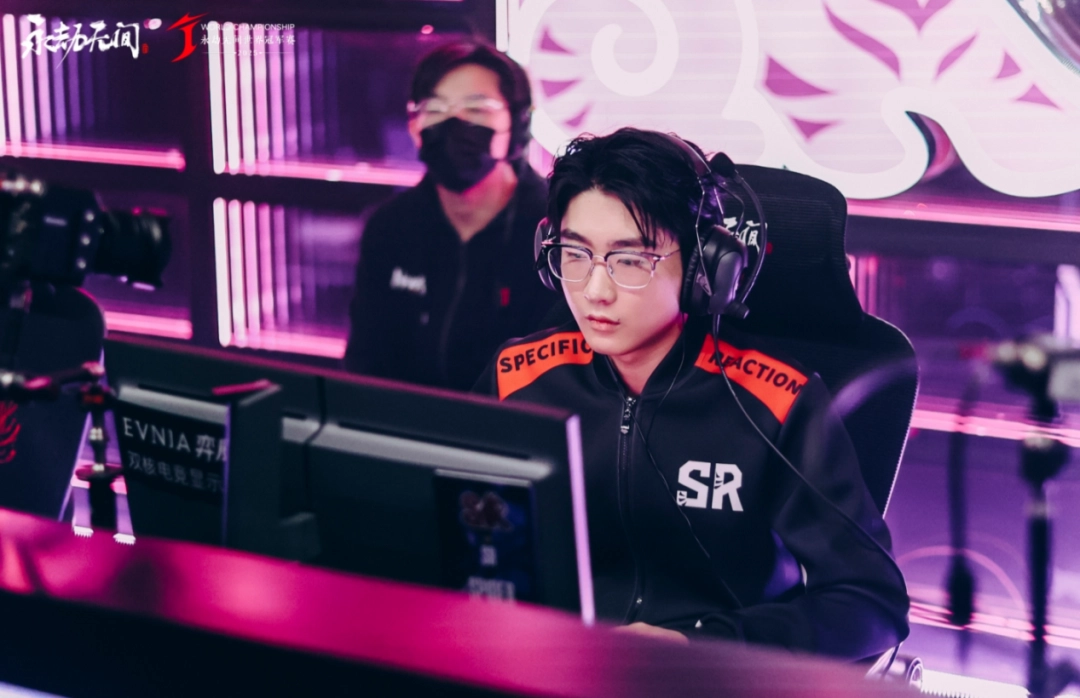
In the first day's Solo Tournament, the highly anticipated player "Little Spider" demonstrated astonishing dominance in the early matches. Not only did he secure enough points through intense combat in the second match to reach match point early, but he also nearly ended the tournament in the third match to claim the Solo Champion title. Unfortunately, under the combined siege of other players, "Little Spider" ultimately failed to lock in the victory early. However, his fierce offensive and极限 (limit-pushing) maneuvers during the counter-siege still thrilled the live audience. The moment that impressed me most in the Solo Finals was during the third match, when "Little Spider," trapped in a desperate situation surrounded by multiple enemies, managed to carve a bloody path out of the encirclement through several seemingly impossible Parries. At that time, shouts of "He parried that?!" echoed throughout the venue.
These dense "hero moments," capable of instantly reversing the tide of battle through individual skill, became the core attraction of the competition.
This is why the two days of competition were completely "non-stop." Because of this, the popularity of the Naraka Cup has soared year by year, with tickets for this year's Solo Finals selling out in just 4 minutes.
As for those who couldn't get tickets, Shenzhen still had plenty to offer that weekend. Like many spectators, I spent the entire day before the finals enjoying the "Martial Chant Carnival" near the venue.
At the four-day, completely free "Martial Chant Carnival," queues filled up in front of various check-in activities.
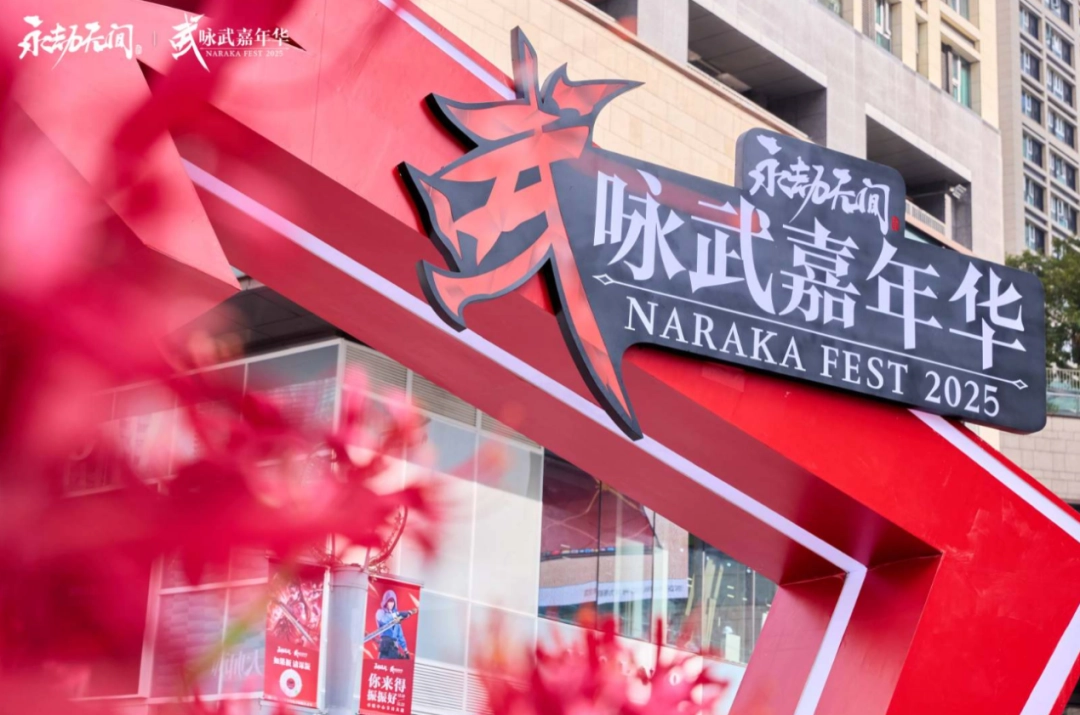
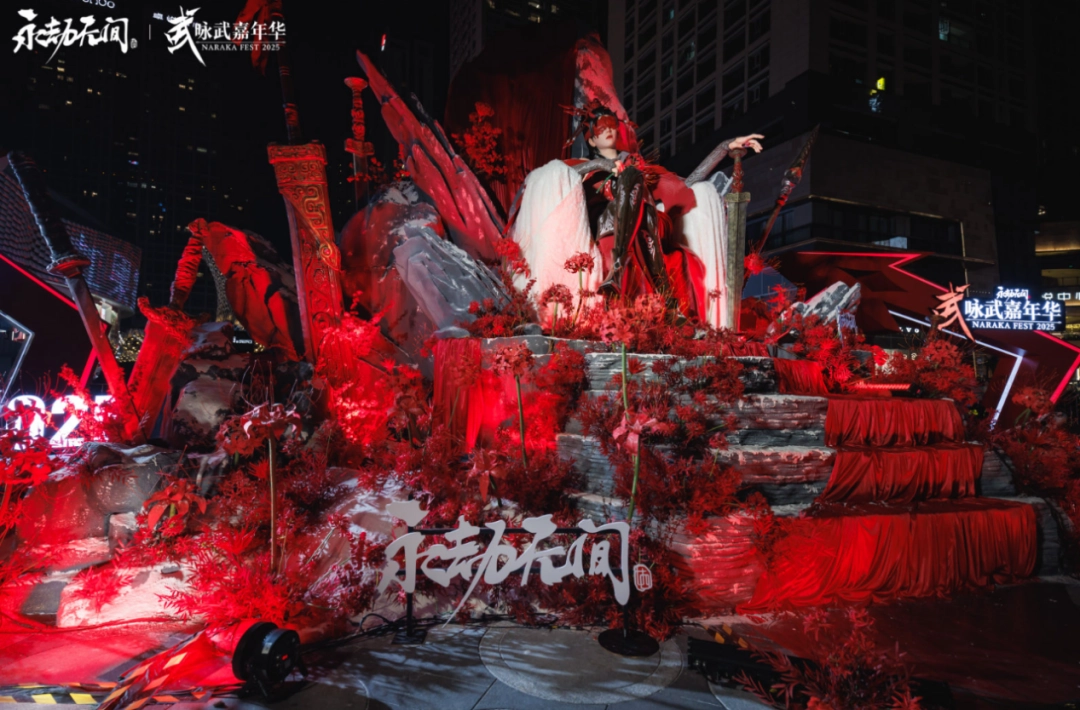
Stepping into the venue, the giant 8-meter statue of Ning Hongye instantly pulled people into the game's Wuxia world. Here, online allies met offline for the first time, with mobile and PC players mingling happily. Long queues formed at every photo spot, with everyone enthusiastically participating in various activities.
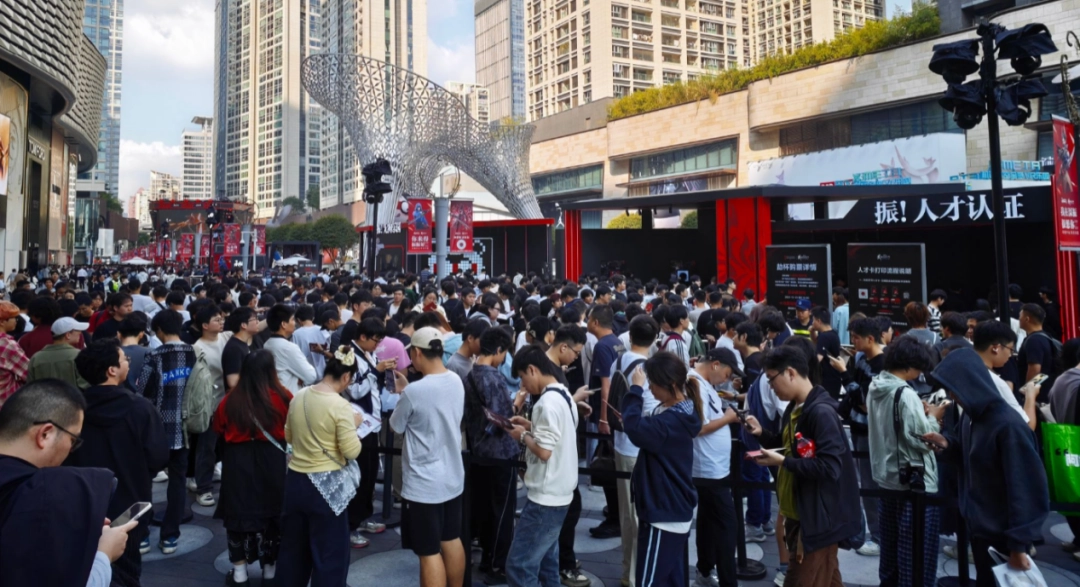
The hottest check-in spot was undoubtedly the booth printing physical "Shenzhen Zhen Talent Cards." Although the end of the line was invisible in the dense crowd and wait times reached an astonishing three hours, players' enthusiasm did not wane. Many spontaneously shared gaming tips while waiting, and those who had already printed their cards showed off their unique "Shenzhen Zhen Talent Cards." This card was not only a symbol of their identity as "Naraka: Bladepoint players" but also carried their love and dedication to the game.
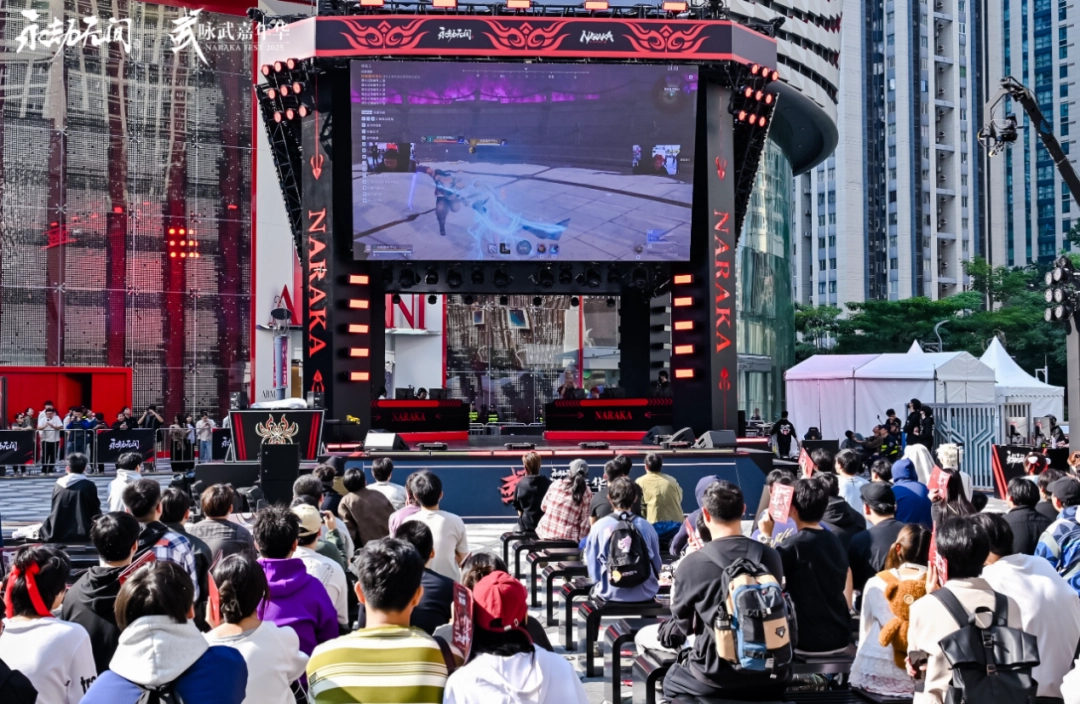
On the main stage, there were not only spectacular performances by guests but also a 1v1 arena segment where players volunteered to compete. Here, you could see many Parry masters sparring with each other. The battles in the arena were incredibly intense, with fighters exchanging blows and swords clashing, drawing cheers from the surrounding audience.
While watching, I also struck up conversations with some of the standout Parry masters on stage. In our exchanges, many of these impressive players admitted they weren't always this skilled. Their "one minute on stage" was actually the result of "ten years of practice off stage." Only after long periods of practice and effort could they gradually master spacing techniques, execute stable combos, and ultimately become what others call "Parry masters."
As an action game, Naraka: Bladepoint naturally has a higher barrier to entry. Players must invest significant time in practice to achieve technical improvement. Their experiences align perfectly with this year's Naraka Cup theme: "Breaking the Cocoon."
This applies to players as well as competitors.
"Breaking the Cocoon" was the core theme of this year's Naraka Cup, and the organizers concretized this theme through various details.
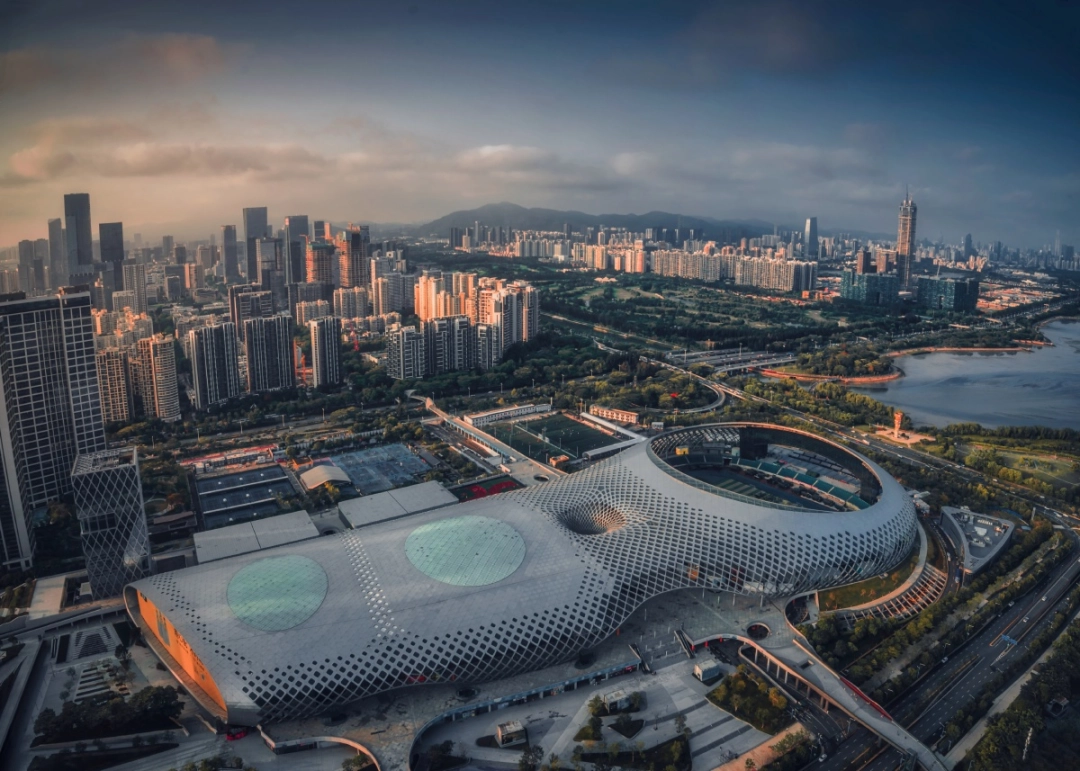
First was the venue selection. The "Spring Cocoon" Gymnasium at Shenzhen Bay Sports Center, with its name implying "breaking out of the cocoon to become a butterfly," perfectly matched the tournament's theme.
Additionally, in terms of venue layout, the players' battle seats were not placed in the center of the stage under the spotlight as usual. Instead, they were enclosed by the stage's base, separated from the audience and the trophy in the center. If viewed directly without cameras or large screens, players could only see the trophy bathed in golden light, unable to see the competitors inside the "cocoon."
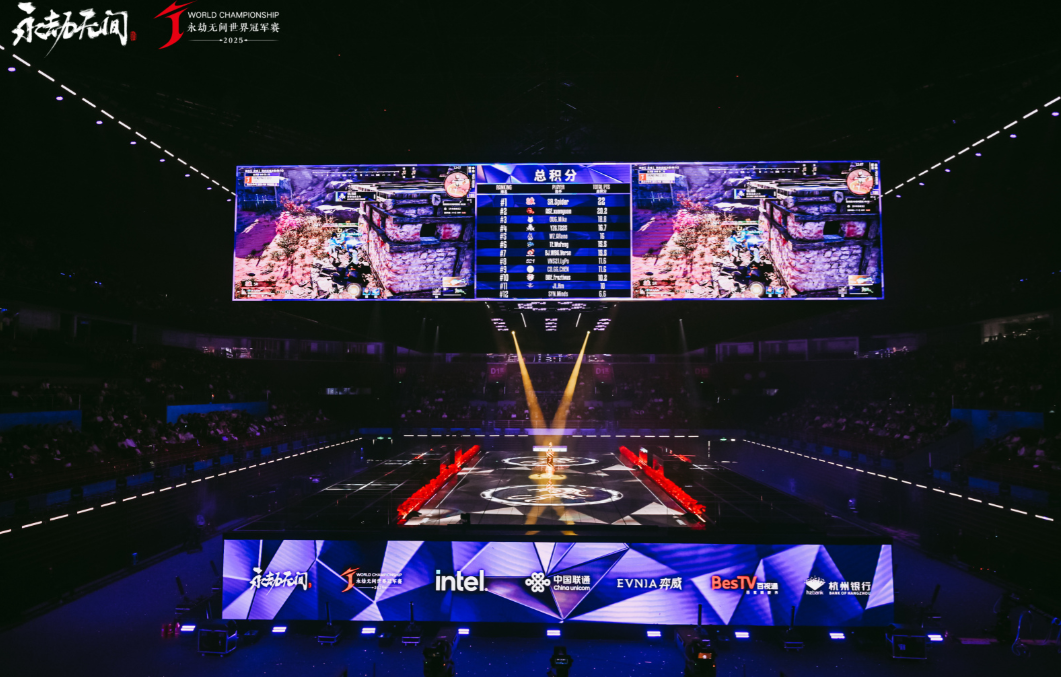
During the competition, this "cocoon" surrounding the players represented the effort and sweat they had silently poured in during their daily practice—efforts that remained "unseen" before they lifted the trophy.
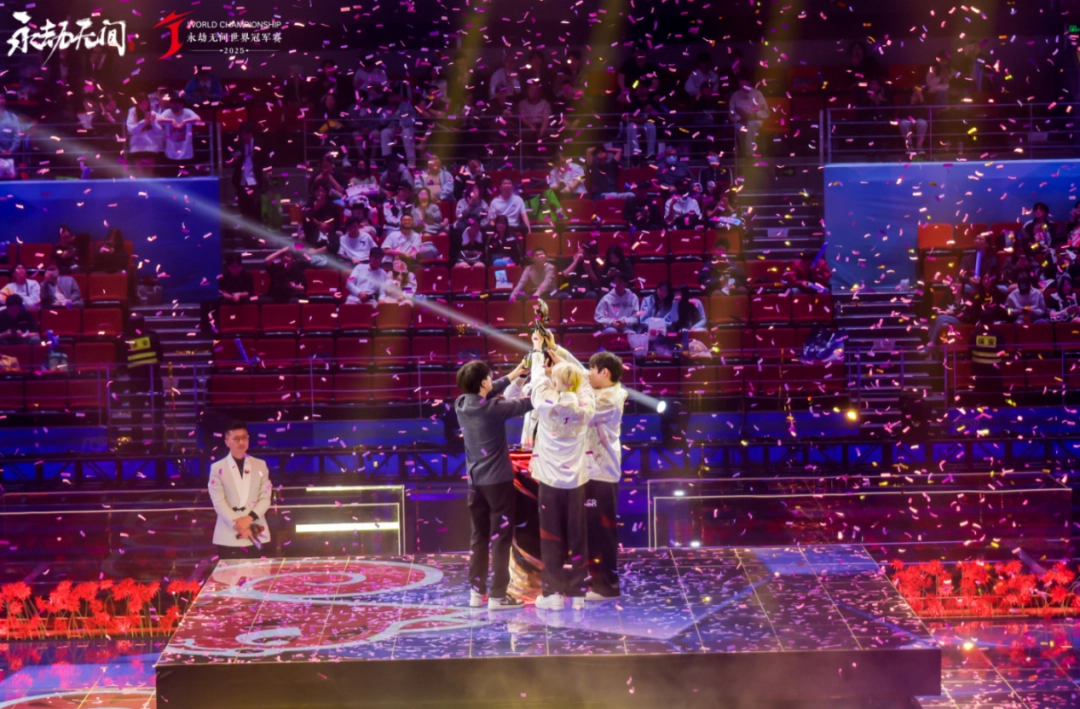
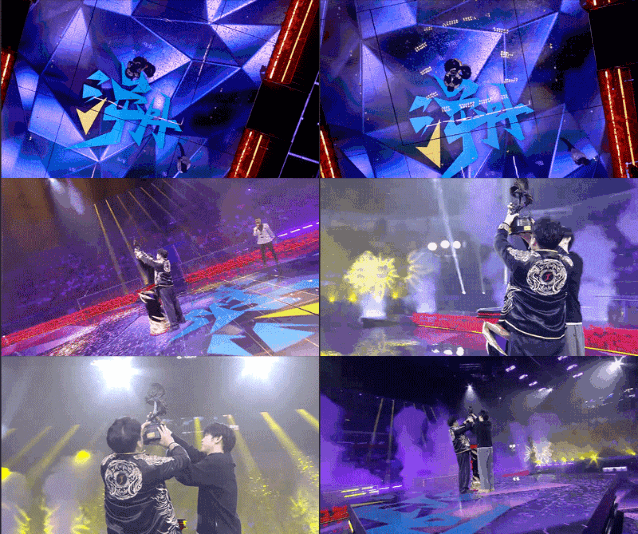
Wu Feng's unexpected victory also coincided perfectly with the "Breaking the Cocoon" narrative of the Naraka Cup. Before breaking out of the cocoon and lifting the trophy, he was not "seen" by the crowd; even the cheers from the audience upon his entrance were slightly quieter than those for other players.
It wasn't until golden rain fell on the arena and the crowd chanted his name that "Wu Feng" truly broke free from that invisible "cocoon" and was seen by everyone.
This applies to competitors as well as the game itself.
In terms of "breaking the cocoon," 24 Entertainment and Naraka: Bladepoint are the same.
As pioneers on the path of "Wuxia Battle Royale," they had no prior experience to draw from and could only rely on their own long-term exploration and accumulation to forge ahead alone. Today, the results of their exploration are evident, achieving remarkable success in esports, product quality, and player culture.
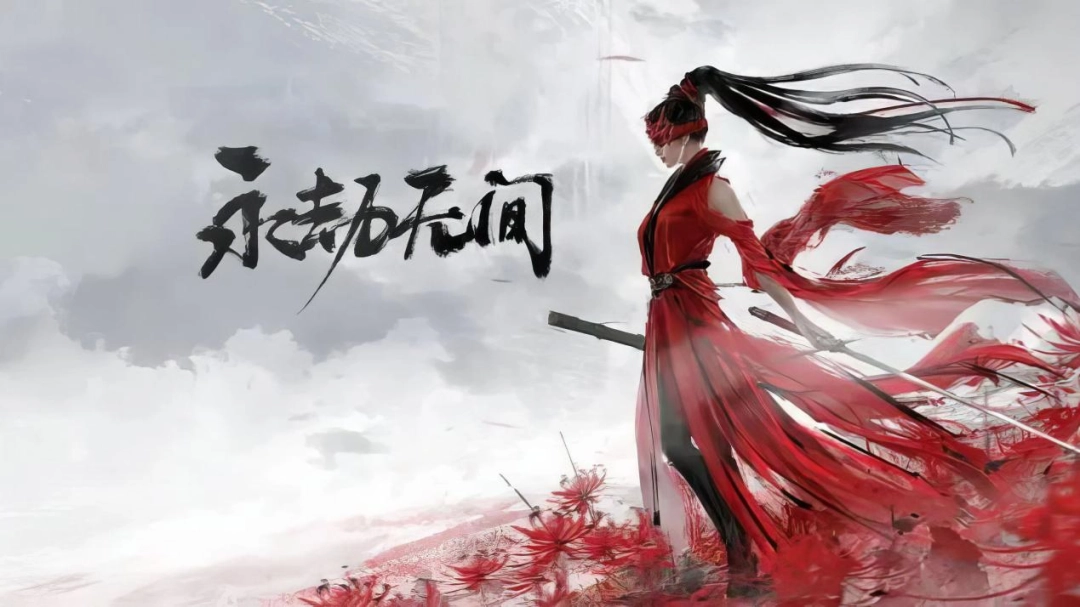
"Naraka: Bladepoint" has successfully "broken out of its cocoon," traveling far along its unique path of Chinese martial arts action gameplay, rightfully becoming the "legendary hero" among Battle Royale games.
This applies to the game, the competitors, and the players alike.
Between matches, as players walked out of the "cocoon" and passed the champion's trophy, which was always shrouded in spotlights, many would pause to look at it for a moment. Some just glanced quickly, while others stopped briefly to carefully examine the battling "Torch Dragon" and "Golden Crow" on the trophy.

Seeing the players examining the trophy from the stands reminded me of Old Chen.
Speaking of Old Chen, you surely don't know him.
Old Chen was my university roommate. Although he was a year younger than me, he looked mature, so everyone liked to call him Old Chen, and I followed suit.
He was very skilled and had several accounts. On one of them, he gave himself the ID "Chen Sanren" (Chen the Wanderer).
His style of play indeed resembled that of a carefree wanderer in the Jianghu, always able to save me from dire straits in chaotic battles.
Those were the craziest days of our "Naraka" adventures. Although in the real world, we were both university students confused about our futures, in Morus Isle of Naraka: Bladepoint, we were knights living freely by our own code.
We helped each other break enemy formations, laughed at each other's clumsy moves, practiced Parrying and combos in the training ground, and promised to reach Meteor rank together.
What happened next is something many have experienced. After graduating from university, we went our separate ways. He successfully got into graduate school, while I started working directly. We both had busy schedules, leaving us with less overlapping free time, and consequently, less time to team up and play "Naraka" together.

Later on, not only did we spend less time playing games together, but our frequency of contact also decreased.
I originally thought we would never have the chance to play "Naraka" together again, but this year's Naraka Cup brought a turning point.
On the night the Solo Tournament ended, I returned to my hotel close to midnight.
I found Old Chen, whom I hadn't contacted in a long time, in my friends list and sent him photos I took at the match that night. To my surprise, he replied instantly. It turned out that he had also stayed up late watching the live stream and watched the entire match.
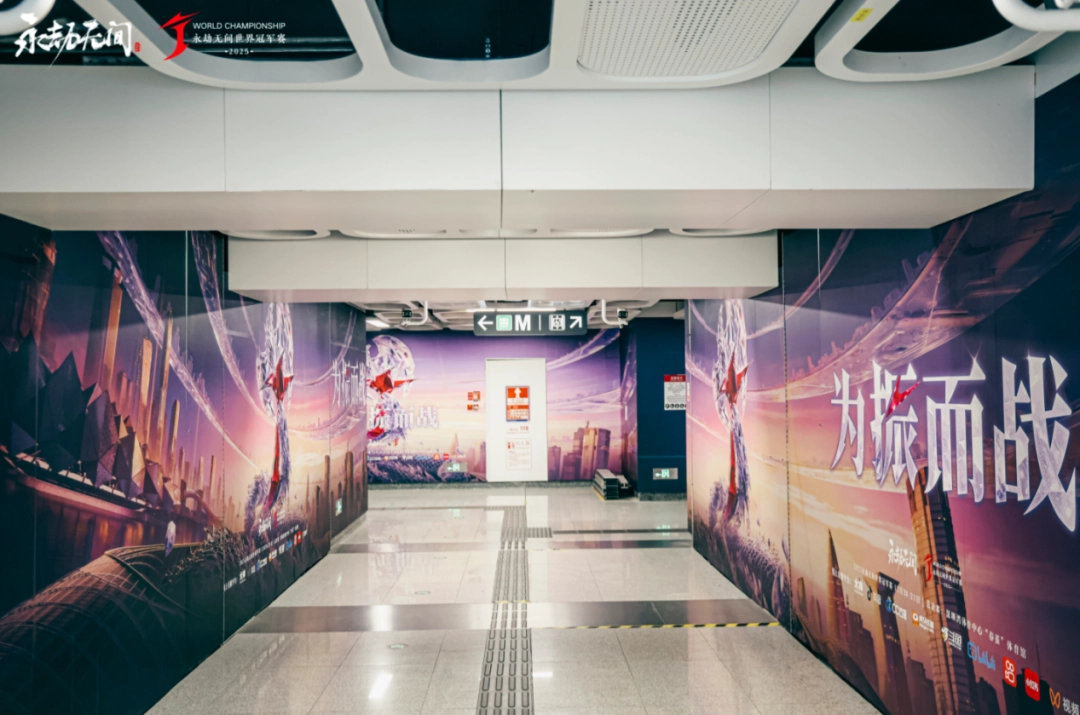
Taking this as an opportunity, I chatted with him for a while. We started with highlights from the match, diverged into our current situations and future plans, and finally returned to our college days, bringing the conversation back to "Naraka: Bladepoint" and the days we spent "looting" together back then.
When I woke up the next morning, I saw the message he had left for me in the early hours—
"How about finding a time to play a couple of rounds of Naraka together again?"
Reading this message reminded me of the night Old Chen submitted his graduate school applications. As he looked at his preferred universities on the screen, his gaze was identical to that of the Naraka Cup players examining the trophy.