

The exaggerated extent of memory chip price hikes in recent years can be intuitively felt by anyone who looks at the price history of any 4TB solid-state drive.
Recently, a personal purchasing experience shared by an overseas user sparked widespread discussion on social media, vividly illustrating the severe reality of soaring storage prices.
A Samsung 4TB SATA SSD purchased by this user less than three years ago has seen its current market price surge approximately sixfold, far outpacing the price increases of most conventional consumer electronics.

This Reddit user, known as tylerbagot, shared his historical purchase order, showing that on October 11, 2023, he bought a 4TB Samsung 870 EVO SATA III SSD on Amazon for $169.99, a very standard mainstream price in the consumer market at the time.
AndLess than three years later, when he clicked on the exact same product link to repurchase, he found the listed price had skyrocketed to $1,099.90, equivalent to about 7,500 RMB.
In 2026, buying a reliable large-capacity 4TB solid-state drive for under $200 has become an impossible luxury. Even standard 2TB SSDs on the market are now generally priced around $300, a level difficult for average consumers to accept.
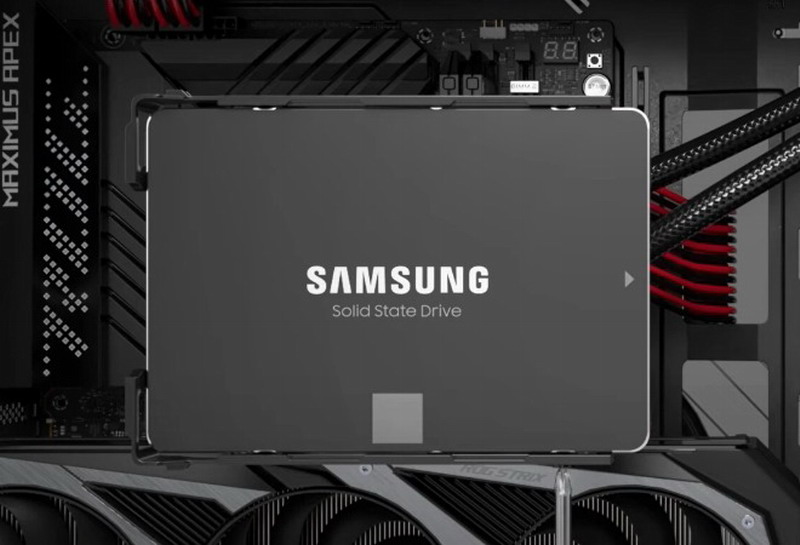
For users still operating older computer equipment or simply needing to expand their desktop's large-capacity storage, mature and stable SATA III SSDs still have clear use cases, provided the budget can cover the current high prices. They are sufficient for daily cold data storage and general office tasks.
However, if your core requirement is high-speed read/write performance, directly investing in a PCIe NVMe Gen 4 SSD is clearly a more cost-effective and longer-lasting choice in the current climate of generally high storage prices. This proves far more worthwhile than buying older, heavily overpriced large-capacity SATA drives.
The storage industry experienced several consecutive years of low prices, leading upstream manufacturers to cut back on many memory chip expansion plans. Now, the explosive demand for AI computing power is diverting high-end storage capacity like HBM towards AI applications, severely squeezing the supply of consumer-grade SSDs. This period of high prices is likely to persist for quite some time. Expecting storage prices to return to the lows of three years ago is basically impossible. Users with urgent expansion needs shouldn't wait indefinitely for low prices; buying according to actual needs is more cost-effective.